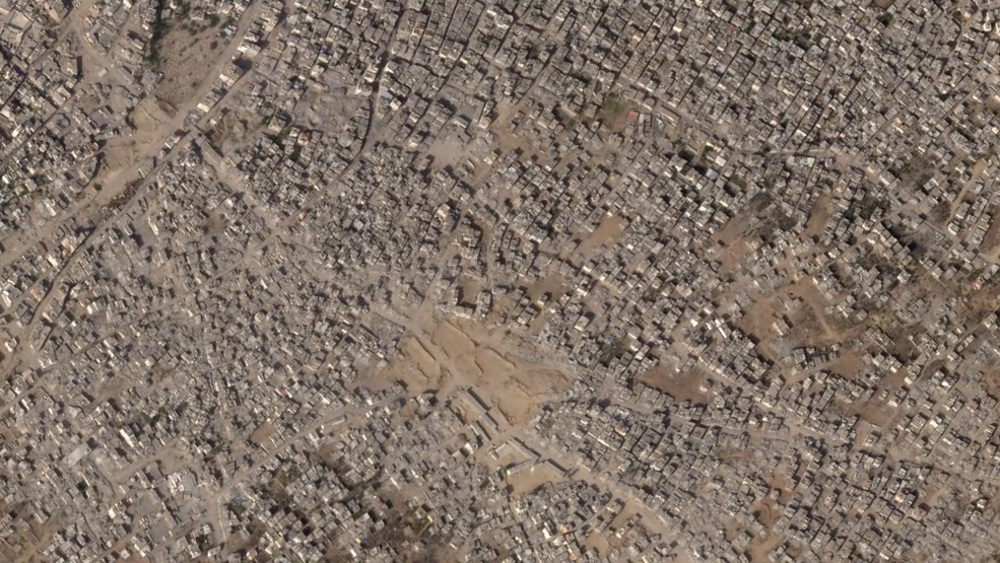
Satellite imagery shows the scale of destruction inflicted by Israel’s military aggression across the Gaza Strip, with entire towns and neighborhoods razed to the ground and large areas reduced to rubble, according to a report.
Rafah, once home to around 250,000 people, has been among the hardest-hit areas. Satellite images analyzed by Planet Labs show that most of the southern city has been demolished, with Israeli forces continuing to destroy remaining structures and clear rubble even after the ceasefire.
The destruction has extended across areas under Israeli military control, which currently account for roughly 60 percent of the Gaza Strip. At least 50 Israeli military outposts have been identified across these areas, including at least 18 built since the ceasefire began. Several have been established on the sites of former residential neighborhoods.
In Beni Suhaila in southern Gaza, an area once densely populated has been transformed into a wasteland crossed by dirt tracks that replaced former streets. A new Israeli military base has also been established at what was previously the town’s main intersection.
In northern Gaza, much of Jabaliya has similarly been reduced to rubble. Satellite imagery shows extensive destruction around the al-Awda Hospital Complex and several UN-run schools. Jabaliya, once home to Gaza’s largest refugee camp and more than 100,000 residents, has suffered widespread devastation.
Beit Hanoun and the Gaza City neighborhood of Shijaiya have also been largely flattened, with residential buildings and apartment blocks reduced to ruins.
An UN-appointed expert warned in a February report that the destruction of civilian housing and infrastructure in Gaza was unprecedented in modern warfare and could amount to crimes against humanity or potentially genocide under international law.
The destruction is only one part of the devastation facing Gaza’s roughly two million Palestinians. More than one in 10 people from the territory’s prewar population has been killed or wounded, while repeated Israeli evacuation orders and military operations have displaced most of the population multiple times.
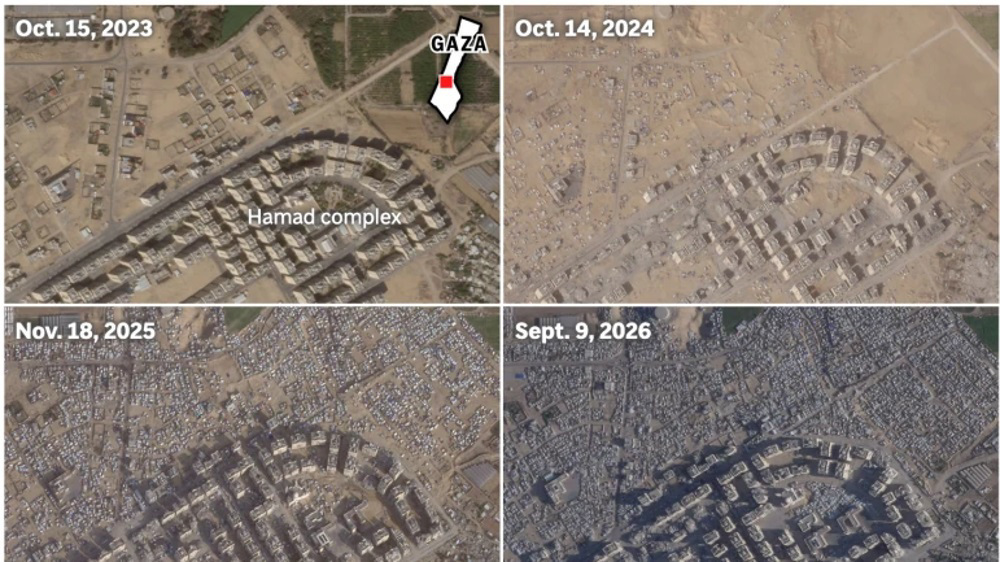
Although the ceasefire halted the largest Israeli aggression and heaviest bombardment, Israeli strikes on tents, vehicles and buildings have continued. Israel says the attacks target Hamas members, while Palestinian officials and rights groups say civilians continue to bear the brunt of the violence.
The ability of Palestinians to rebuild has also remained severely restricted. Israel has prevented most construction materials from entering Gaza, while a broader reconstruction plan included in the ceasefire agreement has failed to move forward.
The humanitarian consequences remain severe. Although increased flows of aid and commercial goods helped Gaza recover from famine conditions that emerged in some areas last year, most Palestinians remain dependent on international assistance, while employment opportunities remain extremely limited.

For many survivors, the physical destruction has been accompanied by profound personal loss.
Najwa Abu Eita lost her seven-year-old daughter and suffered severe injuries, including the loss of an eye, when Israeli forces struck her home in the Nuseirat refugee camp in September 2024. Once a hairdresser, she now lives in a tent beside the ruins of her home and struggles to find work.
Shadi Barawi, 35, lost his father early in the war and later had his leg amputated after being wounded by shrapnel in Gaza City. One of thousands of amputees left by the war, he has returned to cutting hair in the tent where he lives, using crutches and working without a prosthetic limb.
Meanwhile, thousands of bodies are believed to remain buried beneath buildings destroyed during Israeli attacks. Since the ceasefire, Gaza authorities have been conducting searches for the remains of those killed.In Gaza City, a search team recently spent eight hours digging through the ruins of Haneen al-Khodari’s family home, which was struck in December 2023. Al-Khodari said 17 members of her family remained buried beneath the wreckage.
The team recovered the remains of a small child and two bones before abandoning the search.
After waiting three years to recover her family members, al-Khodari sat beside the ruins as the search ended. The remains recovered were placed on a plastic sheet marked, “Mixed bones.”
According to the latest figures reported by Gaza’s Health Ministry, Israeli attacks have killed at least 74,000 Palestinians and wounded more than 174,000 others since the regime launched its genocidal war on the territory on October 7, 2023.
 This makes it easy to access the Press TV website