

By Ivan Kesic
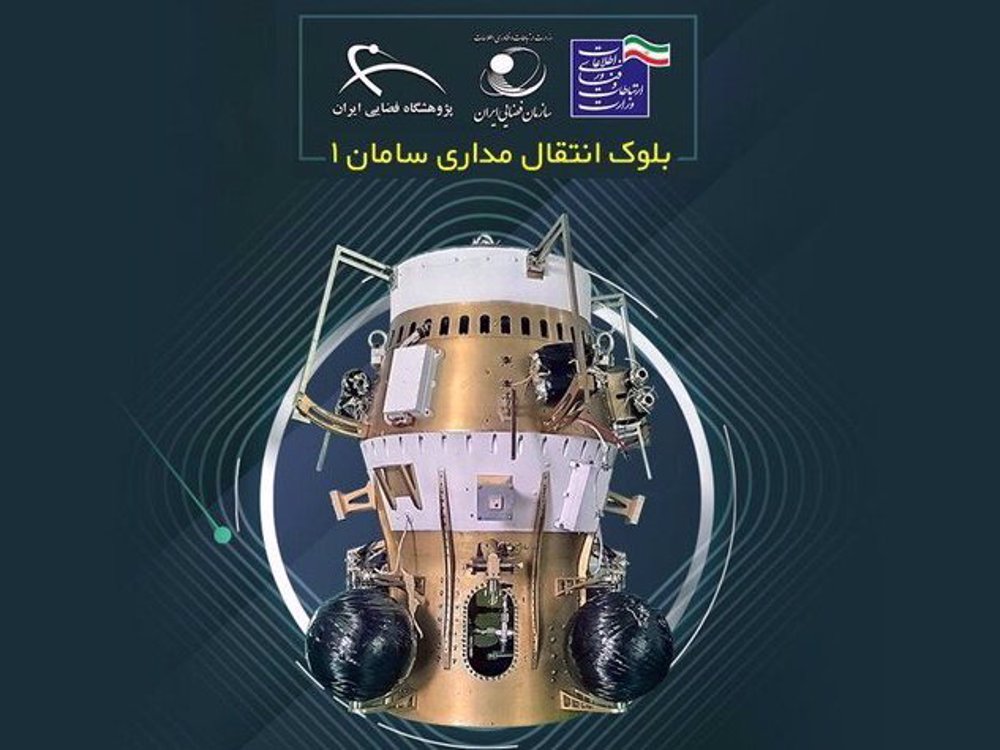
On October 3, 2026, Nader Makari, acting head of the Iranian Space Research Center (ISRC), announced a significant milestone in Iran’s space program: the launch of liquid-fuel propulsion development for the Saman series of orbital transfer blocks, alongside continued advances in the solid-fuel Saman-1 system.
The announcement signals more than a routine engineering upgrade. It points to Iran’s strategic transition toward satellite constellation deployment and more sustained access to higher orbits, including geostationary orbit at an altitude of approximately 36,000 kilometers.
Having demonstrated orbital transfer capabilities during the December 2024 Simorgh launch, the Saman program is now broadening its technological foundation to meet the increasingly complex demands of modern space missions.
Understanding the orbital transfer block
To appreciate the significance of the Saman program, it is first necessary to understand the role of an orbital transfer block within a space mission’s architecture.
Launch vehicles are designed to overcome Earth’s gravity and traverse the atmosphere, generating the enormous thrust required to carry payloads into space. However, their substantial structural mass and powerful engines make them less efficient for performing precise in-space maneuvers or transferring payloads to distant orbits.
An orbital transfer block, commonly known internationally as a space tug or kick stage, is a spacecraft that transports a satellite from its initial deployment or parking orbit to its intended operational orbit.
Such systems typically feature lightweight structures, independent navigation and attitude-control systems, and propulsion systems optimized for operation in the vacuum of space.
The Saman-1 marks Iran’s entry into this specialized area of space engineering. It is designed to bridge the gap between the capabilities of launch vehicles optimized for low Earth orbit and Iran’s growing need to deploy satellites into medium and higher orbits.
Saman-1: Architecture and demonstrated capabilities
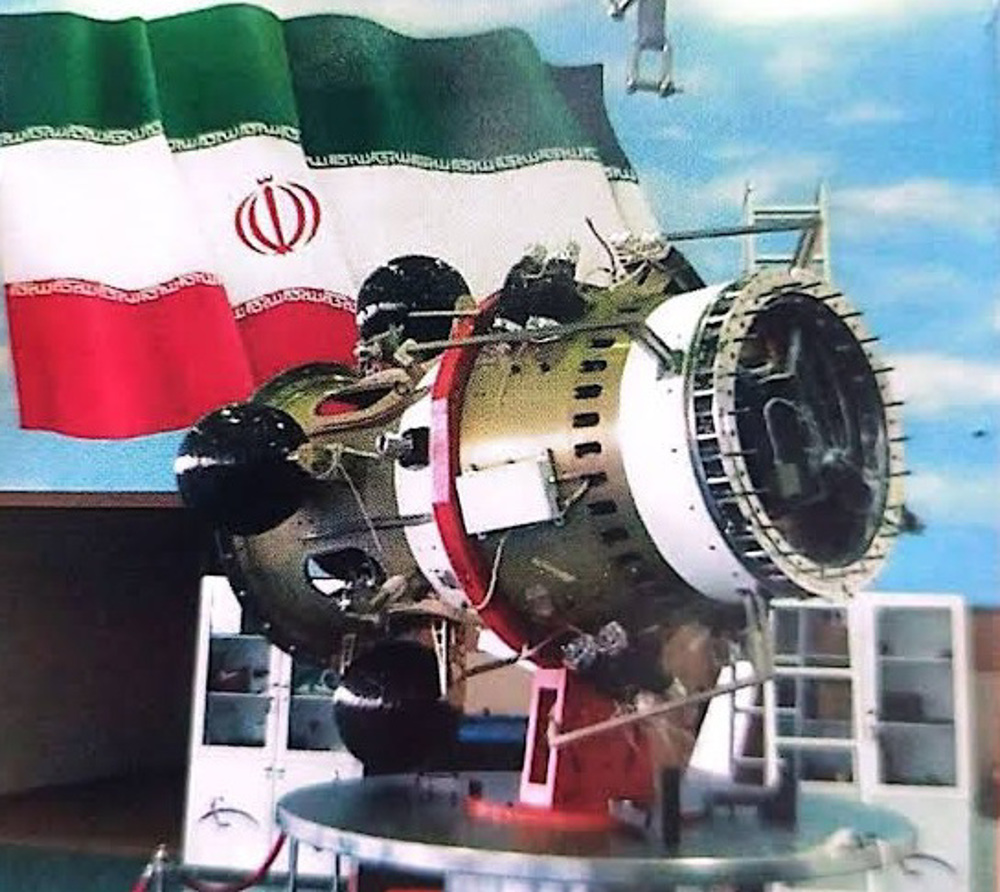
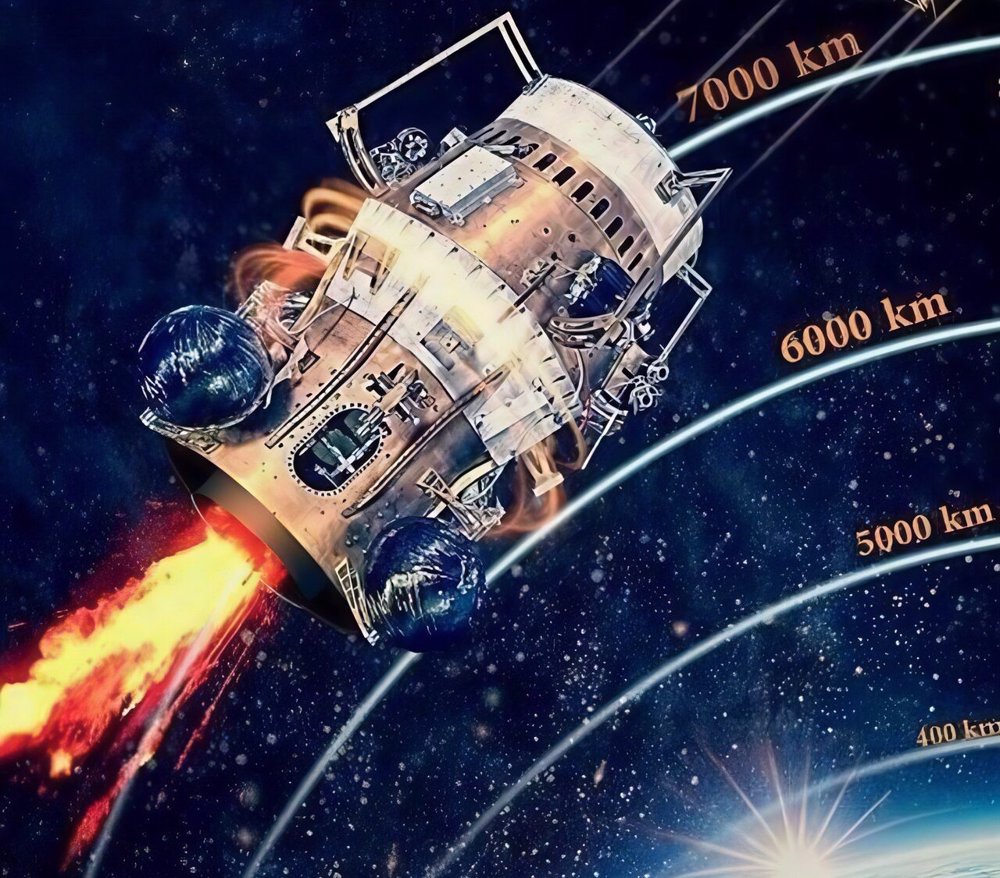
The Saman-1 space tug began its development around 2015 and was first unveiled in February 2017 on the occasion of National Space Technology Day.
In its initial configuration, the system weighs approximately 240 kilograms when fully fueled, with an empty mass of 55 kilograms and a propellant mass of 185 kilograms.
The system utilizes the Arash-24 solid fuel motor as its primary propulsion unit, capable of producing 1,300 kilograms of thrust during its 40-second burn time.
The Saman-1 begins its operation in a circular orbit with a 55-degree inclination and is designed to deliver payloads to an elliptical orbit with perigees and apogees ranging from 400 to 7,000 kilometers, respectively, with a 58-degree inclination.
For its first mission, the system was tasked with lifting a 100-kilogram satellite from a 400-kilometer circular parking orbit to an elliptical orbit with an apogee of 700 kilometers and a perigee of 400 kilometers.
Several new subsystems were designed and manufactured specifically for the Saman-1, including a complete and independent navigation and control system, a solid-fueled propulsion system made from titanium to reduce weight, cold gas thrusters, a power system, and a flight computer.
The ground segment of the Saman program includes telecom command and telemetry stations in the UHF and HF bands, with four ground stations located in Tabriz, Mahshahr, Mashhad, and Qeshm.
Successful launch of December 2024
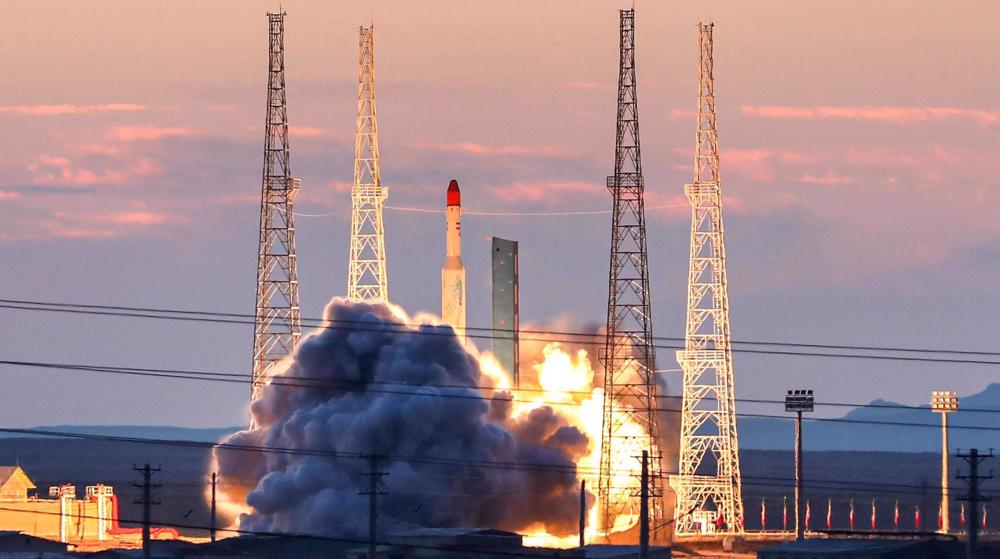
After successful suborbital tests in June 2021 and October 2022, the Saman-1 achieved a major milestone on December 6, 2024, when the Simorgh satellite carrier successfully launched it into space along with the Fakhr-1 satellite and another research payload.
This launch broke Iran's record for the heaviest space payload injection, with the combined mass of the three instruments totaling 300 kilograms.
The payloads were placed in a low Earth orbit with an apogee of 410 kilometers and a perigee of 300 kilometers, and the performance of the Saman-1's subsystems in orbit was successfully tested.
The Iranian Space Agency (ISA) confirmed that initial tests indicated the full health of the space tug's various subsystems, and a two-way communication line was established to begin testing the rotary and main propellers.
This successful demonstration validated the multi-payload launch capability of the Simorgh carrier and established the Saman-1 as a reliable orbital transfer system for future missions.
Strategic shift to liquid propulsion
The core of the October 2026 announcement is the recognition that previous orbital transfer systems, while proven, require expansion to meet the demands of new missions.
The statement that liquid fuel activities have begun in the Saman satellite projects represents a fundamental change in Iran's space doctrine.
To understand the significance of this transition, it is necessary to examine the physical and operational differences between solid and liquid propulsion.
In solid fuel technology, the fuel and oxidizer are combined into a single chemical compound and molded into a housing. These engines offer simplicity of construction, long-term maintainability, and enormous thrust generation relative to their weight and size.
However, the use of solid fuel in orbital transfer blocks faces serious engineering limitations.
The most critical weakness is the lack of controllability: once an ignition command is sent, the solid fuel engine ignites and continues to burn until the last particle of fuel is used up. There is no possibility of shutdown, restartability, or throttling.
In liquid fuel propulsion, the fuel and oxidizer are stored in separate tanks under controlled conditions and injected into the combustion chamber by pressurized gases or turbopump systems.
This architecture provides capabilities that are generally unavailable in the solid fuel design. A suitably designed liquid-propellant engine can provide restart capability, allowing several precisely controlled burns separated by coast phases.
This enables an orbital transfer block to ignite its engine for a few seconds at one point in the orbit to enter an elliptical transfer orbit, then shut down and coast until reaching the orbital apex, before reigniting to circularize the orbit and place the satellite in its precise position.
The second advantage is the ability to continuously control thrust through throttling. By changing the fuel and oxidizer inlet flow rate through proportional valves, the thrust intensity can be increased or decreased.
This capability is crucial for the smooth and safe deployment of sensitive satellites without introducing severe gravitational shocks to the payload.
Engineering complexities and Iranian achievements
The development of liquid fuel engines for space applications presents significant engineering challenges that the ISRC is now addressing.
One of the biggest challenges is managing the propellant in zero-gravity conditions. In the absence of gravity, the liquid fuel in the tank forms suspended bubbles and adheres to the walls, a phenomenon that can cause gas to be drawn into the engine instead of liquid, potentially leading to engine shutdown.
The development of propellant management devices using capillary structures and metal sponges represents a hidden and very complex achievement in the development of liquid fuel blocks.
The use of liquid propellants in space typically requires hypergolic fuels such as hydrazine or its derivatives with nitrogen tetroxide.
These fuels are highly toxic and corrosive, but their main advantage is that they ignite spontaneously upon contact and do not require an igniter system, ensuring the reliability of repeated combustion in the vacuum of space.
The ISA had already reached maturity in the field of single-propellant thrusters for attitude control, but the entry into orbital block main engines marks mastery of the full cycle of high-thrust bipropellant engines.
Path toward constellation deployment
The development of liquid fuel in the Saman block is directly linked to Iran's strategic program of satellite constellation deployment.
The Shahid Soleimani constellation, whose first phase includes 24 narrowband satellites comprising 18 main satellites and 6 reserve satellites, is designed to provide Internet of things (IoT) communications, crisis management, forest fire monitoring, and data transmission in areas without terrestrial infrastructure.
Three satellites from this constellation are already prepared for launch and will be unveiled during the Fajr decade and placed in orbit this year.
Launching 24 satellites one by one with 24 different rockets is not economically or time-wise justified.
The logical solution is to use powerful launchers to send several satellites simultaneously, but the main challenge is that the satellites of a constellation should not be released at one point in space.
They must be distributed at specific angular distances within an orbital plane to create continuous communication coverage without blind spots. This distributed operation can be facilitated by an orbital transfer block with restartable propulsion.
The operational scenario would involve the launch vehicle placing the carrier block of several satellites into the initial orbit, the orbital transfer block igniting its liquid motor to reach the desired orbital plane, releasing the first satellite, then restarting the liquid motor to change its speed and orbital angle before releasing the next satellite.
This cycle continues until the mission is completed. The entry of the Saman block into the field of liquid fuel precisely means providing a physical platform for the realization of large-scale constellation projects such as the Shahid Soleimani system.
Geostationary orbit and broadband communications
Another area where the orbital transfer block plays a crucial role is achieving geostationary orbit at an altitude of 36,000 kilometers.
This orbit is the most strategic point in space for deploying telecommunications satellites, broadcasting, and broadband communications.
Following the successes of the Nahid-2 telecommunications satellite in low Earth orbit, including the first satellite phone call and Ku-band testing, Iran has begun construction of the Nahid-3 satellite.
Weighing approximately 110 kilograms, Nahid-3 is a broadband satellite designed specifically for deployment in geostationary orbit and is currently in the design and construction phase of its main subsystems.
Reaching this extremely distant orbit is accomplished through a maneuver called a geostationary transfer orbit. In this scenario, the launcher places the payload in a highly elliptical orbit with a perigee close to Earth and an apogee at 36,000 kilometers.
For final deployment, the spacecraft coasts for hours before reaching apogee, at which point an engine must be fired to make the orbit circular and adjust its inclination.
The Saman block, with its liquid fuel architecture, has the capability to perform this complex and time-delayed maneuver with the highest precision and stabilize the Nahid-3 satellite in Iran's orbital position.
Space economics and data platforms
The technical aspects of the transition to liquid propulsion are directly tied to macroeconomic concepts.
Launch cost per kilogram has always been a major bottleneck in space commercialization, and advanced liquid-fueled orbital transfer blocks maximize the efficiency of heavy launchers.
Instead of launching expensive rockets for a small satellite, a single launcher can be launched with a heavy main payload and several small satellites.
After the main payload is deployed, the orbital transfer block uses its reburning capability to change course and release the microsatellites into different orbits, drastically reducing launch costs for startups, knowledge-based companies, and academic teams.
The final output of these space infrastructures is the production and processing of space-based data.
Sensing satellites such as Pars-1, the upgraded version of Pars-2, and Rad-1, Iran's first indigenous radar satellite, are responsible for continuous imaging of the Earth's surface.
The precise deployment of these satellites in sun-synchronous orbits by orbital transfer blocks ensures the quality and repeatability of the data.
Optical and radar data from these satellites are fed into national platforms such as the Raz platform and the Iran Zamin system, known as the Iranian Google Earth, which are equipped with advanced artificial intelligence algorithms for monitoring agricultural crops, predicting droughts, assessing watersheds, registering land violations, and monitoring land subsidence.
Reorganizing for the future
To respond to this new value chain, the Space Research Institute has undertaken an internal restructuring.
The shift from project-oriented missions to problem-oriented missions and the establishment of the Applications Research Institute are structural responses to the needs of the country's executive bodies.
Previously, satellite and subsystem research institutes were focused on developing pure technology, but the new approach is based on monitoring, predicting, and solving the daily challenges of space-based industries.
Supporting orbiting systems in space requires the simultaneous development of communication and control infrastructure.
The launch of a project to localize inter-satellite link technology will allow satellites in a constellation to relay data to each other in space without having to pass over a specific ground station, significantly reducing delay in message transmission and increasing the real-time capabilities of constellations in crisis situations.
At the same time, the development of an integrated network of satellite control centers distributed throughout the country, such as the Salmas center and the development of the Chabahar space base, is on the agenda of the Space Organization.
Road ahead
The development of liquid fuel systems in the Saman orbital transfer block represents a roadmap for Iran to join the small group of countries with smart space tug technology.
While solid fuel engines performed exceptionally well as primary and final accelerators and proved their worth in the successful launch of Saman-1 to an altitude of 400 kilometers, they lack the flexibility required for the requirements of the era of constellation building.
The transition to a liquid propulsion architecture that offers capabilities such as repeated combustion in vacuum, thrust control, and delicate orbital phasing maneuvers is a prerequisite for implementing major national projects such as the injection of the Shahid Soleimani constellation and the transfer of Nahid-3 series satellites to geosynchronous orbit.
This hardware revolution will directly drive the space economy, and the ability to accurately and cost-effectively deploy multiple payloads into different orbits through shared launches will pave the way for strong private sector participation and the development of space startups.
Combining this orbital infrastructure with advanced Earth observation platforms forms a complete cycle of space-based technologies that, instead of focusing solely on demonstrating power, focuses on solving the country's vital challenges, including water resource management, smart agriculture, environmental monitoring, and expanding digital economy infrastructure.
The Saman program, with its solid foundation and liquid future, stands as a testament to Iran's growing capabilities in the final frontier.
 This makes it easy to access the Press TV website