
Doctors Without Borders (MSF) says Israel is continuing its genocide in Gaza, warning that sustained military violence, restrictions on essential supplies, and the destruction of healthcare and civilian infrastructure are systematically undermining Palestinians’ ability to survive.
In a statement released on Monday, the international medical charity said that conditions for survival in Gaza were being “systematically destroyed,” warning that Israel was “progressively asphyxiating” the besieged territory through continued violence and restrictions on essential supplies.
MSF further said the situation had been compounded by the destruction of healthcare and critical infrastructure, while Palestinians were increasingly confined to shrinking areas of the Gaza Strip.
MSF stated that Israel’s so-called “Yellow Line,” initially presented as a temporary measure, had increasingly become a mechanism of confinement. The organization said the line was being reinforced by military positions, berms and ongoing demolitions and had continued moving westward, “squeezing people into a smaller and smaller area.”
Amande Bazerolle, MSF’s head of emergency response in Gaza, said the area around the line had become more than a geographic boundary.
“The Yellow Line cannot be treated simply as a line on a map,” Bazerolle said. “It has become a mechanism of encirclement and ethnic cleansing, while cutting communities off from the infrastructure, healthcare, water and other essentials they need to survive.”
MSF said Palestinians approaching the area risk being shot by Israeli forces, while its medical teams continue to treat people wounded by Israeli gunfire nearby.
The organization said violence was occurring across Gaza, not only around the Yellow Line. Its teams treated more than 1,200 cases of violent trauma during June and July alone, it said, while reporting that MSF had treated more than 200,000 trauma cases over the past three years.
MSF also highlighted worsening public-health conditions, citing overcrowding and inadequate access to clean water, sanitation, shelter and healthcare. Its teams treated more than 11,000 cases of skin disease and 1,500 cases of chickenpox during June and July, according to the organization.
Access to medical care has also deteriorated sharply, MSF said, as hospitals face shortages of basic supplies and patients struggle to obtain essential medicines and treatment.
Restrictions on supplies including engine oil and spare parts have further damaged infrastructure needed to operate hospitals, ambulances and water systems, the charity said. It added that generators were already breaking down and water-trucking operations had been reduced.
MSF also warned that the crisis extended beyond Gaza, pointing to increased violence, military operations, home raids, displacement and demolitions in the occupied West Bank and East al-Quds.
“It will take generations to recover from the harm that has already been done over the past three years, and in the preceding decades,” Bazerolle said, adding that the consequences of what she called Israel’s “ongoing genocide” were being felt daily.
She urged governments to take immediate action, saying Israel had carried out destruction, displacement and deprivation “with impunity” while such practices had become increasingly normalized.
“Governments must act now to ensure Israel stops the destruction and killing, prevents ethnic cleansing, and stops denying Palestinians the means of survival,” Bazerolle said.
A United Nations Commission of Inquiry (CoI), established by the UN Human Rights Council, recently concluded that Israeli authorities “intended to kill as many Palestinians as possible” and have committed the crime against humanity of extermination.
The developments come as Israel has already tightened restrictions on international organizations delivering humanitarian assistance.
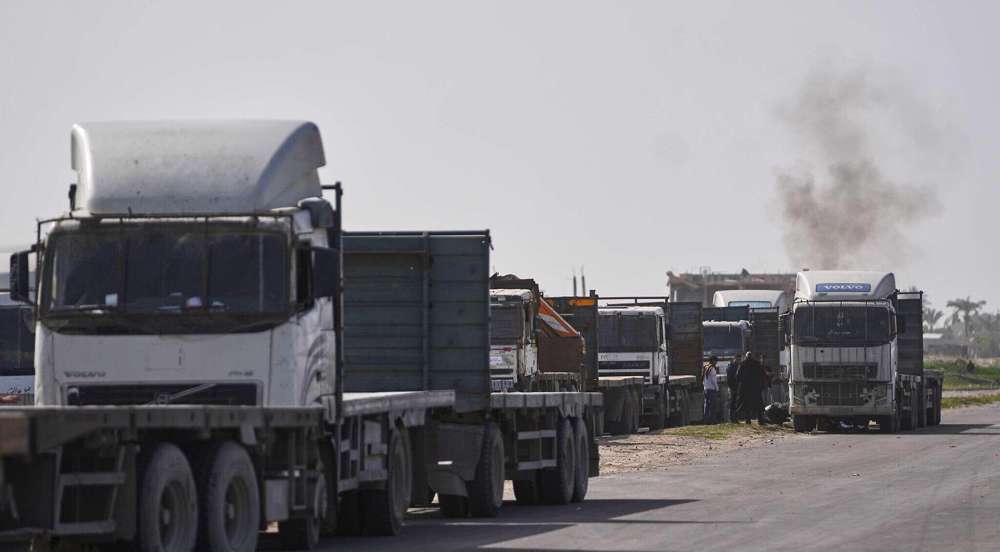
In December last year, Israel announced plans to revoke the licenses of 37 international NGOs operating in Gaza and the occupied West Bank from March 1, citing their "failure to provide detailed information about Palestinian employees."
MSF said it had spent months trying unsuccessfully to meet with Israeli authorities over the requirements, describing the move as a “pretext to obstruct humanitarian assistance” to Palestinians in Gaza.
Measures have included legislation limiting the operations of the United Nations Relief and Works Agency for Palestine Refugees (UNRWA), along with broader constraints on the access and activities of other aid groups in Gaza and the occupied West Bank.
Israel faces mounting international scrutiny over its conduct in Gaza, where more than 74,000 Palestinians have been killed since October 2023, according to the Palestinian Health Ministry.
 This makes it easy to access the Press TV website