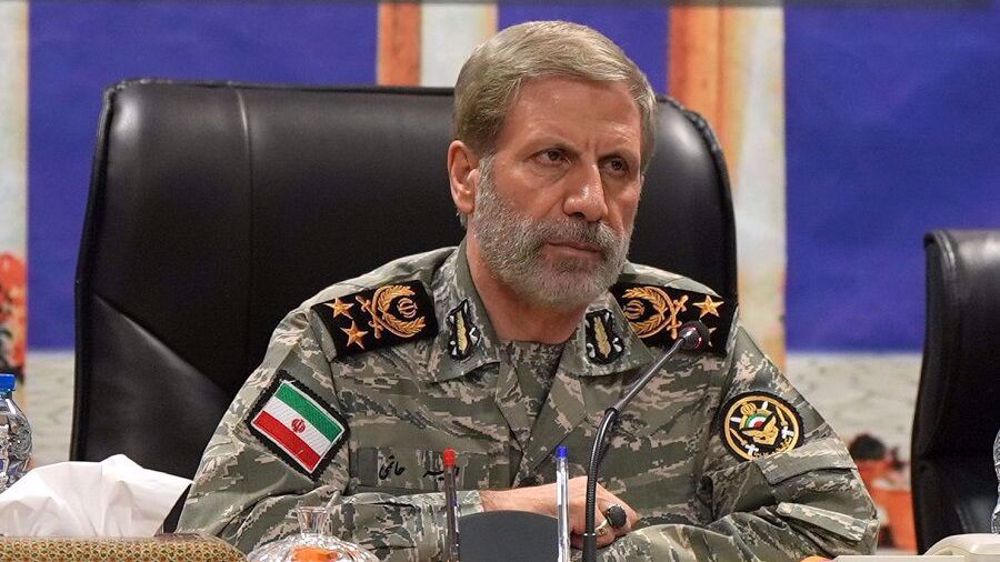
Commander of the Islamic Republic of Iran Army Major General Amir Hatami has warned that the Iranian Armed Forces will deliver a crushing response to any renewed hostile action, declaring that Iran remains fully prepared and vigilant.
Hatami made the remarks during a visit to Army units stationed in Fars Province, where he reviewed the personnel’s combat morale, equipment readiness and defensive capabilities.
Referring to the Armed Forces’ achievements in the recent US-Israeli war against Iran, the Army chief said that although war causes damage, what matters is its outcome, which, rather than surrender, brought honor and pride to the country.
He maintained that the war has not yet ended, saying the enemy has turned to other methods after failing on the military battlefield.
“After failing on the military battlefield, the enemy has resorted to other methods and, through sanctions and economic pressure, is trying to put the people under pressure, while at the same time pursuing many measures to create insecurity and unrest,” Hatami said.
“The Armed Forces, while maintaining readiness and vigilance, will deliver a crushing response to the enemy’s threats if it makes another mistake,” he added.
Hatami also described war as an arena of resilience, saying the side capable of demonstrating greater resistance and resilience would ultimately prevail.
“We consider ourselves to be on the path of defending the truth, trust in divine promises, and with this belief, we will continue the path of confronting the enemy and defending the country,” he said.

The US and the Israeli regime waged their first criminal war against Iran, which lasted 12 days, in June 2025. Their second aggression began on February 28, 2026, and came to a halt in early April after 40 days.
In both wars, Iran’s resistance and successful retaliatory operations forced the aggressors to accept a ceasefire.
Iran has also maintained a tight grip on the Strait of Hormuz since the early days of the second imposed war.
In July, the US conducted waves of deadly air raids on Iran and imposed a naval blockade of the country in violation of the Islamabad Memorandum of Understanding (MoU) with the Islamic Republic, signed on June 17, to end the war.
In response, the Iranian Armed Forces launched devastating strikes against strategic American targets across West Asia and declared the Strait of Hormuz closed to all traffic.
 This makes it easy to access the Press TV website