By Press TV Website Staff
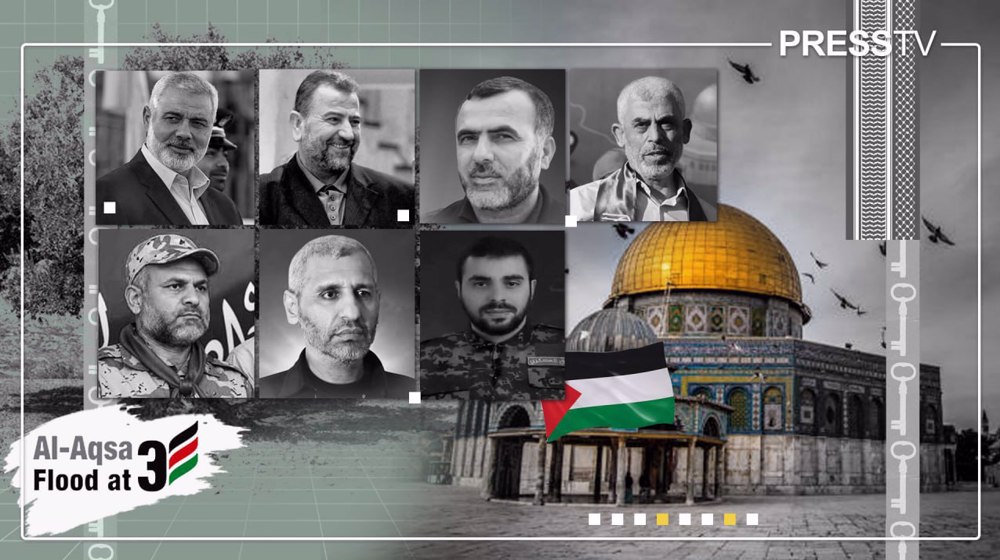
Since Operation Al-Aqsa Storm, the historic military operation that shook the Zionist occupation and its Western backers on October 7, 2023, several prominent resistance leaders and commanders have been martyred while remaining committed to the cause of liberating Palestine.
As Israel’s genocidal war on Gaza unfolded, they stood at the forefront of the resistance, carrying the struggle for freedom and dignity through some of the darkest chapters in the history of Palestine.
Ismail Haniyeh, Yahya Sinwar, Saleh al-Arouri, Mohammed Deif, Marwan Issa, Abu Obeida, and Raed Saad are among the most prominent figures whose lives were devoted to the Palestinian cause.
Their martyrdom did not erase the legacy they left behind. They became part of a long history of resistance, sacrifice, and steadfastness — a legacy carried forward by those who continue to struggle for a Palestine free from Israeli occupation and apartheid.
Ismail Haniyeh
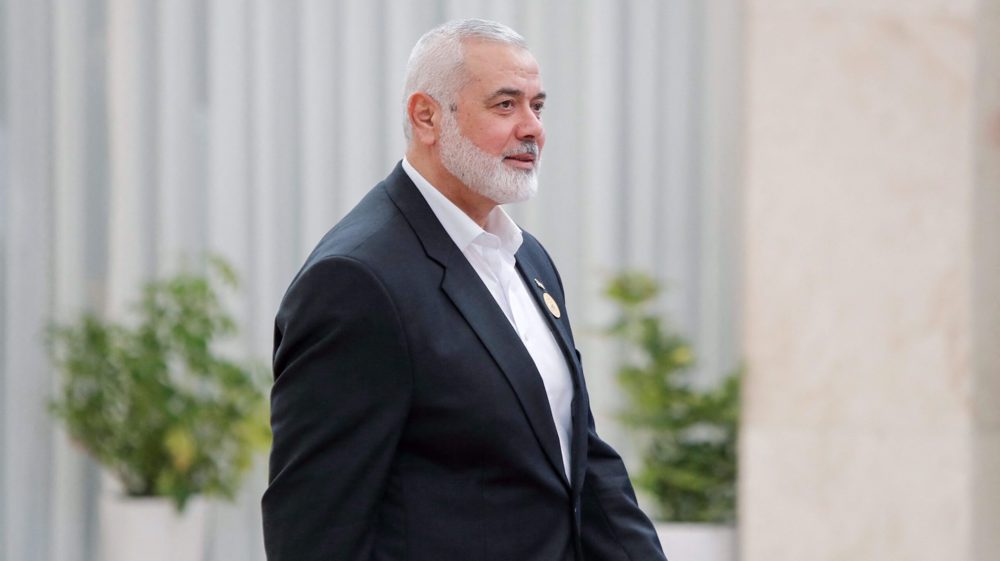
Ismail Haniyeh, the head of the political bureau of the Palestinian resistance movement Hamas, was assassinated in a cowardly Israeli attack in Tehran on July 31, 2024.
Haniyeh was in the Iranian capital to attend the swearing-in ceremony of Iran’s newly elected President, Masoud Pezeshkian.
Born in 1962 in the al-Shati refugee camp in the Gaza Strip, Haniyeh studied Arabic literature at the Islamic University of Gaza, graduating in 1987.
After years of political activism against the Israeli occupation, he was appointed one of Hamas’s senior leaders in 1997 and gradually rose through the movement’s ranks to become its top political leader.
He also headed the office of Sheikh Ahmed Yassin, the founder of Hamas, following Yassin’s release from an Israeli prison in 1997. The two maintained a close relationship until Yassin’s assassination by Israel in 2004.
Haniyeh played an active role in both the First and Second Intifadas and was imprisoned by Israel on several occasions. He also survived multiple assassination attempts, including a 2003 suicide bombing.
Under his leadership, Hamas won the 2006 Palestinian legislative elections, and Haniyeh became Prime Minister of the Palestinian government.
He also served as Hamas’s leader in the besieged Gaza Strip from 2006 to 2017.
On May 6, 2017, Haniyeh was elected head of Hamas’s political bureau, succeeding Khaled Mashal.
Following Operation Al-Aqsa Storm, Haniyeh used his political position to defend the Palestinian resistance and champion the Palestinian cause on the international stage.
But his leadership came with a deeply personal cost. At least 14 members of his immediate family were killed in Israeli attacks on Gaza in October 2023.
In November 2023, his granddaughter and grandson were also killed. In April 2024, Haniyeh lost three of his sons and three grandchildren in an Israeli airstrike.
In June 2024, ten more members of his extended family, including his 80-year-old sister, were killed in an Israeli strike on the al-Shati refugee camp.
Despite these devastating losses, Haniyeh remained steadfast in his commitment to the Palestinian cause and continued to struggle to that end,
In an April 2023 interview with Press TV, Haniyeh said Israel was “living in its worst situation” and outlined the deepening political and strategic crisis facing the occupying entity.
Yahya Sinwar
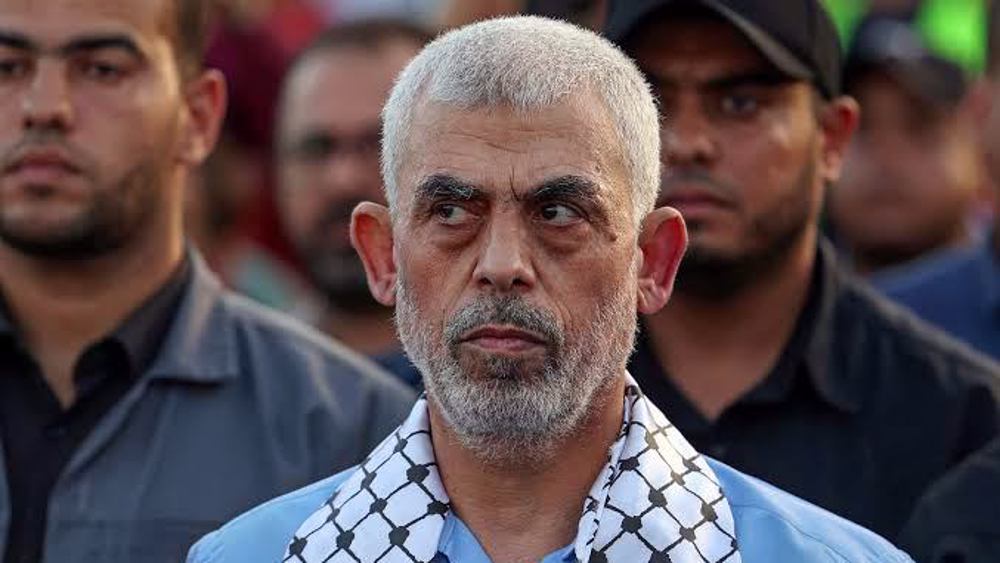
Yahya Sinwar, the Gaza-based leader of the Hamas resistance movement, was martyred in Rafah in southern Gaza on October 16, 2024.
His final moments became a powerful symbol of his lifelong commitment to armed resistance. He was found wearing a combat vest, with an AK-47 rifle by his side.
Known as “Abu Ibrahim,” Sinwar was born on October 19, 1962, in a refugee camp west of Khan Yunis in southern Gaza.
While studying at university in the early 1980s, he joined the Islamic Student Bloc, a precursor to Hamas, alongside young activists including Haniyeh and Khalil al-Hayya.
From 1982 to 1988, Sinwar helped organize and lead confrontations with the Israeli occupation. He was arrested several times, beginning in 1982, when he was sentenced to six months in Fara’a prison for his resistance activities.
In 1988, he was arrested again and sentenced to four life terms. He ultimately spent 23 consecutive years in Israeli prisons, including nearly four years in solitary confinement.
In 2011, Sinwar was released as part of a prisoner-exchange deal between Hamas and Israel.
He was elected head of Hamas’s political bureau in Gaza in February 2017 and was re-elected in 2021.
The charismatic and courageous leader of the Palestinian resistance against the Israeli occupation and the key mastermind of Operation Al-Aqsa Storm, Sinwar figured high on the regime’s “kill list.”
His home was bombed and destroyed in 1989, again in 2014 and 2021, and once more during Israel’s genocidal war on Gaza in December 2023.
Fluent in Hebrew as well as Arabic, Sinwar studied the language and Israeli society closely. His writings, speeches and political analyses offered a glimpse into a mind shaped by decades of imprisonment and resistance.
At the heart of his political thought was an unwavering belief in resistance and the necessity of confronting the occupation.
On August 6, 2024, Sinwar was elected head of Hamas’s political bureau, succeeding Haniyeh.
He played a central role in coordinating and overseeing resistance operations in Gaza following the events of October 7, 2023.
While Israel repeatedly claimed that Sinwar was hiding deep underground, images that emerged after his martyrdom showed him on the battlefield, confronting Israeli forces until his final moments.
He did not leave Gaza. He did not surrender. And he martyred as he had lived — on the front lines of the struggle he had devoted his life to.
Saleh al-Arouri
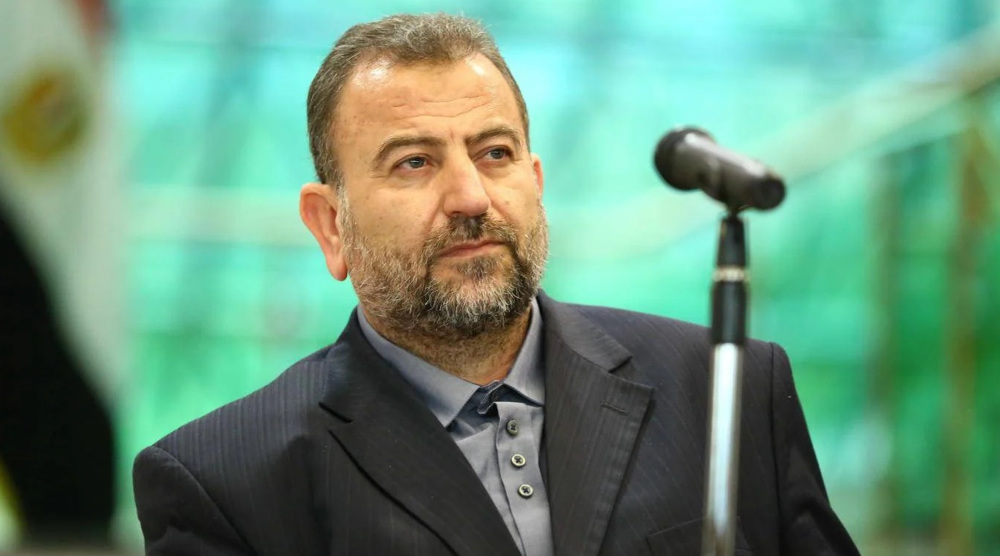
Saleh al-Arouri served as deputy head of Hamas’s political bureau from October 2017 until his assassination on January 2, 2024.
Al-Arouri, 57, was martyred in an Israeli drone strike in Beirut’s southern suburb of Dahiyeh.
Born on August 19, 1966, in the Ramallah area of the occupied West Bank, al-Arouri enrolled at Hebron University in 1985 to study Islamic Sharia.
He was elected head of the university’s Islamic faction and established ties with Hamas’s youth movement on campus.
Al-Arouri joined Hamas during the First Intifada and played a key role in the establishment and expansion of the al-Qassam Brigades, the military wing of Hamas, in the northern West Bank.
He was repeatedly detained by the Israeli occupation forces, spending long periods in Israeli prisons between 1985 and 1992 and again between 1992 and 2007.
In 2010, Israel deported him to Syria, where he lived for three years before moving to Turkey and later Lebanon. He was living in exile in Lebanon when Hamas launched Operation Al-Aqsa Storm.
For years, Israeli officials had openly threatened to assassinate him. Israeli Prime Minister Benjamin Netanyahu had specifically warned that al-Arouri would be targeted.
Mohammed Deif
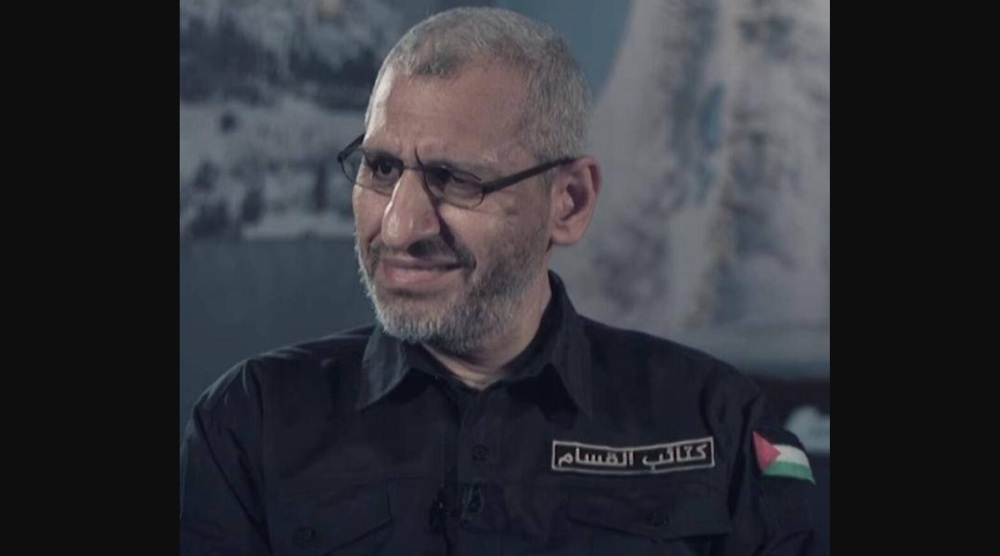
Mohammed Deif was a legendary commander of the al-Qassam Brigades and one of the key strategists behind Operation Al-Aqsa Storm.
As chief of staff of Hamas’s military wing, Deif was one of the most elusive and feared figures for the Israeli regime, surviving numerous assassination attempts over several decades.
Hamas officially confirmed his martyrdom in January 2025, describing him as a commander whose name “instilled terror and fear” among Israeli political and military leaders until he fell in the “greatest battle — a battle that he authored with his ideas and blood.”
Deif was born in 1965 in the Khan Yunis refugee camp in southern Gaza, established in the aftermath of the 1948 Nakba, when hundreds of thousands of Palestinians were forcibly displaced from their homes.
He joined Hamas in 1987 during the First Intifada. After two years of resistance activity, he was captured in 1989 and spent 16 months in Israeli detention before being released in a prisoner exchange.
He became one of the founding figures of the al-Qassam Brigades and played a leading role in developing its engineering capabilities, including rockets, explosives, and tunnel warfare.
Over the years, the resistance tunnel network in Gaza expanded into a vast underground system that would become a defining feature of the Palestinian resistance’s military strategy.
Since the mid-1990s, Deif had been one of the most wanted figures on Israel’s assassination list. Israel attempted to assassinate Deif at least seven times, four of them during the 2000s.
In 2000, he was detained for several months by the Palestinian Authority at Israel’s request but later escaped with the help of associates.
In August 2014, during Israel’s war on Gaza, an Israeli airstrike targeted his family home in Gaza City, killing at least six people, including his wife and two children.
His abilities, decades of struggle, and successful organization of anti-Israeli operations made him one of the most renowned figures on the anti-Israel resistance front.
For Israel, he was a wanted man. For his supporters, he became a symbol of defiance, a commander who spent decades evading assassination and building the military capabilities of a besieged people.
Marwan Issa
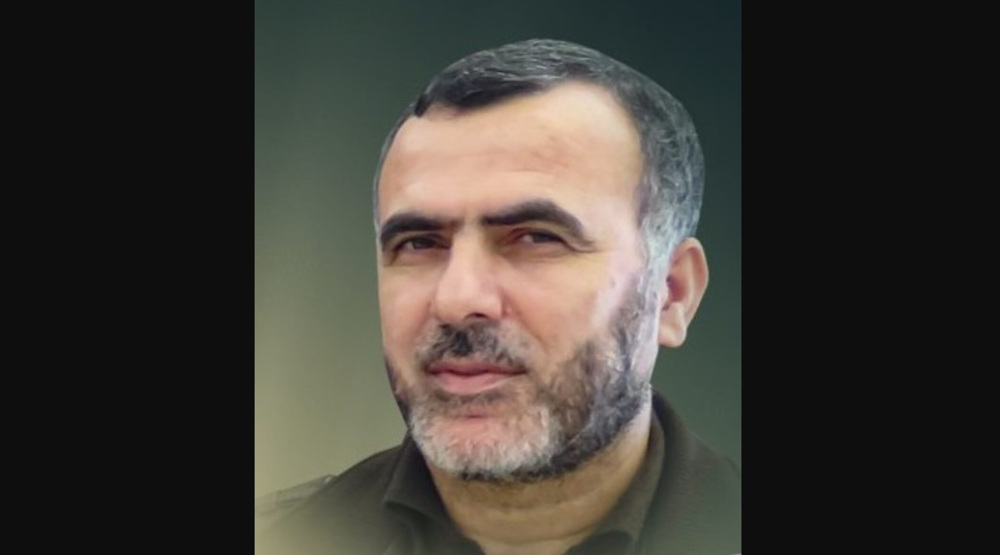
Among the high-ranking resistance commanders martyred alongside Mohammed Deif was Marwan Issa, the deputy commander of the al-Qassam Brigades.
Born in 1965 in the Bureij refugee camp in central Gaza, Issa came from a family originally displaced from the area near Ashkelon.
Before the establishment of Hamas, he was involved with the Muslim Brotherhood.
During the First Intifada, Israel detained him for five years, from 1987 to 1993. He was later detained by the Palestinian Authority in 1997 and remained in custody until the Second Intifada in 2000.
Issa subsequently emerged as one of the senior commanders of the Palestinian resistance and played a role in numerous operations against the Israeli occupation.
Known for his military expertise, he became one of the most senior figures in the al-Qassam Brigades and, like Deif, spent years on Israel’s assassination list.
His life was marked by imprisonment, pursuit and resistance — a path that ultimately ended in martyrdom.
Abu Obeida
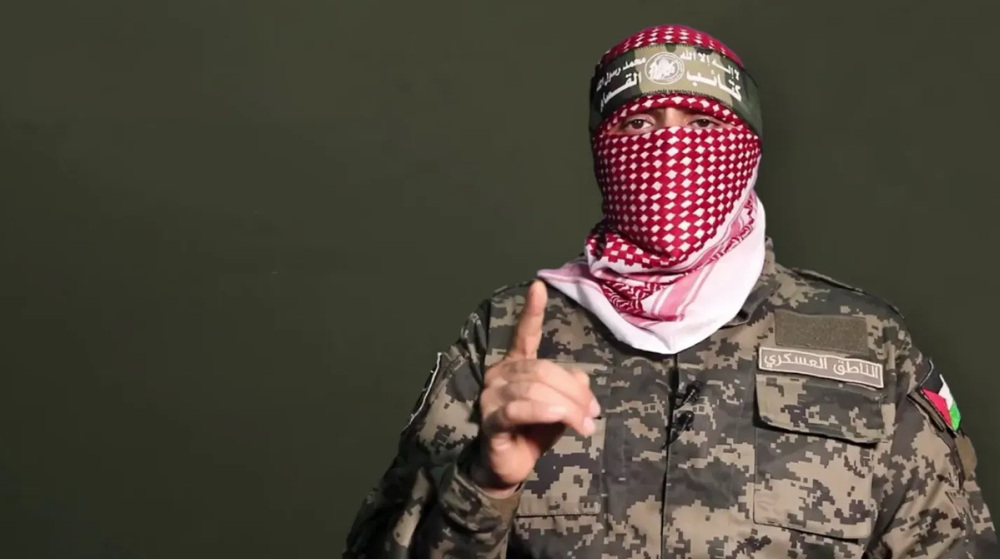
Hamas confirmed in December 2025 that Abu Obeida, the iconic masked spokesman of the al-Qassam Brigades, had been martyred earlier that year during Israel’s genocidal war on Gaza.
His real identity remained undisclosed throughout his lifetime.
Like his predecessor, Imad Aqel, who was assassinated by Israel in 1993, Abu Obeida kept his face concealed beneath a distinctive red keffiyeh and appeared in military uniform.
The anonymity only strengthened his symbolic power.
He first rose to prominence in 2002, delivering media briefings during the Second Intifada. Following Israel’s withdrawal from Gaza in 2005, he was formally introduced as the al-Qassam Brigades’ military spokesman and remained its most recognizable public voice.
In 2006, he appeared in a video claiming responsibility for an operation in southern Gaza that killed two Israeli soldiers and resulted in the capture of Israeli soldier Gilad Shalit.
That operation marked his emergence onto the international stage. Over the following years, Abu Obeida became a defining figure in the al-Qassam Brigades’ media strategy.
But after October 7, 2023, his role took on an entirely new dimension. His carefully delivered statements and battlefield updates became closely followed across the Arab and Muslim world and far beyond.
For millions, the masked spokesman became more than the public voice of Hamas’s armed wing. He became one of the most recognizable symbols of Palestinian resistance during the war on Gaza.
His appearances challenged Israeli military claims, announced battlefield developments and projected an image of defiance from a territory under relentless bombardment.
Abu Obeida represented a voice that refused to be silenced — a voice that continued speaking from besieged Gaza until his martyrdom.
From October 7, 2023, until his martyrdom, Abu Obeida provided battlefield updates, mocked Israel’s claims of invincibility, and portrayed Gaza as “the greatest military school for a people’s resistance.”
Raed Saad
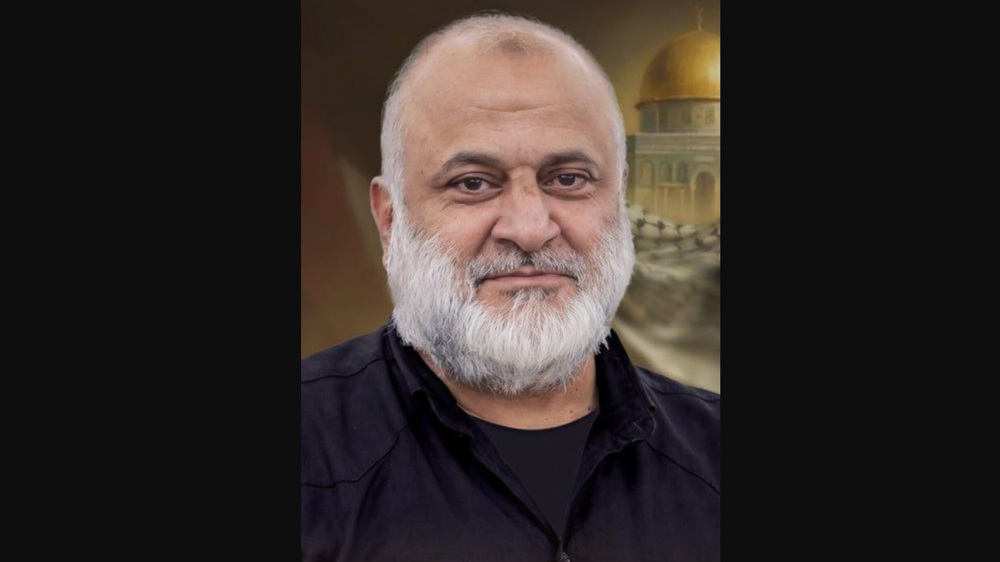
Raed Saad was assassinated by the Israeli regime in December 2025 in a violation of the ceasefire agreement reached with Hamas in October 2025.
Born in 1972, Saad was a senior member of the military council of the al-Qassam Brigades.
He served as head of the brigades’ operations and production departments and had previously commanded the group’s military wing in Gaza City.
A veteran resistance commander, Saad was involved in the development and organization of the al-Qassam Brigades’ military capabilities and remained one of the movement’s senior field figures.
His assassination added another name to the long list of Palestinian resistance commanders martyred during Israel’s war on Gaza — men who, from different positions and in different ways, had devoted their lives to the Palestinian struggle.
For their supporters, their martyrdom marked not the end of the resistance, but another chapter in a struggle defined by sacrifice, steadfastness and an enduring demand for freedom.
 This makes it easy to access the Press TV website