
The Mesopotamian region stands as a cradle of human civilization, a place where our ancestors first laid roots. Countless historical traces affirm Mesopotamia's pivotal role in the birth of civilization.
The Tigris and Euphrates rivers, weaving through the landscape, have been indispensable in shaping the ancient civilization.
Over the ages, millions of people have thrived along their banks, embracing life intertwined with agriculture and fishing, and laying the foundations for Mesopotamia's rich tapestry.

Who is responsible for the current situation?
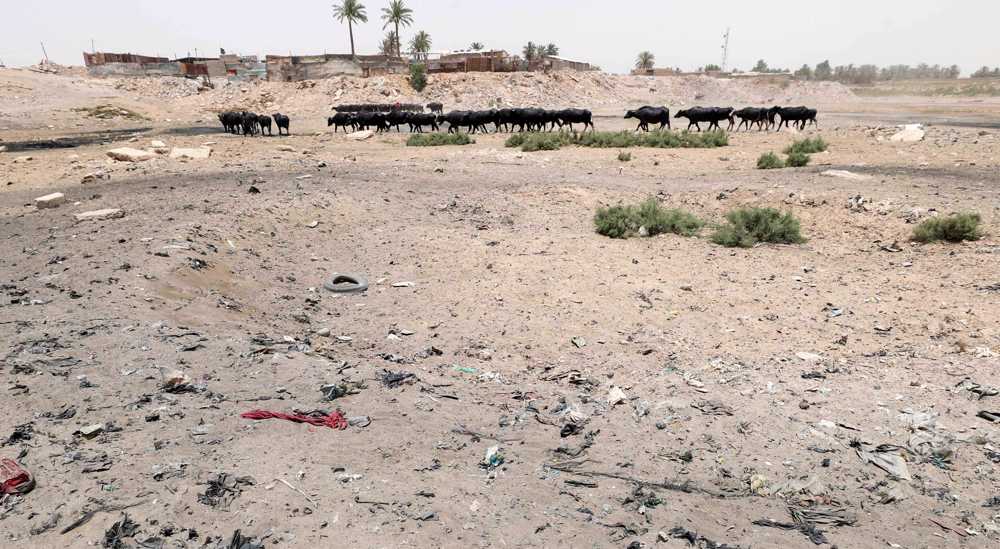
Salty, unhealthy water has become a scourge in people's lives. Reports narrate tales of illness from drinking brackish water, leading many to hospitals.
The decline in water levels behind the dams in Iraq and Iran allows salty seawater to infiltrate fresh riverbeds.
Accusations of government incompetence echo in Iraq as citizens grapple with water scarcity.
The water scarcity poses more of a grave concern for farmers than urban residents
This farmer grapples with hardships to irrigate his crops, leading to thirsty, parched wheat fields.
Should the relentless drought persist, the farmers of this region will face an inevitable choice: abandoning the centuries-old homes and huts they have cherished and embarking on a forced migration to seek refuge elsewhere.
Miles from Iraq, the residents of Hasankeyf, a town in Turkey, express their discontent through protests against government policies.
14 0r 15 houses and even people and everything disappeared from this village because of this policy.
Local Resident
Surprisingly, the government's actions compel people in this area to migrate, not due to drought, but rather due to an excess of water.
Hasankeyf is an ancient town and has a history of over 10,000 years. It has witnessed diverse historical epochs and has never witnessed its people being compelled to leave.
However, the construction of a massive dam now forces them to bid farewell to their cherished homeland. Situated on the Tigris River, the dam will submerge all the land in the vicinity underwater.
In a bid to safeguard the historical heritage of Hasankeyf, the government relocates vital historical buildings and structures in the area. For the inhabitants of the region, migration is an unavoidable reality.
Today, a somber gathering amasses in a house as the community bids a final farewell to Ibrahim.
He has made the decision to head to Batman, a city near Hasankeyf.
News has reached them that a demonstration is slated to take place in the neighboring village, highlighting the shared plight and determination of those facing the challenges brought about by the Ilisu Dam.
The people in Hasankeyf and Iraq both feel compelled to migrate, yet their reasons are different: the looming threat of rising water levels on one side and the stark absence of water on the other side of the border.
As Turkish authorities submerge a 10,000-year-old civilization beneath the waters of the Ilisu Dam, a contrasting narrative unfolds across the border in the Iraqi city of Mosul.
Local authorities say they have no option but to release substantial amounts of water stored behind the dam to prevent crops from withering in December. The move, however, has an unforeseen consequence.
The water level behind the dam recedes, unveiling a city from the Bronze Age that dates back 3,400 years, belonging to the Mitanni Empire.
The unearthing of the ancient city of Mosul, despite its historical significance, fails to alleviate the profound distress among the populace.
The critical factor remains the scarcity of water, hence making the prospects of historical tourism an unaffordable luxury.
Meteorological data consistently point to a concerning trend: a steady decline in rainfall in the Southwest Asia region each passing year.
Despite the mounting evidence, the Iraqi media and officials place part of the blame on the Iranian government for the dire situation.
Iranian officials, however, reject the allegations, stating that Iran is not culpable for the region's water tension.
We have had a fine dust problem in the region for several years. There is a shortage of water in Iran and the countries of the region, which has caused the decline of surface and underground water.
What I can say is that the Islamic Republic of Iran will not stop the flow of water to Iraq in any way.
Secondly, what percentage of Iraq’s water is supplied from Iran?
Only 7%!
You do not pay attention to 93% of the water entering Iraq and insist that Iran does not allow this 7% to enter.
Iranian Ambassador to Iraq
Iraq’s water resources enter the country through two rivers; the Tigris and the Euphrates, and their related branches.
The Euphrates flows from Turkey, then Syria, and then enters Iraq. The Tigris directly enters Iraq. They come to Turkey, enter the borders of Iraq and join the Tigris.
There are more than 43 joint rivers between us and the Islamic Republic of Iran. The Karun River, which flows directly into the Shatt al-Arab,
The Tigris and the Euphrates cross in the south of Iraq in the Qorna region in the Basra province, which flows into the Shatt al-Arab and then into the Persian Gulf.
This part that flows into the Persian Gulf reduces the activity of the salt mouth.
70% of Iraq’s water revenues come from neighbouring countries, which include Turkey, Iran, and Syria.
If the 70% is to be divided, 50% of it comes from Turkey, 15% from Iran, and 5% from Syria.
Khalid Shamal, Iraqi Water Resources Ministry
In stark contrast to Iran's relatively modest water contribution, a substantial 71% of Iraq's water supply originates from Turkey, a volume 10 times greater than that of Iran. Intriguingly, this crucial aspect receives scant attention in the Iraqi media.
The lifelines of Iraq, the Tigris and Euphrates Rivers, draw their origins from the Taurus mountain range in Turkey.
The journey of the Euphrates continues in Syria before it winds its way towards Iraq, stretching across a vast expanse of about 2,800 kilometers. The Euphrates covers a basin of approximately 444,000 square kilometers. Turkey contributes 33% of this basin, Syria 19%, and the majority, 46%, belongs to Iraq.
The Tigris, on the other hand, embarks on its 1,850-kilometer journey with a brief passage through Syria before reaching Iraq. The Tigris basin spans 387,000 square kilometers, with 15% in Turkey, 9.5% in Iran, a minimal 0.3% in Syria, and a significant 75% in Iraq.
Ultimately, the Tigris and Euphrates converge at the conclusion of their odyssey, merging into the Arvan River at the Iran-Iraq border, culminating in their shared destination, the Persian Gulf, marking the end of their extensive journey.
The Conclusion of World War I marked the demise of an empire that had lasted six centuries. (13:02) In 1922, the Ottoman Empire crumbled, giving rise to the birth of new nations such as Syria, Iraq, and modern-day Turkey, all sharing common borders.
However, nature, indifferent to the political changes, operated beyond the constraints of borders.
The Tigris and Euphrates, vital rivers with a history dating back centuries, continued their courses unaffected by geopolitical shifts; they flowed seamlessly across the new boundaries, defying the need for passports.
Regrettably, in the last two decades, politics has embarked on a deliberate endeavor to exert control over nature, seeking to confine these two rivers without specific borders.
Razzaza Lake, as the first man-made lake in the whole basin, has been created in the last years of the Ottoman Empire. And after that, the country of Iraq has been [sic] created.
Two other lakes, Habbaniyah and Tharthar, have been [sic] created by the governments of Iraq in 1948 and 1956.
These three lakes are the main sources of dust storms. Sometimes there is a huge amount of water and good precipitation, it is okay. But some years, when we are faced with drought, these sources, these dried lakes, will be the sources of dust for the whole region and are threatening the life for [sic] the whole region.
(14:50) It's a very important issue to be considered that more than dam construction that has been started in, let's say, in 1970 in Turkey, also other countries have also created some dams in the upper parts of these two lakes.
From my point of view, these man-made lakes and dams have the main roles of water crisis for the whole basin.
Dr Ali Darvishi Boloorani, Professor of Geoinformatics, Tehran University

In 1983, after approximately a year and a half, Iranian forces liberated Khorramshahr and reclaimed the city and the Iraqis were forced to withdraw from Iran, with around 19,000 of them taken captive.
Amidst Iraq's intense focus on its conflict with Iran, little attention was paid to its other neighbor, Turkey, which initiated one of the largest construction operations, the Ataturk Dam.
The dam, with its staggering construction cost, had the potential to pose a threat to the future of Iraq.
Actually, as you know, two dams in Turkey are the main dams in Euphrates and Tigris; Ataturk in the Euphrates and Ilısu, let's say, in the Tigris. Actually, the start point of dam construction for Ataturk is going back in 1983 [sic]. It is at the same time of war between Iran and Iraq.
It is a good point to mention that conflicts in some countries, like Iran, Iraq, Syria, I don't know, maybe has created a good background for Turkey to develop ambitious dam construction projects for the whole region.
You know, when the countries are fighting with each other, at the same time another country is upstream and has started dam construction.
Dr Ali Darvishi Boloorani, Professor of Geoinformatics, Tehran University
Initiating the construction of what was deemed the largest dam in Europe, Turkey embarked on a colossal undertaking that had been a dream since 1936.
The ambitious project, known as the Southeastern Anatolia Project, GAP, aimed to harness the power of the two rivers, Euphrates and Tigris, by channeling and impounding their waters within Turkish territory secured behind immense dams.
Covering nine Turkish provinces and an expansive area equivalent to 75,000 square kilometers, roughly the size of Belgium, the project had a direct impact on 10% of the Turkish population.
Envisioned as a catalyst for regional development, Turkey anticipated that the construction of the dams would enhance prosperity in the Kurdish regions, concurrently addressing and diminishing grievances within these areas.
The implementation of the GAP and DAP projects (in Turkey) has not only caused destructive environmental, political and social effects on the countries of the region, but has also had effects inside Turkey.
The relocation of some old cities such as the city of Hasankeyf, is actually contrary to the UNESCO conventions, because this is an ancient city.
Turkey has forced the local people to leave, thus, it has faced social challenges, and at the same time, the implementation of these two projects is exactly in the Kurdish regions of Turkey, which has caused security and ethnic tensions.
Constructing dams in Turkey is contrary to international conventions that have condemned the displacement of ethnic groups.
In addition, it is said that the implementation of the GAP project will cause drought and water tensions, agricultural restrictions and local problems in Iraq and Syria.
Mohammad Yazdi, Professor of Earth Sciences, Shahid Beheshti University
Turkey completed the construction of the Ataturk Dam in 1992, initiating its operation.
Ranked as the fifth-largest dam globally, it stood as the third-largest in terms of hydroelectricity production.
The inauguration of the monumental dam became a catalyst for economic growth in Turkey, generating one million jobs and contributing to the overall increase in public welfare.

However, while the GAP project brought prosperity to Turkey, it brought about adverse effects for its neighbors, particularly Iraq and Syria.
The construction of the Ataturk Dam, in particular, had significant consequences for the Mesopotamia region. Approximately 90 rivers, each as substantial as the Zayandehrud River in Iran, were denied Mesopotamian water due to the dam's construction.
The projects marked a turning point in the Tigris and Euphrates, once revered as amongst the most abundant rivers globally. Unfortunately, their flow diminished significantly.
The ensuing drought had a profound impact on thousands of people in Iraq and Syria, triggering protests from the governments and people in both countries.
In response to these protests, the then Turkish president, Turgut Ozal, provided a surprising rejoinder, stating, “Some countries sell oil, we sell water”.
Unreasonable exploitation of water, which is shared between countries, has caused damage to the environment of the region.
In other words, Turkey’s exploitation of its alleged own waters is, in fact, depriving the countries’ environment in the region of its water rights.
That is, it has caused the occurrence of many fine dusts [sic] and has damaged the biological ecosystems of the region.
These have not only affected Syria, Iraq and Iran, but these fine dusts will penetrate to some parts of Central Asia as well.
For example, if the water input of the Aras River decreases, the ecosystem of the Caspian Sea will be under threat. Maybe ten to twelve countries will suffer.
There is no such risk with oil. If oil is not extracted from the underground reservoirs, nothing serious will happen and its extraction will be limited and within a country.
Basically, it is wrong to compare water and oil extraction. With this comparison, Turkey tries to evade answering the environmental effects of this issue.
Mohammad Yazdi, Professor of Earth Sciences, Shahid Beheshti University
Many politicians in the West, including former U.S. President Barack Obama, have highlighted the impact of drought on the protests in Syria.
The article, “Climate Change and the Syrian Civil War Revisited”, cites this point, emphasizing how the drought, causing over 50% of Syria's rural population to migrate to cities between 2002 and 2010, laid the groundwork for public dissatisfaction.
Based on the results of Turkey's water projects, we can see that, due to the blockage of the waterway from the Dijla River to Syria, drought has been going on in eastern Syria for years.
This has caused 50% of the Syrian population to migrate to big industrial cities such as Idlib and Aleppo.
These migrations have caused the Syrian government to face a number of social problems, as the population of these cities had been overpopulated and there was no job creation and welfare opportunities for the migrants.
In fact, Turkey's actions in limiting the flow of water from the Dijla River to Syria caused internal dissatisfaction with the government in Syria.
This led to the invasion of Syria by Daesh and its six-year war.
Ramin Farhoudi, Director, Trend Think Tank
The prolonged drought created the conditions for unrest, which foreign-backed extremist groups like Daesh exploited to start the war in Syria.
The conflict resulted in the tragic loss of over 400,000 innocent lives.
Nevertheless, these remain a cohort of individuals who are averse to acknowledging a pivotal element in this scenario; the construction of dams in Turkey.

Finally, after much anticipation, the trial of Saddam Hussein concluded and delivered its final verdict, bringing an end to the long-standing expectations.
Following the presentation of his defense, the court ultimately delivered a guilty sentence and proceeded with the execution of Saddam Hussein.
This event instilled a sense of hope with the people of Iraq, who believed it marked the end of their sorrows and ushered in a season of prosperity and comfort.
Little did they know that a grave danger loomed in their midst, one that could tightly grip the Iraqi economy and spell uncertainty for the future of the nation, exacerbating the already dire conditions faced by the distressed Iraqi people.
In 2021, 15 years after the execution of Saddam Hussein, a significant event took place in Turkey with the opening of the Ilısu Dam.
This structure now serves as a reservoir, holding a substantial 65% of the precious water resources of the Tigris River.
Unfortunately, this has resulted in a decreased flow of water to neighboring countries, specifically Syria, Iraq and Iran.
The Ilısu Dam has a reservoir capacity of ten and a half cubic meters. Its production capacity is 1200 megawatts of hydroelectric power. The construction of the dam started in 2006 and ended in 2016.
It is said that the Ataturk Dam cost $30 billion and the Ilısu Dam cost almost $10 billion.
This dam is actually the biggest dam in this region, covering an area of about 320 square kilometers. It is about a third of the size of the Ataturk Dam Lake.
Mohammad Yazdi, Professor of Earth Sciences, Shahid Beheshti University
The people of Iraq, who had recently rid themselves of the torment of Saddam, found themselves ensnared by another distressing adversary named drought.
This malevolent force has cast a shadow over the lives of the Iraqi population, as they grapple daily with the dwindling water supplies, uncertain of what the future holds.
People lost their cattle while they were making a living by them. They were forced to turn to other jobs.
When we used to go see the marsh, it was lush green and attractive and full of peace. But now it has become a desert.
The rural people used to earn money from the marsh. When such a change is made, he will face trouble because he has no source of income.
Iraqi Citizen 01
According to statistics, the fine dust storms in Iraq and Syria, of which there were six in 1989, surged to an alarming figure of over 300 in 2021.
We all drink water from the al-Khabur river of the Euphrates. Even the cattle used to drink water from it. But today, we don’t even allow the sheep to drink water from al-Khabur, because as soon as they drink it, they get sick.
There is no water. Al-Khabur’s water is dark, cloudy, contaminated and unpottable.
There is no water left. The lands are all dry. There is no water. But there is nothing we can do.
Local Livestock owner
Regrettably, even though Turkey proclaims its respect for the water rights of downstream nations, the actual situation paints a different picture.
The combined might of the Ilısu and Ataturk Dams has granted Turkey domination over more than an astonishing 60 billion cubic meters of water pertaining to the vital Tigris and Euphrates Rivers.
Consequently, the water levels in Turkey have reached unparalleled heights, juxtaposed against the neighboring countries; Iraq and Syria in particular, suffer the dire consequences as the river's water has plummeted to its lowest level.
But now this happens only for the Tishrin Dam. The dam stops working for 16 hours a day. Both the flow of water and electricity generation stops.
All the power plants are out of service; almost completely. Only a power plant or two are working.
Tishrin Dam Engineer
With the containment of water behind the Ataturk and Ilısu Dams in Turkey, a tragic consequence unfolds as the once thriving wetlands in Iraq are gradually withering away.
This particular region, once traversed by Iraqi farmers sailing through its waters, now bears witness to the parched and desolate landscape.
Year after year, the scarcity of water engulfs more agricultural lands, rendering them barren and lifeless in both Iraq and Syria.
There are two issues. One of them is about foreign issues, which is the continuation of talks with Turkey and the discussion on water and flow of water and operations related to it.
And the other issue is domestic, which has to do with the ministry.
Despite its short 10-month stint, this government has made significant progress in this regard.
The Water Administration of Iraq has turned the issue from a political case that was handled by the foreign ministry into a fundamental issue that is handled by the highest executive power of the government, namely the prime minister.
This case turned into a very important issue that includes various aspects, from technical to political, security, economic and media. Therefore, the efforts were successful and increased in the flow of the Tigris River.
Meanwhile, there is the issue of stagnant water between us and the Islamic Republic of Iran, and the good flow of water in the Karun River.
The domestic efforts were different, and we tried to boost the strategic water reservoir in the dams. Meanwhile, all-out efforts by the security forces and Hashd al-Shaabi popular forces were made to stop the abuse of water, either in the water that flows or in the restricted areas of rivers.
Khalid Shamal, Iraqi Water Resources Ministry
One wonders if Turkey fully comprehends the potential ramifications of this water crisis on the stability of its neighboring countries, including Iraq and Syria.
It is an unsettling thought as Turkey initiates yet another ambitious endeavor known as DAP, Eastern Anatolia Project.
This colossal project intends to erect an astonishing 90 dams across diverse water sources, further fueling concerns and uncertainties.
This project began in 2000, and some of its projects have been completed since 2016.
Two large dams have been erected on the outskirts of Aras, one of which is the “Soylemez” Dam, which has a capacity of 1.4 billion cubic meters. The capacity of this dam is approximately equal to all other dams that have been erected on the outskirts of Aras in Iran, Armenia and Azerbaijan.
The fact is that about 40% of the Aras River, which is estimated to be about 10 billion cubic meters, comes from Turkey.
About 2.5 billion cubic meters comes from Iran, and about 2.5 billion cubic meters comes from Azerbaijan, and, about 2 billion cubic meters comes from Armenia.
Turkey is trying to control 40% of the Aras River.
Mohammad Yazdi, Professor of Earth Sciences, Shahid Beheshti University
In the initiative known as the GAP project, the primary objective revolved around constructing dams to harness electricity generation.
As such, Turkey found it necessary to release the accumulated water behind these dams in order to fulfill this purpose.
However, the DAP project takes a distinct approach, focusing on agricultural development.
Consequently, the water reserved behind these dams becomes crucial for Turkey's domestic consumption, leaving little to none for neighboring nations.
The GAP project, Great Anatolia Project, is one of the biggest agricultural projects in the region that has about 1.8 million hectares of irrigated lands.
And this agriculture in this GAP project, as you can see here, is totally green, but when you come to Syria and Iraq, the green and red, the amount of red area is increased. This means the temporary agriculture, not persistent agriculture.
It is a very important issue to be considered that GAP project is causing a huge amount of water and costs a lot of water for the countries downstream.
As you can see here, we have also calculated the water requirements for GAP agriculture based on the different crops that is already cultivated in this region. Wheat, cotton, pistachio, I don't know, corn, etc.
Water requirements of these agriculture crops have been calculated and finally we came to this conclusion.
It's a catastrophe for Iraq, Syria, but it's a very, very good outcome for Turkey that about 7.2 billion cubic meters per year is required for this agriculture GAP.
It's a huge amount of water and it's a huge amount of agriculture development without considering the downstream situation.
As you can see here, actually, immediately after coming to Syria, total agriculture is almost destroyed. In Iraq also it's almost destroyed.
Dr Ali Darvishi Boloorani, Professor of Geoinformatics, Tehran University
Nevertheless, Turkey's dam construction endeavors and their consequential ramifications extend far beyond the Tigris and Euphrates rivers.
The Aras River, an essential waterway delineating Turkey's eastern borders, originates from the Menguldag Mountains situated in the southern reaches of Erzurum.
Traversing the Ararat Mountains, this river enters the plains of Armenia showcasing the significance and the delicate balance of nature impacted by Turkey's projects.
After Armenia, the Aras River is connected to the Arpachay River and eventually becomes the border river between Iran and the Republics of Armenia and Azerbaijan, which is about 1,072 square kilometers.
The catchment area of Aras River is about 102,000 square kilometers. Turkey's share is 34%. Azerbaijan and Armenia together have 54% and Iran 12%.
Now, Turkey has plans for this massive river.
The Karakurt Dam is the 154th dam to be built in Turkey and it is the 64th hydroelectric dam in the country. It is has the capacity to generate about 100 megawatts of electricity annually.
With the completion of the dam, a reservoir capable of holding 1.6 billion cubic meters, with 100 million cubic meters of water sourced from the Aras River, will be established, consequently, impacting the water allocations of neighboring countries.
Notably, Iran alone holds water rights to the extent of 1.8 billion cubic meters from the Aras River.
Moreover, both Turkey and Armenia have opted to construct two dams along this river, each with a capacity of 250 million cubic meters, further contributing to alterations in the river's flow.
This development implies that countries downstream of the Aras River, including Iran, will practically lose access to the previously available water resources.
Consequently, agriculture in the Moghan Plain region of Iran faces a significant threat.

In the northwest of Iran, we are faced with the DAP project of Turkey as our old neighboring state.
Turkey, by constructing the Karakurt Dam on the Aras River and several smaller dams to store the remaining water rights from the Karakurt Dam, has threatened the life (ecosystem) of the border river of Aras between Iran, Azarbaijan, Armenia and the Autonomous Republic of Nakhchivan.
With the withdrawal of water from the Karakurt Dam by Turkey, the flow rate, or Debbi, of the Aras River has decreased by 30%, which will cause the agricultural economy of these countries to face threats in this area in the north and south of the Aras River.
We are witnessing that the agricultural economy of Iraq and Syria has been greatly affected by the use of the GAP project in Turkey.
Ramin Farhoudi, Director, Trend Think Tank
Water disputes between different countries have always been going on. When these disputes do not come to a conclusion, the work reaches the international legal institutions.
Among others, we can mention the dispute between France and Spain over the exploitation of Lake Lanoux.
Spain filed a complaint with the international court at The Hague, and the court prohibited France from further exploitation of the lake.
France accepted the decision of the court, and since 1954, there has been no more disputes between France and Spain on this matter.
According to international law, no country is allowed to exclusively utilize the water from rivers that share a common basin.
Presently, the principle of limited sovereignty is widely acknowledged. Under this principle, countries have the authority to alter the path of international rivers, as long as it does not adversely affect the interests of other countries within the river basin.
Article 4 of the Helsinki Treaty obliges the countries that have common surface and underground freshwater to protect, use, and distribute, the water in a fair and reasonable manner.
Customary rule holds significant importance as one of the key sources in international law. The Helsinki Treaty is repeatedly referenced and established as a basis for practice.
When a procedure or practice is consistently followed over a period of time, and those involved consider themselves obligated to adhere to it, it becomes a customary rule that subsequent governments are also compelled to comply with.
Throughout history, the Tigris, Euphrates and Arras rivers have flowed from Turkey to Iraq, Syria, Azerbaijan, Armenia and Iran, providing water to these regions.
However, Turkey's construction of numerous dams has disrupted the course of these rivers, thereby infringing upon this established customary rule.
There is another agreement which dates back to 1946 that Turkey and Iraq signed, according to which Turkey was obliged not to build another dam on the Tigris River without Iraqi coordination and consent.
Another agreement was signed by Syria and Turkey in 1989, when the GAP project had almost begun. It was decided that the joint exploitation of the Euphrates would be carried out by Turkey and Syria in such a way that 500 cubic meters per second of water should always be released (from Turkey) for the Aleppo region and inside Syria.
But in practice, we see that Turkey refuses to fulfill its obligations in this regard, despite signing these treaties.
Sometimes Turkey has withdrawn its position due to the pressures and it has continued to work again with the spread of regional tensions.
Mohammad Yazdi, Professor of Earth Sciences, Shahid Beheshti University
Many European countries, such as Germany, Austria and Switzerland, have protested against Turkey due to the dangerous consequences of dam construction, Germany has even withdrawn its contractors from dam construction projects in Turkey.
But these objections did not deter Turkey, but caused it to turn to secrecy and not publish any further information on the GAP project.
As a result, Turkey's neighbors have developed a negative perception of its action.
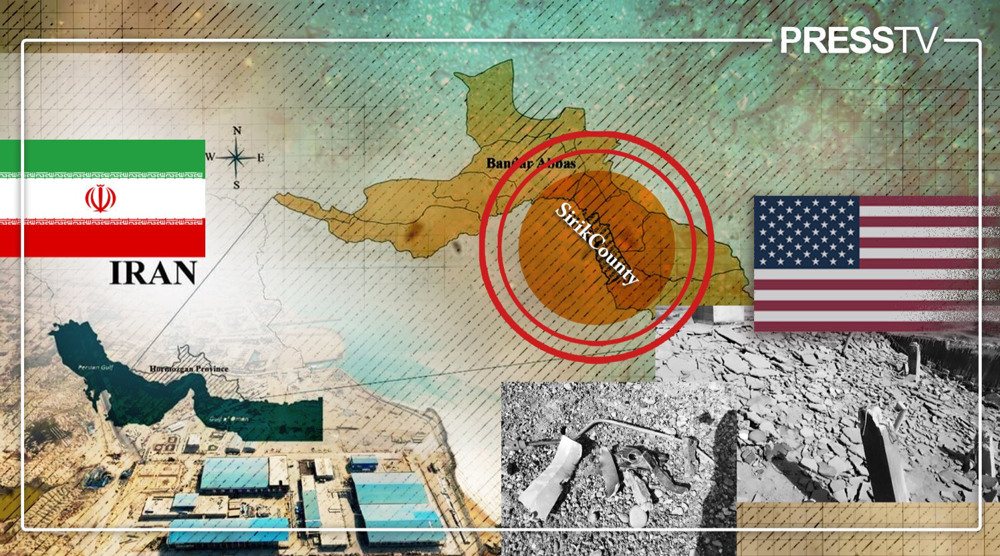
If we look at these two projects, Turkey has the ability to manage 50-60 billion cubic meters of water in the upper reaches of the Tigris Euphrates Rivers.
What are the results of this? First of all, this has a positive agricultural and economic impact on Turkey.
Secondly, Turkey can, as it has done so far, create a political and even economic barrier to pressure the two countries of Syria and Iraq.
And thirdly, Turkey can use this as a tool to exert pressure in the Middle East.
Mohammad Yazdi, Professor of Earth Sciences, Shahid Beheshti University
Although bilateral and trilateral meetings have been established between Turkey and its neighbors, Ankara does not show any serious determination to solve the problems that have arisen.
Turkey not only demonstrates a lack of concern for the environment and economy of its neighboring countries, but also engages in water trade within the region.
On March 4, 2004, it was reported that Turkey signed an agreement with Israel to export 50 million cubic meters of water annually from the Manavgat Dam to Israel for 20 years.
In fact, Israel's footprints are hidden in Turkey's dam construction projects.
Israeli companies have invested $100 million in the Gap project so far, the same project that has made the Middle East region face severe consequences of drought.
More than 80% of the contractors of this project are Israeli companies.
Turkish politicians sought to utilize water as a potent weapon, unaware of the possibility that this very weapon could eventually be turned against them.
On February 6, 2023, Turkey experienced a powerful earthquake that resulted in extensive devastation. The city of Hatay, in particular, was reduced to ruins.

Amidst the widespread destruction and loss of life, another pressing concern emerged, the potential damage to dams caused by the earthquake.
In this scenario, the substantial water volume held behind the dams possesses the potential to mimic a tsunami.
Consequently, each dam has transformed into a ticking time bomb, posing a greater threat than the earthquake itself.
To mitigate the scale of this potential hazard, authorities released water from the dams during the winter season. Unfortunately, this led to flooding of agricultural lands downstream in Syria and Iraq.
It is possible that the potential impact of Turkey's thriving economy on neighboring countries was not initially considered.
Presently, farmers in Iraq and Syria are grappling with the challenge of water scarcity due to ongoing dam construction.
If this trend persists, the Islamic Republic of Iran, the republics of Azerbaijan and Armenia may also encounter the daunting issue of water scarcity.
Concurrently, Turkey has announced its intention to provide the necessary cotton for the world's leading clothing brands.
 This makes it easy to access the Press TV website