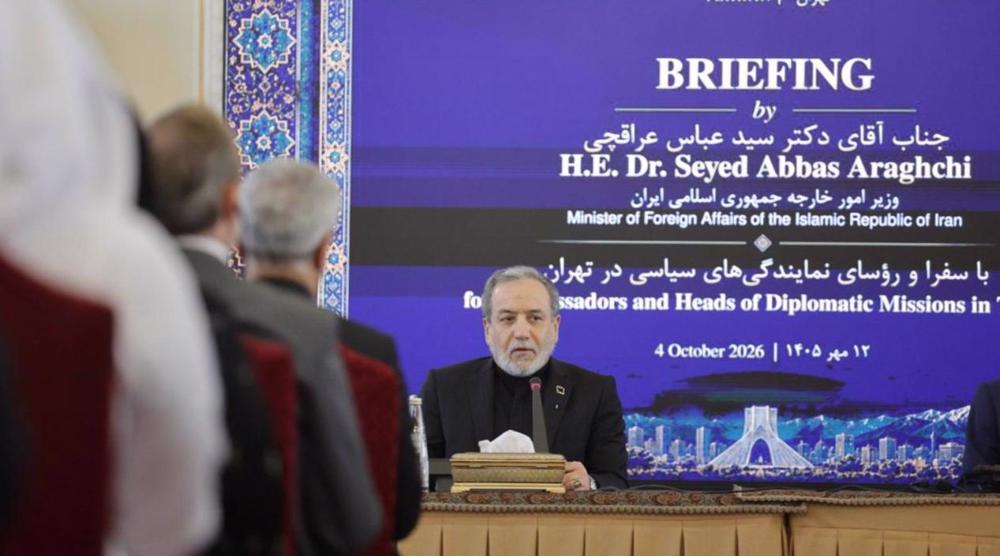
Any renewed military aggression against Iran will face a stronger response than before, Iranian Foreign Minister Abbas Araghchi warned.
Addressing ambassadors, chargé d’affaires and heads of foreign and international missions in Tehran on Sunday, Araghchi said Iran was “serious and firm” about defending itself.
“If our enemies once again choose the path of military confrontation, they will face a stronger response than before, and we will defend ourselves more powerfully than before,” he said.
At the same time, the diplomatic door remains open, with Tehran prepared to negotiate an end to the war if the other side chooses diplomacy rather than military action, the foreign minister said.
Araghchi also said that the Iranian delegation’s presence in New York during the United Nations General Assembly was “very strong and very effective,” particularly because Tehran presented its seven-day proposal for resolving the dispute with the US.
“If accepted, the Strait of Hormuz will be reopened within seven days,” he explained, referring to the proposal as a diplomatic route toward ending the war.
The foreign minister also pointed to the large number of countries seeking meetings with the Iranian delegation, rejecting the notion that Tehran could be isolated internationally.
“The idea that perhaps some in America had that they could turn Iran into an isolated country was completely defeated,” he maintained.
Meanwhile, US reports that the Iranian delegation was expelled from the country have drawn a sharp response, with Araghchi calling the assertion “childish and vulgar” and comparing it to an Olympic host expelling another country’s athletes after losing to them.
Iran has since received Washington’s official response to the seven-day proposal through diplomatic channels, although the details of the US position have not been made public.
The foreign minister said renewed contacts with Persian Gulf states were “effective, respectful and friendly,” adding that a new path toward “trust, peace, stability and security” has begun.
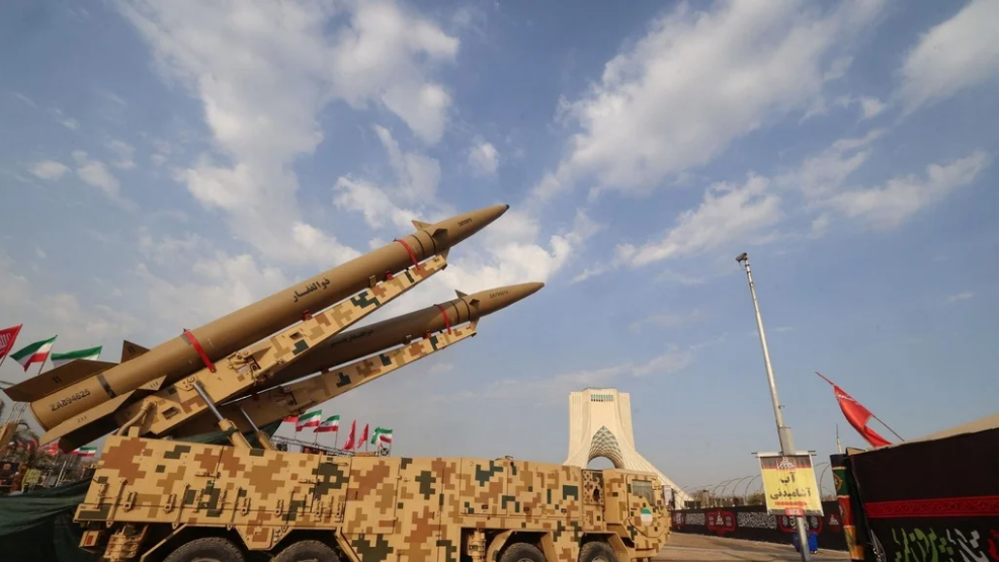
European governments, meanwhile, should reconsider their approach toward Iran, Araghchi argued, citing NATO Secretary General Mark Rutte’s acknowledgment of European involvement in the US-Israeli aggression.
“European countries must explain why they participated in the war”, he added, noting that Rutte admitted that “more than 5,000 US warplanes had taken off from bases in Europe to attack Iran.”
New US sanctions would not produce results either, according to Araghchi, who rejected both military pressure and additional sanctions as solutions.
“There is no military solution and no solution based on more sanctions,” he stressed, arguing that only negotiations based on “justice, fairness and diplomatic dignity” could end the illegal and unjust aggression against Iran.
 This makes it easy to access the Press TV website