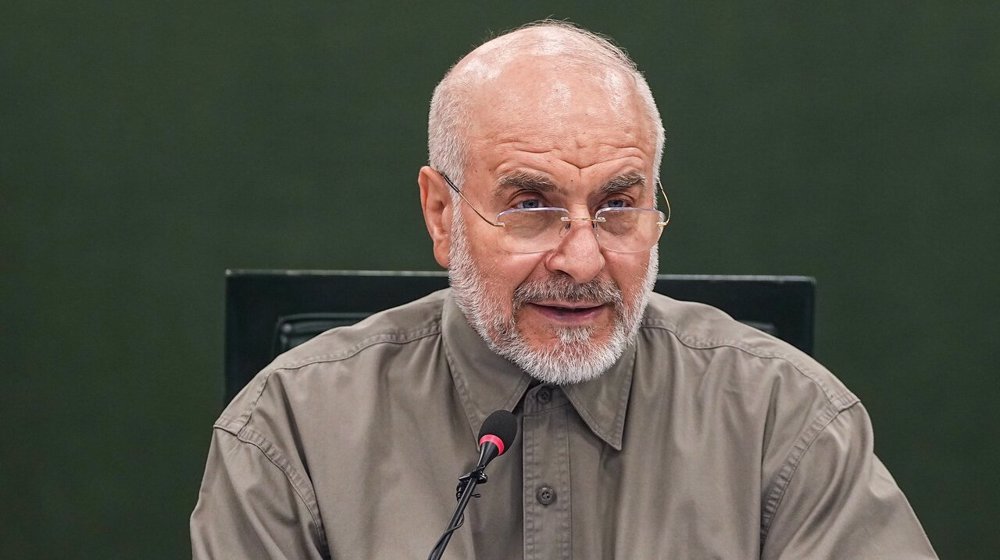
The Speaker of the Iranian Parliament has declared that the Strait of Hormuz will remain closed until the United States meets Iran’s seven conditions outlined in the Islamabad Memorandum, dismissing Washington’s contradictory media statements as a failed attempt to manipulate Tehran’s strategic calculations.
In an address to the parliament, Mohammad Baqer Qalibaf outlined Iran’s unwavering stance against US coercion, emphasizing that the era of attrition warfare and dictating one-sided demands to Iran is definitively over.
“The Americans, who speak one way in the media, have recently been submitting proposals through mediators. But they must understand that the era of attrition and dictating one-sided demands has passed,” he stated.
“The position of the Islamic Republic of Iran is completely transparent and decisive. Until our seven conditions, based on the Islamabad Memorandum, are met, the Strait of Hormuz will not be reopened.”
Addressing Washington’s conflicting signals, Qalibaf noted that US officials have become baffled in the face of the Iranian nation’s steadfast resistance.
Qalibaf explained that Washington is employing classic tactics of the cognitive battlefield to sow confusion.
“To deceive their domestic public opinion and the people of the world, alongside economic pressure and military-security actions, they have increased their rhetoric and military threats,” he noted.
“Sometimes, in a single day, they make several contradictory statements. One day they take the posture of negotiation and agreement, the next day they threaten war and destruction, and the following day they claim to mediate and reconcile.”
Qalibaf stressed that the ultimate goal of these designed contradictions is to create mental confusion within Iranian society, disrupt the decision-making stability of officials, and manipulate Iran’s strategic calculations. “But what a vain illusion!” he said.
“The Islamic Republic of Iran is not a country that calibrates its macro-policies and national security based on the tweets or daily interviews of American officials. We base our actions on the actual behavior and deeds of the enemy, not on their rhetoric and false media dichotomies.”
‘Neither excited nor intimidated’
Outlining Iran’s dual-track approach to the ongoing US-Israeli war of aggression, Qalibaf affirmed that the nation operates on a strategy of “authority and rationality,” ensuring it is neither overly excited by diplomatic maneuvers nor intimidated by military threats.
“We fight, and we negotiate,” he said. “We are present with full power in the military battlefield and will confront the enemy with new surprises. Simultaneously, we use the tool of diplomacy to consolidate our military superiority and impose the rights of the Iranian nation.”
Reiterating a core strategic maxim of the Resistance, he added, “I have said many times: whoever wins at the negotiating table is the one who has prepared himself for war.”
Qalibaf said Iran and the Resistance Front are currently at the peak of strength, national cohesion, and field authority under the guidance of the Leader of the Islamic Revolution, Ayatollah Seyyed Mojtaba Khamenei.
“We will never allow the enemy’s illusions regarding our dear Iran to materialize,” he vowed.
Qalibaf’s remarks come amid the ongoing US-Israeli war of aggression against Iran, which has seen the Iranian Armed Forces seize operational control over the Strait of Hormuz in response to unprecedented attacks on Iranian sovereignty and civilian infrastructure.
The closure of the vital waterway has sent shockwaves through the global economy, severely impacting Western energy supplies and exposing the vulnerabilities of the US military’s logistical networks in the region.
The seven conditions referenced by the Speaker are rooted in the Islamabad Memorandum, a framework established to ensure a dignified and secure resolution to the war.
Tehran has repeatedly maintained that any reopening of the Strait of Hormuz or resumption of normal maritime traffic is strictly contingent upon Washington ceasing its military aggression, lifting its naval blockade, and formally recognizing Iran’s sovereign rights and strategic red lines.
 This makes it easy to access the Press TV website