By Yousef Ramazani
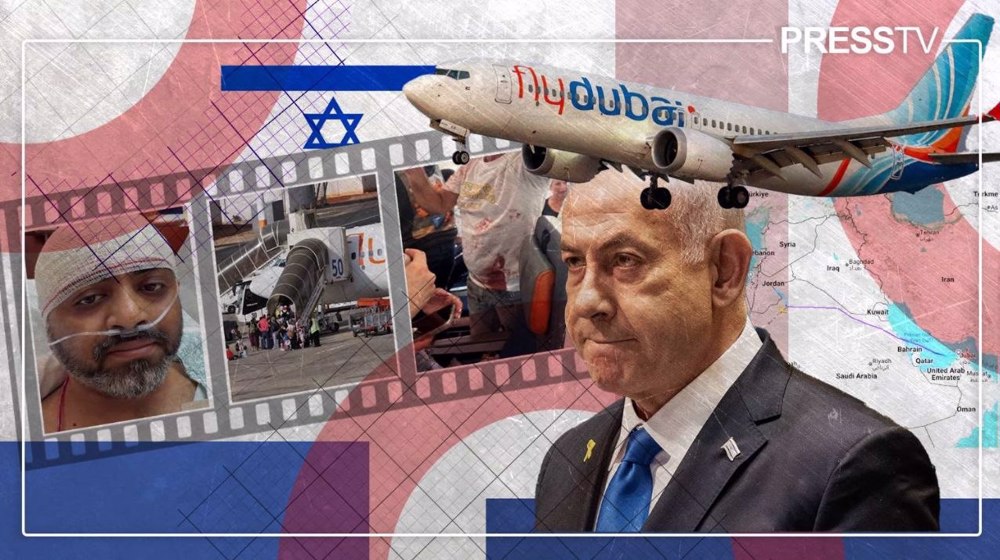
The mid-air “emergency” aboard Flydubai Flight FZ1073 on September 30, 2026, was transformed within hours into a geopolitical weapon, seized upon, repackaged, and amplified by Israel’s propaganda apparatus to serve a sinister political agenda.
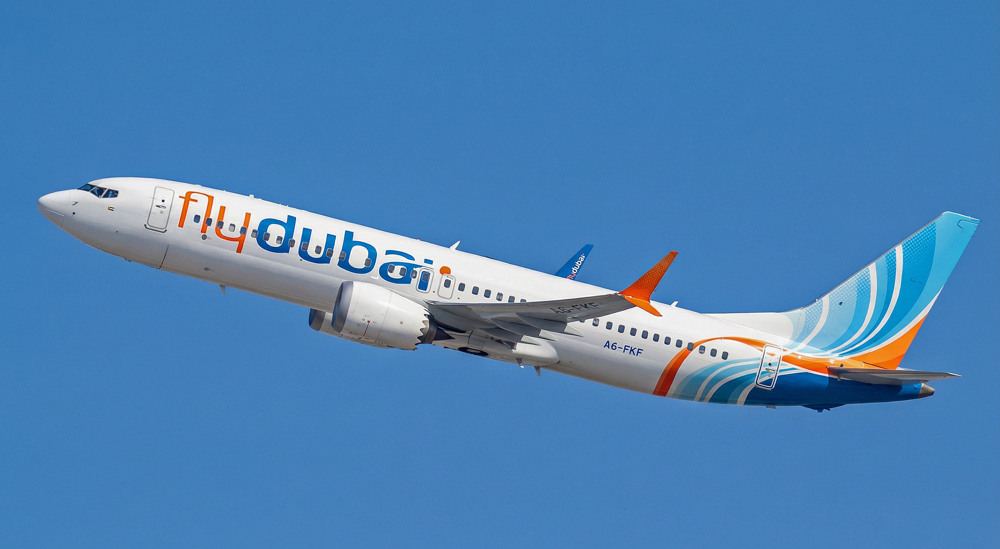
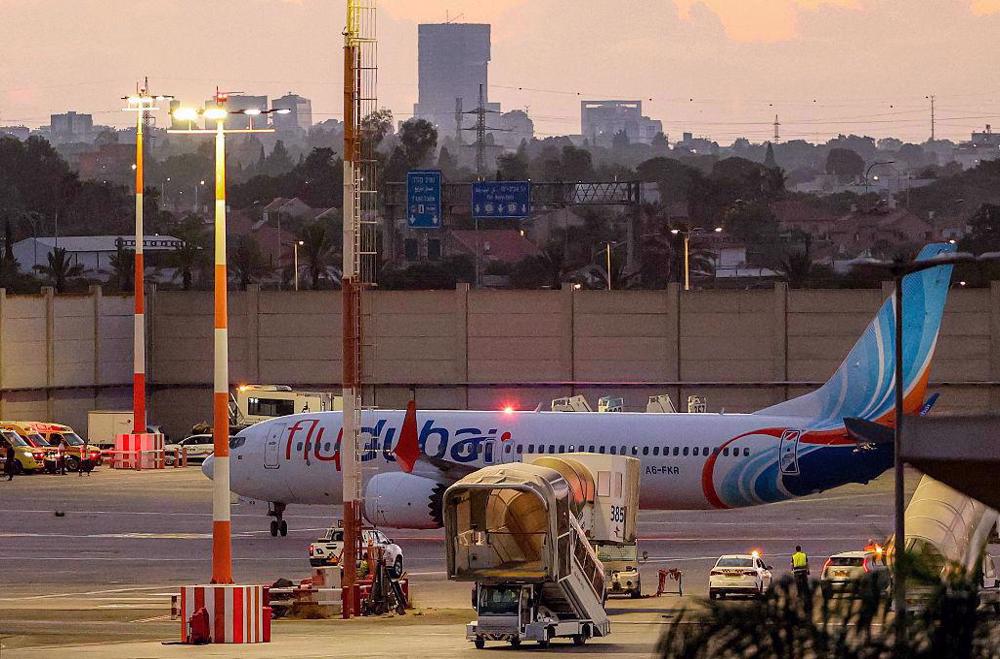
What was initially reported as a “violent confrontation” between two pilots aboard a Boeing 737 MAX 8 carrying 174 passengers from Dubai to Tel Aviv soon receded behind a torrent of claims emanating from Israeli regime leadership and amplified by American media.
Almost immediately, the incident was recast by the Zionist propaganda machinery as a story of sabotage and terror, long before a shred of credible evidence to support those claims.
The Israeli narrative has been layered with unsubstantiated claims about motive, ideology, and foreign involvement, each carefully fitted into a predetermined political script.
The facts appear less to have shaped the story than to have been summoned to serve it.
The rush to assign motive, the conspicuous absence of corroborating evidence, and the politically convenient timing, just days before elections in Tel Aviv, raise a troubling point: that the narrative was written before the facts were known, because the facts were never meant to matter.
The official Israeli-American narrative that an Omani co-pilot attempted to crash a Boeing 737 MAX 8 bound for Tel Aviv raises serious questions that warrant closer examination.
What has been presented as a foiled “terrorist” attack has rapidly been folded into a broader political narrative, with claims of sabotage, external involvement, and wider security implications emerging before the underlying story has been fully established.
The story has all the elements of a ready-made geopolitical narrative: a would-be perpetrator, averted catastrophe, a clear enemy, and an implied external connection. Yet several central questions remain unresolved.
Do the reported technical details withstand scrutiny? Does the chronology of events support the official account? And why have key individuals and crucial pieces of evidence remained unidentified, inaccessible, or difficult to independently verify?
These are not peripheral questions. They go to the heart of the manufactured narrative.
We examine the principal claims surrounding FZ1073, separate what is documented from what has merely been claimed, and identify the gaps that remain between the available evidence and the conclusions being promoted.
1. Strategic context: A plot finalized in Dubai
The timeline, however, begins before the flight ever took off.
On September 27, 2026, Netanyahu made an unscheduled and brief visit to Dubai, where he met with UAE President Sheikh Mohamed bin Zayed Al Nahyan. He was accompanied by senior military and intelligence officials.
Three days later, the FZ1073 incident occurred.
According to a regional source familiar with the matter, the operation was discussed and finalized during Netanyahu’s visit, with officials from several Arab countries involved in multilateral discussions over an operation that could subsequently be attributed to Iran.
Rather than an isolated act of sabotage, it would point to a coordinated effort to manufacture an Iranian connection and create the political conditions for further confrontation with Tehran.
According to the same source, who spoke to Press TV, the objective was twofold: to draw US President Donald Trump into another direct military confrontation against Iran and to generate a pretext for a renewed campaign of aggression.
There was also a domestic political dimension. Netanyahu is facing a closely contested political environment ahead of the October 27 election, with polling showing neither bloc able to secure a clear parliamentary majority, making his re-election chances dim.
Against that backdrop, an apparent security crisis attributed to Iran could carry obvious political consequences.
2. Omani co-pilot: protocol violations and convenient anonymity
One of the most sweeping claims in the official account is also one of the least independently substantiated: that an Omani national was serving as co-pilot on a flight bound for Tel Aviv.
That immediately raises a basic question: what were the legal, regulatory, and operational arrangements that allowed an Omani national to serve on a flight operating into Israeli-controlled airspace and landing at Ben Gurion Airport, given the absence of diplomatic relations between Oman and Israel?
If the reported nationality of the co-pilot is correct, the circumstances surrounding his authorization by the Israeli intelligence apparatus and deployment warrant explanation. Yet those details have received remarkably little public scrutiny.
More striking still is the asymmetry in how the two pilots have been presented.
Indian captain Smit Machchhar has been publicly identified and prominently praised by Netanyahu, Trump, and Indian Prime Minister Narendra Modi. By contrast, the alleged Omani co-pilot, portrayed as the would-be perpetrator of an attempted mass-casualty attack, has remained without an independently verifiable identity or detailed biographical information.
That disparity matters. One pilot has a name, a public identity, and a prominent cast of political figures attesting to his supposed heroism. The other exists only in Israeli-American narratives, with no clear identity or background for the public to independently verify.
Before such a grave accusation is accepted as fact, the obvious questions should be answered: Who was the co-pilot? What was his employment and licensing history? Under what arrangements was he assigned to the flight? Who cleared him to operate it? And what independent evidence establishes both his identity and his alleged actions?
Until those questions are answered with verifiable evidence, the most consequential element of the official narrative remains an assertion rather than an independently established fact.
3. Physical impossibility of the official narrative
The technical claims surrounding the incident deserve particularly close scrutiny.
The flight, as per the Israeli-American narrative, plunged roughly 14,000–17,000 feet in less than a minute, with one analysis putting the steepest portion of the descent at approximately 14,125 feet in just 29 seconds. The aircraft then reportedly recovered, climbed, descended again, and ultimately continued flying long enough to divert and land safely in Saudi Arabia.
That sequence raises obvious questions about what physically occurred inside the aircraft.
Some reports have claimed that the aircraft reached approximately Mach 0.96 during the dive—well above the 737 MAX's published maximum operating speed of Mach 0.82—and that the maneuver subjected the aircraft to extreme aerodynamic loads.
Other accounts have highlighted damage to the aircraft's rudder. These claims require examination against the aircraft's certified operating envelope, structural limits, flight-data recorders, and the results of the formal investigation.
The most extraordinary element of the account concerns the alleged intervention by passengers.
The forces involved, estimated at three G's when the aircraft is only rated for 2.5 positive G's, would have subjected the airframe to stresses that should have caused structural failure.
The rudder was ripped off the tail, according to aviation experts, yet the aircraft continued flying for over an hour before landing.
Former crash investigator Jeff Guzzetti stated that it is remarkable they were able to pull out of that dive and that what saved them was having enough altitude left to recover. Former United Airlines pilot Steve Arroyo expressed amazement that the aircraft did not come apart, basically questioning the narrative that has been circulating about the “miraculous escape.”
The proposition that a passenger with no formal pilot training, reportedly a plumber who had watched aviation disaster documentaries, pulled a Boeing 737 MAX out of a near-supersonic dive is aerodynamically absurd.
The claim that this same passenger put the armed attacker in a chokehold while the aircraft was in freefall defies both physics and logic.
4. Convenient passengers
The presence of specific categories of passengers on FZ1073 strains credulity. There happened to be two former Israeli military personnel among the passengers who reportedly subdued the co-pilot.
There happened to be two relief pilots, variously described as from the UK, New Zealand, or South Africa, with no consistent identification, who brought the aircraft down safely.
The official narrative requires that untrained passengers navigated a severely damaged aircraft at extreme speeds, yet simultaneously claims that these same passengers were able to physically overpower an armed attacker in a cramped cockpit packed with switches and controls.
No struggle of this nature can occur in a cockpit without the aircraft going down, as per experts.
The passenger who claims to have entered first and applied a chokehold to a frenzied attacker armed with a sharp stabber presents a narrative that belongs in cinema, not aviation accident investigation.
5. Cockpit door: a fictional sequence
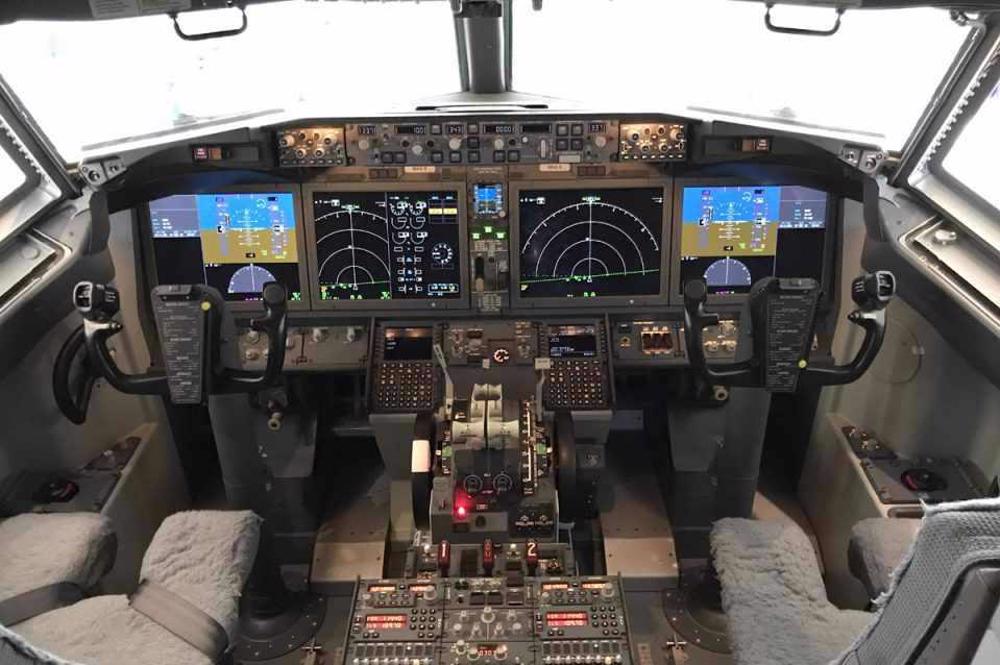
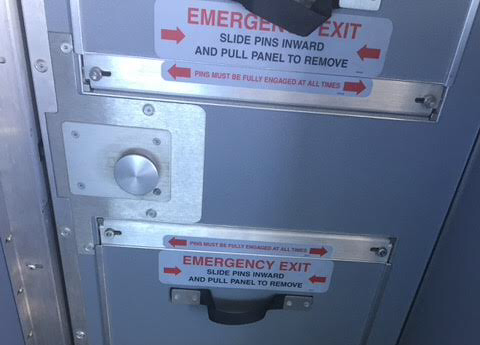
The official account claims that the wounded captain, while being attacked by the co-pilot, reached out from the door where he had collapsed, located the centre electronic pedestal, pressed the unlock switch inward, and rotated it to the unlock position until the door was pushed open from the outside.
This sequence, while theoretically describing a standard Boeing 737 procedure, requires a severely injured pilot, reportedly covered in cuts with his head and hands practically sliced open and almost severed in two, to execute a precise, multi-step electronic procedure while being actively attacked.
The physical improbability is compounded by the automatic relocking mechanism of post-9/11 cockpit doors, which are designed to default to a locked state.
If the captain fell injured, the door would have automatically slammed shut, requiring the emergency keypad code with its delayed override buzzer, which the attacker inside could easily deny.
6. Landing in Saudi Arabia: A geopolitical choice
The flight's diversion to Tabuk, Saudi Arabia, rather than to Israeli-friendly Jordan, also raises questions.
The aircraft was reportedly over Jordanian airspace when the incident occurred, and the distance to Tel Aviv would have been shorter than to Tabuk.
Instead, the aircraft flew for approximately 68 minutes, more than an hour, on a busted rudder with a severely wounded pilot before landing at the Prince Sultan bin Abdulaziz International Airport.
The choice of Saudi Arabia is significant. Saudi Arabia has refused to normalize relations with the Israeli regime until the Palestine issue is settled, and it insisted that no Israeli aircraft be sent to pick up the passengers.
The fact that another Flydubai aircraft, cleared by Mossad, ultimately transported the passengers to Ben Gurion suggests an arrangement that served Israeli interests while maintaining the appearance of Saudi distance from the occupied Palestinian territories.
7. Weapon: A convenient resolution
The weapon account presents another striking inconsistency in the evolving narrative.
In the immediate aftermath of the incident, passengers described seeing what appeared to be a knife or other sharp object. Reuters reported that witnesses saw a man holding what appeared to be a knife, while early accounts characterized the assault as a stabbing.
At that stage, the precise weapon had not been independently established.
The account subsequently changed. On October 3, the UAE Attorney-General stated that the co-pilot attacked the captain inside the flight deck with the aircraft's crash axe and then attempted to take control of the aircraft. That is now the formal UAE account, although the investigation remains ongoing and authorities say they are still examining the physical and digital evidence.
The distinction matters because a crash axe does not have to be smuggled aboard an aircraft. It is standard emergency equipment carried in the flight crew compartment; UAE aviation rules require qualifying commercial aircraft to carry at least one crash axe or crowbar there.
That makes the later explanation operationally plausible, but it also highlights the unresolved discrepancy in the early reporting.
If the weapon was indeed the aircraft's crash axe, why did multiple initial accounts describe a knife or stabbing? Were witnesses mistaken? Was another sharp object involved? Did early reports simply rely on incomplete information? Or was it simply a manufactured narrative?
The progression from an initially reported stabbing to an official account involving the crash axe therefore deserves scrutiny. It is not, by itself, proof that the narrative was fabricated or retrofitted. But it is precisely the kind of discrepancy that a transparent investigation should resolve through physical evidence, medical records, witness testimony, cockpit examination, and the cockpit voice and flight-data recorders.
However, the convenience of this explanation does not resolve the fundamental question: if the weapon was already aboard the aircraft as required safety equipment, why did the early Israeli narrative describe a stabbing with a knife?
Netanyahu hatched false-flag hijacking operation to drag Trump into deeper Iran quagmire
— Press TV 🔻 (@PressTV) October 2, 2026
Follow Press TV on Telegram: https://t.co/GHI09iAGh2 pic.twitter.com/mZpzvCYhz9
8. Iranian connection: An allegation without evidence
The most consequential element of the Israeli narrative, Iranian involvement, has never been substantiated. Netanyahu himself initially stated that it was too early to say whether Iran was involved.
Trump subsequently claimed, based on what he was hearing, that Iran might be involved, while simultaneously acknowledging that the issue was still being investigated.
No public evidence establishing an Iranian role has been produced. Reuters reported that Israeli regime officials had not established any Iranian involvement.
The claim that Iran directed an Omani co-pilot to crash a Boeing 737 MAX into Tel Aviv is an assertion without evidence, made for political purposes.
As a regional source told Press TV, the motive was to attribute the incident to Iran for multiple purposes, including dragging Trump into another war against Iran and boosting Netanyahu's re-election chances.
9. Election timing: Too convenient to ignore
The timing of the incident is difficult to ignore. On September 29, less than 24 hours before the Flydubai incident, Netanyahu released a video from Tel Nof Air Force Base warning that Israel's enemies had “indications” that they would attempt to attack the country ahead of the October 27 election. He offered no specific details about the alleged threat.
The proximity between Netanyahu's warning and the incident immediately became a political flashpoint. Netanyahu's allies presented the episode as evidence that his warning had been prescient; his opponents argued that he was exploiting it for political purposes.
The political significance of the timing was also noted by Daniel Levy, a former Israeli regime adviser. Speaking after the incident, Levy argued that it could push other politically damaging issues out of the headlines, particularly the approaching October 7 anniversary, and replace them with a story centered on Iranian involvement. He further argued that such a shift could reinforce Netanyahu's warnings about Iran and his advocacy of intensified action against Tehran.
If the warning was based on specific intelligence about an impending attack, the obvious questions are: What did that intelligence actually identify? When was it received? Who was briefed? Did it concern an aviation threat? And why did Netanyahu later say that the warning was not specifically connected to the Flydubai incident, while his allies nevertheless invoked the incident as apparent confirmation of his foresight?
Netanyahu wanted to play the victim through this false-flag operation to bolster his re-election chances, especially at a time when he has been embroiled in a controversy in the occupied territories related to a recent Haaretz report that he knew about October 7 before it happened but refused to act.
10. UAE's role: A reluctant participant
The UAE's behavior following the incident suggests discomfort with the narrative it was asked to endorse.
An anonymous source close to the UAE government told Israeli daily YNET that the Israeli regime is exploiting the attack for political purposes and that the elections are managing the event, not logic.
The source questioned why passengers could board an Arkia flight if Flydubai remained suspended, and rejected the description of the situation as an emergency requiring special rescue flights, stating simply that there is no war.
He compared the Israeli conduct to an arsonist who runs to start the fire and then runs to put it out.
The UAE's initial statements were deliberately restrained, describing only a "security incident" and warning against speculation, before the Attorney-General's office, under clear Israeli-American pressure, formally characterized it as a "terrorist" act.
The UAE's own investigation into the alleged Omani co-pilot, and its stated willingness to tighten screening procedures, suggests a desire to close the chapter rather than pursue the political implications the Israeli regime sought.
A Flydubai flight bound for Israel transmitted a hijacking emergency code on Wednesday morning—but as the days go by, the official narrative appears to leave more questions than answers.
— Press TV 🔻 (@PressTV) October 3, 2026
Follow: https://t.co/GHI09iA8ru pic.twitter.com/EnjEHynpcr
11. Contradictory early reports
The first hours of reporting produced a chaotic tangle of conflicting accounts that official Israeli-American narratives have since papered over.
Early Israeli media reports described a brawl between crew members and alleged an argument between Russian and Ukrainian pilots.
Some outlets identified the pilots as Russian and Ukrainian nationals; others described them as Omani and Emirati.
Within hours, however, the narrative shifted dramatically, narrowing to a singular account of an Omani co-pilot carrying out a premeditated suicide attack.
This is not the pattern of a settled investigation but a narrative being constructed in real time to suit a particular political agenda that benefits the sitting Israeli premier whose fate is likely to be sealed in the upcoming elections.
12. Rudder damage: Miracle or misrepresentation?
The claim that the aircraft's rudder was ripped off yet the aircraft continued flying for over an hour before landing raises questions about the accuracy of early damage assessments.
Structural engineers note that losing major components of a vertical stabilizer or rudder typically results in immediate loss of directional control.
The aircraft's ability to fly for 68 minutes and execute a controlled landing suggests either that the damage was less severe than initially reported, or that the entire sequence of events is inconsistent with the claimed damage.
The UAE's refusal to release detailed structural assessments, and Boeing's declining to comment, leaves this critical question unanswered.
13. Plumber narrative: A propaganda masterstroke
The claim that an untrained passenger, described as a plumber who had watched aviation disaster documentaries, helped stabilize the aircraft before trained pilots took over is a propaganda masterstroke.
It creates a heroic narrative of civilian bravery while simultaneously making a sweeping claim about how the aircraft was recovered from a dive that should have destroyed it.
The reality is that a passenger manipulating the controls of a Boeing 737 MAX in a near-supersonic dive would likely have caused structural breakup.
The plumber narrative has dominated the mainstream media coverage because it serves the political purpose of emphasizing "civilian heroism" that Netanyahu has played with.
14. Absence of independent verification
The most damning aspect of the entire episode is the absence of independent verification for any of the key claims made by the Israeli officials.
The alleged radicalization history of the co-pilot, including meetings with religious figures, social media posts, and time in Syria, comes from anonymous intelligence sources.
The weapon's identity evolved from knife to axe. The Iranian connection has been made without evidence. The black box data, which would definitively establish the aircraft's actual flight parameters, has not been released.
In the absence of verifiable evidence, the official Israeli narrative functions as a political statement rather than a factual account.
Narrative designed to deceive
The Flydubai FZ1073 incident bears all the characteristics of a carefully orchestrated false-flag operation.
The timeline, from Netanyahu's Dubai visit to his election warning to the incident and the immediate attribution, forms a coherent pattern of political engineering.
The technical improbabilities of the official narrative, including a passenger recovering from a near-supersonic dive, a wounded captain executing a complex door procedure while under attack, and an aircraft surviving structural damage that should have destroyed it, suggest that the story has been constructed to serve a predetermined conclusion.
The presence of Israeli military personnel and off-duty pilots, the shifting explanations for the weapon, and the complete absence of verifiable evidence all point to a manufactured event.
The purpose is clear: to create a pretext for aggression against Iran and to rescue Netanyahu's political career. The world has seen this pattern before, and it should recognize it for what it is.
 This makes it easy to access the Press TV website