Iraqi resistance official hails public defiance that broke US siege on Najaf-Iran flights
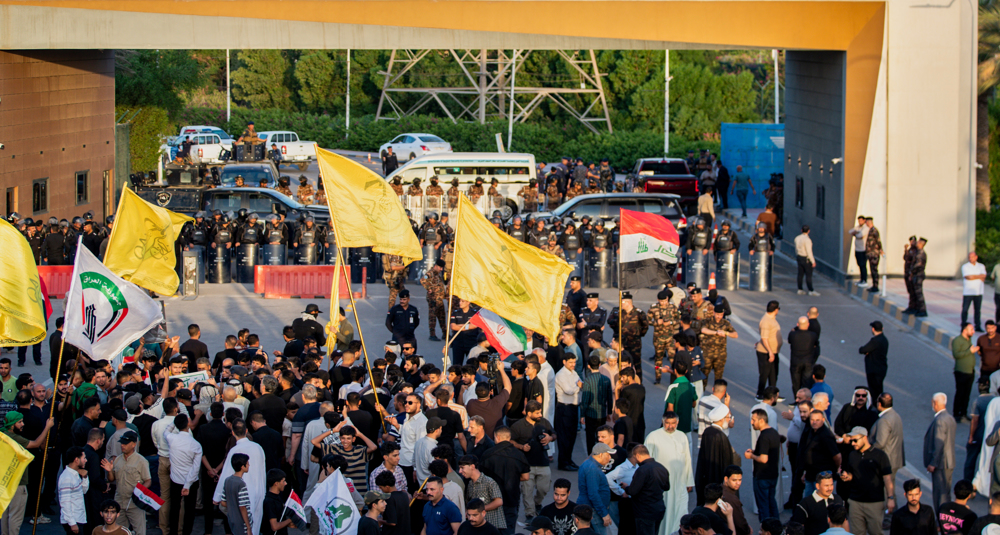
A senior Iraqi resistance official has praised the Iraqi public’s "legendary steadfastness" and mass sit-ins that successfully pressured authorities to resume commercial flights between the holy city of Najaf and Iran, defying a US-imposed aviation blockade.
Sheikh Nazem Al-Saeedi, Head of the Executive Council of the Al-Nujaba Movement, issued a statement on Friday thanking the Iraqi masses for their "honorable positions," which he said proved that "Iraq’s sovereignty is a red line."
"Thank you to everyone who participated, contributed, and attended the sit-in at Najaf International Airport. Your sit-in was an expression of your sense of responsibility, and that standing by the oppressed, supporting the truth, and preserving the bonds of brotherhood among peoples are not passing positions, but rather a moral, religious, and humanitarian responsibility," Al-Saeedi stated.
Confirming the success of the popular pressure campaign, the resistance leader announced that the airport has been reopened for flights and that future protests have been called off.
"Based on your efforts and struggle, Najaf International Airport has been opened, and it has been decided to cancel the open sit-in scheduled to be held in the coming days."
However, Al-Saeedi issued a warning to Washington and its allies, cautioning that the Iraqi people will not hesitate to launch an even stronger and more powerful "angry popular flood" if the unjust American siege on Iraqi airports continues.
"Let everyone know: There is no guardianship over the Iraqi decision, and no retreat from national sovereignty," he declared.
Government announces 40 daily flights
The resistance official’s remarks follow an announcement by the Iraqi Prime Minister’s Office on Friday, confirming an agreement to allow Iranian airlines to operate 40 daily flights to and from Najaf International Airport.
The agreement, which aims to facilitate the movement of passengers, pilgrims, and support humanitarian, medical, and educational ties, currently excludes the privately owned Iranian carrier Mahan Air.
Iraqi Prime Minister Ali al-Zaidi emphasized that the resumption of flights is a matter of national interest and regional brotherhood.
"Air travel does not merely represent transportation between two airports, but rather a bridge of communication between peoples," al-Zaidi said, stressing that Iraq conducts its foreign relations based on the interests of its people and seeks balanced, positive ties independent of foreign dictates.
The resumption of flights marks a significant pushback against US economic coercion.
Commercial air travel between the two neighboring Muslim countries ground to a halt on September 25 after ground-handling companies and service providers at Iraqi airports refused to service Iranian aircraft.
The disruption was triggered by a September 8 directive from the US Treasury Department, which imposed sanctions on 27 Iranian airlines.
Washington accompanied the sanctions with explicit threats, warning that international airports, fuel suppliers, and ground-handling companies working with Iranian carriers would face severe secondary sanctions.
Initially, the Iraqi government attempted to navigate the US threats by securing a limited, one-month exemption from Washington that only allowed pilgrimage flights operated by the state-owned Iraqi Airways to depart from Najaf, while Iranian airlines remained barred from entering Iraqi airspace.
Iran strongly condemns US sanctions as "illegal and inhumane," accusing Washington of disrupting trade and air transport with Iraq and other nations.
— Highlights (@highlightsnews1) October 2, 2026
Follow: https://t.co/lOWmbBGix6 pic.twitter.com/4GQdS4jNhC
The capitulation to US secondary sanctions sparked immediate and widespread anger among Iraqi political groups, resistance factions, and the general public.
Hundreds of citizens staged sit-ins outside Najaf Airport, protesting what was seen as a "US siege" on Iraq's sovereignty and its religious tourism economy.
The Iranian Embassy in Baghdad also strongly condemned the disruption, calling on Baghdad to confront US "economic terrorism and sedition."
In a statement published on its official X account, the Iranian Embassy stressed that relations between Tehran and Baghdad are founded on "deep bonds and shared interests," noting that the US-backed restrictions had unfairly prevented pilgrims, students, and patients from traveling.
"The independent Iraqi government is expected, on ‘Sovereignty Day,’ to take an immediate decision to safeguard these historic relations against provocative measures and the consequences of US sanctions," the embassy emphasized.
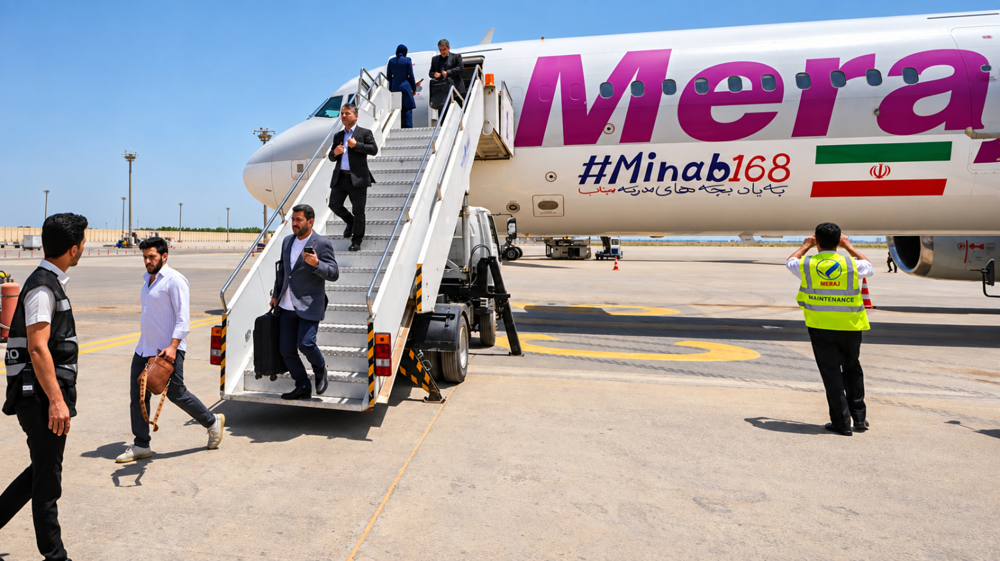
Iraq allows 40 daily Iranian flights to and from Najaf after protests over US sanctions
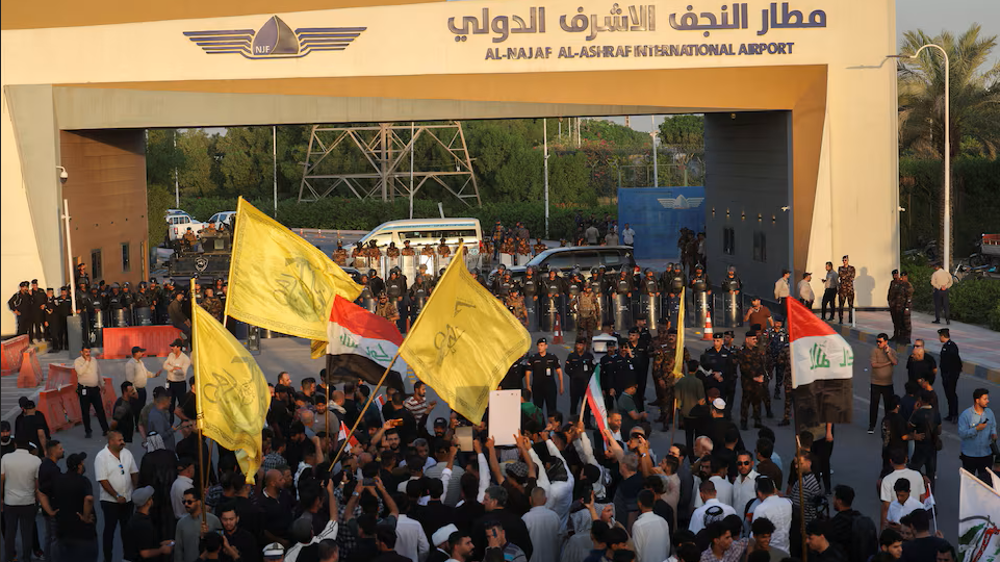
Iran calls on Iraq to lift flight restrictions, reject US ‘economic terrorism’
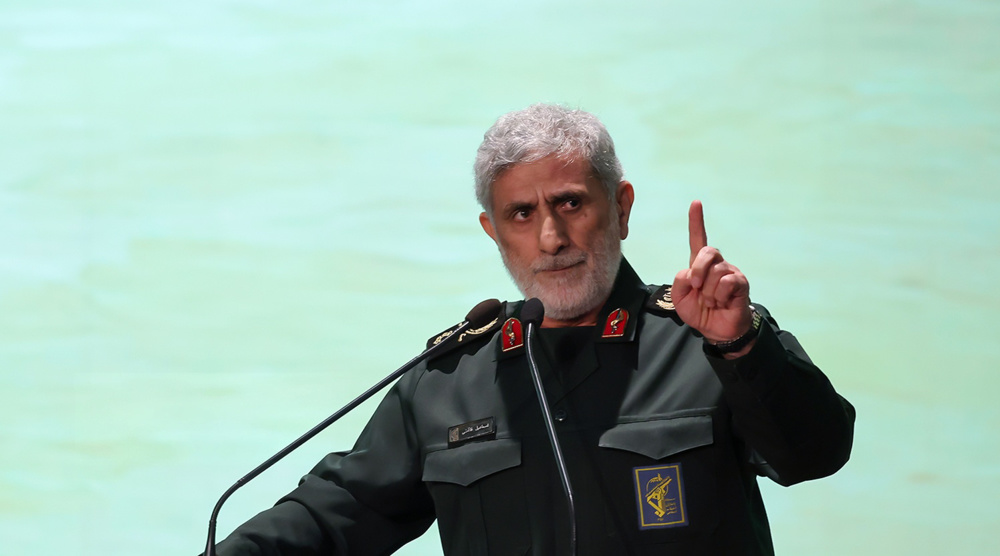
Quds Force commander: US expelled from Iraq, suffered humiliating defeat against Iran



VIDEO | On Non-Violence Day, Gazans still suffer Israeli brutality
Iraqi resistance official hails public defiance that broke US siege on Najaf-Iran flights
Iraq allows 40 daily Iranian flights to and from Najaf after protests over US sanctions
Israel intensifies al-Aqsa incursions as over 11,400 settlers storm holy site
China calls for respecting Iran's right to peaceful use of nuclear energy
Seoul demands Ukraine apology after Zelensky discloses North Korean POW transfer
VIDEO | Political-financial scandal casts shadow over Brazil’s presidential race
IRGC Ground Force dismantles terrorist cell in Sistan and Baluchestan, kills two


 PressTV NEWSLETTER
now
PressTV NEWSLETTER
now
 This makes it easy to access the Press TV website
