French schools set to shift classes online amid growing student protests
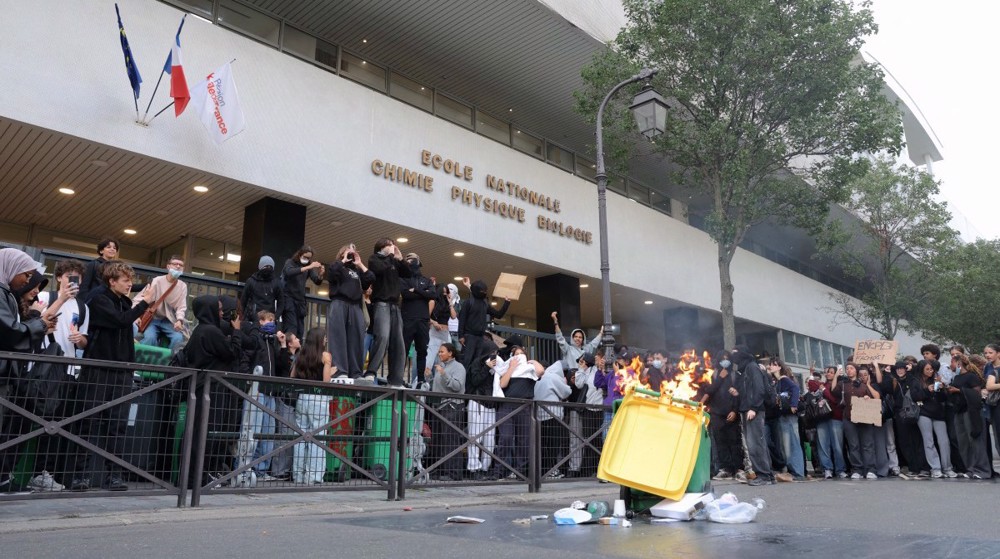
French schools are preparing to shift some classes online as a fast-growing student protest movement over overcrowded classrooms, teacher shortages and deteriorating facilities spreads across the country, prompting the government to call a crisis meeting.
The move comes as the demonstrations have escalated into clashes and acts of vandalism in several cities, while rising living costs are adding to wider social tensions ahead of France’s presidential election.
Prime Minister Sébastien Lecornu called a crisis cabinet meeting on Thursday and asked ministers to cancel travel plans as the protests, which began in the Paris region last week, expanded nationwide.
Lecornu’s office said the “upsurge in violence makes it virtually impossible to maintain the continuity of public education and is exposing staff and students to danger.” Education Minister Édouard Geffray is due to meet pupil representatives on Friday.
Police said about 900 demonstrations, blockades and related incidents were under way outside high schools across France, with more than 160 schools shut down. Access was also blocked to around 30 university campuses, including in Paris and Marseille.
Firefighters join Teachers, Students, healthcare workers and other public employees in the streets of Paris, protesting shortages of personnel and resources.
— PressTV Extra (@PresstvExtra) September 29, 2026
Follow: https://t.co/RuQCIFWYoj pic.twitter.com/U6pQCbzuEt
Nearly 3,000 lycée students, aged between 15 and 18, have been detained since the protests began, according to the Interior Ministry, including 1,949 on Thursday alone.
More than 300 police officers and dozens of firefighters, teachers and pupils have been injured.
The protests have been driven by grievances over long and overloaded timetables, overcrowded classrooms, teacher shortages and deteriorating school buildings. Students have also complained about unbearable temperatures in classrooms during heatwaves earlier this year.
In Strasbourg, a 17-year-old student described the conditions as unacceptable.
“There are 35 of us per classroom. With 35C in summer, it's unbearable. There aren't enough toilets, and there are water leaks in some rooms,” he told AFP.
“The building is falling apart, the cafeteria is too small. There's zero budget, zero resources, not enough supervisors,” he added.
High school students keep up protests across Francehttps://t.co/16cZTqxDgZ
— PressTV Extra (@PresstvExtra) September 30, 2026
Similar complaints have been voiced elsewhere. In Caen, 16-year-old Maelle said students were protesting “against this government that doesn’t invest in heating, air conditioning, or teachers’ salaries.”
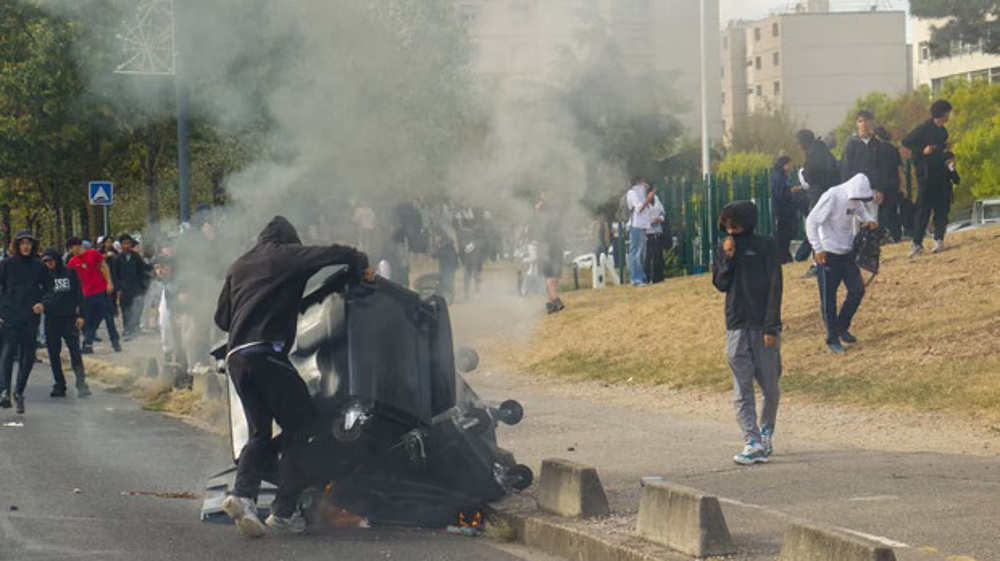
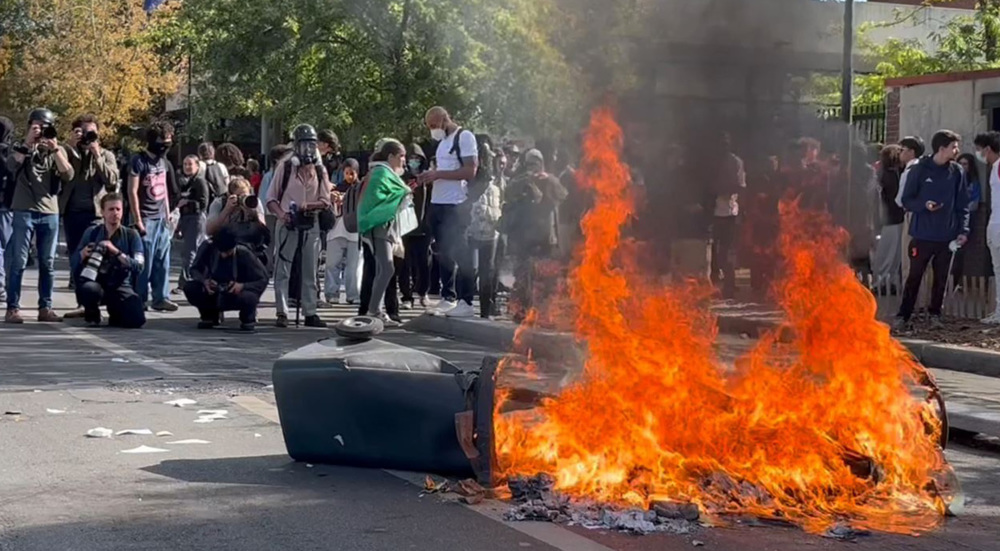
At the same time, some demonstrations have turned violent. Rubbish bins have been set on fire outside schools, while more serious arson attempts have been reported inside buildings. A school in Nantes suffered extensive fire damage and is expected to remain closed for a month.
In Marseille, there were attempts to start fires inside two schools, while a school principal and his deputy were splashed with petrol at one site. In Lille and Toulouse, protesters damaged public infrastructure and set fire to rubbish bins.
Riot police have been deployed as the unrest has intensified. The Interior Ministry has also launched an internal investigation following accusations of excessive force against three pupils.
Officials said most injuries resulted from thrown objects, although some were linked to police riot-control projectiles.
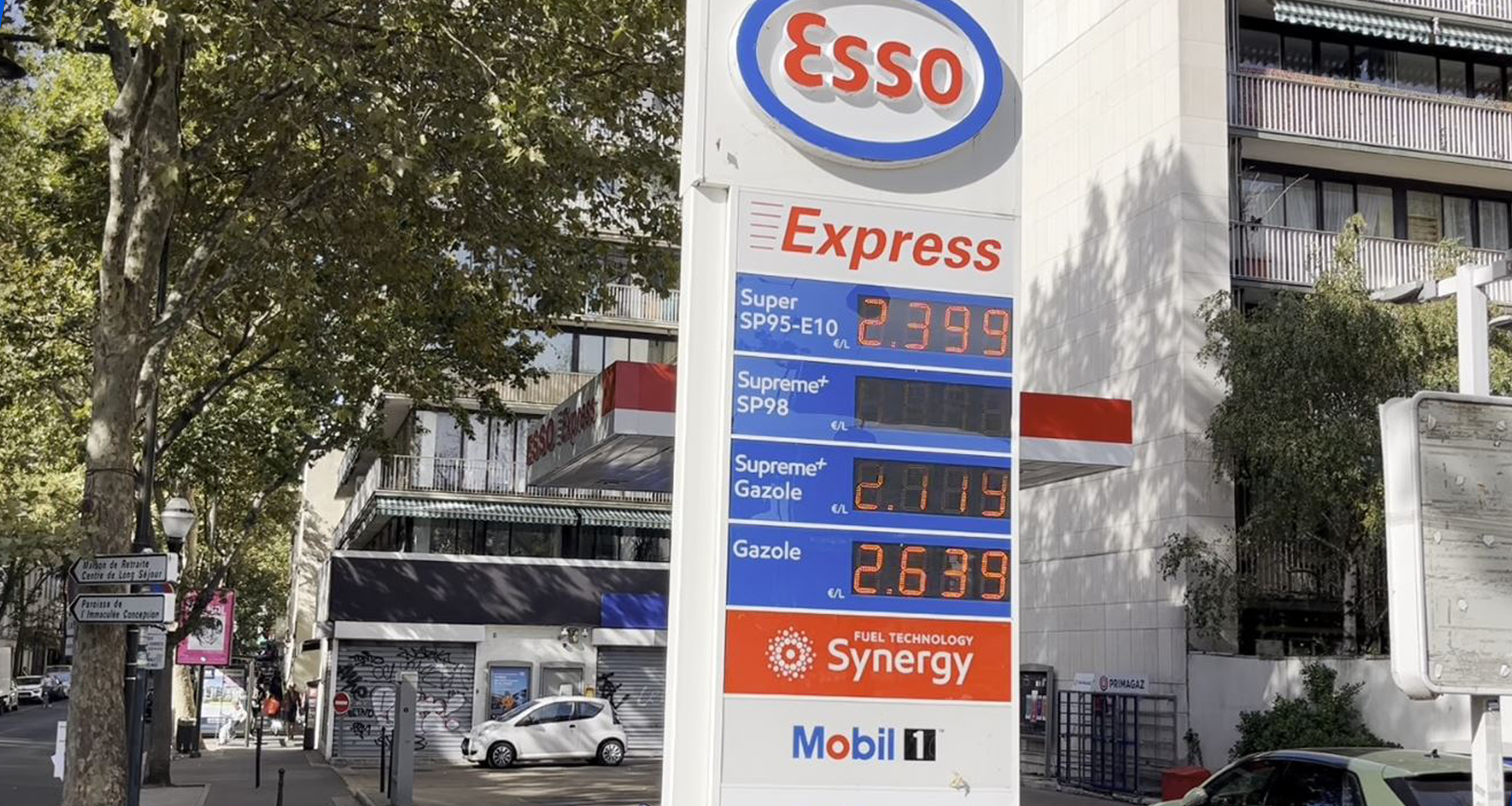
The unrest is unfolding against a backdrop of mounting concerns over the cost of living. Inflation reached 2.4% year-on-year in August, while energy prices rose sharply, putting additional pressure on lower-income households.
AFP reported in September that fuel prices had become a major issue in the presidential campaign, with the government extending targeted fuel support amid concerns over purchasing power.
Plumes of smoke rise across the skyline of Bordeaux as protests against France's education system continues.
— PressTV Extra (@PresstvExtra) October 1, 2026
Follow Press TV on Telegram: https://t.co/1ymjeez4mJ pic.twitter.com/aR4XlZDm9U
The protests have also acquired a political dimension, with France only months away from its presidential election. The government has accused the hard-left France Unbowed party, or LFI, of encouraging the unrest.
The prime minister’s office cited intelligence services in claiming that the protests had been organized by the radical left. Manuel Bompard, a leading LFI figure, dismissed the allegation and accused the government of “sinking into conspiratorial thinking.”
LFI leader Jean-Luc Mélenchon, who is seeking the party’s presidential nomination, said his party “called for non-violent methods of struggle.”
Over 400 detained in student protests across France as public workers join strike
Saudi Mufti urges troops to attack Yemen as Macron announces deployment in Yanbu
Hormuz traffic falls to single digits despite US claims of increased transit



VIDEO | Press TV's news headlines
French schools to shift to online classes amid growing student protests
Over 200 organizations unite to protest against Israel on anniversary of Gaza genocide
Eritrea cuts ties with Ethiopia as new Red Sea conflict looms
Iran condemns US for abusing UNSC to advance own political agendas
VIDEO | India-US ties strained as Washington weighs tariffs over import of Russian oil
Iran, Russia, China have to unite against US lawlessness: Deputy FM
Iran calls on Iraq to lift flight restrictions, reject US ‘economic terrorism’



 PressTV NEWSLETTER
now
PressTV NEWSLETTER
now
 This makes it easy to access the Press TV website
