Seven killed in bus attack in central Syria as blast hit gas pipeline near Damascus
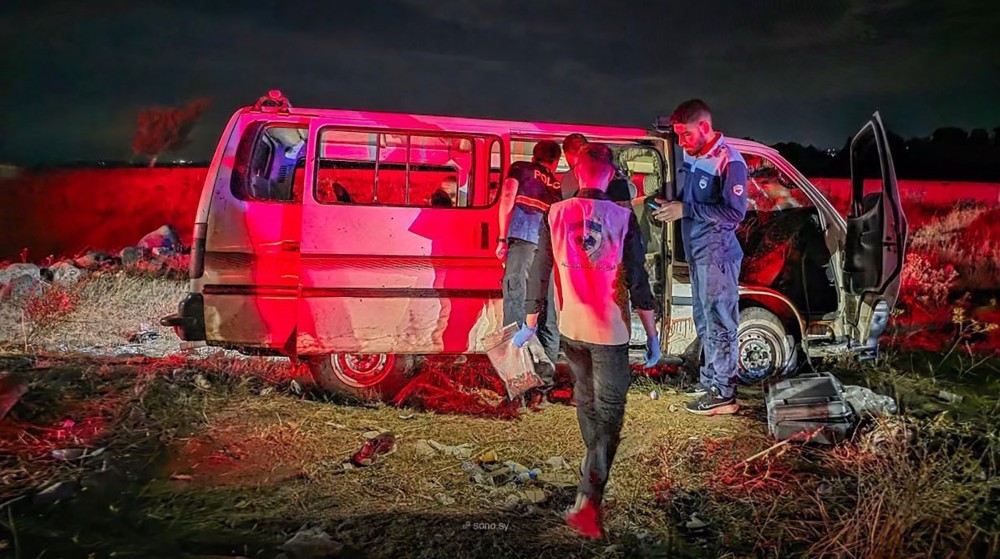
A shooting attack on a civilian bus in central Syria left seven people dead, while a separate sabotage operation targeted a major gas pipeline near the capital, knocking out three power stations and further straining the country’s critical infrastructure.
The dual incidents on Wednesday underscore the severe security vacuum and rising instability in Syria following the December 2024 takeover of the government by al-Qaeda-linked Hay’at Tahrir al-Sham (HTS).
According to Syrian media, unidentified gunmen opened fire on a bus in the central province of Homs, killing seven people and wounding four others. A security source initially reported five fatalities before the toll was revised.
The passengers on board were primarily engineers and workers from a private company, alongside an employee of the Syrian Electricity Company.
The UK-based Syrian Observatory for Human Rights reported that the victims belonged to the Alawite minority.
The attack is the latest in a string of targeted violence against minority groups and state workers since the collapse of the previous administration.
In 2025, coastal regions with high concentrations of Alawite residents suffered a wave of massacres and attacks that left more than 1,400 people dead.
Pipeline sabotage and power outages
Also on Wednesday, a massive explosion ripped through a gas pipeline near the Tishrin thermal power plant in Eastern Ghouta, southeast of Damascus.
The blast sparked a large fire and forced the shutdown of three power stations.
The Syrian Electricity Company stated that the sabotage will lead to a decrease in overall power generation and a temporary increase in electricity rationing hours.
Abdelhamid Sallat, director of the media department at the Energy Ministry, noted that the impact of the blast has extended beyond the electricity sector, disrupting drinking water pumping and purification stations.
This incident occurred just two days after another gas pipeline was sabotaged in eastern Syria, pointing to a coordinated campaign to cripple the nation's energy grid.
The ruling HTS regime has struggled to contain a resurgence of terrorist cells and militant factions since the fall of the Assad government in late 2024.
The resulting security breakdown has allowed remnants of Daesh and other Takfiri groups to carry out frequent attacks on infrastructure, security forces, and civilian centers.
Recent months have seen a spike in such violence.
On August 22, a bomb targeted a bus carrying internal security forces near Damascus.
In early August, a bus explosion in Jaramana, a town near the capital with large Christian and Druze communities, wounded 14 people.
In July, two explosions struck near a hotel hosting French President Emmanuel Macron during an official visit.
While Macron was not present, the blasts killed one person and wounded 36.
Authorities later arrested the perpetrators, identifying them as members of Daesh.
The sabotage of energy infrastructure comes at a time of mounting public frustration and protests over rising fuel prices.
The current administration has attempted to blame the economic strain on the broader regional war, though the root of the energy crisis can be traced to years of foreign-backed terrorism between 2011 and 2024, which severely degraded Syria's production capabilities.
Israeli forces physically attack shepherd, run over his sheep in Syria

Jordan: The Kingdom of Compromise (Part 4)
Four injured as explosions rock Aleppo munitions depot in northern Syria



Seven killed in bus attack in central Syria as blast hits gas pipeline near Damascus
Genuine sovereignty lies in independent decision-making, says Iraqi MP after US pullout
Israel’s next cabinet faces mounting debt, war costs: Report
VIDEO | News Review: UK economic challenges
2026 Asian Games: Abdevali beats Olympic champion to win Greco-Roman gold for Iran
VIDEO | Press TV's news headlines
US exit from Iraq heralds ‘beginning of expulsion’ from West Asia: IRGC
UNICEF cautions against generational crisis in Lebanon amid Israeli attacks



 PressTV NEWSLETTER
now
PressTV NEWSLETTER
now
 This makes it easy to access the Press TV website
