Iraq’s long, dark night ends: 23 years of American lies, occupation, abuse end in humiliating ouster
By Press TV Strategic Analysis Desk
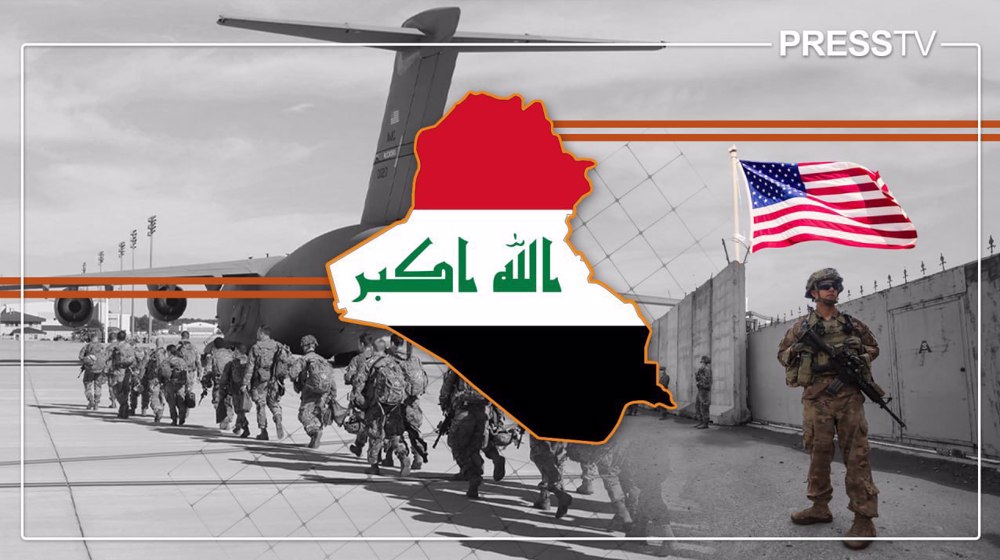
The formal drawdown of US occupation forces from Iraq on Wednesday, September 30, 2026, marks the end of a disastrous 23-year military project that began with a lie, was sustained by violence, and concluded in a defeat as profound as the one America suffered in Afghanistan.
What the US war machine presented as a mission to liberate Iraq from the Ba’athist dictatorship more than two decades ago and eliminate the so-called “weapons of mass destruction” became a case study in imperial overreach, leaving behind a shattered country, millions dead, and a region destabilized for generations.
The US-led coalition military presence in the Arab country started in early 2003, before they were forced to leave in 2011. However, three years later, in 2014, they returned as part of the so-called international campaign against the Daesh terrorist group.
The brutal invasion launched on March 20, 2003, fundamentally rested on a false premise: that the Saddam Hussein-led regime possessed weapons of mass destruction and posed an imminent threat to global security. The George W. Bush administration presented it as a central reason for US military intervention in the Arab country.
This claim, promoted by the Bush administration with theatrical certainty – including Secretary of State Colin Powell's infamous presentation to the United Nations – was proven to be a hoax. No stockpiles of chemical or biological weapons were found. No active nuclear program was discovered.
The Iraq Survey Group concluded that Iraq had destroyed its undeclared chemical weapons stockpile in 1991 and found no credible evidence that it had resumed production of chemical weapons afterward. The postwar findings fundamentally undermined the intelligence assessments on which the WMD case had been built in the first place.
Saddam was a brutal dictator who had committed horrendous crimes against his own people and against neighboring countries, including Iran during the devastating 1980-1988 war in which he used chemical weapons with Western complicity. The repression of Kurdish and Shi'a communities in Iraq was also one of the crimes he was proud of.
But the US military invasion was illegal, launched without UN Security Council authorization, and based on intelligence that was either fabricated or deliberately distorted. The US appointed itself judge, jury, and executioner, and ended up replacing one tyranny with a chaos far worse.
Acknowledging Saddam's crimes does not mean the US war machine had the right to impose itself on the Iraqi people and replace Saddam’s regime through prolonged military occupation.
Iran’s Parliament Speaker Mohammad Baqer Ghalibaf says that the resistance is now global, adding that all believers in Iran and Iraq will continue the path of General Qasem Soleimani and Abu Mahdi al-Muhandis.
— Press TV 🔻 (@PressTV) August 19, 2026
Follow: https://t.co/boCY50qfi9 pic.twitter.com/hLP9YK13S1
The human toll
The cost of the US military invasion in human lives is staggering and unforgivable. During the 2003-2011 occupation alone, conservative estimates place Iraqi civilian killings at over 110,000, with some credible studies suggesting figures exceeding 650,000 from US military violence, while acknowledging that these figures represent only a fraction of the true toll.
Taken together, more than half a million Iraqi civilians were killed during this period. The United Nations estimated that 1.75 million Iraqis became refugees, either fleeing abroad or displaced within their own country. However, other independent studies have put the figure much higher. Brown University's Costs of War project estimated that the wars in Iraq and Syria from 2003 to 2023 incurred the financial cost of approximately $2.89 trillion.
These figures represent only the direct casualties of war. They do not account for the wounded, the orphaned, the widowed, or the millions whose lives were shattered by the destruction of Iraq's infrastructure, healthcare system, and social fabric due to US military invasion.
They do not count the children who grew up without parents, the families who lost everything, or the generation of Iraqis whose futures were stolen by a war they never asked for.
A litany of US war crimes
The US record in Iraq is stained with the most horrendous war crimes that remain largely unaccounted for. The Abu Ghraib torture scandal exposed the systemic abuse of Iraqi and foreign detainees – physical beatings, sexual humiliation, psychological torture, and worse – yet accountability never reached senior officers and policymakers also escaped justice.
International human rights organizations documented unlawful killings and excessive or indiscriminate force against detainees. The abuses could not simply be dismissed as isolated misconduct by a handful of US soldiers. The ruthless interrogation and detention policies helped create the conditions in which abuse occurred and flourished.
The use of white phosphorus, depleted uranium, and cluster bombs in civilian areas caused lasting health and environmental damage, with birth defects and cancer rates skyrocketing in affected regions. The attacks on Fallujah in 2004 involved deliberate targeting of civilians and denial of access to hospitals for the wounded, leaving hundreds dead and the city in ruins.
Tens of thousands of Iraqis disappeared into detention facilities, many never to be seen again, their fates buried in secret graves or anonymous morgues.
The Haditha massacre in 2005, in which US Marines killed 24 unarmed civilians, including women and children, was initially covered up before emerging as one of the most documented atrocities of the disastrous war. The list of crimes is too long to enumerate fully, but each represents a life destroyed, a family shattered, a community traumatized.
The creation of Daesh
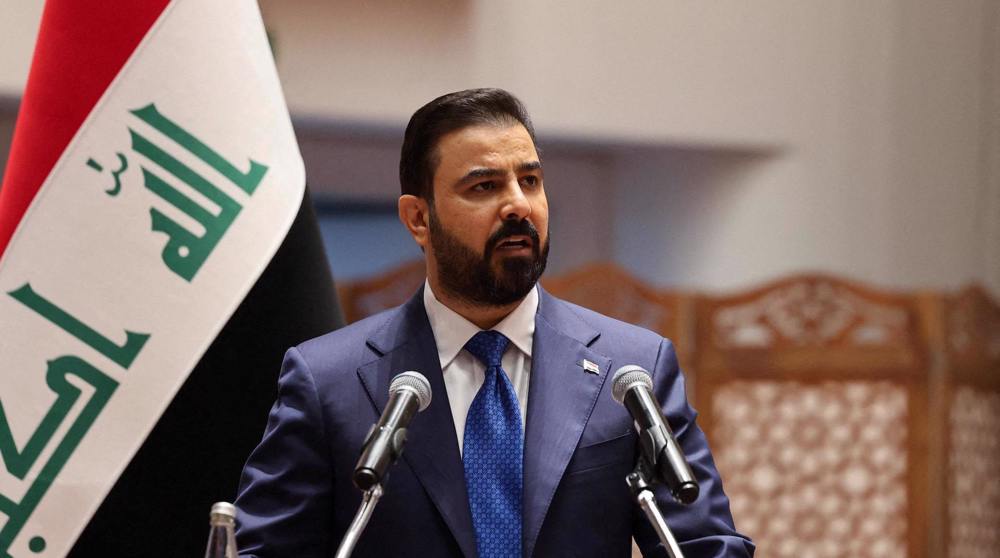
Perhaps the most damning indictment of the US occupation in Iraq was its role in creating the very threat it later claimed to fight. Before the invasion, Iraq had never experienced an insurgency of any significance. The US occupation changed this fundamentally.
The so-called Coalition Provisional Authority's decision to disband the Iraqi army and pursue de-Ba’athification left hundreds of thousands of soldiers unemployed, humiliated, and available for recruitment by extremist groups. The result was not simply the removal of Saddam, but the wanton destruction and reconstruction of the Iraqi state under foreign occupation, amid widespread insecurity, insurgency, violence and institutional collapse.
When US occupation forces initially withdrew in 2011, they left behind a hollow Iraqi military that collapsed rapidly when Daesh swept across the country in 2014, capturing Mosul and declaring a so-called caliphate.
Ironically, the United States returned in 2014, claiming to fight the very monster its occupation had helped create, prolonging its presence and perpetuating the cycle of violence. It is difficult to understand the rise of Daesh without understanding the environment produced by the American invasion, occupation, insurgency, polarization and collapse of Iraqi institutions.
As per many observers, the creation and rise of the Daesh terrorist group after the withdrawal of the US-led coalition forces in 2011 provided a pretext for them to return, which indicates that there was more to it than meets the eye. The CIA had a direct role in the creation of Daesh.
The Iraqi demand for US withdrawal
The turning point came on January 3, 2020, when a US drone strike assassinated General Qassem Soleimani, Iran's top anti-terror commander, and Abu Mahdi al-Muhandis, deputy commander of Iraq's Popular Mobilization Forces, as their convoy left Baghdad airport.
The terrorist strike was a gross violation of Iraqi sovereignty, conducted without Iraqi permission. Prime Minister Adil Abdul Mahdi stated that his government had denied Washington authorization for the attack, yet it proceeded anyway – an act of war against a sovereign nation that has been occupied for years.
The response was swift and unequivocal. On January 5, 2020, Iraq's parliament passed a resolution calling for the expulsion of all foreign troops from Iraqi soil and the cancellation of the request for military assistance from the US-led coalition. The resolution was supported by approximately 180 lawmakers, which was politically significant, although not legally binding.
At the time, Muqtada al-Sadr, the influential politician and cleric, called the parliamentary move insufficient and demanded that the US embassy be shut down and American troops expelled in a humiliating manner. His demand reflected the mood in the country.
For years afterward, Iraqi MPs, the Iraqi people, and resistance movements repeatedly demanded the implementation of this resolution. The delay reflected the complex political and security dynamics at play, but the demand never faded.
Finally, in 2024, Baghdad and Washington agreed on a timetable, setting September 30, 2026, as the date for completing the coalition's military mission.
A defeated force departs
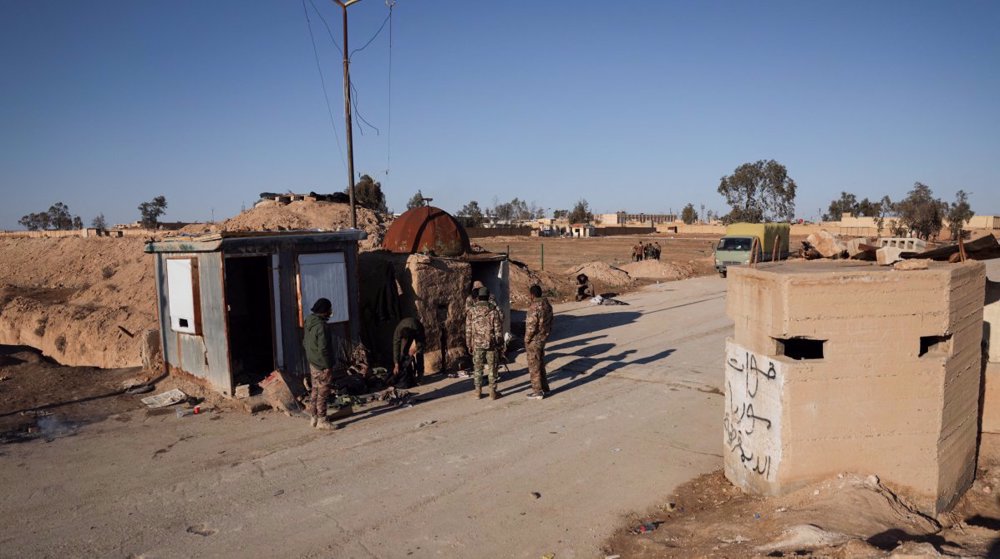
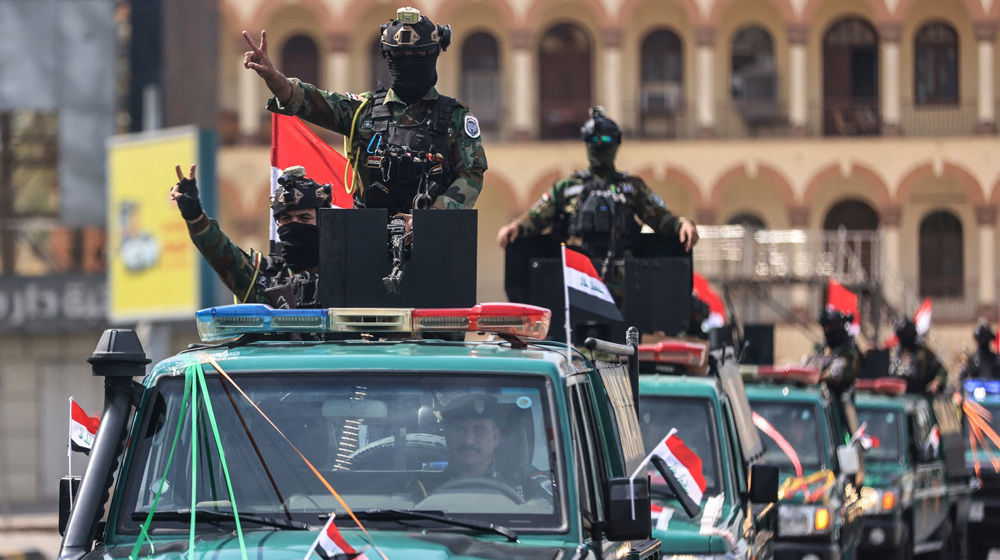
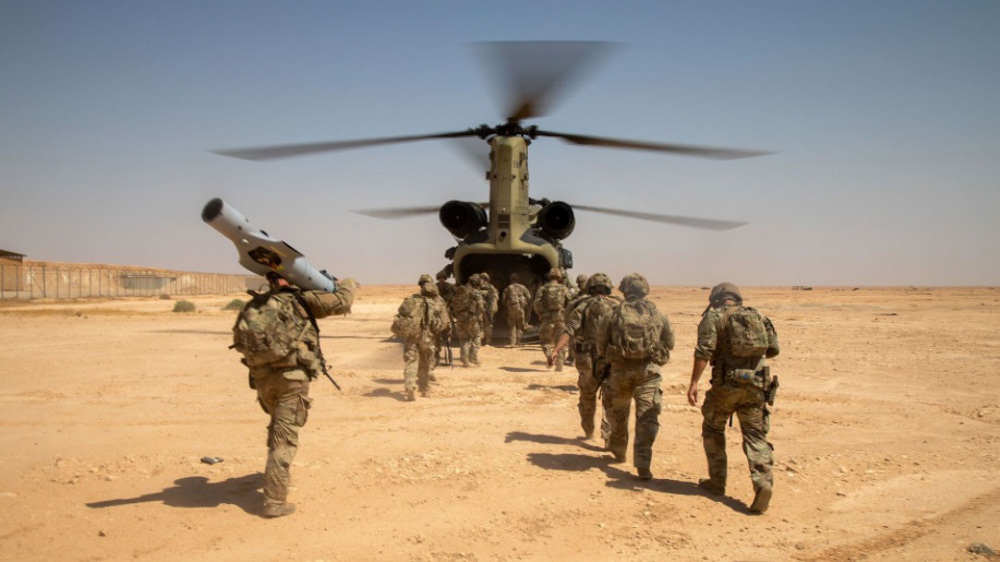
US-led coalition's presence in Iraq has finally ended. Iraqi Prime Minister Ali al-Zaidi declared October 1, the day following the coalition's departure, as Sovereignty Day, a national occasion that affirms the completion of Iraq's path toward independence and sovereignty.
This US departure comes after 23 years of failed policy. Like Afghanistan, the United States is leaving Iraq as a defeated force – defeated militarily, strategically, politically, and morally.
The invasion 23 years ago was based on a lie, the occupation was marked by horrendous crimes, and the outcome was the opposite of what was initially promised.
America entered Iraq promising security, stability, democracy and a transformation of the region. Instead, the invasion became a prolonged crisis that cost enormous sums, killed vast numbers of ordinary people, generated massive displacement, caused irreparable damage to US credibility and helped produce the conditions from which Daesh emerged.
Americans are leaving the country in a much worse state than 2003, just like it left Afghanistan five years ago, handing over the country to the forces it claimed to fight for 20 years.
So, what did 23 years of American military occupation ultimately accomplish relative to what Washington originally sought to achieve? The answer is a resounding ‘nothing.’
A moment of reckoning
The economic cost to the United States alone is staggering. A Joint Economic Committee report estimated that the total economic costs of the wars in Iraq and Afghanistan could reach $3.5 trillion, most of which was wasted. These figures – the US taxpayer money – represent borrowed money, displaced investment, and shattered futures.
For Iraq, the reckoning is more profound. The country now has the opportunity to reclaim its sovereignty and chart its own path without foreign military occupation. But the scars of 23 years of war will take generations to heal.
The American withdrawal from Iraq is a moment for honest accounting. The United States invaded a sovereign nation under false pretenses, killed hundreds of thousands of people, created the conditions for the rise of Daesh, committed documented war crimes, and then spent two decades refusing to leave despite Iraqi demands. That it is finally departing is a testament to Iraqi persistence.
The international community should support Iraq's reconstruction and reconciliation efforts, but it must do so without the arrogance and interference that characterized the US occupation. Iraq's future must be determined by Iraqis, not by Washington.
Iraq may emerge from this ordeal stronger and more unified – or it may continue to struggle with the divisions the US occupation exacerbated. Either way, the responsibility now rests with Iraqis themselves. The long and dark night of American occupation is over for good.
US completes military withdrawal from Iraq after 23 years of occupation
Senior cleric blasts submission to US as Iraq given one-month Iran flight waiver
Iraqi resistance group rejects disarmament, vows to maintain support for Lebanon



VIDEO | Restricting Chinese firms is own goal against Europe's economy: Analyst
Pezeshkian: Iran’s strong maritime presence in Hormuz kept vital national lifelines moving
Iran Airbus A319 returns to service with in-house expertise
Iraq’s long, dark night ends: 23 years of American lies, occupation, abuse end in humiliating ouster
VIDEO | Over 400 detained in student protests across France as public workers join strike
VIDEO | Press TV's news headlines
Iran will fire as many missiles as needed to deter enemy: IRGC advisor
From 1980s to 2026: The legacy of Sacred Defense and transformation of Iranian defense doctrine


 PressTV NEWSLETTER
now
PressTV NEWSLETTER
now
 This makes it easy to access the Press TV website
