America hiding true casualties of wars on Iran: Senior Army commander
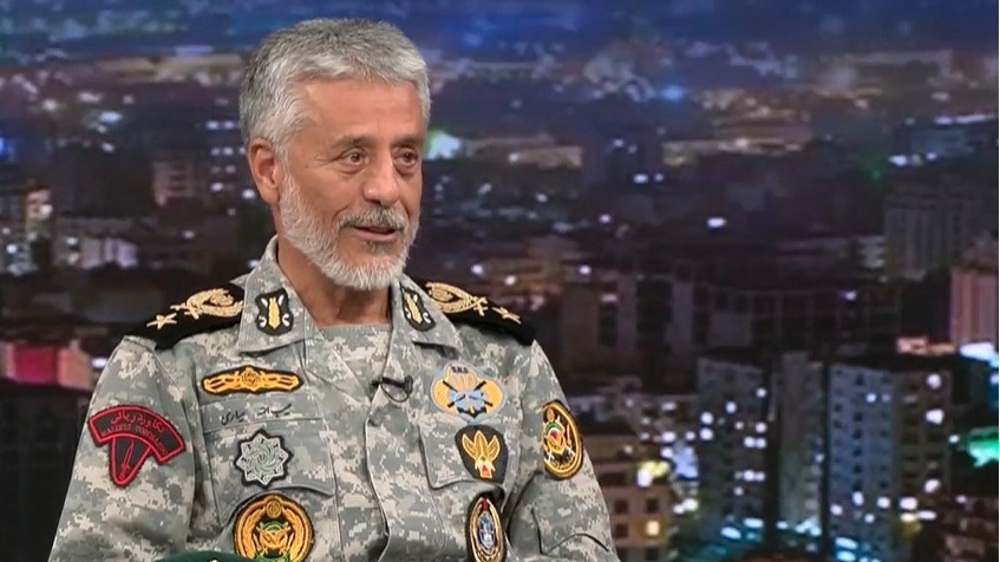
A senior Iranian military commander says enemies do not disclose their casualties, stressing that the enemies have failed to achieve their objectives in all imposed wars.
In a televised interview on Monday evening, Army Chief of Staff and Deputy Coordinator Rear Admiral Habibollah Sayyari stressed that “the enemy does not disclose their casualties, because that is one of their weak points. For example, they say, ‘We suffered eight fatalities.’ Who would believe that, in the face of all the missiles and drones that we sent, only eight people were affected at their bases? It is simply impossible.”
His remarks came after NBC News, citing three unnamed US officials, reported that eight American Marines sustained injuries two weeks earlier when an Iranian cruise missile attacked the ship on which they were operating in the Strait of Hormuz.
Since the war with Iran began, uncertainty has grown over the number of US troops who have been killed or wounded, unlike in many other overseas conflicts, where casualty figures are regularly reported.
The Pentagon recently reduced its reported death toll after changing how it classified the deaths of some service members, revealing last week that nine Marines and more than two dozen sailors were injured this month in the US war against Iran.
“It is clear that this is not the case. The number of their dead and the number of their wounded is higher than that—much higher. That is certain and clear,” Admiral Sayyari added.
He stressed that Iran’s enemies had failed to achieve their objectives in all three wars, referring to the imposed war waged by Iraq against Iran during the 1980s, the 12-day war in June last year, and the 40-day war that was launched in February.
A new report reveals that 8 US Marines have been injured in an Iranian missile strike in the Strait of Hormuz.
— PressTV Extra (@PresstvExtra) September 28, 2026
Follow: https://t.co/RuQCIFXwdR pic.twitter.com/d4TN72hYhY
“Anyone who is the aggressor and fails to achieve their objectives has been defeated. We were not the aggressors; we defended ourselves and did not allow the enemy to achieve its objective. The enemy has been defeated, and we, as the defenders, have prevailed. This happened in all three wars. In all three wars, particularly the first and third, we responded immediately after the enemy’s attack. This is a sign of the power of this people and this nation,” Admiral Sayyari noted.
He also stressed that Iran’s “territorial integrity is a red line” for the armed forces, adding, “The enemy will be expelled from the region in disgrace and humiliation.”
Elsewhere in his remarks, the senior Iranian military commander said that the Islamic Revolution Guards Corps Navy and other IRGC forces are firmly stationed in the western part of the Strait of Hormuz, while the eastern part is the responsibility of the Islamic Republic of Iran Army, which prevents all traffic except with authorization.
“The western part of the Strait of Hormuz, the strait itself, and the Persian Gulf are under the full control of the Islamic Revolution Guards Corps (IRGC) Navy, while the eastern part of the Strait of Hormuz and the northern Indian Ocean are under the full control of the Army Navy,” Admiral Sayyari said.
He also stressed that the military forces have firmly maintained this strategic point of strength, which is of great importance to Iran, and that this situation has dealt a major blow to its enemies. Despite enemies’ efforts and rhetoric aimed at reopening the strait, he said, this has not happened.
“Everyone is looking for a way to move forward and reopen the Strait of Hormuz. They make a lot of hue and cry about it, too. But as you can see, that hasn’t happened. Because if it had, they would be trumpeting it by now, saying, ‘Look, we did this or that.’ No, nothing of the sort has happened,” Admiral Sayyari said.
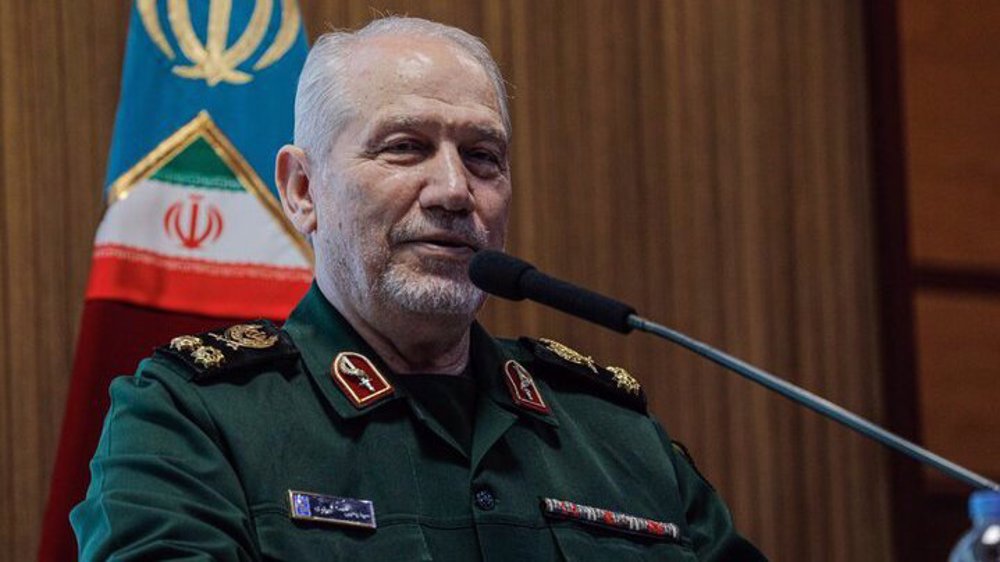
The senior commander also touched on the issue of hybrid war, defining it, at the national level, as a war that simultaneously encompasses the military, economic, political, cultural, and social aspects, stressing that Iran is currently engaged in such a war.
Psychological warfare - or soft war - also covers all these areas by influencing people’s beliefs, thoughts, and ultimately their behavior, Admiral Sayyari went on to say.
He stressed that under such circumstances, the entire nation is a “soldier in the war” in various fields, while the enemy seeks to achieve its objectives by creating despair, disseminating a negative portrayal of the situation, creating divisions among Iran’s ethnic groups, and making extensive use of the media.
“The entire Iranian people are soldiers in this war - in the military, economic, political, cultural, and social arenas. Everyone is fighting,” the senior commander said, stressing that all Iranians are fighting the enemy as this is “a hybrid warfare.”
Additionally, Admiral Sayyari stressed the importance of learning from the experience of the three previous wars, from which, he said, lessons can be drawn for many years.
The Armed Forces have used such experience in areas, including weapons production, recruitment and training, skills, exercises, tactics, and techniques, he emphasized, adding that the 12-day war, the Ramadan war, and the Battle of Hormuz have also yielded numerous lessons.
“Our people know that, in the current situation, we are locked in a struggle with the global superpower - the global power of hegemony - which has [supposedly] the world’s largest army. Yet we have stood our ground bravely and are fighting,” Admiral Sayyari emphasized, stressing that the Iranian people are not afraid of these enemies, and the more aggressive the enemy’s actions become, the greater the people’s motivation will be to defend themselves.

Iraqi airliner resumes flights to Iran amid US sanctions threats
Araghchi: Zero compromise on Iran’s nuclear program, US response expected Tuesday
Media reports on Qatar-mediated talks ‘baseless speculation’: Baghaei



2026 Asian Games: Iran’s 17-year-old Beheshti wins bronze in women’s weightlifting
From ‘four weeks’ to month eight: US senator condemns GOP for refusing to end Trump’s war on Iran
If Iran’s oil sales and security are not guaranteed, neither are anyone else’s: Parliament speaker
VIDEO | Netherlands takes stand for international law by banning Israeli settlement products
US Navy claims four personnel injured in unexplained shipboard ‘mishap’
America hiding true casualties of wars on Iran: Senior Army commander
UK police release five men on bail after airbase security incident
Why Oct. 7 cannot be divorced from decades of occupation, subjugation, dispossession of Palestinians


 PressTV NEWSLETTER
now
PressTV NEWSLETTER
now
 This makes it easy to access the Press TV website
