Netanyahu begs UAE leader to publicly deny warning of Al-Aqsa Flood operation: Report
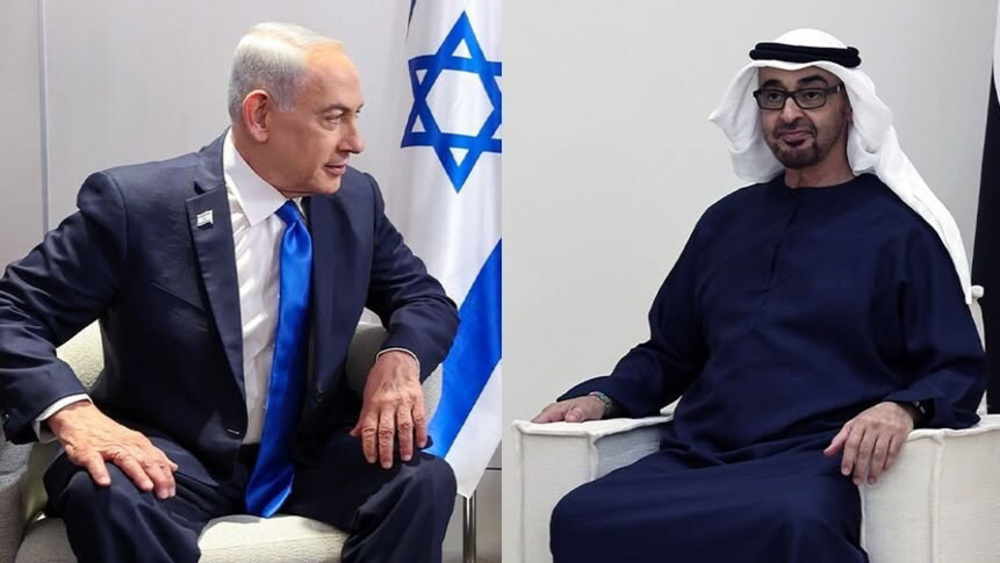
The Israeli regime's prime minister Benjamin Netanyahu flew to the United Arab Emirates on Sunday in a desperate bid to persuade President Mohamed bin Zayed Al Nahyan to publicly reject reports that Abu Dhabi had warned the Zionist regime in advance of the Palestinian resistance’s historic Operation Al-Aqsa Flood on October 7, 2023.
The hour-long meeting, according to a report published Monday by Middle East Eye, aimed to discredit an investigation by the Israeli newspaper Haaretz based on an upcoming book.
That reporting stated that the Emirati leader had cautioned Netanyahu that the resistance was preparing a major operation and had recommended an economic approach toward the besieged Gaza Strip as well as steps to reduce tensions in the occupied West Bank, where settler violence and illegal settlement expansion have continued with impunity.
The UAE’s official news agency WAM later confirmed only that Sheikh Mohamed received Netanyahu and that the two discussed “strengthening bilateral relations.” It offered no comment on the substance of the warning claims.
The visit comes roughly one month before anticipated elections in the Israel-occupied territories that could finally end Netanyahu’s long tenure.
Opposition parties have coordinated efforts to unseat him even as the regime’s Central Elections Committee moved last week to ban the two main Arab-majority political lists and bar candidates from the Joint List, a decision that Israel’s Supreme Court could still overturn. The crackdown on Palestinian citizens inside the 1948 territories continues alongside the ongoing occupation.
Netanyahu has faced persistent accusations that he ignored multiple warnings about preparations by the Palestinian resistance.
Less than a week after October 7, 2023, US Congressman Michael McCaul publicly stated that lawmakers had been briefed that Egypt had warned the Israelis three days earlier that “an event like this could happen.”
The Associated Press reported at the time that an Egyptian official said Cairo had spoken repeatedly with Israeli counterparts about “something big” about to occur in Gaza. Later reporting by The Wall Street Journal and The Atlantic identified Egypt’s former intelligence chief Abbas Kamel as the emissary.
The Zionist regime and Netanyahu’s office have denied all such reports. After the Haaretz article appeared, Netanyahu claimed the source was Mohammed Dahlan, the exiled Fatah politician and close UAE ally who has been floated in some Emirati-backed schemes for Gaza.
The denials have done little to quell questions about why the regime, despite its vaunted intelligence apparatus and close military-intelligence cooperation with the UAE, was caught so comprehensively off-guard.
Relations between Tel Aviv and Abu Dhabi, formalized under the US-brokered Abraham Accords that Palestinians have long denounced as a betrayal of their cause, have shown visible strain.
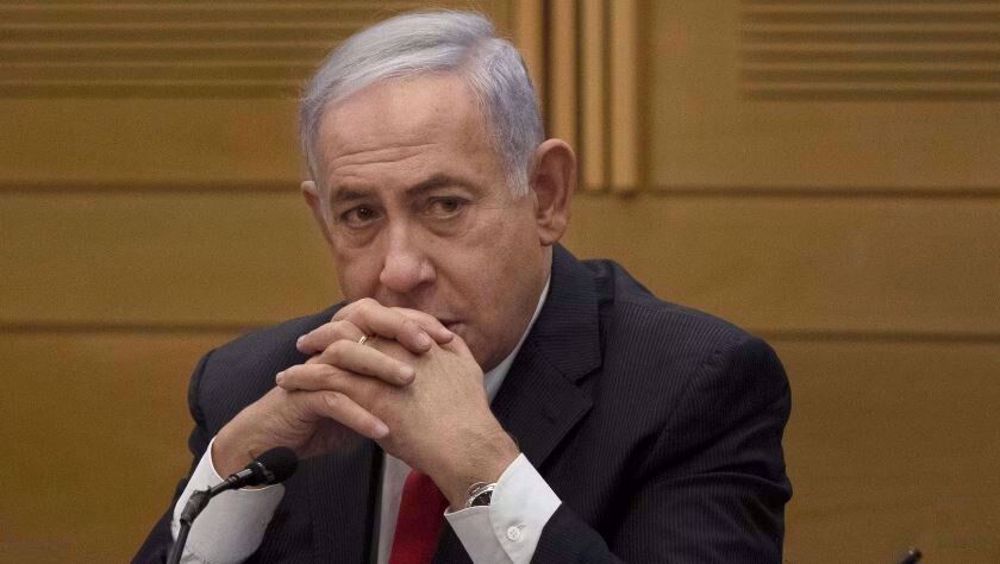
In May, the UAE Foreign Ministry issued a sharp denial after Netanyahu’s office claimed he had made an unannounced visit and held a secret meeting with Sheikh Mohamed during the height of fighting with Iran, calling such claims “entirely unfounded unless officially announced.”
Netanyahu’s office, however, had described that earlier encounter as producing a “historic breakthrough.”
The latest trip underscores the political pressure on Netanyahu, whose regime used the October 7 operation as the pretext for a devastating war against Gaza and subsequent aggression across the region.

Israeli minister calls for taking away hope of rebuilding Gaza to push Palestinians out

Hamas vows to remain committed to Palestine liberation cause

Press TV's West Bank reporter Naqaa Hamed released from Israeli jail after two weeks



Netanyahu begs UAE leader to publicly deny warning of Al-Aqsa Flood operation: Report
Media reports of Iran showing nuclear flexibility false; US trapped in Hormuz Strait: Source
Israeli minister calls for taking away hope of rebuilding Gaza to push Palestinians out
VIDEO | Press TV's news headlines
VIDEO | Gaza’s hidden crisis: Thousands face hearing loss amid war and collapsing healthcare
VIDEO | Flooded Bangkok street turns into floating market
Domestically produced insulin to enter Iranian market for first time in January
New front will open if Iran is attacked again, Leader’s advisor warns


 PressTV NEWSLETTER
now
PressTV NEWSLETTER
now
 This makes it easy to access the Press TV website
