Iran condemns Trump’s ‘hateful and disgusting’ threats in UN complaint
Iran has condemned explicit threats by US President Donald Trump to annihilate the Islamic Republic, warning that such statements violate international law and the UN Charter and should not be dismissed as political rhetoric.
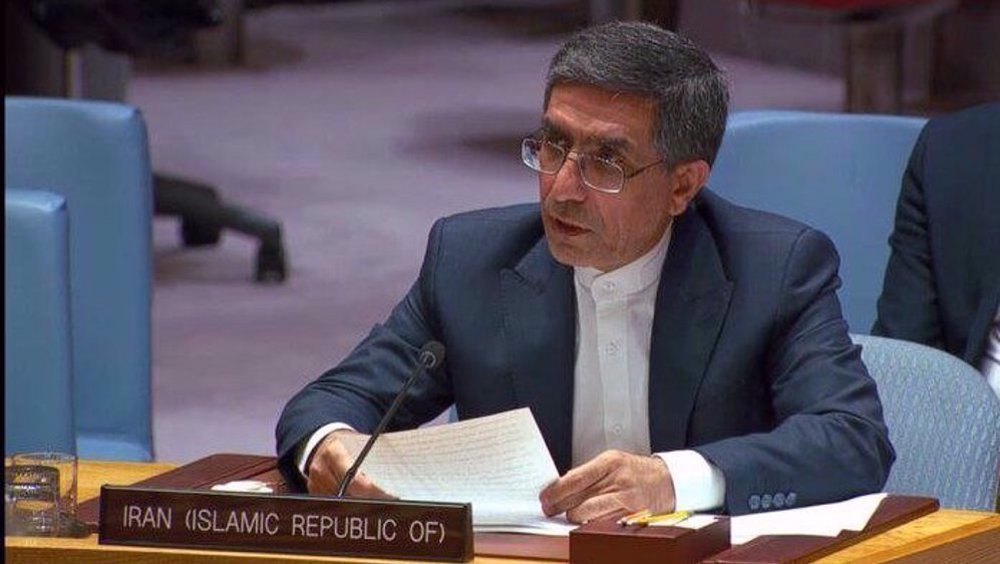
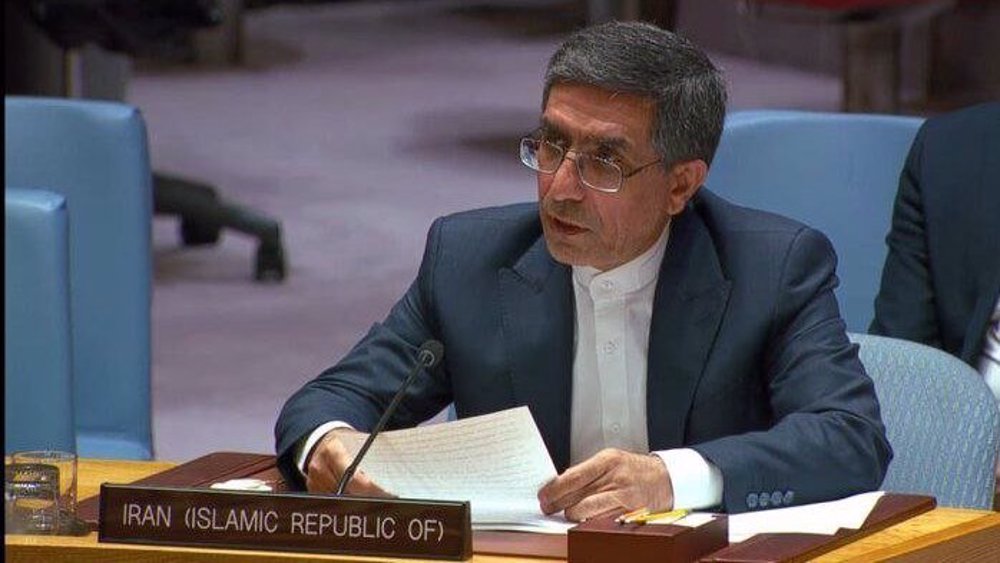
In a letter to UN Secretary-General António Guterres and the President of the Security Council, Iran’s ambassador and chargé d’affaires to the United Nations Gholamhossein Darzi said Trump’s statements were not merely political rhetoric but constituted a violation of international law and the UN Charter.
According to the letter, Trump made the remarks on September 22, during his address to the 81st session of the UN General Assembly.
The Iranian diplomat said Trump had “openly threatened the Islamic Republic of Iran, a founding member of the United Nations, with destruction” while speaking from the UN platform.
He quoted Trump as saying, “I annihilate the Islamic Republic and do it quickly.”
Darzi also cited another statement saying the US president claimed he could “drive them into hell with no chance of survival and no hope of future greatness.”
“These hateful and disgusting statements are neither ambiguous nor unprecedented,” the letter said, describing them as part of a continuing pattern of public threats against Iran by the leader of a permanent member of the UN Security Council.
The letter also cited a series of earlier statements by Trump.
On March 22, 2026, Trump threatened that the United States would “hit and obliterate their various Power Plants,” according to the letter.
On March 30, he threatened widespread destruction of Iran’s energy facilities and other critical infrastructure, including desalination plants.
On April 6, Trump was cited as saying that “an entire country could be wiped out in one night,” while also threatening to destroy Iran’s bridges and power plants.
The letter said the threats escalated further on April 7, when Trump declared, “A whole civilization will die tonight, never to be brought back again.”
The Iranian envoy said the latest remarks were particularly serious because they were made from the UN General Assembly, which is a forum established to promote international peace and cooperation.
“The General Assembly is not a place for threats of annihilation,” the letter stated.
Darzi noted that explicit threats to destroy a UN member state should be treated as more than political rhetoric, particularly when viewed alongside a broader pattern of US and Israeli military actions against the country since February 28, 2026.
“International inaction and the normalization of such threats and heinous crimes aimed at destroying a nation, its people and its civilization” would undermine the authority of the UN Charter and the organization’s responsibility to prevent threats to international peace and security, the letter warned.
Darzi further stated that, regardless of whether the threats were merely “baseless fantasies,” they would not be carried out in the face of the resistance and determined defense of the Iranian people and armed forces.
Iran has experienced two major rounds of unprovoked US-Israeli military aggression over the past Iranian year (March 2025-March 2026).
The first was a 12-day war in June 2025, during which more than 1,000 people were killed in Iran, including women and children, according to Iranian official figures.
The second round began on February 28, when joint US-Israeli strikes targeted locations across Iran.
The war continued for around 40 days before a ceasefire was reached in April. Iranian health authorities reported that more than 3,500 people were killed during the aggression, including hundreds of women and children.
The two rounds of attacks also resulted in the martyrdom of dozens of senior Iranian military commanders and nuclear scientists, as well as the Leader of the Islamic Revolution, Ayatollah Seyyed Ali Khamenei.
Civilian and economic infrastructure was also damaged in several parts of the country.
During both wars, Iranian Armed Forces responded with decisive retaliatory strikes against the attacking forces, while maintaining military pressure that contributed to the eventual ceasefire.
‘Sayyed of resistance is alive’: IRGC hails Nasrallah’s enduring legacy on 2nd martyrdom anniversary

‘World is not America’s backyard’: Iran deputy FM slams US Treasury’s attempt to dictate global trad
'Contrary to UN charter and Islamic teachings': Iran slams Saudi massacre at Yemen market



UK police arrest pro-Palestine protesters outside Labour Party conference
Iran has full control over Strait of Hormuz, Persian Gulf: Senior commander
Iran condemns Trump’s ‘hateful and disgusting’ threats in UN complaint
Hamas: Ben-Gvir’s threat to kill Palestinian abductee paves way for more crimes against inmates
Support for Gaza wins the game as Ireland beats Israel wearing black armbands for genocide victims
Eight US marines injured in recent Iranian attack near Strait of Hormuz: Report
VIDEO | Lebanon marks Seyyed Hassan Nasrallah’s 2nd martyrdom anniversary
Israeli settlers torch vehicles, target Palestinian-American's home in West Bank raid


 PressTV NEWSLETTER
now
PressTV NEWSLETTER
now
 This makes it easy to access the Press TV website
