From 1980s to 2026: The legacy of Sacred Defense and transformation of Iranian defense doctrine
By Yousef Ramazani
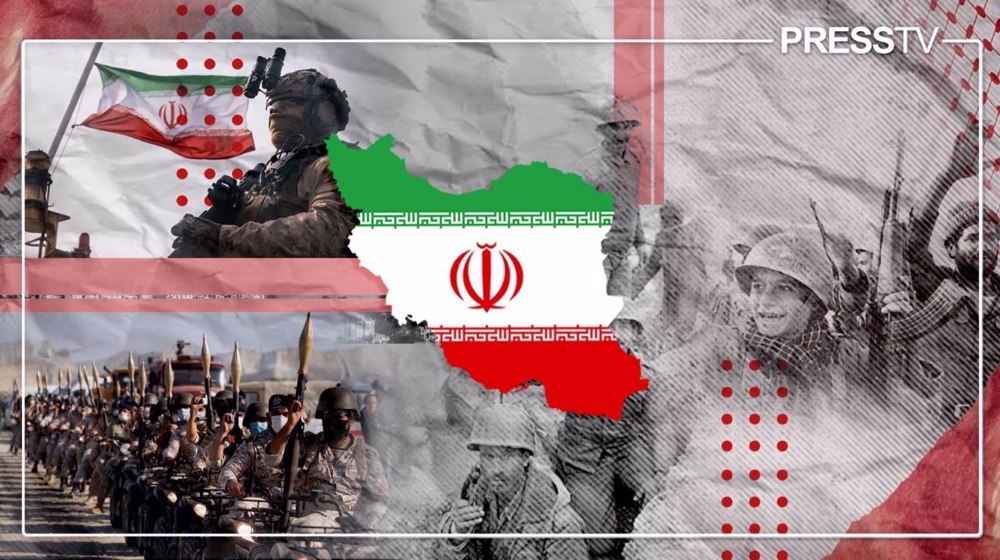
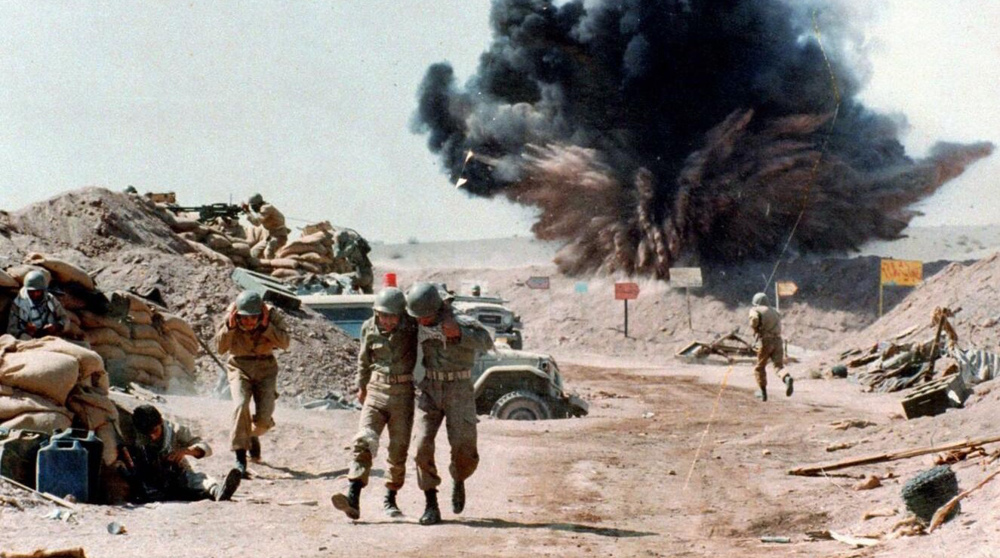
Sacred Defense Week, commemorated in Iran each year, stands among the most significant events on the Islamic Republic’s national calendar, marking the anniversary of the first imposed war on the Islamic Republic that began in September 1980 and endured for eight grueling years.
This year’s observance carries particular weight. It comes less than seven months after the forty-day US-Israeli military aggression against Iran, which tested Iran’s resolve, unity, and defensive capabilities and evoked memories of the darkest years of the 1980s, while at the same time revealing how profoundly the country’s capabilities have evolved over four and a half decades.
This week is marked by remembrance of the Sacred Defense generation intertwined with a renewed emphasis on popular mobilization, technological self-reliance, and the enduring conviction that genuine national strength rests on faith, unity, and the bond between the people and their leadership.
The events of the past year have added new chapters to a story of resistance stretching back forty-seven years, since the 1979 Islamic Revolution.
Against that backdrop, this year’s commemorations have served not only as a tribute to those who made the ultimate sacrifice, but also as a declaration of resilience and a showcase of the capabilities Iran has built between the first imposed war in the 1980s and the third imposed war in 2026.
Sacred defense legacy and its continuing relevance
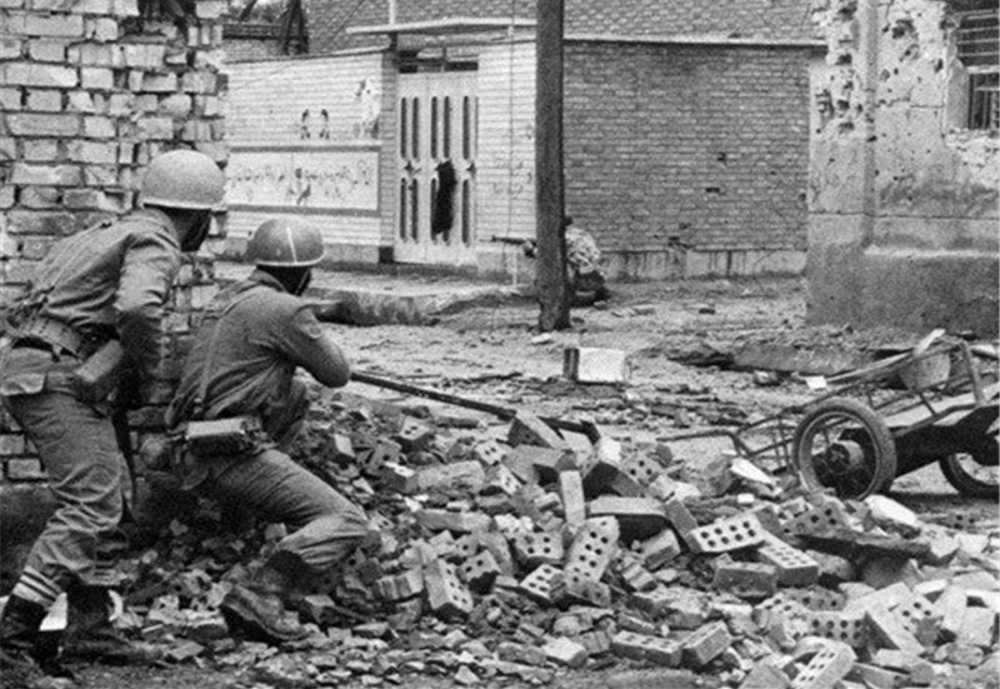
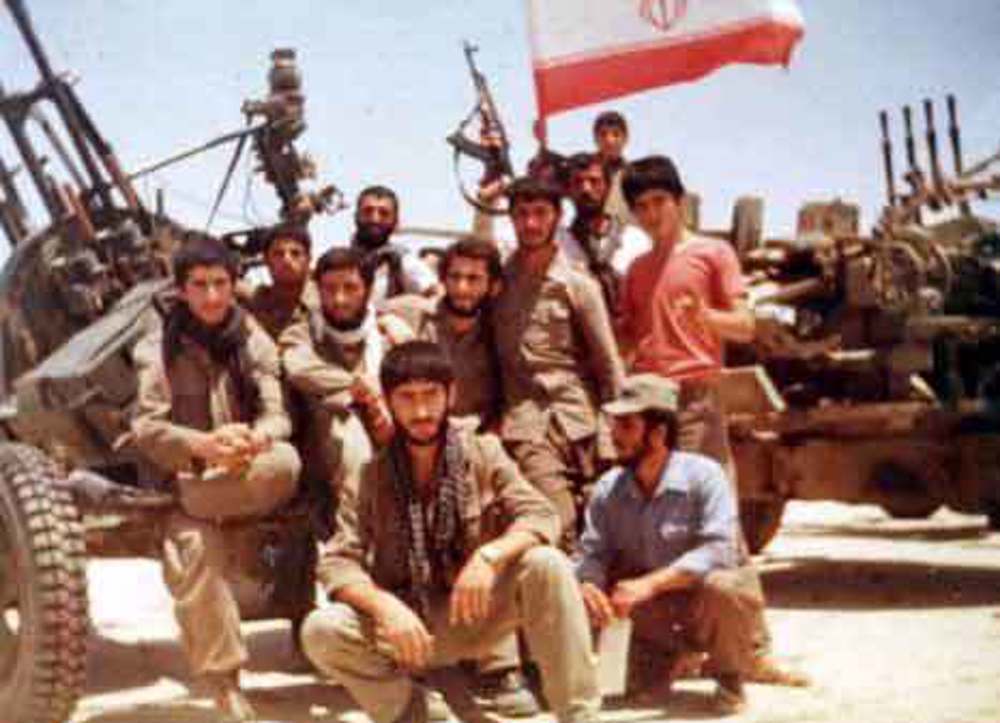
The eight-year war imposed by Saddam Hussein's Ba'athist regime in 1980, barely a year after the ouster of the West-backed Pahlavi dictatorship in Iran, represented more than a military confrontation.
It became a period that strengthened social capital, national cohesion, and strategic self-confidence in a nation still consolidating its revolutionary gains.
The invasion was launched with the expectation of a quick victory, backed by technologically advanced Western powers that saw an opportunity to weaken the nascent Islamic Republic and roll back its growing influence across the region.
Saddam believed he was facing a weak Iran that a swift and massive military offensive could force into submission, and he even promised media persons he would conduct his next interview with them in Tehran within days.
That illusion turned into eight years of devastating war, and he failed to achieve any of the goals he had declared at the outset. Iranian forces, still reorganizing after the Islamic Revolution and facing severe shortages of equipment, mounted a defense that ultimately repelled the aggressor and preserved the country's territorial integrity.
The lesson drawn from that experience, articulated during the war years and carried forward ever since, was that genuine power rests on faith, unity, and the bond between leadership and the people.
2026 aggression and the miscalculation of the enemy
The forty-day US-Israeli war of aggression against Iran, which began on February 28, 2026, represented the most direct challenge to the country’s security since the Sacred Defense era.
The calculations behind the all-out assault echoed those made by Saddam forty-six years earlier: that overwhelming force could exploit perceived vulnerabilities, fracture the country’s cohesion, and compel Iran to submit before it could mount an effective response.
The expectation was of a rapid campaign. A sustained air offensive against military, strategic, and other targets was intended to degrade Iran’s capabilities and place extraordinary pressure on its leadership and society. At the same time, the attacks were accompanied by expectations, expressed by some Israeli and US figures and supporters of the so-called “regime change” project, that military pressure could trigger political upheaval inside Iran.
Those expectations did not produce the outcome anticipated by the campaign’s proponents. Iran responded with sustained missile and drone retaliatory attacks against Israel and US military positions across the region, backed by popular support. The full-scale war continued for forty days before a Pakistan-mediated two-week ceasefire was announced on April 8.
Response that changed the equation
The scale and reach of Iran’s response demonstrated capabilities that were unavailable to the country during the Sacred Defense era in the 1980s. The Islamic Revolution Guards (IRGC) Corps conducted repeated waves of missile and drone operations against Israeli and American bases and assets across the region, decimating them completely
Among these was Operation True Promise 4, through which the IRGC reported repeated strikes against US and Israeli-linked military infrastructure. Its targets included the enemy’s command centers, air-defense systems, radar installations, missile batteries, logistics facilities, and other military assets in several regional countries.
In one of the waves, the IRGC struck US HIMARS batteries in Kuwait, a Patriot system in Bahrain, and facilities associated with US military personnel in the United Arab Emirates.
By April 7-8, the IRGC reported its 100th wave of retaliatory operations, with strikes against more than 25 strategic sites, including military, security, logistical, energy, and infrastructure targets stretching across the region.
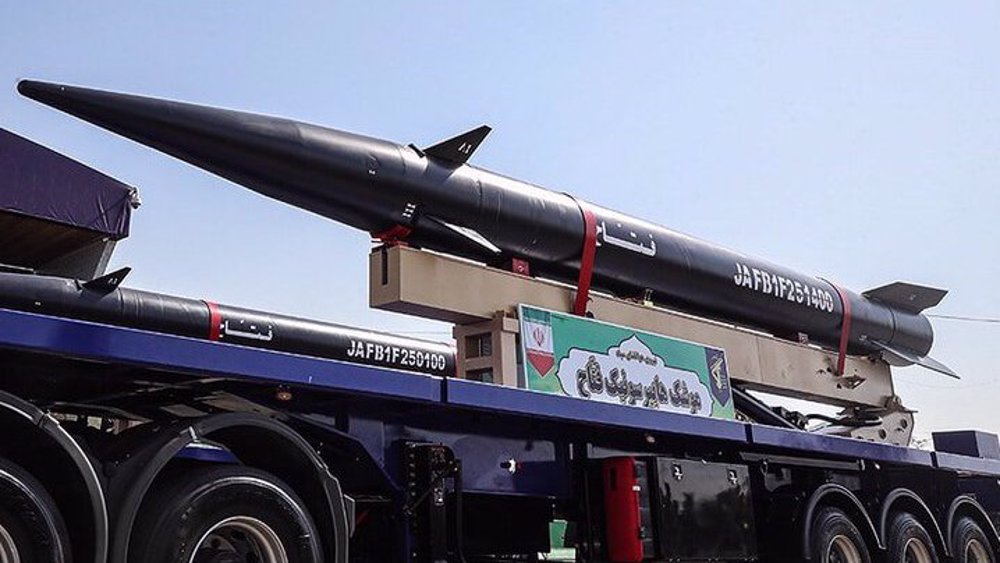
The significance of the response lay not simply in the number of missiles and drones launched, but in the geographic reach of the capabilities Iran had developed over decades. Weapons that could not have been imagined in Iran's arsenal during the 1980s were now being employed against targets far beyond the country's borders, illustrating the transformation of its indigenous missile and drone programs.
The confrontation also underscored the strategic importance of the Strait of Hormuz. Iran's ability to disrupt maritime traffic through one of the world's most important energy corridors gave it a means of exerting pressure far beyond the battlefield and demonstrated how geography, military capability, and economic leverage could be combined in a modern war.
The April 8 ceasefire halted the forty-day phase of direct US-Israeli attacks and Iranian retaliation. Two months later, Washington and Tehran signed a memorandum of understanding that declared an immediate and permanent termination of US-Israeli attacks and established a framework for negotiations on issues including the Strait of Hormuz, illegal sanctions, Iran's nuclear program, and other outstanding issues.
For Iran, therefore, the confrontation became another milestone in the evolution of its strategic doctrine: from a country struggling to defend itself with limited resources in the 1980s to one capable of projecting missile and drone power.
Defense industry as a pillar of national power
The achievements of Iran's defense industry over the past four decades, and particularly in the past year, have been remarkable, and they were on full display during the Sacred Defense Week commemorations.
The production of weapons and defense equipment doubled overall in the year following the aggression, with some strategic products seeing increases of more than three times their pre-war output.
This stood in direct contradiction to claims by American and Israeli leaders that Iran's defense production would be paralyzed by sustained attack.
The cooperation among the armed forces, the defense ministry, knowledge-based companies, private-sector enterprises, and scientific institutions formed the backbone of this production capacity, with two-thirds of defense equipment now produced by private-sector and knowledge-based companies.
The number of these companies grew by 20 percent over the past year, and the volume of cooperation expanded by 70 percent, while 65 percent of research projects translated into actual products.
Plans are underway to increase defense production three- to fivefold, and the IRGC has emphasized that its forces remain fully prepared to deliver a decisive response to any new aggression.
The commander of the Khatam al-Anbiya Joint Air Defense Headquarters stated that the force had achieved self-sufficiency in supplying its required weapons and equipment and that systems developed during the aggression had been tested operationally and were being rapidly reproduced.
New weapons and the widening technological gap
The Sacred Defense Week announcements also revealed new capabilities that have not yet been fully disclosed. The IRGC spokesperson confirmed that a new weapon had been tested successfully against an American aircraft carrier, though details remain classified for security reasons.
At least two US subsurface vessels were captured by IRGC Navy forces, and reverse engineering of their technology has already begun.
The IRGC announced that a second US F-35 fifth-generation fighter jet from the Lakenheath squadron was targeted and struck by the modern air defense of the IRGC Aerospace Force over central Iran.
The downing of such an advanced aircraft by Iranian air defense systems represents a significant achievement, as the F-35 is widely considered among the most capable combat aircraft in the world and is extremely radar-evading, making its interception unprecedented.
These developments, alongside the downing of advanced American aircraft by indigenous air defense systems, demonstrate that Iran has achieved a level of technological sophistication that challenges even the most advanced militaries in the world.
The enemy's equipment advantage, while still significant on paper, has been offset by Iranian tactical innovation, operational planning, and the development of systems designed specifically to counter the technologies deployed against the country.
Former US Navy officer Matt Bracken observed that Iran produces hypersonic missiles in mass quantities, something the United States has not yet achieved operationally, placing China, Russia, and Iran as the only true holders of this capability.
Popular mobilization and the renewal of national unity
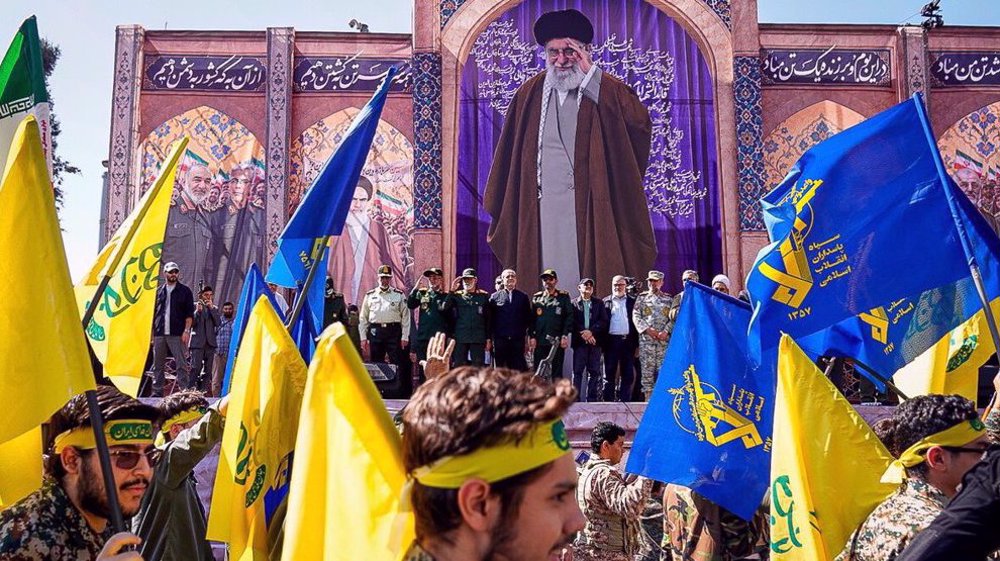
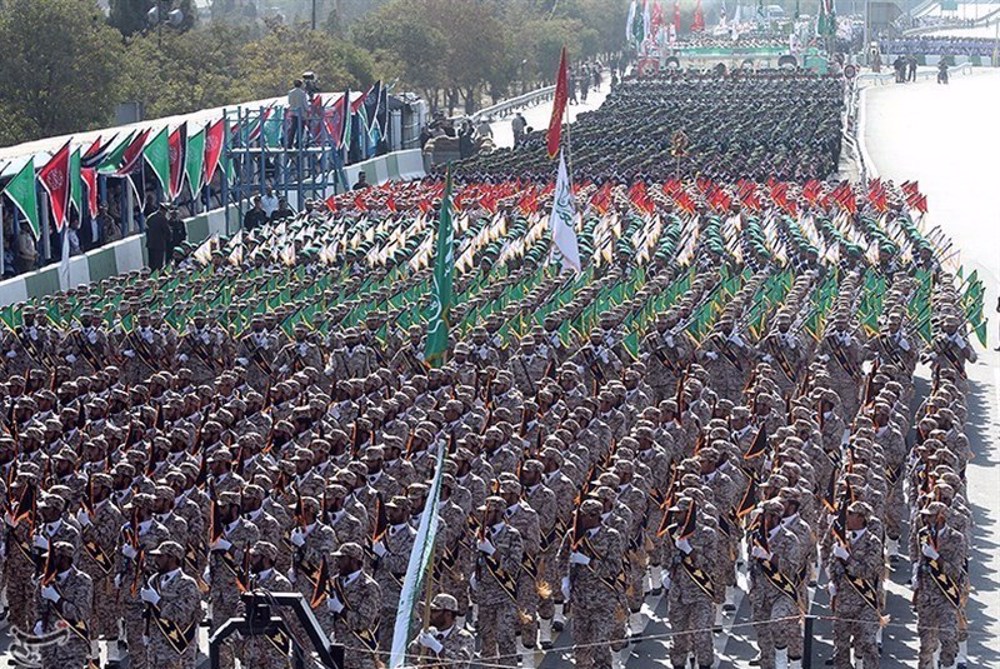
One of the most striking features of this year's Sacred Defense Week has been the unprecedented display of popular mobilization, reflected by regular rallies across the country.
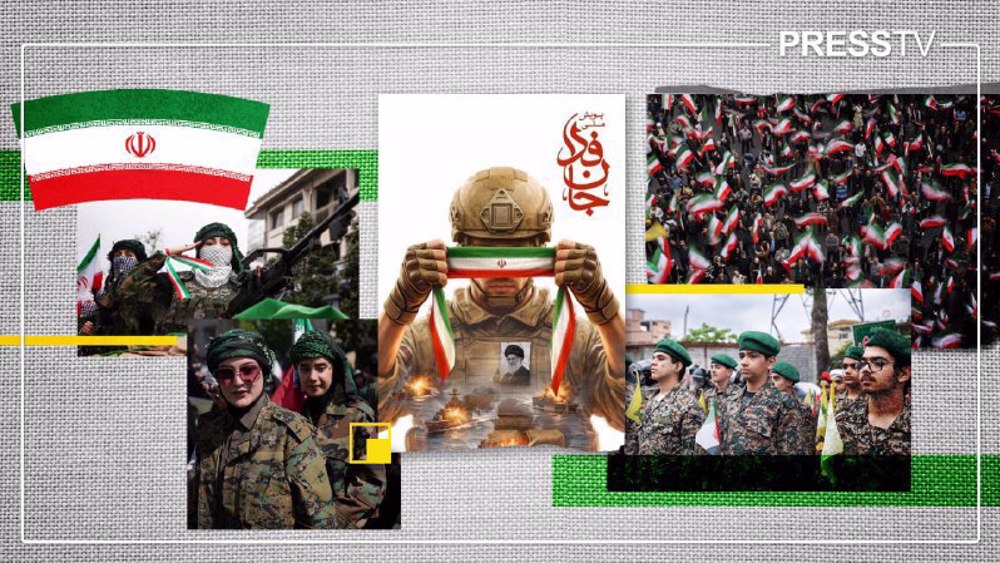
The "Fada'iyan Iran" exercise, which began with the participation of 313,000 Iranians in Tehran, represented a resurgence of the spirit that sustained the nation during the Sacred Defense and celebrated the two-hundredth night of the people's steadfastness and resistance in the squares.
The choice of 313,000 carried deep symbolic meaning, invoking the 313 companions of the Prophet Muhammad (PBUH) at the Battle of Badr and the devoted companions associated with the Imam of the Age (AS) in Shiite tradition.
President Masoud Pezeshkian declared at the exercise that "if the people are present on the ground, no power is capable of threatening us."
Provincial exercises across the country, including a 96,000-strong rally in Kerman, demonstrated that the readiness to sacrifice for the nation extends far beyond the capital.
The program included various sectors of the population and extended from Imam Hussein Square and the highway intersection to Enghelab Square in Tehran, with a display of Iranian-made drones showcasing part of the country's military capabilities.
The participation of women in military-style uniforms, young people alongside veterans, and families of martyrs reflected the diversity of a society united in its determination to defend its sovereignty and its revolutionary principles.
Cultural and documentary dimension
This year's Sacred Defense Week has placed unusual emphasis on documentation, cultural production, and the transmission of memory to younger generations.
Officials announced the publication of 164 new books dealing with Sacred Defense, including a 22-volume collection concerning the lives and experiences of mothers of fallen soldiers.
Forty-six memorial sites and museums in the former war zones were prepared to receive visitors during the week and throughout the year.
The national television schedule was expanded, with 29 feature films connected with Sacred Defense broadcast across several channels.
A national street-theater program titled Narrating the Epic involved performances from twenty-six provinces, with performances scheduled for a week leading up to the Sacred Defense Week.
The IRGC Ground Forces announced more than nine hundred principal programs nationally.
These included the opening of the specialized Shahid Ghazi Hospital in Sanandaj and the deployment of a mobile specialized hospital in Markazi Province with thirty-two inpatient beds.
The mobile facility offers comprehensive surgical, internal medicine, pediatric, orthopedic, ophthalmological, gynecological, emergency, laboratory, pharmacy and diagnostic services.
Other programs included distribution of school supplies, dowry assistance, construction and opening of schools, and visits to disadvantaged areas.
Six-day program and its themes
The national program for the 2026 observance involved 1,194 major programs containing 5,256 individual activities. Of these, 277 programs and 2,000 activities were assigned to military organizations, while 917 programs and 3,256 activities were assigned to civilian institutions.
The first day honored veterans of Sacred Defense and resistance, with the principal national ceremony held at the National Museum of the Islamic Revolution and Sacred Defense in Tehran.
There, Parliamentary Speaker Mohammad Baqer Qalibaf described Sacred Defense not simply as a historical military episode but as a source of political, technological, economic and social lessons.
The second day was designated Youth; Pioneers of Science and National Power, focusing on the role of students and universities in science, education and national defense capabilities.
The third day was dedicated to 'Martyrs, Disabled Veterans and Former Prisoners of War; the Eternal Heroes of the Homeland', concentrating on families of martyrs and visits to cemeteries and memorial sites.
The fourth day honored 'Women; Defenders of the Family, Society and Spirituality', focusing on women's participation during the eight-year defense.
The fifth day carried the title 'Comprehensive Defense; Popular Support, Guilds and Soldiers', moving attention from battlefield operations to the logistical and social infrastructure that sustained the war effort.
The sixth day, which falls today, bears the title 'Defenders of Iran's Security and Dignity; Armed Forces, Basij, Jihadists, Clergy, Nomads, Villagers and Kurdish Muslim Peshmerga', with the central historical theme being the breaking of the siege of Abadan.
Breaking of the siege of Abadan
The sixth day of Sacred Defense Week connects the military dimension of Sacred Defense with the contribution of different social and ethnic groups.
The historical reference is Operation Samen ol-A'emeh, launched in September 1981 and culminating in the breaking of the siege of Abadan on Mehr 5 (September 27). The operation was an important turning point in the early stages of the Imposed War.
The anniversary has consequently received particular attention in Khuzestan, where provincial officials announced a dedicated Abadan commemoration alongside programs honoring veterans and commanders and other events connected with the province's wartime history.
The day also recognizes the Army, IRGC, Basij, clergy, nomadic communities, villagers and Kurdish Muslim Peshmerga as groups whose participation is to be discussed during today's programs.
Nationwide university flag ceremony
This week was also marked by a nationwide university ceremony. According to the Ministry of Science announcement, universities across the country held flag-raising and flag-respect ceremonies.
The events coincided with the beginning of the new academic year and is intended to connect the national symbol with themes of identity, independence and national unity.
Reports from individual universities indicate that some institutions had already begun related ceremonies as students returned to campus. This initiative reflects the broader effort to transmit the values of Sacred Defense to younger generations through educational institutions.
Strategic logic of Iranian defense
The pattern that emerges from the 1980s Sacred Defense and the 2026 wars of aggression reflects a consistent strategic logic that has guided Iran's defense development for decades.
The IRGC has stated that effective deterrence stems from constant readiness, strategic and tactical innovation, operational planning in battles, and the continuous advancement of defensive and military technologies and systems.
The experience of both the Iraq-imposed war and the recent US-Israeli aggression has demonstrated that enemies who miscalculate and launch aggression against Iran ultimately fail to achieve their objectives, while Iran emerges stronger and more united.
The miscalculation of the aggressors in 2026 was twofold: they expected a quick victory over Iran, and they anticipated that the Iranian people would turn against the Islamic Republic.
Neither expectation materialized. Instead, the aggression produced the opposite effect, unifying the population and accelerating the development of defense capabilities.
The IRGC has warned that in the event of any new miscalculation or aggression, the Islamic Republic will take the initiative on the battlefield from a commanding position and deliver another deadly response.

Iran’s Tabas UNESCO Global Geopark wins top two prizes in international competition
313,000-strong ‘Jan-Fada’ drill signifies Iran’s popular mobilization and social readiness amid war
Discover Iran: Tabriz’s extraordinary architectural legacy through royal palaces, merchant mansions



VIDEO | Restricting Chinese firms is own goal against Europe's economy: Analyst
Pezeshkian: Iran’s strong maritime presence in Hormuz kept vital national lifelines moving
Iran Airbus A319 returns to service with in-house expertise
Iraq’s long, dark night ends: 23 years of American lies, occupation, abuse end in humiliating ouster
VIDEO | Over 400 detained in student protests across France as public workers join strike
VIDEO | Press TV's news headlines
Iran will fire as many missiles as needed to deter enemy: IRGC advisor
From 1980s to 2026: The legacy of Sacred Defense and transformation of Iranian defense doctrine





 PressTV NEWSLETTER
now
PressTV NEWSLETTER
now
 This makes it easy to access the Press TV website
