Iran FM outlines seven-day plan for conditional reopening of Strait of Hormuz
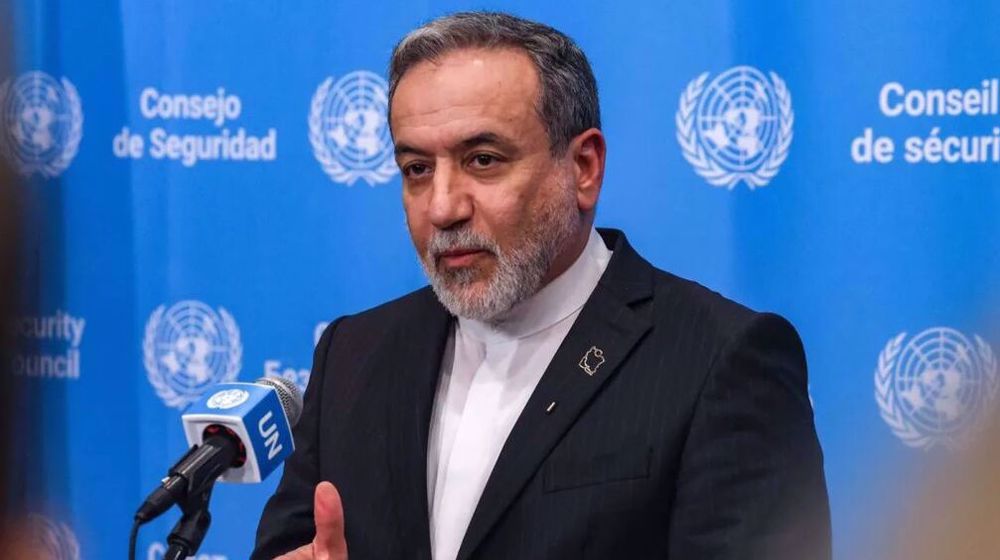
Foreign Minister Abbas Araghchi has outlined a seven-day plan for reopening the Strait of Hormuz, saying implementation would begin immediately if the United States accepted Iran’s conditions.
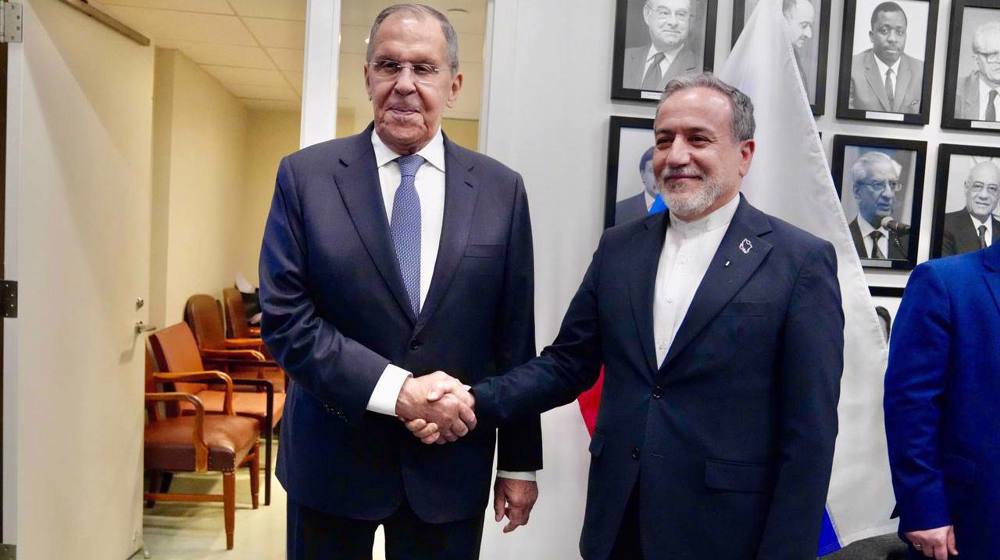
Speaking at a press conference at the United Nations headquarters in New York on Friday, the top diplomat said the seven-day period would begin once Washington accepted the plan.
🔴 Iranian Foreign Minister Abbas Araghchi speaks to media at UN:
— Press TV 🔻 (@PressTV) September 25, 2026
🔺Allegations that Iran is on verge of making nuclear weapons is a big lie
🔺Iran committed to security of Strait of Hormuz; US-Israeli actions insecure region pic.twitter.com/CxS3gZGQIE
“If that happens tomorrow, implementation of the plan will begin immediately,” he said.
Araghchi said Iran believes the necessary process could be completed within four or five days if the required measures were taken.
According to the foreign minister, under the proposed sequence, the Strait of Hormuz would reopen on the sixth day, followed by the United States’ entering into a final agreement on the seventh day.
He said the measures required from the United States had already been communicated to the American side and were set out within the framework of the Pakistan-mediated memorandum of understanding.
Iran closed the chokepoint following the launch of the latest round of unprovoked American-Israeli aggression against the country on February 28.
The Islamic Republic and the United States agreed on a 60-day reopening period as part of the memorandum of understanding in June, but American violations forced Tehran to reestablish the closure.
“If there is the necessary seriousness on the US side, this will happen and the Strait of Hormuz will be reopened,” Araghchi said.
The official said Iran remained committed to safe and secure navigation, but asserted that maritime security could not be restored through further military aggression, threats, blockade or economic pressure, citing the various instruments of pressure that Washington has been applying against Tehran.
“The Strait of Hormuz remained open until 28 February 2026,” he said, adding that insecurity in the waterway and disruption of maritime navigation were the direct result of aggressive actions by the United States and the Israeli regime.
The official reminded that, under Article Five of the memorandum, Iran undertook to put in place the necessary arrangements to facilitate the safe passage of ships, adding that the Islamic Republic immediately began technical talks with Oman to implement the commitment and restore maritime traffic to pre-war levels. “Within two weeks of the implementation of the memorandum, maritime traffic had returned to approximately 60 percent of its pre-war level,” he said.
Nevertheless, subsequent unilateral US military aggression and other aggressive measures violated and halted implementation of the memorandum, he said.
Araghchi said Iran continues to reaffirm its commitment to international law, the UN Charter, and diplomacy, citing the negotiations that produced the Islamic Republic’s 2015 nuclear agreement with world countries as well as its efforts to pursue diplomacy over the past two years.
He denounced the United States and the Israeli regime for pursuing “aggression, threats, assassination, economic warfare, and blatant disregard” for international law and the UN Charter.
The most recent round of American-Israeli aggression against Iran, he said, claimed the lives of more than 5,000 people, including hundreds of women and children. He cited attacks on residential areas, schools, hospitals, energy facilities, sports and cultural venues, transport infrastructure, and other civilian targets.
Araghchi also condemned Washington for using economic deprivation as a means of political pressure.
“This is not diplomacy; it is coercion and economic terrorism,” he said, adding that the measures violated Iran’s rights and the binding provisional measures issued by the International Court of Justice on October 3, 2018 that ordered the US to ease the sanctions it re-imposed on the Islamic Republic after abandoning the nuclear deal earlier that year.
Addressing allegations against Iran’s nuclear energy program, Araghchi said they were political.
He rejected the claim that Iran was “on the verge” of acquiring a nuclear weapon as a “big lie,” saying the Islamic Republic had been a party to the Nuclear Non-Proliferation Treaty since 1970 and subject to extensive International Atomic Energy Agency monitoring for decades.
He also said the United States could not claim to defend nuclear non-proliferation while targeting peaceful nuclear facilities under IAEA safeguards, referring to Washington’s acts of aggression against Iranian nuclear sites.
‘The choice now rests with the US’
He concluded by placing responsibility for the next step with Washington.
“The choice now rests with the United States. Iran will not accept coercion, threats or intimidation and will not relinquish its sovereign rights under pressure,” he said.
Iran sets 7 conditions for US to escape war quagmire: Top security officialhttps://t.co/l2NfFfVHOi
— Press TV 🔻 (@PressTV) September 20, 2026
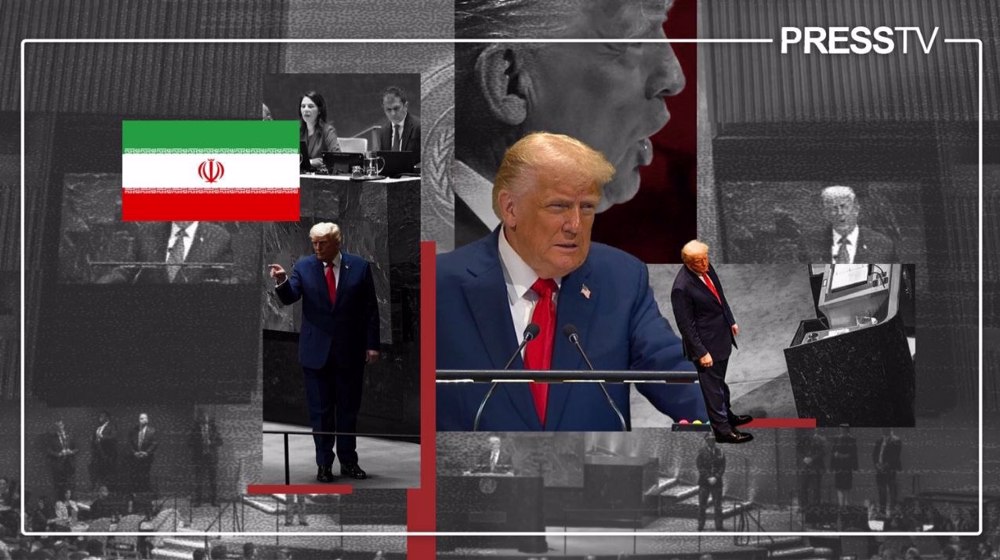
“The United Nations was established to prevent the ‘law of the jungle’ from replacing the rule of international law. The UN Charter is not optional. Sovereignty is not conditional. Diplomacy does not mean surrender. And peace cannot be built through threats of annihilation,” the official said, pointing to repeated threats issued by US President Donald Trump against the Islamic Republic.
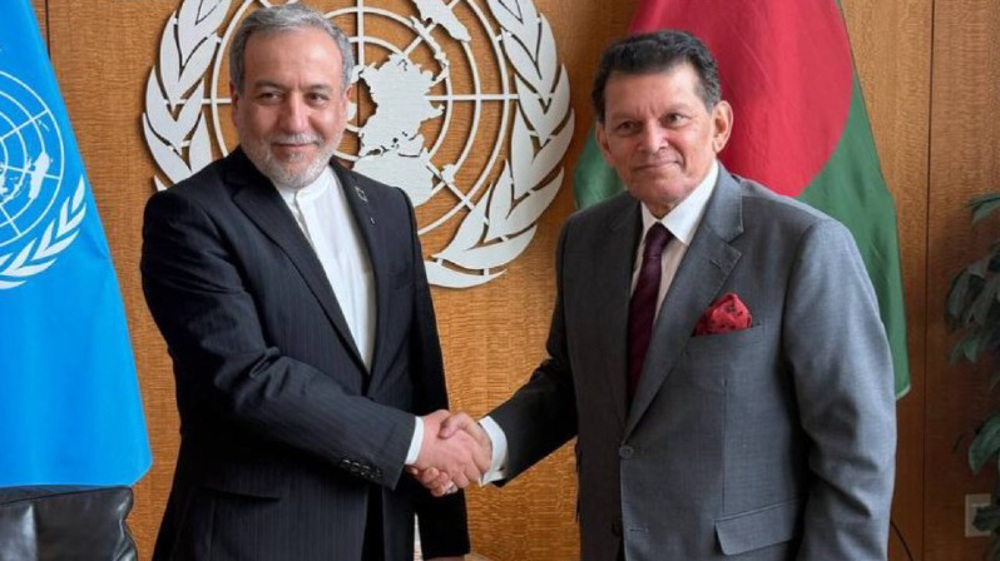
Iran FM: Restoring trust in UN requires ending impunity for those behind grave intl. crimes
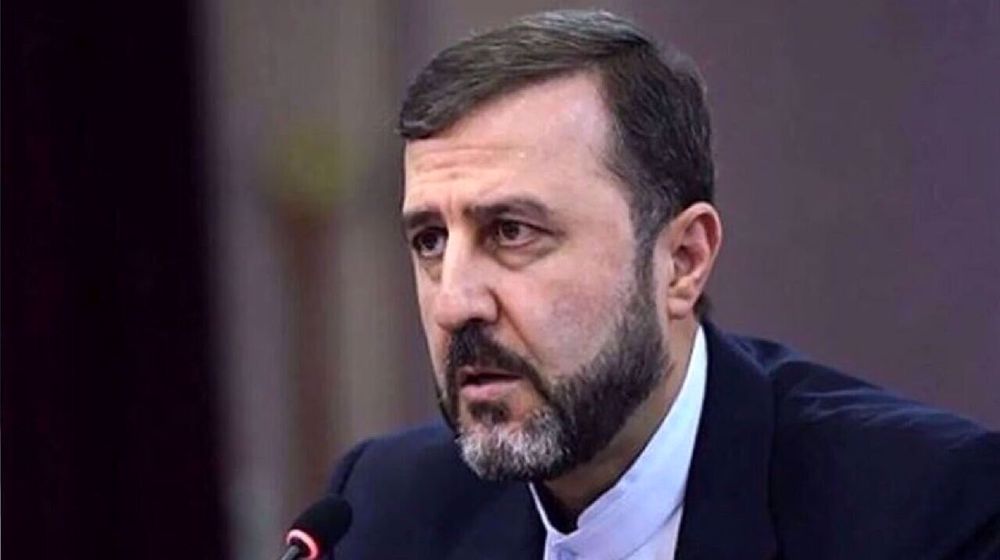
Disarmament without dealing with Israel’s nukes is meaningless: Iran's deputy FM
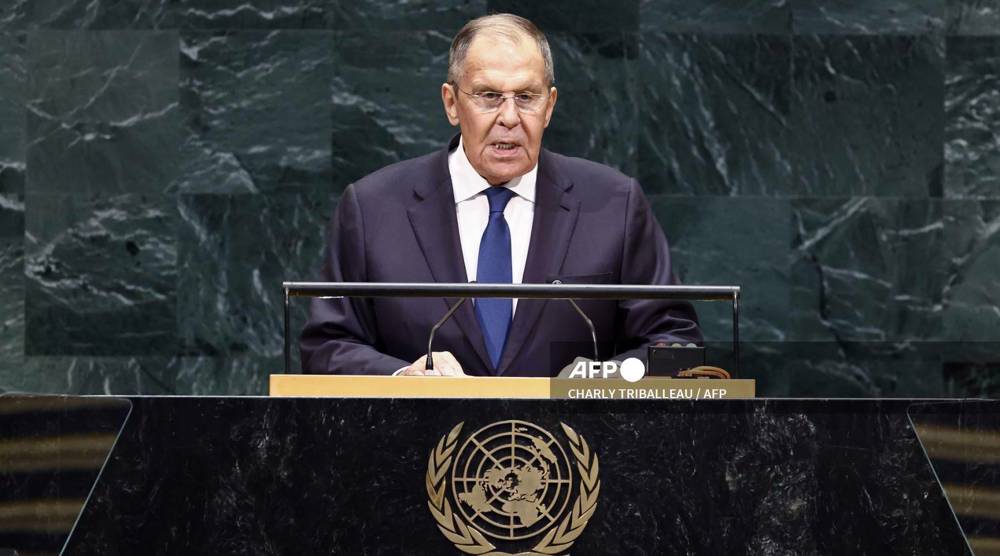
At UN, Russia condemns US assassination of Iran’s Leader as ‘unacceptable’



Iran FM: Restoring trust in UN requires ending impunity for those behind grave intl. crimes
Disarmament without dealing with Israel’s nukes is meaningless: Iran's deputy FM
VIDEO | UN says Gaza struggling with most severe economic crisis on record
At UN, Russia condemns US assassination of Iran’s Leader as ‘unacceptable’
Yemeni military says Saudi warplanes carry out 27 airstrikes in past 24 hours
Israel establishes new illegal settlement outpost in occupied West Bank
VIDEO | Press TV's news headlines
VIDEO | News Review: Iran slams US ‘economic terrorism’


 PressTV NEWSLETTER
now
PressTV NEWSLETTER
now
 This makes it easy to access the Press TV website
