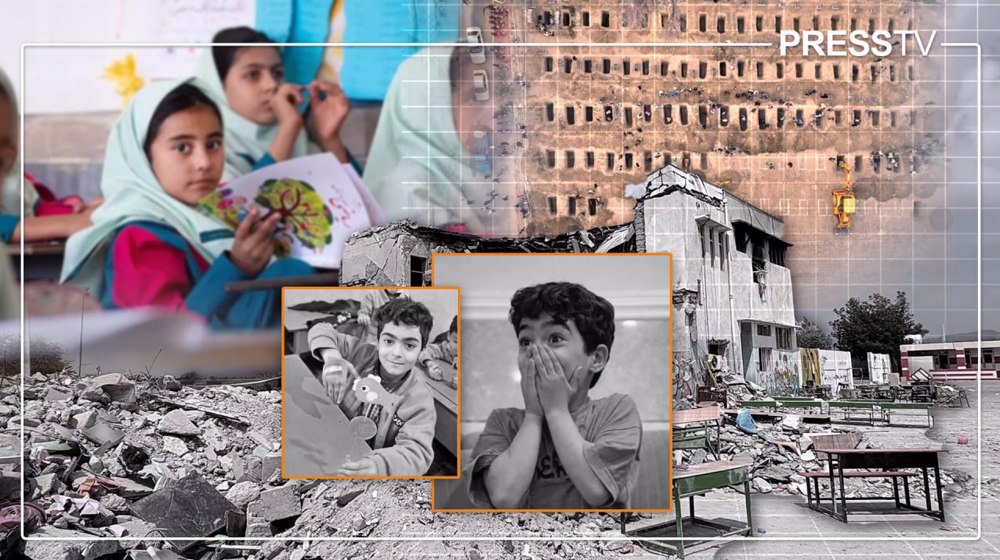
Minab’s school bell rings through grief as 168 empty desks stand as silent witnesses
By Maryam Bashirpour
In the first week of Mehr, which corresponds with late September, a familiar sound returns across Iran. Bells ring. Children pour through school doors, new notebooks in their hands, talking about the holidays and asking about their new teachers.
I have known this sound up close. I am a teacher who, for years, stood at the classroom door and watched as the young children and future builders of their country entered one by one.
But this year, I am standing at no door. I am sitting behind a desk, reading the names and taking attendance — something that breaks a teacher’s heart because some of those names do not answer.
Let me tell you what a teacher does on the first day of the academic year. Before the lessons start, before the introductions take place, before mathematics and poetry are sketched on the blackboard, the first task of a teacher is taking attendance.
He or she reads a name. A child says: “Present.” This small exchange — name, voice, name, voice — is the heartbeat of a classroom. It is from here that the teacher understands that the year has begun, that the classroom is filled with enthusiasm, vitality and life, and that children are thirsty for knowledge. It is here that the teacher understands they can begin their work.
But this year, in Minab, a teacher reads 168 names and hears no voice, no response. The attendance register is heavier this year than any other year.
A teacher reads the name “Makan Nasiri,” and there is no answer. Makan was a first-grade student at Shajareh Tayyibeh School in Minab. He went to school to study like all children do, but he never returned home. Not even his remains.
He was among the 168 little students who were killed by the US-Israeli war machine in an unprovoked and illegal attack on February 28.
They searched for weeks to find him. DNA tests were conducted, and the rubble was turned over and over, but no trace of his small body was found. Of Makan, nothing remained for burial except small signs of a child who had grown large in people’s memories; even his grave is empty.
It was February 28, 2026. Around 10:30 in the morning. The first recess had just ended. The children had returned to class. The mathematics teacher was at the board and was about to explain a problem when American Tomahawk missiles struck the school.
The missiles targeted the school three times and at intervals, and this is a clear indication that the attack was deliberate and planned. In this attack, at least 168 girls and boys were martyred on the first day of the 40-day imposed war.
Minab is the center of this grief, but it is not all of it. Iran’s Minister of Education announced that, in the imposed war by the United States and Israel against Iran, at least 310 students and teachers were martyred and more than 210 were wounded.
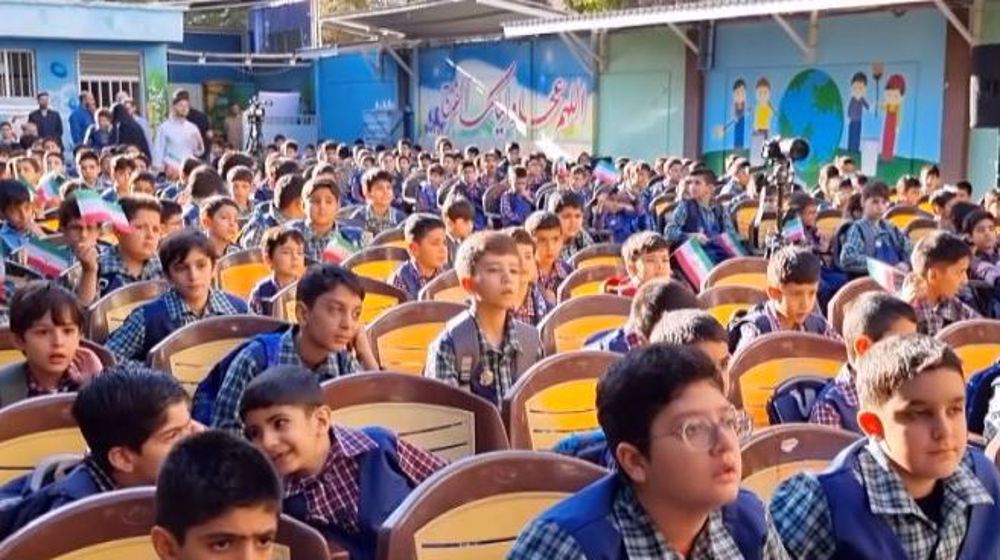
More than 750 schools were damaged, and around 900 educational and administrative units were destroyed or damaged.
The Iranian Red Crescent confirmed that 311 children who were martyred in the airstrike are absent from school this year. Imagine: 311 empty desks. 311 families who, on the first day of the academic year this year, instead of buying schoolbags and notebooks, went to their children’s graves to offer a silent prayer.
But why is a school targeted in the first place? The legal answer to this question is clear. Under the provisions of international law and the Hague and Geneva treaties and conventions, targeting civilians and civilian objects such as schools constitutes a war crime.
Under the Rome Statute, deliberately attacking educational facilities that have no military use is considered a war crime. Ms. Michelle Bachelet, the United Nations High Commissioner for Human Rights, said regarding the attack on the Minab school: “Images of bombed classrooms and grieving parents clearly showed who pays the highest price for war: civilians who have no power in the decisions that led to the war.”
UNICEF and UNESCO also expressed their deep concern and recalled that students in a place dedicated to education are protected under international humanitarian law.
The Iranian Teachers Association, in separate letters to UNICEF and UNESCO, called for the use of all mechanisms of international humanitarian law to condemn the killing of students in Minab and punish the aggressors as war criminals.
But to this day, no American or Israeli regime official has accepted responsibility for this diabolical crime. US officials have said that the attack is under investigation. The UN High Commissioner for Human Rights called on them to conduct the investigation quickly, impartially, transparently and fully, and to make its findings public. This has not been done to date.
And despite all this injustice and unkindness, this year’s school bell, which was always accompanied by celebrations marking the beginning of the new academic year, rang with a lump in its throat.
Esmaeil Baghaei, the Foreign Ministry spokesman, published images of the innocent faces of the children of Minab and wrote: “Today is the first day of Mehr; the day schools reopen in Iran; and these are the innocent faces of the children of Minab who were martyred in the American attack with Tomahawk missiles on Esfand 9, 1404. They should have been at school today, with bright eyes and happy faces, celebrating the beginning of the academic year; but now their torn bodies are buried beneath the earth.”
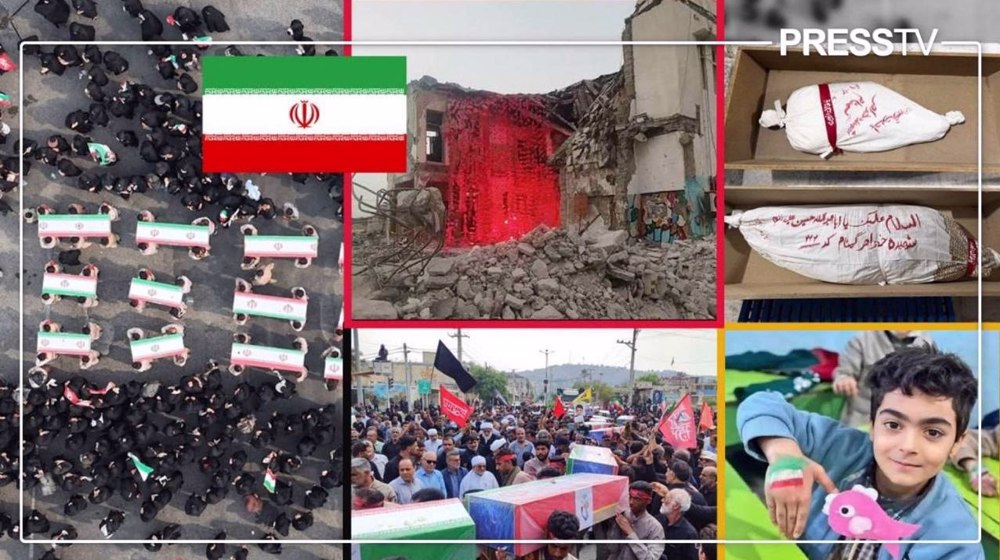
The school bell rang in Minab this year. In the same city where 168 of its desks have remained empty forever, teachers went to their classrooms. The surviving children went to a new school.
Life continues — not in the sense that the pain is over, but in the sense that we do not surrender.
Every student who enters a classroom today can be the continuation of the dream of a martyred student. Makan will not return to school, but his name remains alive, so that no one forgets that behind every desk sits a dream, and when war reaches a school, it does not only destroy a building; it targets part of the children’s future.
This year, the school bell in Minab carries a lump in its throat. But it rang so that we would remember why we resist and refuse to be unnerved. It rang so that the world would know: we do not forget or forgive.
And as a teacher, I teach my children that resilience means that, after seeing the rubble left by the bombing, we still love school. It means knowing that 168 empty desks are not the end of our story. It means turning grief into responsibility, not into forgetfulness.
I teach that resistance means living with pain, but not surrendering or retreating. I teach that recognizing the crimes of America and Israel means knowing who gave the order, who sent the missiles, and who prevented global condemnation of the heinous crime.
And I teach them to fight against arrogance and never bow their heads before any arrogant power.
And finally, I teach that we do not sow hatred; we sow truth. We seek justice. And we want no other child to leave an empty place behind in the classroom.
Maryam Bashirpour is a university researcher, writer and teacher based in Tehran.
(The views expressed in this article do not necessarily reflect those of Press TV.)
313,000-strong ‘Jan-Fada’ drill signifies Iran’s popular mobilization and social readiness amid war
How Iran turned US military and economic aggression into strategic leverage to dictate terms
Remembering Sabra and Shatila massacre: Why memory is the ultimate shield against erasure



IRGC: Iran will continue punishing US until Tehran’s conditions are met
VIDEO | German teens skip schools nationwide in protest at compulsory military service
VIDEO | Tehran children center marks 1,000th stem cell transplant
VIDEO | Palestinians decry world officials' inaction on Israeli crimes at UNGA
VIDEO | 'We’re seeing a replay of the US-backed 1964 coup in Brazil': Analyst
Iran FM outlines seven-day plan for conditional reopening of Strait of Hormuz
Saudi Arabia has kept nuclear weapons option open: Report
VIDEO | 26th ICCU focuses on future of cardiovascular medicine


 PressTV NEWSLETTER
now
PressTV NEWSLETTER
now
 This makes it easy to access the Press TV website
