Shahed-238: Iran’s jet-powered drone redefines low-cost threat, challenges modern air defense networks
By Mohammad Molaei
Among the arsenal Iran deployed during the 40-day imposed war against US and Israeli military bases and assets scattered across the region, one platform drew particular attention from Western air-defense analysts.
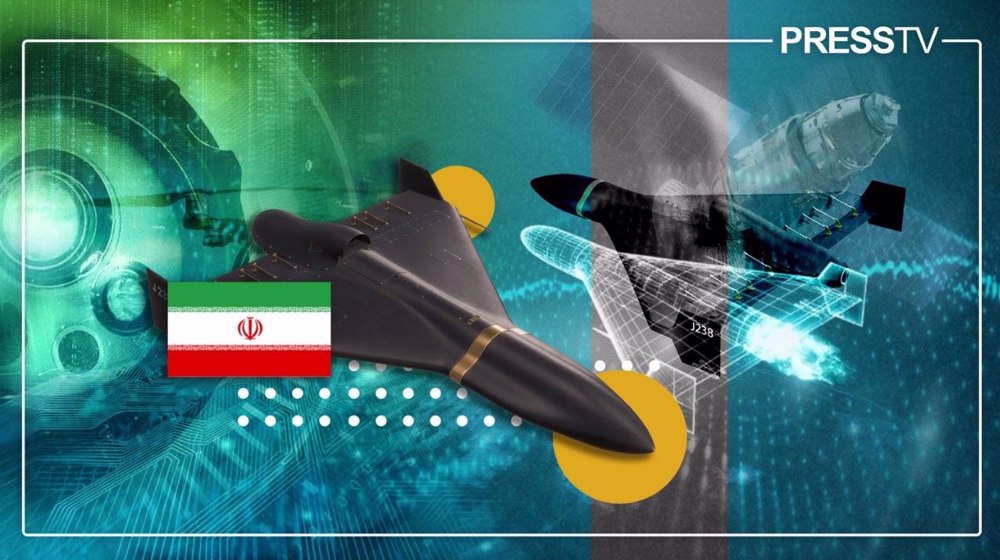
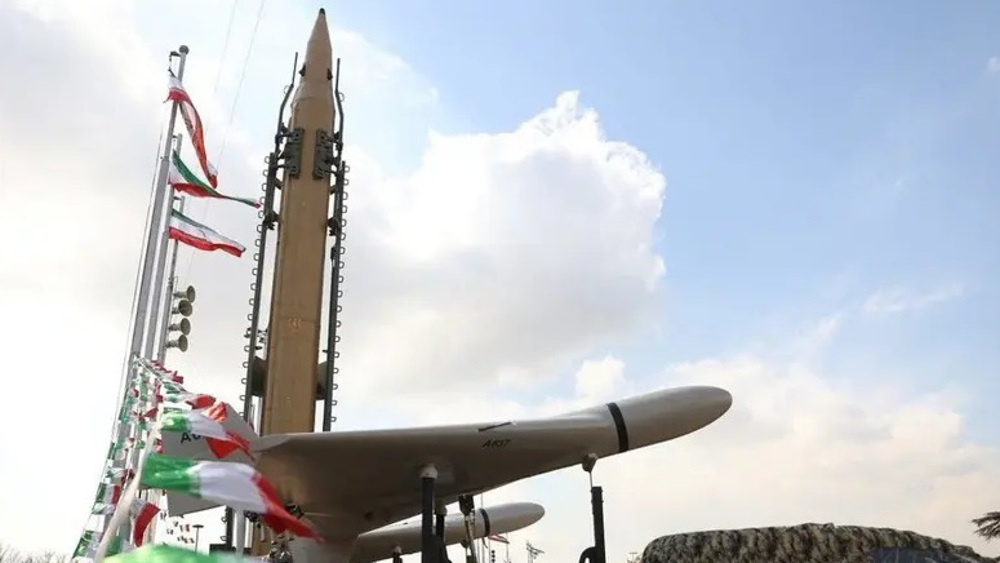
The Shahed-238, a jet-powered evolution of the venerable Shahed-136, was the cynosure of all eyes and ears. By trading some range for greater speed, the system emerged as a particularly challenging low-cost target for layered interceptor networks.
The Shahed-238 was first unveiled in November 2023 by Shahed Aviation Industries at an Islamic Revolution Guards Corps (IRGC) aerospace exhibition, held alongside a visit by the martyred Leader of the Islamic Revolution, Ayatollah Seyyed Ali Khamenei, to review achievements by the IRGC Aerospace Force.
Unlike many showcase systems, however, the platform did not remain a static exhibit. By late 2025, it had entered small-scale operational production, with its combat debut coming during the 12-day war before seeing substantially more extensive use in the 40-day war that followed.
Technical profile: From piston to turbojet
The defining break between the Shahed-238 and its predecessors is propulsion. Where the Shahed-136 relies on an Iranian-built MD-550 piston engine driving a rear-mounted propeller, the Shahed-238 replaces that system entirely with a compact turbojet.
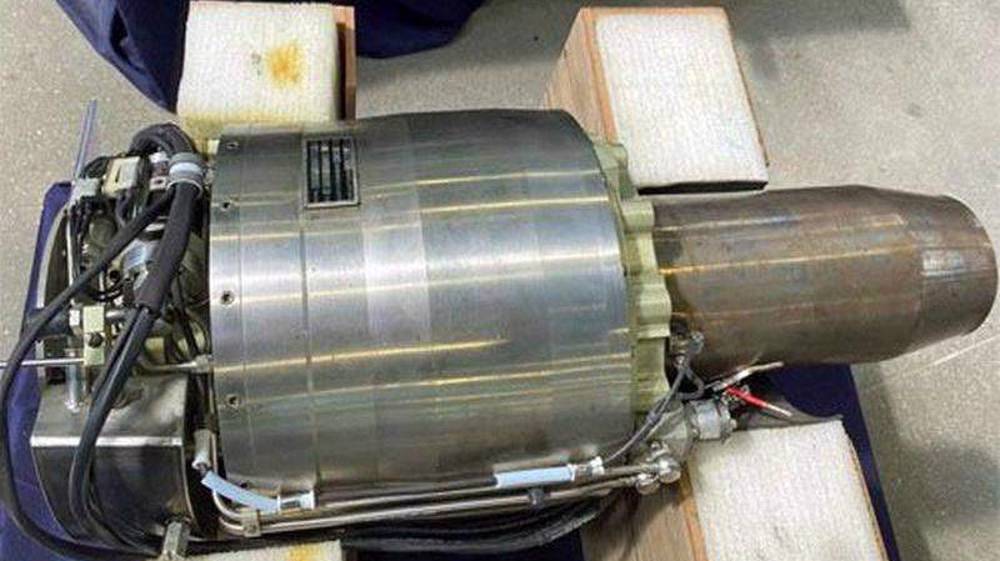
Technical analysis of recovered airframes has identified two distinct engine variants in service: an Iranian-built unit from the Toloue-10 family, and, in at least some recovered examples, a Czech-manufactured PBS TJ150 turbojet a unit weighing under 19 kilograms with roughly 1,500 newtons of thrust, originally marketed for commercial unmanned systems rather than weapons.
That substitution changes the drone's performance envelope substantially. Where the Shahed-136 cruises at roughly 185 km/h, the Shahed-238 reaches mid-course speeds in the 500–600 km/h range, with some tracked engagements recording terminal impact speeds in excess of 700 km/h.
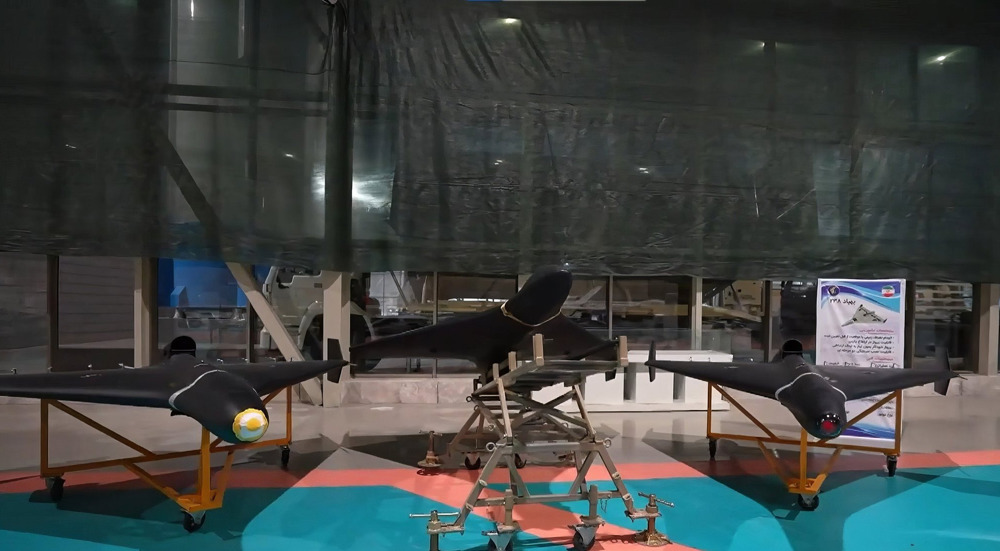
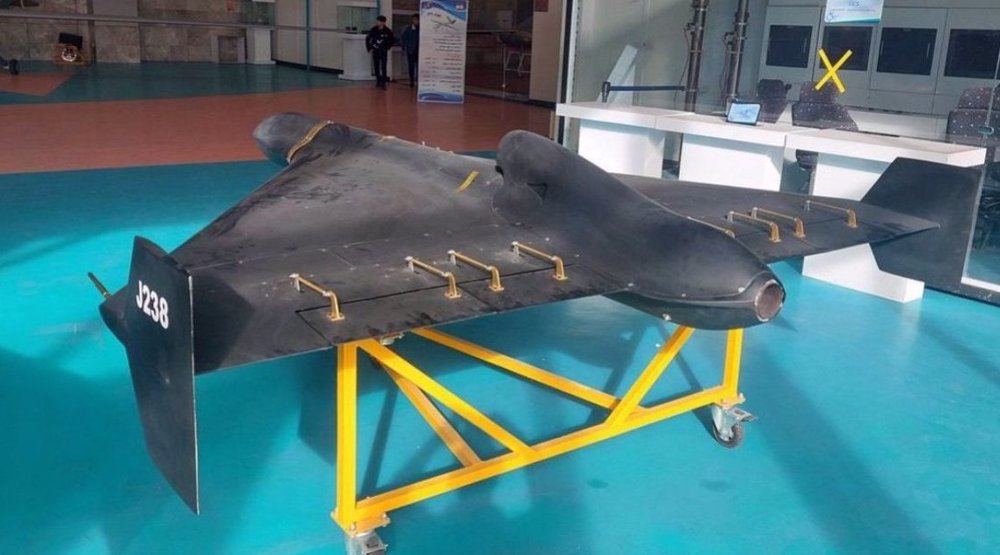
The airframe itself is roughly 3.5 meters long with a 3-meter wingspan, a flight ceiling near 9,000 meters (30,000 feet), and a warhead capacity of up to 50 kilograms. Guidance combines GNSS with inertial navigation; launch is typically rocket-assisted or vehicle-based; and recovery
on airframes not used operationally is via parachute.
Fitting a jet engine into an airframe originally built around a piston power plant has not come without cost. The turbojet's fuselage placement required modifications to the upper airframe to accommodate air intake, added weight, and forced a fuel-type change from gasoline to Jet-A.
The net effect has been a marked increase in maximum takeoff weight from roughly 250 kilograms in earlier configurations to 380 kilograms, alongside reduced fuel-carrying capacity and, consequently, shorter endurance than the Shahed-136's long-range variants.
Iran has, in effect, built a version of the platform optimized specifically for speed and reduced reaction time rather than maximum range.
Operational use in the 40-day war
During the opening weeks of Iran's retaliatory campaign in response to the illegal and unprovoked military aggression by the US and its Zionist ally, codenamed as part of its "True Promise" operations series, Iranian forces employed thousands of one-way-attack drones, with the Shahed-238 forming a specific high-speed component within that broader barrage, deployed specifically to shorten adversary warning times and complicate the engagement cycles of air-defense operators.
Beyond its use against Israeli assets in the occupied territories, the platform's operational reach extended further afield: a Shahed-238 struck a forecourt area in front of a hotel in Dubai on February 28, 2026, marking one of the clearest documented instances of the type striking Persian Gulf territory outside the immediate front.
Penetrating the ring: Why speed changes the calculus
The Shahed-238's core tactical value lies less in any single technical spec than in what its speed does to the arithmetic of layered air defense. Modern interceptor networks are built around engagement timelines calculated for slow, propeller-driven loitering munitions like the Shahed-136, which travel at speeds low enough that even legacy systems have adequate reaction windows.
A target closing at 500–600 km/h compresses that window substantially, reducing the time available for detection, track classification, and interceptor launch, particularly for point-defense systems optimized against slower drone traffic.
Iranian military sources have explicitly presented this as a key objective, describing the jet-propulsion upgrade as a means of increasing speed and maneuverability to complicate air-defense engagements. Specialized variants of the airframe have also been described as being configured for suppression-of-enemy-air-defense (SEAD) missions, including versions equipped with imaging-infrared seekers and radar-homing guidance designed to target emitting radar systems rather than fixed infrastructure alone.
The platform's tactical logic also fits within Iran's broader "attrition" doctrine for drone warfare: cheap, mass-produced airframes designed to force defenders into a costly exchange ratio, where each interceptor fired often costs many multiples of the drones themselves, degrades an adversary's finite interceptor stockpile regardless of whether any individual drone is shot down.
Layering a faster-flying variant like the Shahed-238 into these mixed salvos, alongside slower Shahed-136 and Shahed-131 types, forces defenders to allocate scarce high-end interceptor capacity against the fast movers while still expending resources against the larger, slow-moving mass a saturation problem that is compounded rather than solved by the presence of a single high-speed type within the mix.
Production scale and the road ahead
Open-source estimates of combined Shahed-136 and Shahed-238 production from Iranian facilities alone have placed monthly output above 200 units, a figure that, combined with parallel production at other places, suggests a manufacturing base capable of approaching 400–500 airframes a month.
Later derivatives reportedly added larger warheads, air-launch capability, and hardened anti-jam guidance, an evolutionary path that gives some indication of where successor variants may be headed.
Whether the Shahed-238 ultimately proves a decisive weapon, by most technical assessments, remains an open question. What is not in question is that its speed has forced a real recalculation inside the air-defense community regarding what a "low-cost drone threat" is now capable of penetrating.
Iran to begin reverse-engineering captured US underwater drone: IRGC

US, Israel must accept 'a region free of their evil, criminal presence': IRGC

US lawmaker admits American people footing bill for Trump’s failed aggression against Iran



UN chief warns Israeli violence in West Bank raises ‘specter of ethnic cleansing’
VIDEO | ‘Korea gets nothing, loses everything, with Hormuz deployment’
Iran parliamentary commission approves penalties for violators of Hormuz laws
VIDEO | Trump’s war disrupts the world
Araghchi urges world to hold US accountable for ‘war crimes’ at UNGA
VIDEO | Press TV's news headlines
US F-16 fighter jet crashes at air base in Germany
Iran warns US against new attack, says Washington will gain ‘nothing but failure’



 PressTV NEWSLETTER
now
PressTV NEWSLETTER
now
 This makes it easy to access the Press TV website
