Two years after Israel’s pager terrorism in Lebanon: Scars, loss, and the will to carry on
By Lama Almakhour
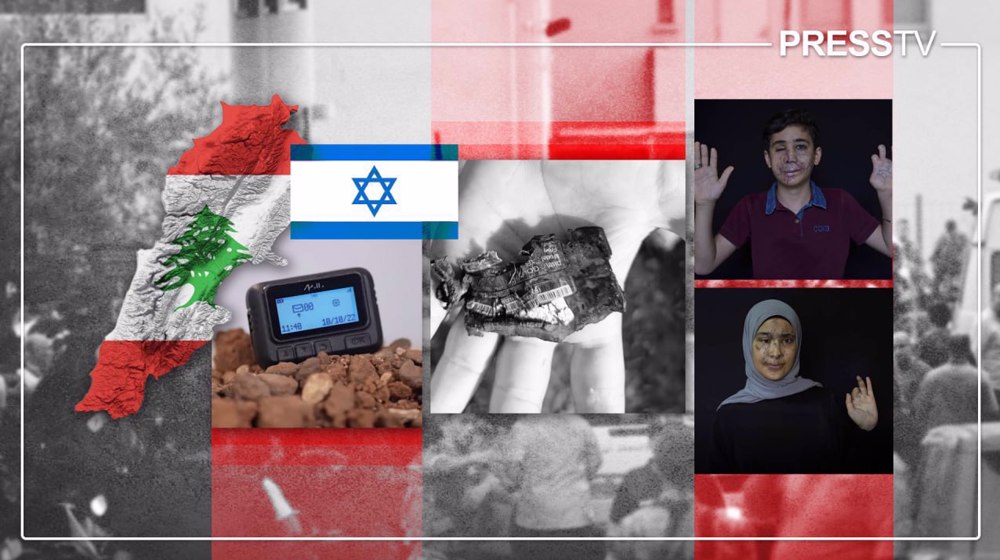
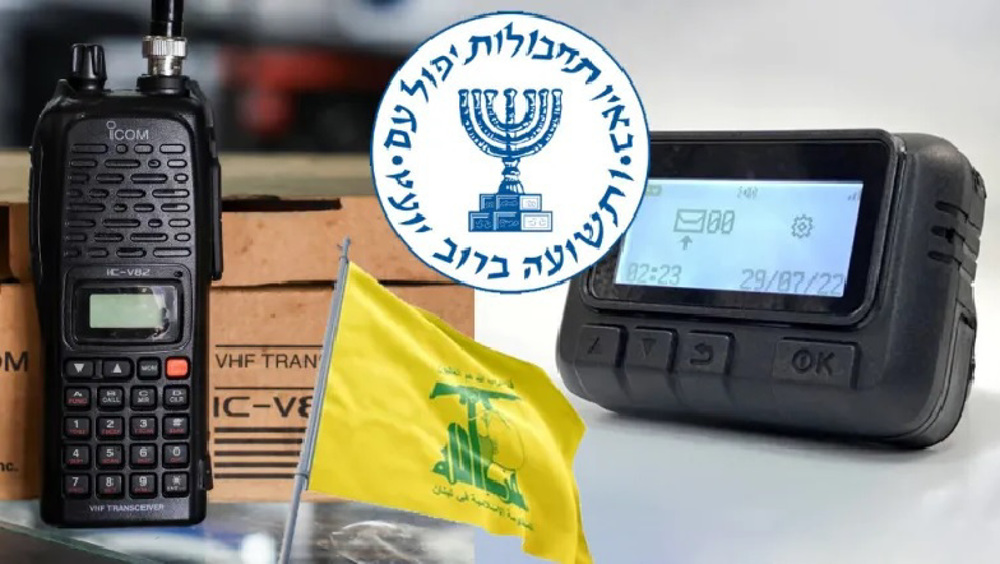
Two years have passed since the Israeli regime carried out the pager terrorist attacks that tore through Lebanon, killing dozens, injuring thousands, and forever changing lives.
For some, the events of September 17-18, 2024, became a permanent reminder of that day. For others, they marked the beginning of a different life – one in which disability, loss, and grief had to be confronted without abandoning the roles and commitments they had built before the attacks.
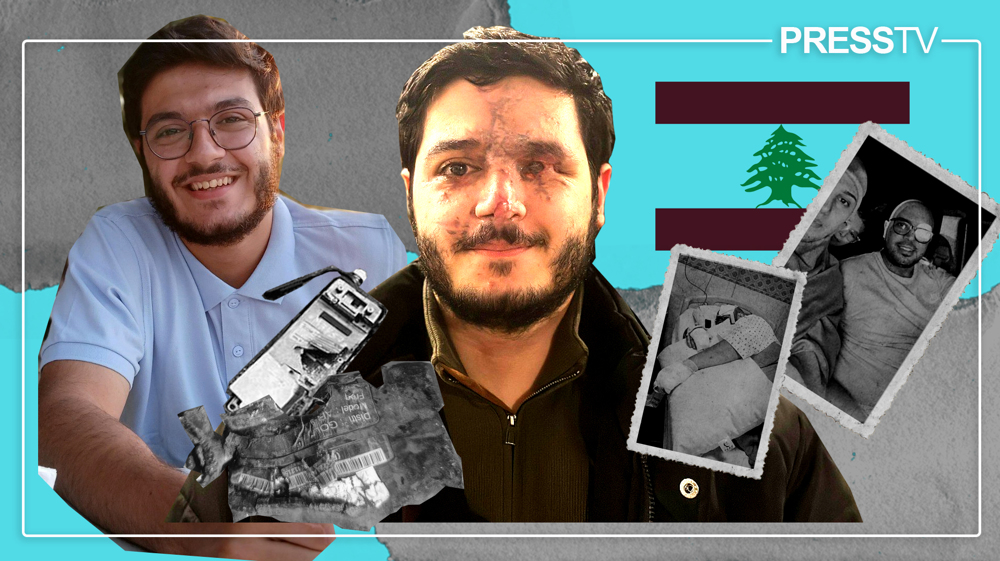
Among them is Basil Shaheen, a young Lebanese father, husband, an educated man, and above all, a resistance fighter from Hermel in northeastern Lebanon.
“The scar on my body is not merely a mark left by an injury. It is part of my identity,” Basil told the Press TV website, recalling that fateful day.
He described his wound not simply as something that would accompany him for the rest of his life, but as a new chapter in his journey – one that requires him to adapt without breaking, and to turn what happened to him into a source of determination and strength.
Basil still remembers the pager explosion in vivid detail. He was speaking on the phone in his office when a young man sitting about forty centimeters away received a pager alert. The man began reading the message before handing the device to Basil.
The pager was approximately thirty centimeters from Basil’s eyes when it exploded. At the same moment, the pager belonging to the man Basil was speaking to on the phone also exploded.
“Ya Allah” — “Oh God” — was the first thing Basil said as the first drop of blood fell.
He felt wounds across his face but did not initially understand the extent of the damage to his eyes. All he could see was darkness – pitch darkness.
He was taken to hospital, spending the journey trying to remain composed and speaking with those around him even as the pain intensified. His wife was at the hospital and witnessed the aftermath. For Basil, the immediate shock of the injury was accompanied by thoughts of his family and children, and by the uncertainty of what life would look like from that point forward.
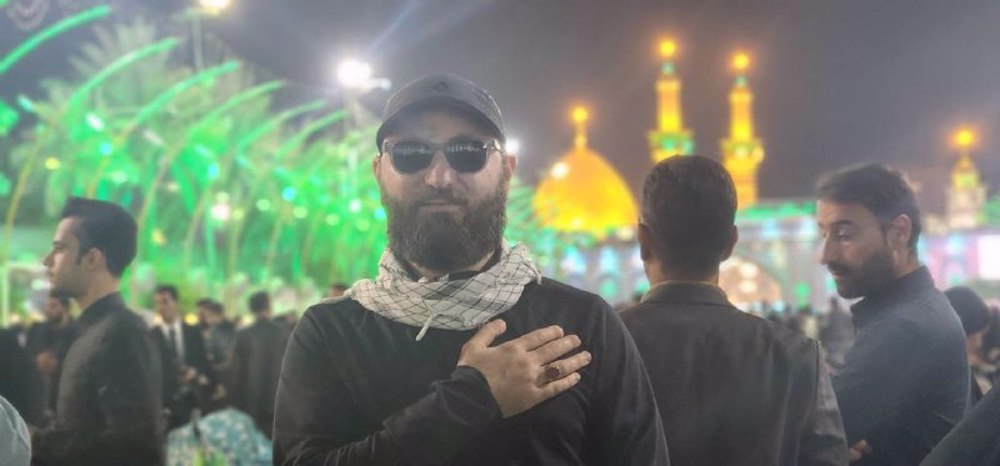
There was also a deeply personal dimension to the date itself. September 17 was Basil's birthday.
He does not regard that coincidence as accidental. Instead, he calls it his “new birth,” believing that the first drop of blood that fell washed away his sins, marking the end of a long period of suffering.
The most difficult moment was during his treatment in Iran, when a neurologist told him that his expected vision would be extremely limited and blurred, perhaps allowing him to distinguish only a few fingers from close range.
“When we heard the medical assessment, I felt truly broken,” he recalled.
But while listening to the supplication of the Day of Arafah attributed to Imam Hussein (AS), Basil said his perspective began to change. Instead of focusing exclusively on what he had lost, he began counting the blessings that remained.
“How many blessings had I been living with every day without thinking about them?” he recalled asking himself at the time. That change in perspective also shaped how he understands his place in the world and the ongoing resistance against the occupation.
Basil does not view the resistance as confined to one geographical front. To him, what is happening across Palestine, Lebanon and the wider region form part of a larger confrontation, which he describes in terms of the “unified front” and the “Axis of Resistance.”
He sees the struggle not only as military, but as an ideological confrontation involving the Zionist regime and the United States and connects it to his belief in the emergence of Imam al-Mahdi (AS), the awaited savior in Islam, and the greater battle.
For Basil, the injury resulting from the pager explosion two years ago did not mean leaving that path behind, it rather meant changing the way he walks that path.
“My resistance is no longer in the form I practiced previously, but I have not stopped resisting,” he told the Press TV website.
Today, he focuses on serving people while adapting his work to his new circumstances. He has also launched a project of his own: a tayammum stone for wounded people (a stone used in Islam for ablution when water cannot be used) designed with impressions of two hands, one missing fingers, to commemorate the wounded and as a gift to survivors.
From Basil to Bayan
Bayan is another pager victim from Hermel and the wife of one of the martyrs. She shared with the Press TV website a unique experience that reveals another side of the story.
Bayan was at home when her husband's pager began ringing. He asked their daughter Fatima, who was not yet four, to bring it to him. The child hesitated. Bayan came out of the kitchen, picked up the pager and approached her husband, asking why it was ringing.
She never finished the question as the pager instantly exploded, bringing their world down.
Her first thought was not for herself. She could see blood on her husband and feared that it belonged to their young son Mahdi, who was on his father's chest. She refused to leave for the hospital until she had seen her children and confirmed that they were safe.
Only then did she realize that her own hand was bleeding and that part of it was gone.
On the way to the hospital, Bayan held her injured hand out of the car window, her severed fingers and blood visible, so that other cars would understand the emergency and clear a path.
She believed at the time that she had sacrificed herself for her husband, whom she affectionately referred to as “the beautiful dark-skinned one.”
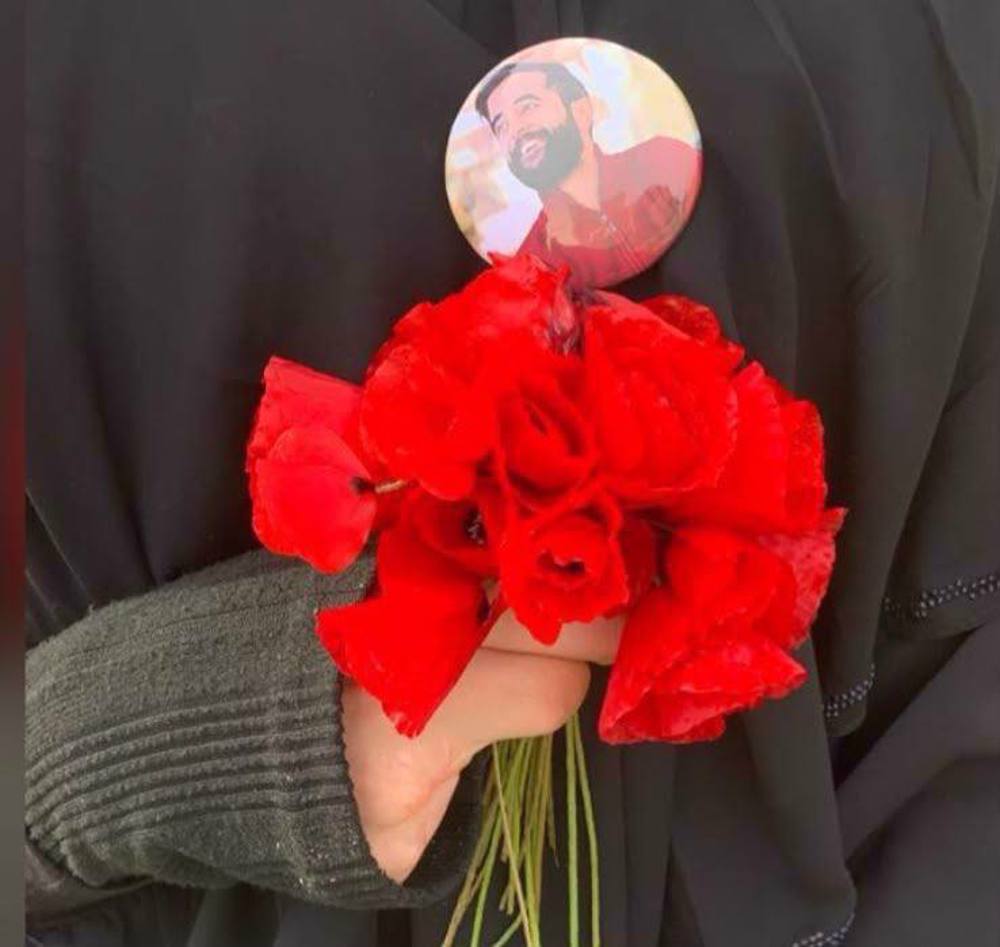
Still able to see through one eye, she was convinced that she would soon lose that sight as well. She asked for her parents and sisters to be brought to her so she could see them one last time.
Those who came to see her struggled to contain their emotions.
“They would cover their faces and cry,” she recalled in conversation with the Press TV website. “I would tell them: ‘This is me. This is Bayan.’”
Two years later, another devastating loss would reshape her life. Her husband, Mohammad Saleh Yaasoub al-Din, was martyred at the stroke of dawn in southern Lebanon during the latest Israeli war of aggression that continues.
For Bayan, it felt as though she had lost the light in her eyes once again. Yet she continued.
After the pager attack, Bayan and her husband had launched a home-provisions project called “We Recovered.” Following his martyrdom, she chose to continue the project in accordance with his will and the strength and determination he had instilled in her.
“I am continuing what we started together,” she said. “For me, loss and breaking down are not options.”
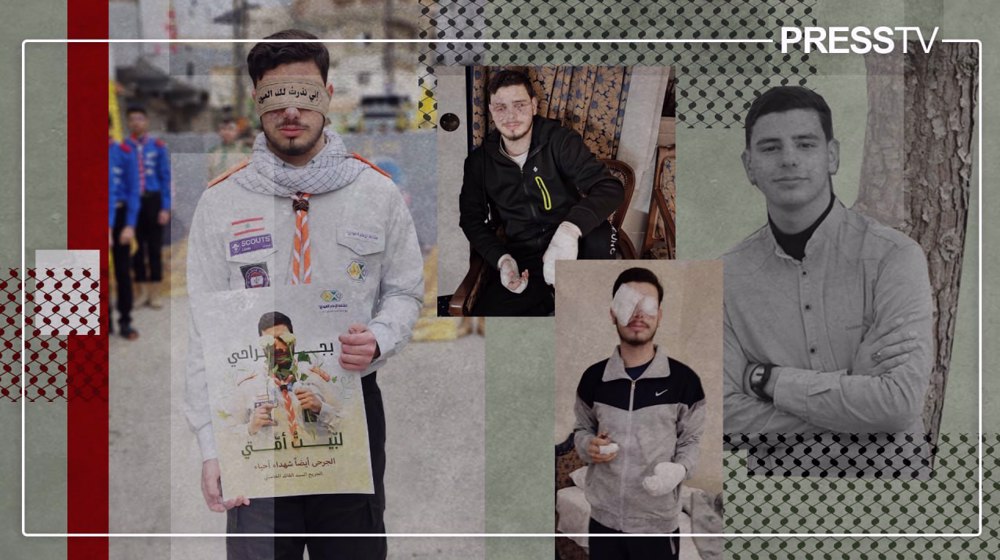
The wounded scout leader Haidar Saqr
Haidar Saqr, a wounded scout leader from Hermel, offered yet another version of what life after the brutal Israeli pager terrorist attack looks like, two years on.
For years, scouting had been central to his work: educating younger generations, helping shape their social development and remaining present among the children and young people he helped raise.
His injury did not change that role. What changed was the way he performed it.
Accepting help from others was not easy for Haidar. Whenever he encountered something he could no longer do as he once had, he searched for another method — another solution that would allow him to accomplish it independently.
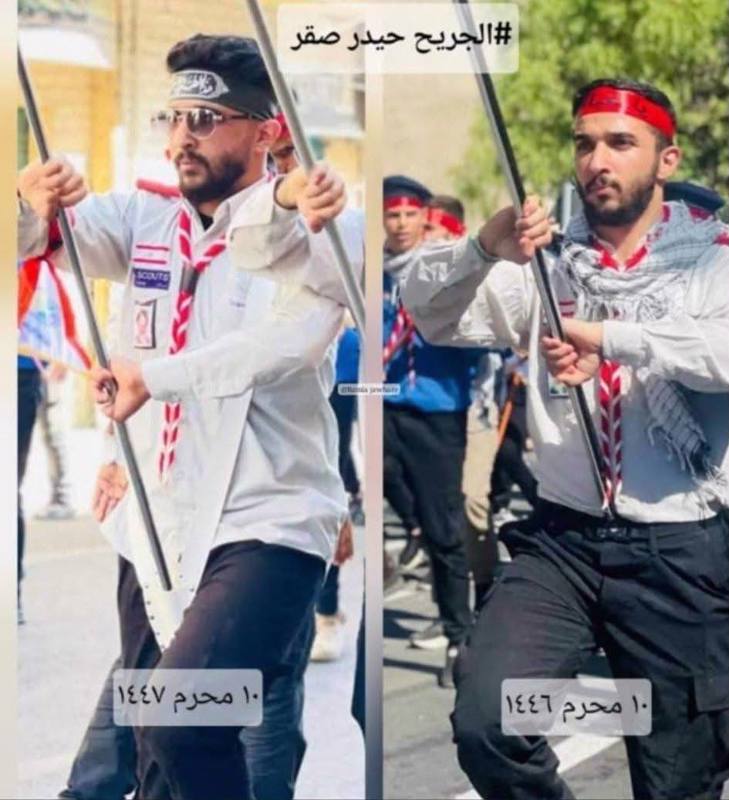
Rather than abandoning his work, he adapted it, relying on the senses and abilities that remained.
He continued his scouting activities and remained among the youngsters he had spent years guiding. But his presence now carried another meaning. He was no longer teaching determination, perseverance and resolve solely through words. His own daily life had become an example of those values.
For Haidar, the injury did not mark the end of the road. It forced him to find another way to walk the same path with greater resolve and determination.
Basil, Bayan and Haidar have lived through different forms of injury, loss and recovery. Yet their stories converge on the same refusal to allow what happened to define the limits of their lives.
Two years after the Israeli pager attack, their wounds remain visible — on their bodies, in their memories and in the lives they have rebuilt.
They have chosen not to disappear from the battlefield, but to remain part of it, both as participants and witnesses, insisting that what happened be remembered as they experienced it — without distortion.
Remembering Sabra and Shatila massacre: Why memory is the ultimate shield against erasure
Iran FM, Lebanese speaker discuss Zionist aggression, reaffirm support for resistance
Six children among 13 killed as Israel ramps up attacks on south Lebanon



VIDEO | Pakistan, China co-chair historic SCO bank framework talks
VIDEO | Press TV's news headlines
VIDEO | News Review: US accused of understating troop deaths in war on Iran
Trump’s ‘war of choice’ against Iran ‘a disaster’: House Democratic leader
Iran’s nuclear doctrine not changed, but NPT withdrawal possible: Top security official
Blast rocks military site in Syria’s Dayr al-Zawr, killing 11 HTS forces
EU urges US to reconsider visa denial for Palestinian UN delegation
Iran dismisses White House accusations as ‘flight from reality,’ ‘act of projection’


 PressTV NEWSLETTER
now
PressTV NEWSLETTER
now
 This makes it easy to access the Press TV website
