US clears way for F-35 fighter jet sale to Saudi Arabia amid Riyadh’s renewed aggression against Yemen
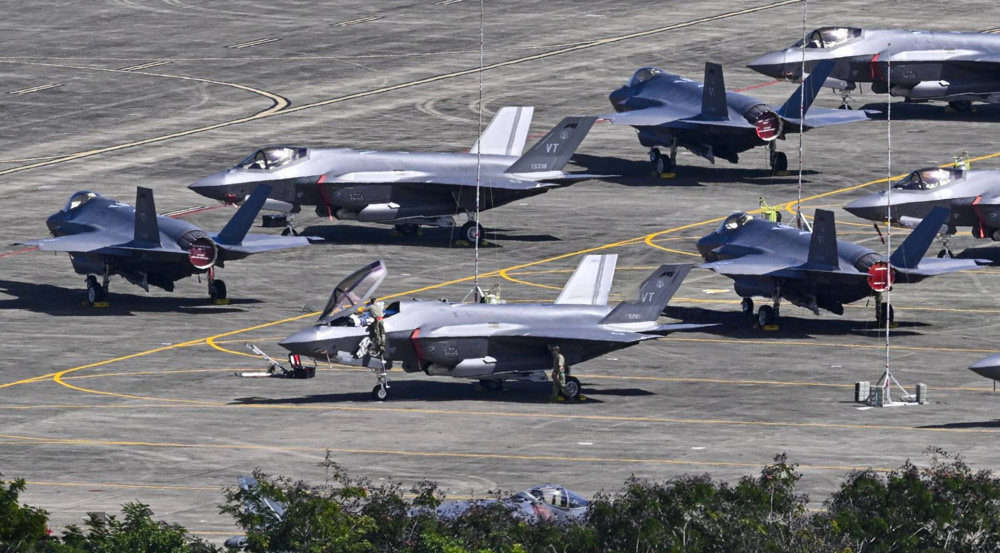
The US State Department has approved a potential $24.3 billion sale of F-35 fighter jets to Saudi Arabia as Riyadh intensifies its military aggression against Yemen.
The approval covers 48 Lockheed Martin F-35 Lightning II aircraft and 49 Pratt & Whitney engines, but the agreement still requires congressional review.
The State Department notified Congress on Thursday that the proposed sale would include the aircraft, engines, communications equipment, electronic-warfare systems, spare parts, training, simulators, software and logistical support.
Congress has 30 days to review the proposed sale, while lawmakers have previously scrutinized major arms deals with Riyadh, particularly following the 2018 killing of Saudi journalist Jamal Khashoggi.
The approval follows a broader expansion of US-Saudi military ties, including an arms package worth nearly $142 billion agreed in 2025 that the White House described as “the largest military cooperation agreement in US history.”
Saudi Arabia welcomed the proposed sale, with its embassy in Washington describing it as another step in the long-standing strategic partnership between Riyadh and Washington.
“The proposed F-35 sale reflects the strength and enduring nature of the Saudi-US strategic partnership and the continued advancement of our defense cooperation,” the embassy wrote in a post on X.
“For decades, Saudi-US security cooperation has contributed to regional stability, strengthened our collective defense capabilities, and advanced our shared security interests,” it claimed.
The F-35 is a fifth-generation multirole fighter built around stealth, advanced sensors, information fusion and secure communications.
Saudi Arabia has sought the F-35 for years as part of efforts to modernize its air force, which currently includes US-made F-15s and European Tornado and Eurofighter Typhoon aircraft.
Israel has flown the aircraft for about a decade and remains the only side in West Asia currently using the F-35, meaning the proposed Saudi acquisition would make Riyadh the first Arab user of the aircraft.
However, many observers view the offer as a non-starter — part of Washington's maneuvering to keep Saudi Arabia aligned with its interests for further manipulation and exploitation.
This follows Trump's blunt dismissal of Saudi Crown Prince Mohammed bin Salman's repeated desperate pleas — reported to have been made three times in a single day in some accounts — to bomb Yemeni forces and halt their advances, which left Riyadh both humiliated and furious.
The sale is certain to face strong opposition in Congress, with the Israeli lobby and the Zionist regime expected to work to prevent it from moving forward, unless they can extract a strategic concession from the Saudis — such as joining the Abraham Accords — and even then, they would likely not provide the Saudis with the same capabilities that the Zionist regime possesses in its F-35s, instead truncating sensitive components.
The US has maintained tight control over the F-35’s software and mission systems, with Israel receiving unique capabilities and greater access to modify the aircraft than other foreign users.
The occupying regime has extensively used the aircraft during its aggression against Iran and Lebanon and during the genocide in Gaza, with the attacks killing and wounding tens of thousands of civilians.
Iran's successful strike on an F-35 on March 19 — which the United States acknowledged only last week — has severely dented the much-hyped aircraft's reputation, reportedly forcing some parties to reconsider their plans to purchase the jet, which is priced at over $100 million per unit.
On the day the video of Iran's successful strike was released, the manufacturer's shares slumped sharply, leaving the United States reeling.
The fanfare over the F-35 proposal comes as Saudi Arabia has intensified its air raids against Yemen following humiliating setbacks against Yemeni armed forces along the Red Sea coast.
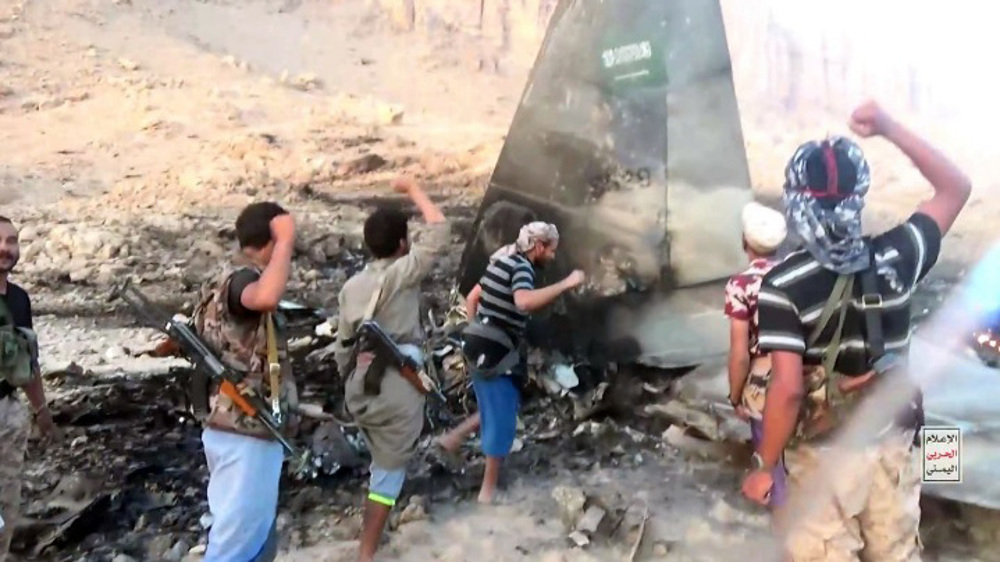
On Tuesday, Yemeni armed forces announced having shot down a Saudi F-15 fighter jet over Ma'rib Governorate using a locally manufactured surface-to-air missile.
Two follow-up formations of Saudi F-15 and Typhoon jets were also engaged and forced to retreat while searching for the wreckage.
Following the announcement, Yemeni forces released footage showing a missile striking an aircraft and fighters inspecting the wreckage in a desert area.
Yemeni armed forces spokesperson Yahya Saree said on Friday that Saudi F-15 fighter jets operating from the Khamis Mushait air base carried out 37 airstrikes against areas of Taiz and Hajjah over a 24-hour period, resulting in civilian deaths and injuries.
Since March 2015, Saudi Arabia and its allies have imposed a blockade on Yemen and launched a sweeping military aggression, backed by military, political and logistical support from the US and several Western countries.
The blockade has killed tens of thousands of Yemenis, while the Saudi-led campaign has failed to achieve its stated objective of restoring a puppet regime in Sana'a.

Al-Houthi: Saudi claims of Yemen targeting Mecca 'heinous lie', manifest slander

Iran dismisses Saudi claim that Yemen attempted to target Mecca
Report: Saudi Arabia seeks allies’ assistance as missiles deplete amid war on Yemen



Saudi crown prince seeks dialogue with Ansarullah after Yemeni blows: Report
IRGC intelligence forces eliminate two terrorists in southeast Iran
South Korea says will not send troops to join US war on Iran
Yemen's control of Bab al-Mandab 'deepens crisis' in Israel
Iran calls for ‘zero-tolerance’ policy on attacks against nuclear facilities at IAEA
Skyrocketing US inflation
US clears way for F-35 sale to Saudi Arabia amid aggression against Yemen
‘Nightmare for enemies’: Iran launches mass ‘Sacrifice for Iran’ drill



 PressTV NEWSLETTER now
  This makes it easy to access the Press TV website