Russia, China veto rejects ‘political abuse’ of UNSC, marks end of ‘unipolar order’: Qalibaf

Iranian Parliament Speaker Mohammad Baqer Qalibaf says the “unipolar order” has ended after Russia and China rejected the political abuse of the UN Security Council by the United States and its allies.
Russia and China vetoed a US-drafted resolution seeking to extend the mandate of the UN Security Council’s Panel of Experts on Iran on Thursday.
“The unipolar order in which one side extracts concessions through force and coercion has ended,” Qalibaf wrote in a post on X.
“China and Russia’s vetoes rejected the political abuse of the Security Council and reaffirmed the rule of law. We must defend multilateralism; unilateralism serves no one’s interests,” he added.
The resolution failed despite receiving 11 votes in favor. Somalia and Pakistan abstained, while Russia and China, two permanent members of the Council, voted against it.
Russia, China veto US backed anti-Iran resolution at UN Security Councilhttps://t.co/2na5EALnO9
— PressTV Extra (@PresstvExtra) September 18, 2026
The Iranian mission to the United Nations in New York also welcomed the outcome, describing the US draft as a “politically motivated” attempt to revive the mandate of the Panel of Experts supporting the 1737 Committee.
The meeting was held under the “non-proliferation” agenda concerning the activities of the 1737 Sanctions Committee, after France used its September presidency of the Security Council to convene the session.
The agenda was first approved in a procedural vote, which is not subject to a veto, before the council proceeded to the substantive vote.
Russia had objected to holding the meeting under the agenda item, noting that the council had already concluded its consideration of the Iranian nuclear issue and that the “non-proliferation” item had been removed from its agenda.
“The Security Council concluded its consideration of the Iranian nuclear issue, and the item non-proliferation was removed from the list of matters of which the council is seized,” the Russian delegation told the chamber, asserting that Resolution 2231 expired on Oct. 18, 2025, and therefore left no procedural or legal foundation for the meeting.
China aligned with Moscow’s position and urged members to avoid “political confrontation and pressurization,” adding that respect for statutory expirations is essential to preserving multilateral credibility and fostering dialogue.
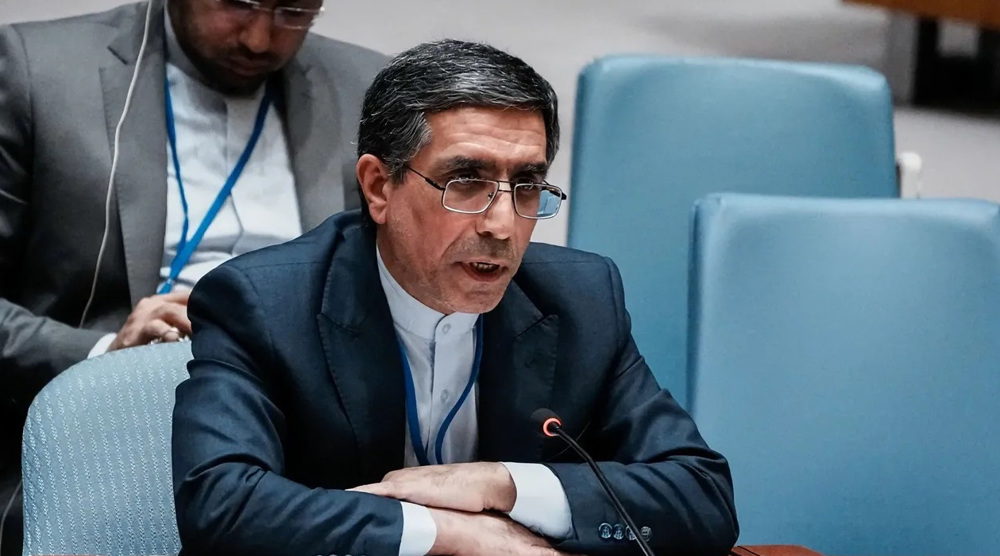
The US-sponsored draft sought to extend the mandate of the Panel of Experts supporting the revived 1737 Iran Sanctions Committee under Resolution 1929. The mandate was due to expire on September 26.
The 1737 Sanctions Committee was established under Security Council Resolution 1737 of 2006 and was tasked with submitting reports to the Council every 90 days.
Before the 2015 adoption of the Joint Comprehensive Plan of Action, endorsed by Security Council Resolution 2231, briefings on Iran’s nuclear issue were held every three months under the “non-proliferation” agenda.
Resolution 2231 suspended all previous Iran-related sanctions resolutions, including Resolution 1737, effectively rendering the 1737 Committee and its reporting requirements inactive.
Iran’s UN mission said Russia and China have “once again stood firmly in defence of the UN Charter, international law, and the integrity of the Council” and prevented “yet another cynical attempt by the United States and its allies to abuse the Security Council for their political purposes.”
Iran expressed its “deep” appreciation to Russia and China for their “consistent and principled positions and decisive actions today.”
The mission also commended Somalia and Pakistan for their “valuable positions and abstentions.”
Iran slams Western UN referral push as ‘desperate action,’ says it will gain nothinghttps://t.co/ekCi2AY4KE
— PressTV Extra (@PresstvExtra) September 4, 2026
Iran reiterated its longstanding position that Security Council Resolution 2231 expired definitively on October 18, 2025.
It said that, from that date, all nuclear-related provisions, measures, restrictions and mechanisms were permanently terminated, that the Security Council have concluded its consideration of the Iranian nuclear issue, and that the “Non-proliferation” agenda item have been removed.
In August 2025, France, Germany and Britain, the European parties to the JCPOA known as the E3, claimed to have activated the so-called snapback mechanism to restore UN sanctions against Iran, despite their violations of the agreement.
However, Resolution 2231 formally expired on October 18, 2025, after which Tehran maintains that the UN no longer has legal effect or an executive mandate.
Accordingly, Iran maintains that the UNSC’s role under Resolution 2231 has definitively ended and that all nuclear-related provisions, measures and restrictions have permanently expired.
Independent countries reject legality of E3’s snapback move: Iran https://t.co/2LBv99JFJ6
— Press TV 🔻 (@PressTV) October 19, 2025
The vote came amid a US-Israeli-led campaign to revive illegal sanctions pressure on Iran after the Board of Governors of the International Atomic Energy Agency (IAEA) referred Tehran to the UNSC last Thursday over falsified safeguards violations.
Iran rejected the move as politically motivated, stressing that its nuclear activities are exclusively peaceful and that the US and its European allies are using the Agency to advance political and military pressure after Washington’s withdrawal from the 2015 nuclear agreement and its subsequent aggression against Iran.
Tehran also maintained that the Agency’s inability to verify certain activities resulted from the security situation and the US-Israeli attacks on Iran’s peaceful nuclear facilities.
Russia and China rejected the IAEA referral, questioning its legal basis and warning that the nuclear issue should be resolved through diplomacy rather than pressure, sanctions or the UNSC.
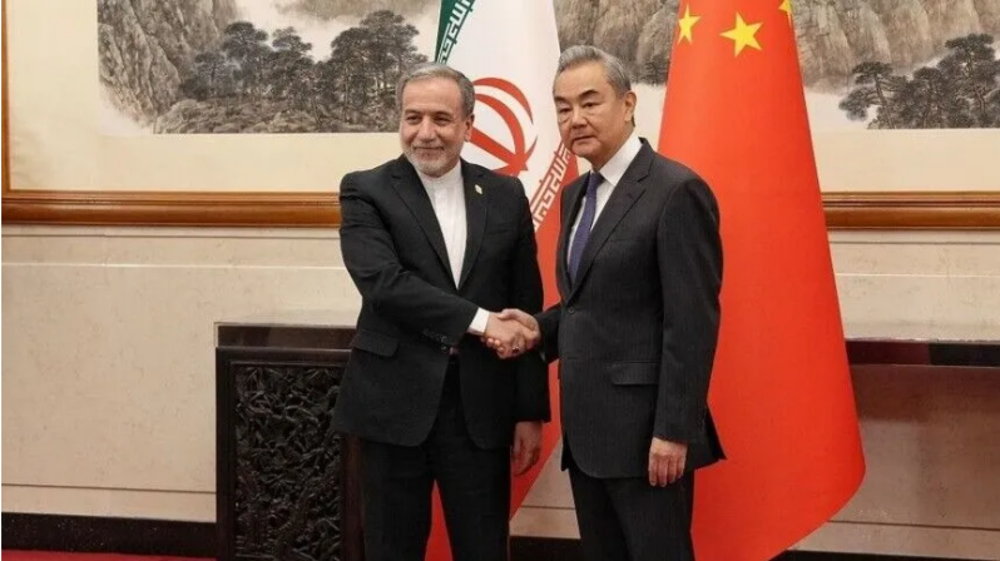
Araghchi welcomes Xi’s initiatives, hails China-Iran strategic partnership
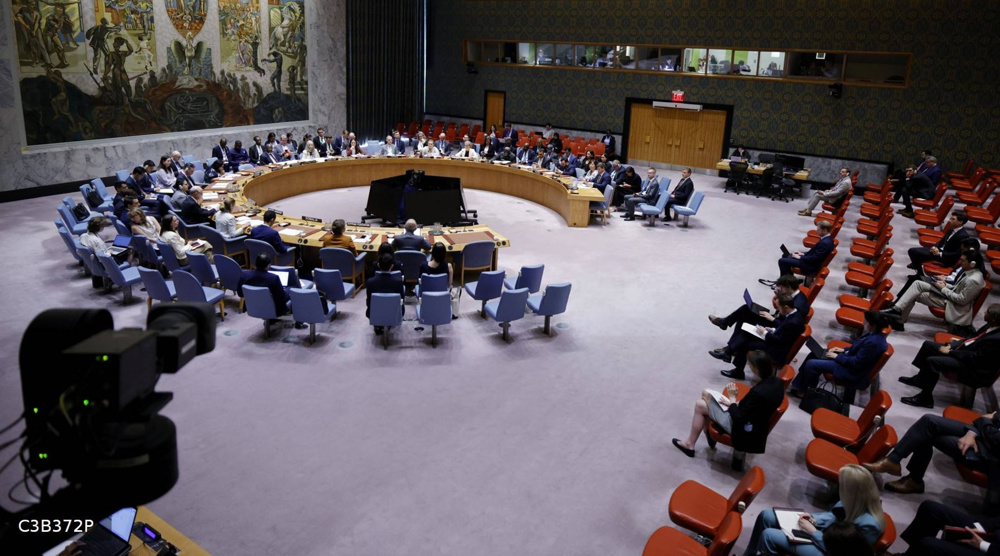
Russia, China veto US backed anti-Iran resolution at UN Security Council
Iran rejects Sweden’s allegations, orders Swedish diplomat to leave within 48 hours



Yemen's control of Bab al-Mandab 'deepens crisis' in Israel
Iran calls for ‘zero-tolerance’ policy on attacks against nuclear facilities at IAEA
Skyrocketing US inflation
US clears way for F-35 sale to Saudi Arabia amid aggression against Yemen
‘Nightmare for enemies’: Iran launches mass ‘Sacrifice for Iran’ drill
Iran: Unilateral US weaponization of space accelerates arms race
Russia, China veto rejects ‘political abuse’ of UNSC, marks end of ‘unipolar order’: Qalibaf
Iran finds new platform in SCO to develop its rare-earth potential



 PressTV NEWSLETTER now
  This makes it easy to access the Press TV website