Iran finds new platform in SCO to develop its rare-earth potential
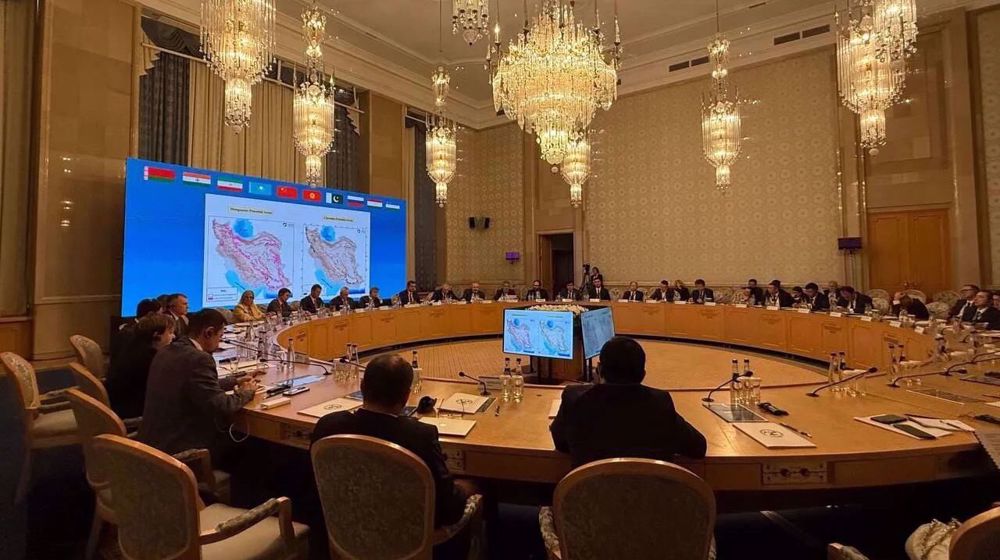
The Shanghai Cooperation Organization’s conference on underground resources opened in Moscow on Thursday, with Iran and other members focusing on mineral technology, rare earths and advanced exploration.
The two-day conference, backed by the Shanghai Cooperation Organization and Russia’s Supreme Mining Council, is exploring a common platform for sharing advanced mining and mineral-processing technologies.
Iranian officials are taking part as the organization explores cooperation in gold, polymetallic ores and rare earths, alongside smart mining, 3D geological modeling, deep geophysics and energy systems for remote mines.
Iran has evidence of rare-earth mineralization in several regions, while research is increasingly focused on locating concealed deposits and recovering critical elements from existing mineral streams.
The emerging SCO framework could therefore connect Iranian mineral potential with technologies, scientific expertise and industrial experience available elsewhere in the organization.
Rare-earth elements have become increasingly important because they are used in permanent magnets, electronics, energy technologies, optical and other advanced materials.
Their economic importance lies not simply in the presence of the elements in the ground, but in the ability to explore, extract, separate, refine and eventually incorporate them into industrial products.
Iran is not yet a major commercial producer of rare-earth elements, but recent studies have identified areas where further exploration could substantially improve understanding of the country's resource base.
One of the key areas is Iran’s Bafq-Saghand metallogenic province, known for major iron-oxide-apatite deposits and geological enrichment in rare earth elements, uranium and thorium.
A 2025 study in the Journal of Asian Earth Sciences used geological, remote-sensing, geophysical and geochemical data to map areas with potential for rare-earth mineralization in the province’s iron-oxide-apatite systems.
The study identified high-potential targets covering about 10 percent of the area examined, particularly along deep geological structures, and recommended detailed exploration at the project scale.
Bafq-Saghand is a major iron-producing province, but researchers have also found rare-earth-bearing minerals such as apatite, monazite and xenotime within the same geological systems.
Additional rare-earth resources may not require new mines, as Iran’s Esfordi phosphate deposit in Yazd Province shows how critical minerals can occur alongside resources already being extracted.
Research on Esfordi has found approximately 1.2 percent total rare-earth elements in its phosphate concentrate, with cerium, lanthanum and neodymium accounting for about 82 percent of the rare-earth content.
The principal rare-earth-bearing minerals identified in the concentrate include monazite, apatite and xenotime.
Researchers have also developed processing methods to separate phosphate and calcium from the concentrate and concentrate the rare earth elements in the remaining material.
One study produced a concentrate containing about 39 percent total rare earth elements, showing the potential to recover them from existing phosphate operations rather than through separate mining.
This approach could prove important for Iran because part of its future rare-earth resource base may emerge from by-products and secondary streams associated with existing mineral operations.
An August 2026 article identified Bafq-Saghand and Esfordi as key areas, while noting that a national assessment requires systematic sampling, mineralogical analysis, drilling and resource estimation.
A study published in August 2026 established Iran’s first national framework for assessing critical raw materials, identifying rare earths, lithium, platinum-group elements, beryllium, uranium, cobalt and rhenium as strategically important.
More than mineral resources, Iran brings to the SCO geological potential, exploration data, mining infrastructure and expertise in recovering critical elements from complex ores.

The other side of the equation is technology.
Finding a rare-earth-bearing zone is only the beginning. Deposits can occur at depth, in complex geological formations or mixed with minerals that make separation expensive.
The Moscow conference's emphasis on deep geophysics, three-dimensional modeling and digital mining therefore corresponds directly to the problems facing frontier mineral exploration.
Three-dimensional geological models can integrate drilling, geophysical and geochemical information to improve understanding of underground structures.
Deep geophysics can detect subsurface anomalies, while digital systems can integrate geological, planning and operational data to reduce exploration uncertainty and improve management of complex deposits.
Processing represents an even more demanding stage. Rare earths generally occur together rather than as a single easily extracted commodity, making separation and purification critical to their economic value.
Esfordi shows Iran has a scientific base for developing rare-earth processing, while cooperation with countries with mature rare-metal industries could expand technologies for pilot and industrial-scale projects.
China's recent scientific cooperation with Iran provides an indication of where such collaboration could develop.
In August 2026, China's National Natural Science Foundation and the Iran National Science Foundation included “exploration and processing of rare earth elements” among the subjects of their joint workshop program.
The cooperation specifically brings exploration and processing together, reflecting the fact that the value of a rare-earth resource depends on the entire technological chain rather than discovery alone.
Russia also brings expertise in rare-earth production, processing and permanent-magnet manufacturing, with programs spanning the value chain from raw-material extraction to advanced materials.
A major Russian rare-metals congress in Moscow in May drew participants from 20 countries, including Iran, to discuss processing, hydrometallurgy, digital deposit models, permanent magnets and electronic materials.
For the SCO, Iranian participation could therefore add another geological and industrial base to a group that already includes some of the world's largest mineral-producing and consuming economies.
China and Russia have extensive rare-earth mining, processing and materials expertise, while Kazakhstan and other Central Asian members have mineral resources and growing exploration sectors, and India has a large mining and industrial base.
The organization could potentially connect these complementary capabilities through common research, technology exchange, geological cooperation and joint industrial projects.
The Moscow conference places Iran at the beginning of a process alongside countries that possess complementary capabilities.
Iran's contribution could be its underexplored mineral potential and growing scientific base, while the wider SCO network could provide technologies, expertise, industrial partnerships and markets needed to develop it.

Discover Iran: Tabriz’s centuries-old trading culture drives carpets, leather, industry and exports
Iran’s hidden aquaculture revolution over four decades
Behind Iran’s record wheat harvest amid drought, sanctions and war



Yemenis hold rally in Sa'ada in support of armed forces after lightning advances
Dozens killed in mosque blast, militant clashes in Pakistan’s Khyber Pakhtunkhwa
Iran: US cannot evade responsibility for war crimes by leaving UN rights council
Saudi crown prince seeks dialogue with Ansarullah after Yemeni blows: Report
IRGC intelligence forces eliminate two terrorists in southeast Iran
South Korea says will not send troops to join terrorist US war on Iran
Yemen's control of Bab al-Mandab 'deepens crisis' in Israel
Iran calls for ‘zero-tolerance’ policy on attacks against nuclear facilities at IAEA


 PressTV NEWSLETTER now
  This makes it easy to access the Press TV website