UN fact-finding mission finds ‘reasonable grounds’ US committed war crimes in Iran
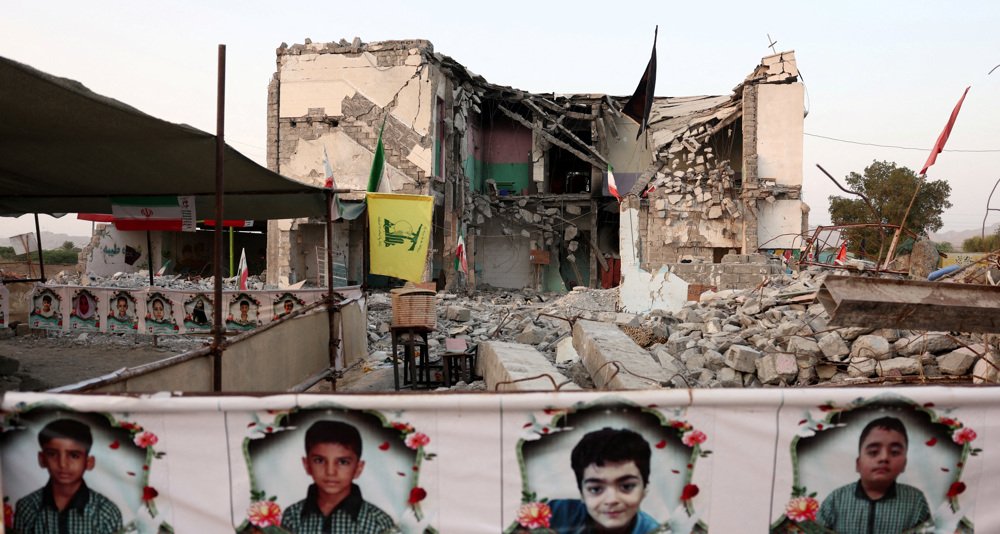
A United Nations Independent International Fact-Finding Mission has concluded there are "reasonable grounds" to believe the US committed war crimes during its war of aggression on Iran, citing indiscriminate attacks that resulted in massive civilian casualties, including a devastating strike on a primary school.
In its latest report submitted to the UN Human Rights Council on Thursday, the mission detailed the catastrophic civilian toll of the US-Israeli military aggression that began on February 28, 2026.
The investigators highlighted two specific incidents as clear violations of international humanitarian law.
The first was a Tomahawk missile strike on the clearly identifiable Shajareh Tayyebeh primary school in the city of Minab, which killed over 160 people, including approximately 120 children.
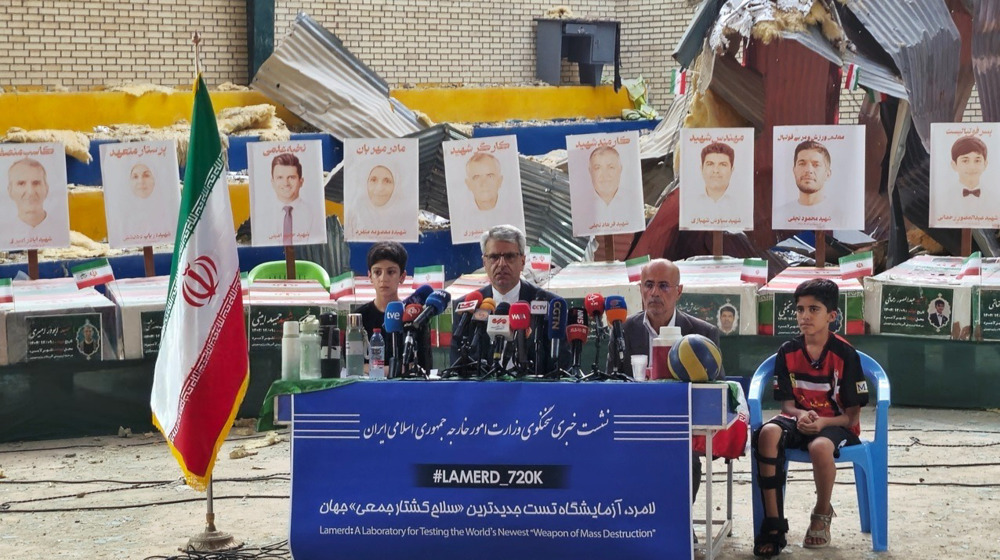
The second was an airstrike in the city of Lamerd, where precision strike missiles dispersed clouds of tungsten pellets over a sports complex and adjacent residential area, killing 22 civilians.
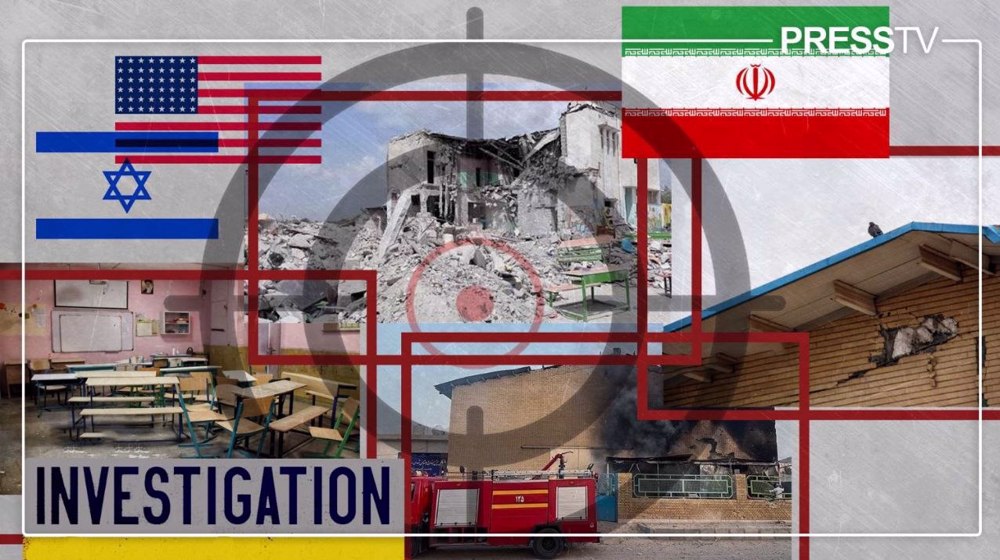
The UN experts concluded that the US failure to update its targeting databases regarding the school's location, despite its proximity to an Islamic Revolution Guards Corps (IRGC) naval complex, amounted to "more than mere negligence."
The report stated that the US directed strikes at the building while "being aware of a substantial risk of striking a civilian object and acting recklessly as regards the possibility that this would happen."
Anti-Iran claims
Alongside its findings on US conduct, the UN Mission leveled severe allegations against the Iranian government, claiming "gross human rights violations" and "crimes against humanity" during the breakout of foreign-backed riots in late 2025 and 2026.
The report alleged widespread use of lethal force, arbitrary detentions, a five-month internet blackout, and the expedited execution of protesters.
Tehran has consistently dismissed such allegations as politically motivated, biased, and fundamentally flawed.
The allegations come even as a UN document (A/80/717–S/2026/363) had already acknoweledged that during the riots, "numerous ordinary citizens and members of law enforcement were killed" while engaged in routine activities.
The document describes deliberate targeting of civilians with the intent to attribute violence to the government, and notes the use of firearms, improvised explosive devices, machetes, axes, knives, and razors.
The document also records acts of decapitation and burning victims alive, which it classifies as terrorist acts.
Even Amnesty International and Human Rights Watch acknowledged that they "reviewed some footage and reports indicating that some protesters have engaged in acts of violence".
Iran's official account, which is echoed in the UN Security Council document, holds that peaceful economic protests were hijacked by armed elements who deliberately killed civilians and security personnel to manufacture victims and create a pretext for foreign intervention.
Alastair Crooke, former British MI6 officer, described the pattern: armed elements would beat bystanders to death while filming and shouting encouragement, drawing crowds and then shooting at security forces when they arrived, creating chaos in which "bullets hit ordinary people".
He stated this was "by the playbook" — attacking buses, mosques, banks to create the atmosphere for foreign intervention.
Colonel Lawrence Wilkerson (ret.), former US military official, described the unrest as "the 1953 coup on steroids" with US and Israeli technology, stating Mossad and CIA were "acting as if it were Iranian citizens who are killing other citizens, burning down places, and looting".
Jeffrey Sachs described it as a "regime change operation" using the CIA/Mossad playbook: "create chaos, bring people to the streets, cause casualties, and use this space inside the country to incite a coup, and if that doesn't work, claim to be protecting the people and intervene directly".
Mike Pompeo, former US Secretary of State and CIA director, stated in an interview with Israel's Channel 13: "Help did come, lots of help" for the riots, adding: "You may not see all of it, and we may not know about all of it, but I'm very confident that the United States is actively trying to do all that it can to support Iranians".
He had previously posted on X referencing "Mossad agents walking" in Iranian streets.
The New York Times reported on March 22 that US and Israeli pre-war planning was built on a Mossad promise that internal riots could topple the Iranian government — a promise that failed to materialize, exposing what the newspaper called a “foundational flaw” in the war’s preparations.
Mossad chief David Barnea presented the plan to prime minister Benjamin Netanyahu before the war and to senior Trump administration officials during a Washington visit in mid-January 2026, according to the NYT report.
Barnea claimed the agency could “galvanize the Iranian opposition,” igniting riots and insurgency within days of the war’s start — operations that could collapse the Iranian government.
The plan envisioned killing Iranian leaders early in the ar, followed by intelligence operations to encourage regime change and trigger mass riots capable of ending the war quickly.
Netanyahu embraced the assessment and used it to convince Trump that bringing down the Iranian government was achievable.
Trump’s initial war address reflected this expectation: after telling Iranians to shelter from bombing, he urged them to “take over your government” once the air campaign concluded.
Iran rejects Sweden’s allegations, orders Swedish diplomat to leave within 48 hours
Iran summons German ambassador over Berlin’s hostile positions, interventionist activities

‘Organized, illegal, aggressive’: Press TV slams abduction of West Bank journalist by Israeli forces



US lawmaker slams Trump’s $5 billion weapons sale to Saudi Arabia
Russia, China veto US backed anti-Iran resolution at UN Security Council
Araghchi welcomes Xi’s initiatives, hails China-Iran strategic partnership
VIDEO | Gaza transport crisis deepens as 70% of vehicles remain out of service
VIDEO | Press TV's news headlines
Iran summons German ambassador over Berlin’s hostile positions, interventionist activities
Israeli occupation court extends detention of Press TV journalist Naqaa Hamed
Iran rejects Sweden’s allegations, orders Swedish diplomat to leave within 48 hours


 PressTV NEWSLETTER
now
PressTV NEWSLETTER
now
 This makes it easy to access the Press TV website
