Jordan positioned itself as a defender of Palestinian rights yet compromised on key issues
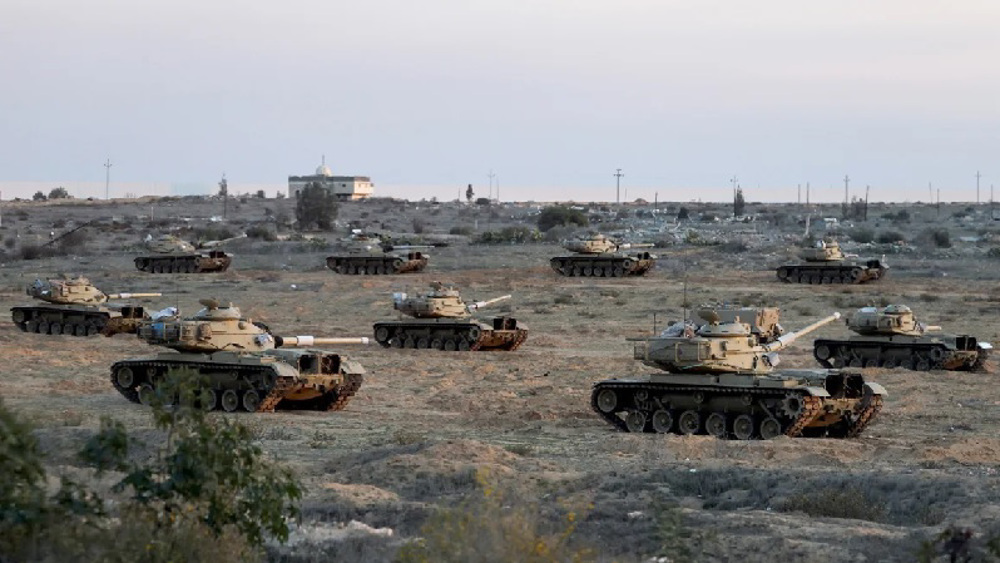
September 12, 1970, the Zarqa Desert, 40 kilometers northeast of Jordan's capital. The images broadcast to the world that day were shocking: a large number of stranded passengers, three airplanes, and a remote stretch of desert. And this wasn't even the end of the story.
Something even stranger was about to happen within minutes.
When the cameras captured the moment the planes went up in smoke, it became clear that the events of the past few days could no longer be ignored.
The operation was carried out by the PFLP, the Popular Front for the Liberation of Palestine, a group of left-wing Palestinian fighters who launched their plan on September 6th.
PFLP had destroyed completely today the three planes, practicing one of its strategical [sic] lines to hit the imperialist and Zionist interests all over the world and in reaction to the stand of the imperialist and Zionist...
PFLP Spokesperson
That day, three international flights bound for New York were targeted. The third flight, after a struggle in the cockpit, was forced into an emergency landing in London. But the first and second flights were diverted to the Zarqa Desert in Jordan.
Three days later, another plane, flight 755, joined them. The next morning, the Palestinians wrote their names on the bodies of the three aircraft and then held a press conference, a conference meant to announce their demands.
Between September 9th and 12th, the Palestinians waited for the world to respond positively to those demands. No response came. Perhaps it was this indifference that fueled their anger and set the planes ablaze.
They released their hostages, but the explosion of those three aircraft in the Zarqa Desert left the world with a pressing question. What were Palestinian fighters doing in Jordan?
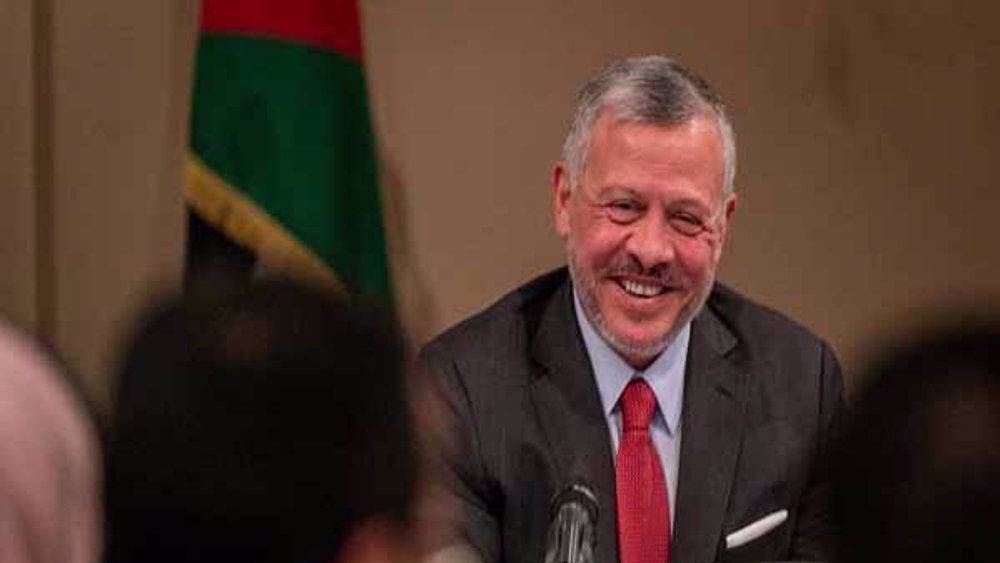
Politicians were asking the same thing. And the first person expected to answer was King Hussein, the ruler of Jordan at the time.
But King Hussein had no satisfactory answer. He too was as lost as the hostages in the Zarqa Desert, torn between the future of his country and the fate of the Palestinians. And yet, in West Asia of that era, there was an even deeper confusion.
No one knew whether the events of those days were just a childish firework show, or whether the Palestinians were truly playing with fire. The strange events of the following days and months would reveal the truth, the bitter truth about a people wandering in the middle of history.
For King Hussein, September 1970 was long and difficult.
What the Palestinians had done had a profound impact on Jordan's future. His decision on how to respond could reshape the future of West Asia, the future of Jordan, and his own fate. If he sided with the Palestinians, how would he answer to foreign governments? And if he opposed them, what would become of the Palestinian cause? The relationship between the Palestinians and Jordan was complicated, one that could only be unraveled by looking back at history.
In those days, King Hussein found himself thinking about his country's past more than ever.
Modern-day Jordan lies in the southwest of Asia, bordering Saudi Arabia, Iraq, Syria, and the occupied Palestinian territories. Before World War I, Jordan was part of the Ottoman Empire.
In the early 1920s, when the empire collapsed, Jordan fell into the hands of one of the war's victors, Britain. The British, drawing on their experience ruling India, chose a policy of indirect control. They handed semi-autonomous administration of Jordan to a powerful local family, the Hashemite dynasty.
For centuries, the Hashemites had overseen Islam's holy sites, including Mecca, thanks to their lineage tracing back to the Prophet Muhammad. But things had changed. Shortly before, during World War I, they had been defeated by the Saudi family in the struggle over Mecca and Medina.
Humiliated, the Hashemites were forced to flee the Hejaz. Now a new opportunity awaited them. A small emirate called Jordan, whose westernmost point lay close to Islam's first Qibla, the Al-Aqsa Mosque in Al-Quds.

Throughout the 1920s and 30s, the Emirate of Jordan pushed for full independence from Britain. Leading this effort was the most prominent Hashemite figure, Abdullah I. Understanding Britain's influence in West Asia he tried to advance his own strategic vision. That vision entered a new phase in 1939 with the outbreak of World War II.
Part of the war spilled into West Asia, and Abdullah I sided with Britain. With his skilled soldiers, the Arab Legion, he shifted the regional balance in favor of the allies, especially the British. This support paid off about six years later, when the war ended with an allied victory, Jordan gained independence.
Abdullah I, a descendant of Muslim caliphs, became the natural choice to lead the new state, not as a caliph, but as a king. Yet in the early days of his reign, misfortune struck.
I repeat again that His Majesty's government have determined to base their policy on the assumption that they must lay down the mandate, under which they have sought for 25 years to discharge their obligations to fulfill the growth of the Jewish national home and to protect the interests of the Arab population.
In order that there may be no misunderstanding of the attitude and policy of Britain, I have been instructed by His Majesty's government to announce with all solemnity that they have consequently decided that in the absence of a settlement, they must plan for an early withdrawal of British forces and of the British administration from Palestine.
Arthur Creech Jones, British Colonial Secretary (1946 – 1950)
While Abdullah I was preparing for his coronation, troubling news arrived from across the Jordan River. On one side of the river stood the newly established Kingdom of Jordan, on the other side, al-Quds, a predominantly Muslim land, now being seized by Jewish forces.
The two banks of the Jordan River represented two opposing approaches. On one side, Britain and fervent Zionist groups, on the other, the Arab nations of West Asia.
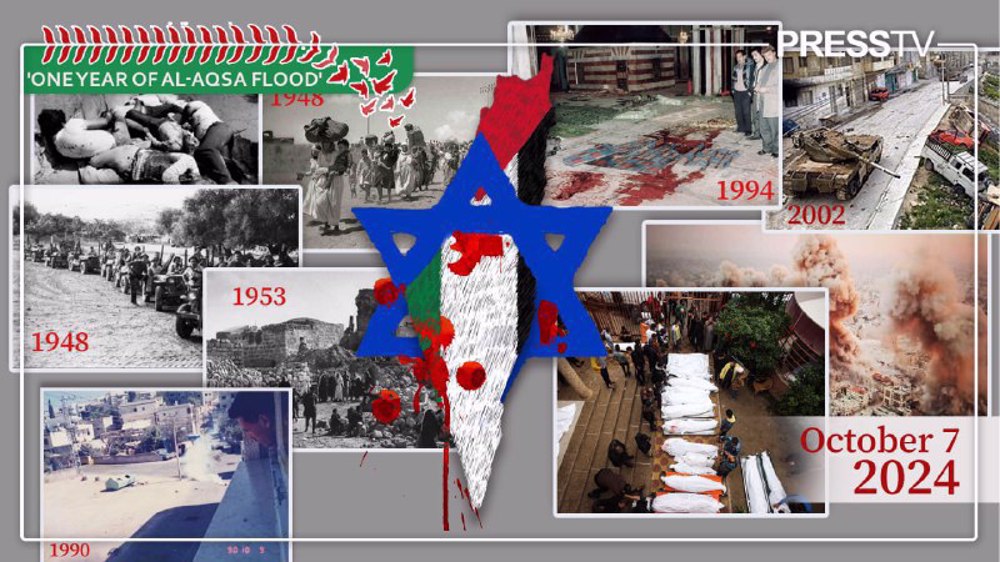
The U.N. plan for the creation of Israel proposed dividing Palestine into three parts, a so-called Jewish state, an Arab state, and an international zone.
But this was not something the Arabs welcomed. So the rifles came out of storage and a new war began, the Arab-Israeli War of 1948.
Abdullah I, alongside the rulers of Egypt, Syria, and Iraq, marched his forces across the river.
Over the next 10 months, the war dragged on, but overall, the newly formed Israel held the upper hand. Israel captured all the areas allocated to it by the U.N., plus parts of the Arab-designated regions.
Egypt seized the Gaza Strip, and Abdullah I gained control of East Jerusalem, including the Al-Aqsa Mosque.
For the Arabs of Palestine, the war brought nothing but loss. But for Jordan's king, it brought opportunity. He could now solidify the Hashemite custodianship over Al-Aqsa.
A symbolic victory against their long-standing rivals the Saudi family in the Hejaz. Yet this territorial gain created a new challenge for Jordan. When the war ended and the land was divided, a massive wave of displaced Palestinians fled to Jordan.
Even if Abdullah I had reservations, he had no choice but to host them. Around 120,000 people, roughly one-third of Jordan's population at the time. The king's greatest fear now was the newly arrived Palestinians.
How was Jordan supposed to deal with these uninvited guests? Life did not give him much time to answer. On July 20, 1951, Abdullah I was assassinated. A Palestinian nationalist opened fire on him during Friday prayers in Al-Quds.
The assassin represented Arabs who believed Jordan had betrayed the Palestinian cause, that by annexing East Al-Quds, Abdullah had prevented the creation of an independent Palestinian state.
It was a harsh lesson for Abdullah's successors, a warning that the Palestinians inside Jordan had to be taken seriously.
A few days ago, you said that if Israel attacks, she will be completely destroyed. And some Arab leaders actually say that their aim is the elimination of Israel without any qualification.
BBC Reporter
If somebody attacks you, what would be your reaction? Somebody attacks us, we will react. React in war means destruction.
Gamal Abdel Nasser, President of Egypt
The 1950s and 1960s were years of turmoil in West Asia. Jordan was struggling with a succession crisis after Abdullah's death and the presence of large numbers of Palestinian refugees.
Israel was expanding settlements and trying to secure fresh water sources. Egypt and Israel were locked in a fierce struggle over the control of the Suez Canal. And the Palestinians were trying to rebuild their identity.
Their goal was clear, to reclaim their homeland.
We know that it is not easy, but we are ready to pay the price.
Yasser Arafat, Fatah Leader
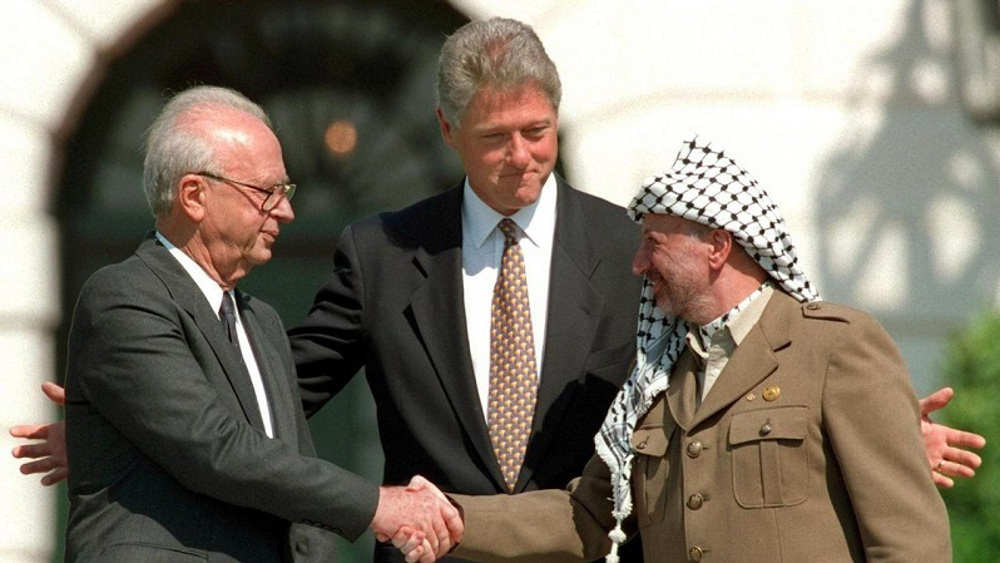
Yasser Arafat founded Fatah and soon after, under the supervision of the Arab League, the Palestine Liberation Organization, the PLO, was established.
Jordan possesses the West Bank as a suitable base for launching the liberation of the occupied homeland, because this country encompasses within itself an inseparable part of it, namely, the overwhelming majority of the Palestinian people, moreover, the territory of this country includes the West Bank, which is the largest part of Palestine that remains in Arab hands.
King Hussein of Jordan
The leadership of the PLO was again handed to Arafat. Not long after, the left-wing fighters of the Popular Fronts for the Liberation of Palestine, PFLP, joined him.
What mattered most to Jordan's government was that the PLO's center of operations was inside Jordan.
They not only launched attacks against Israel from Jordanian territory, but also gained significant influence within the country.
Unofficial estimates suggested that by the 1960s, half of Jordan's population was Palestinian, around 700,000 people, including roughly 50,000 armed fighters loyal to Arafat.
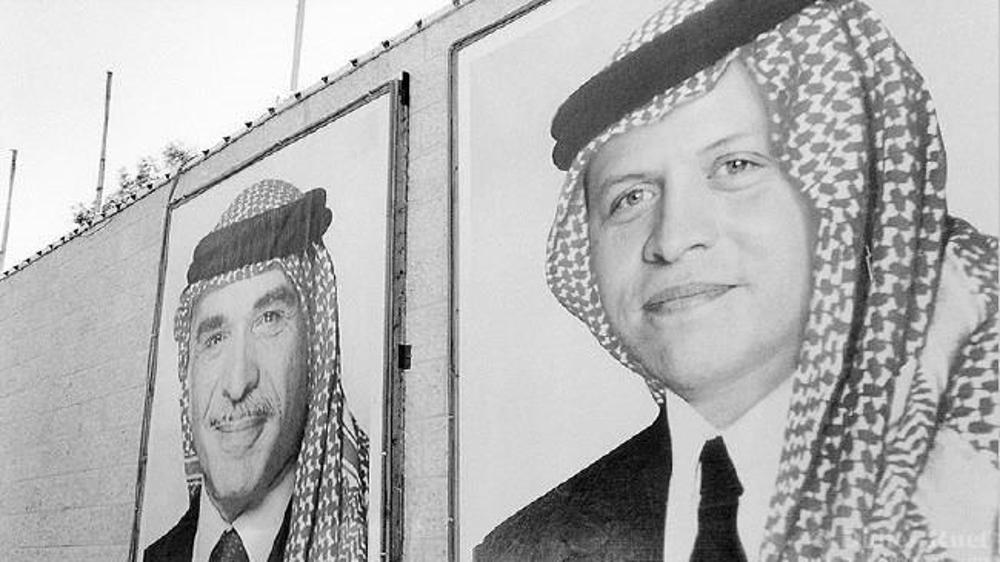
This was troubling news for Jordan's new king, King Hussein, Abdullah's eldest grandson.
He had come to power through a complicated process and now faced two major threats, Israel on one side and the Palestinians inside Jordan on the other. These two dangers soon collided at a historic moment in June 1967. On June 5, 1967, an unexpected war erupted, Israel on one side and all the Arab states on the other.

The justification for the war was Israel's repeated encroachments on Arab lands, its theft of Arab water resources, and the killing and expulsion of Palestinians.
The Arab nations vowed to free Palestine once and for all.
By June 11, just six days after the war began the world had turned upside down. Israeli forces had captured the Gaza Strip, the Sinai Peninsula, and the entire West Bank. These newly occupied territories were three times larger than the occupying regime's original borders.
As a result, nearly one million more Arabs came under the Israeli regime's control.
For the Arab governments, the war was a catastrophe. Around 21,000 dead, 45,000 wounded, and a deep sense of humiliation.
Jordan, however, suffered an additional blow. King Hussein lost East Al-Quds and the Hashemite custodianship of the Al-Aqsa Mosque. On top of that, he was once again forced to host a new wave of Palestinian refugees, people who arrived with few belongings and a great deal of anger.
I went out to the front and I could see people crossing over in small groups, very tired, in all the years that I spent since 1953 trying to build that country, that army, all the pride, all the hopes; I saw it just destroyed.
King Hussein of Jordan
Soon, Jordan was filled with refugee camps, stretching from Irbid and Amman to Tafilah and Aqaba. These camps quickly fell under the control of the PLO. Walking through Jordanian streets, one was more likely to see armed Palestinian fighters than Jordanian soldiers.
The feeling King Hussein had while watching this unfold was similar to what his grandfather had felt after the 1948 war, a feeling that would continue to haunt the Hashemites for years to come.
To be continued …

Trump impeachment on the horizon post-midterms
Iranian nuclear chief barred from IAEA conference
Ansarullah takes over Bab al Mandab Strait



VIDEO | Gaza transport crisis deepens as 70% of vehicles remain out of service
VIDEO | Press TV's news headlines
Iran summons German ambassador over Berlin’s hostile positions, interventionist activities
Israeli occupation court extends detention of Press TV journalist Naqaa Hamed
Iran rejects Sweden’s allegations, orders Swedish diplomat to leave within 48 hours
UN fact-finding mission finds ‘reasonable grounds’ US committed war crimes in Iran
Al-Houthi: Saudi claims of Yemen targeting Mecca 'heinous lie', manifest slander
Iran dismisses Saudi claim that Yemen attempted to target Mecca






 PressTV NEWSLETTER
now
PressTV NEWSLETTER
now
 This makes it easy to access the Press TV website
