‘The American age is over’; Iran war exposes limits of US global military power: US magazine
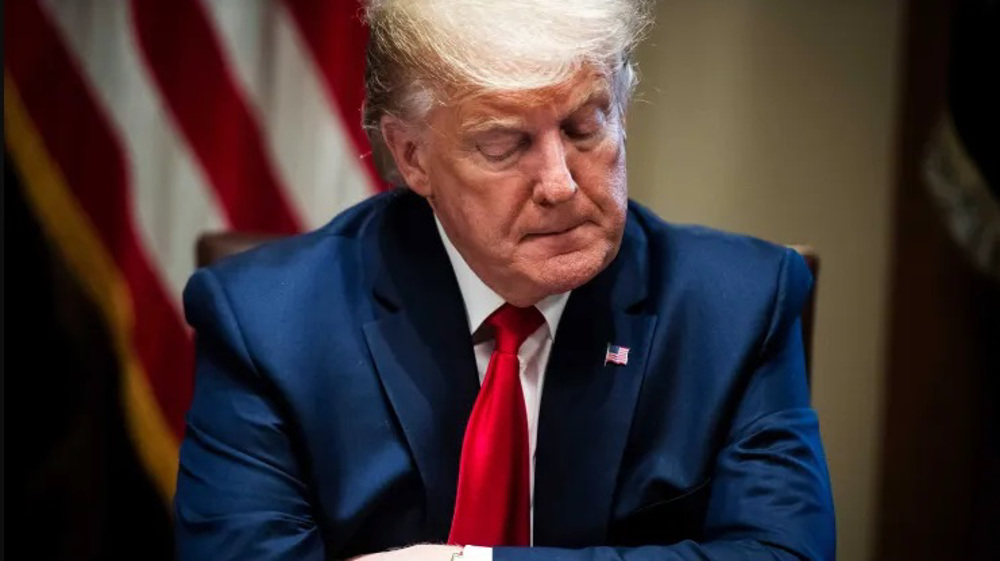
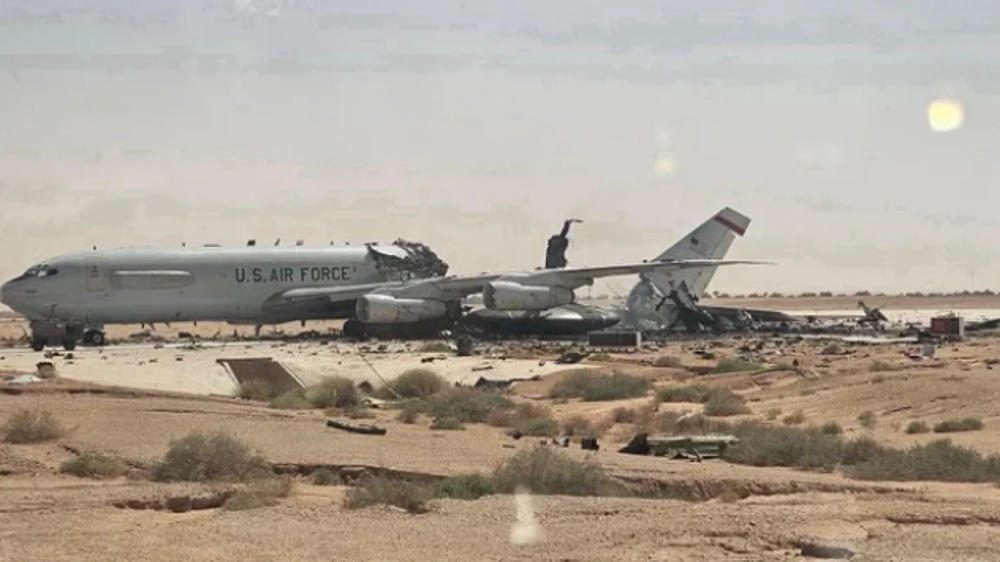
The United States’ military power has come under severe strain during its war against Iran, with retaliatory strikes on American bases, pressure on weapons stocks, and disrupted logistics exposing vulnerabilities in a system long regarded as “the world’s most capable,” an American magazine writes.
In an assessment published on Wednesday, The Atlantic argued that the confrontation had demonstrated how quickly the foundations of post-World War II “American global dominance” can weaken. It pointed to the inability of the United States, despite its advanced military equipment, extensive base network, and alliances, to defeat Iran.
US congressional assessment warns of inflation, weapons shortages as war against Iran runs up $38-billion bill
— Press TV 🔻 (@PressTV) September 16, 2026
https://t.co/xXFvFOpYDL
Attacks disrupt US operations
The impact has been particularly significant around the Persian Gulf, where the United States has been trying to project the most significant overseas’ military presence since Britain’s postwar withdrawal, the assessment noted.
The Carter Doctrine of 1980 committed Washington to play a decisive role in the flow of oil and other commodities through the Persian Gulf. Its credibility depended on the ability of the US military to respond to any attempt to close the Strait of Hormuz.
According to the magazine, however, that capability has been challenged by the confrontation. Although US and Israeli attacks involved many assassinations, Iran’s establishment remained intact, while Iranian missile and drone strikes struck American facilities and evaded elements of US air defenses.
By March, fewer than two weeks after the war began, 17 US bases, air-defense installations, and diplomatic facilities had been hit, including the Fifth Fleet headquarters in Bahrain and major facilities in Kuwait.
Bahrain loss creates logistical strain
The attacks had an immediate impact on US military operations, the magazine wrote.
The loss of the Bahrain facility was identified as a key reason the Trump administration did not escalate militarily with Iran during the summer, despite threats to do so. The US Navy had relied on Bahrain for decades to resupply ships operating in the region.
With the facility unavailable, the logistical chain supporting US naval operations had to extend to Diego Garcia, a British-controlled island in the Indian Ocean more than 2,000 miles from the Strait of Hormuz.
The affected bases have largely remained out of operation because of the continuing threat to US personnel and equipment, The Atlantic wrote.
It cited an American trooper as asking Admiral Daryl Caudle, chief of the US’s naval operations, during a recent town-hall meeting about retrieving personal belongings from the Bahrain base. “We’re not getting back in there anytime soon,” Caudle responded. “I just want to be completely honest with that.”
US military nearing 'breakdown' amid sustained Iranian attacks: US officials
— Press TV 🔻 (@PressTV) September 15, 2026
https://t.co/t8CTemsKtV
Pressure spreads beyond the Persian Gulf
The strain has also affected US military deployments elsewhere, the assessment argued, noting that, to sustain its aggression against Iran, Washington has had to move important equipment away from the western Pacific.
The confrontation has simultaneously placed pressure on US weapons stocks. By the end of April, studies were estimating that American supplies of THAAD and Patriot interceptors and Tomahawk cruise missiles had fallen to dangerously low levels, with shortages subsequently worsening.
At current production rates, the United States could require several years to restore its stocks to pre-war levels, the magazine reminded.
Manufacturing, alliances face pressure
The Atlantic also linked the problem to US industrial capacity. During World War II, the United States rapidly expanded military production by converting civilian industry, including automobile factories, to wartime output.
Today, the United States accounts for only a small share of global civilian shipbuilding, while China produces about half of the world’s ships and controls roughly 80 percent of global drone manufacturing, according to the assessment.
The strain on American power is compounded by uncertainty surrounding traditional alliances. Japan and South Korea, for example, are major shipbuilding powers, while European governments are increasingly considering greater responsibility for their own defense.
The US Department of War has announced plans to withdraw 5,000 troops from Germany, while a broader defense review could lead to further reductions. Germany is considering whether to assist Britain in modernizing its nuclear weapons.
Elsewhere, Pakistan, Turkey, and Saudi Arabia have signed a military pact, the magazine noted, reminding that Oman and other Persian Gulf states were also reaching out to Iran, while South Korea was improving relations with China.
An uncertain future
The magazine argued that even a return to earlier US policies might not fully restore Washington’s previous global reach.
After more than eight decades of supposed global dominance, the assessment concluded, the United States was entering a period in which maintaining its previous position would require confronting the vulnerabilities revealed by the war.

US Republican lawmaker moves to impeach Hegseth over war on Iran
Trump impeachment on the horizon post-midterms
US assessment warns of inflation, weapons shortages as war against Iran runs up $38-billion bill



VIDEO | US grappling with rising cost of war on Iran
‘The American age is over’; Iran war exposes limits of US global military power: US magazine
Ansarullah: Yemenis are the true defenders of holy sites
VIDEO | Gaza journalists battle Israeli attacks, health crisis while documenting war
Israel blockade leaves 70% of Gaza hospital generators out of service: Health ministry
VIDEO | Press TV's news headlines
Pezeshkian hails 200 nights of rallies, reaffirms support for Iranian armed forces
Pezeshkian: Iran ready to resolve issues with neighbors through diplomacy


 PressTV NEWSLETTER
now
PressTV NEWSLETTER
now
 This makes it easy to access the Press TV website
