Discover Iran: Tabriz’s Armenian heritage of churches, commerce and art woven into social fabric
By Mina Mosallanejad
- Armenian Christian commercial networks have been active across the region for centuries, connecting Tabriz with distant markets.
- The Armenian presence, however, is not limited to commerce, but extends into community and cultural life.
- Armenian theatre later reached audiences beyond the community, reflecting Tabriz’s broader cultural exchange.
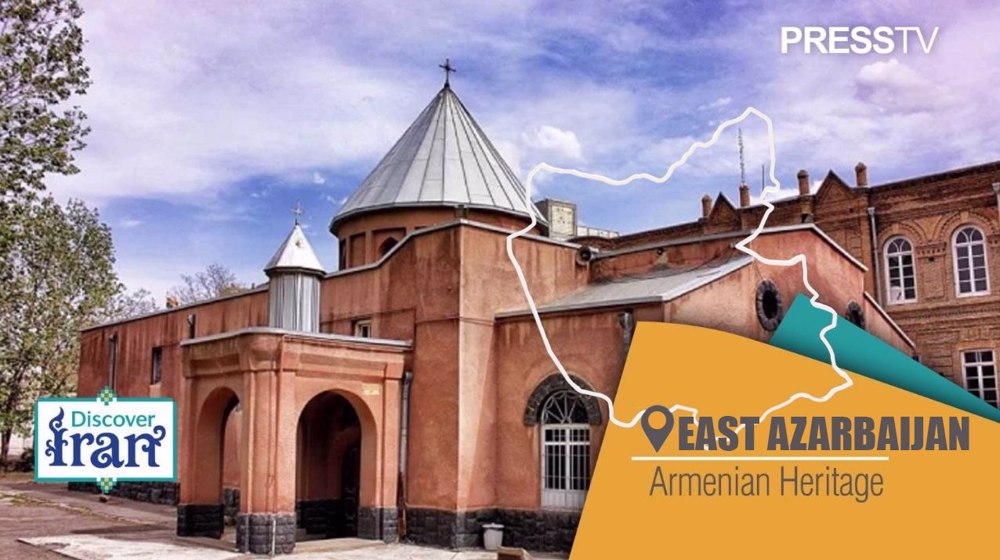
A walk through the historic center of Tabriz and its Armenian past can be easy to miss. No grand walls mark a separate Armenian quarter; instead, the churches and other traces of that history are woven naturally into the city’s urban fabric.
Yet for centuries, Armenians were an important part of the commercial, religious, and cultural life of one of Iran’s most important crossroads.
Tabriz’s Armenian heritage is closely tied to its geography. Located in northwestern Iran, the city stood at the intersection of the Caucasus, Anatolia, and the Iranian plateau.
By the 19th century, Tabriz had become one of Iran’s principal commercial centers. Its position connected it to trade routes leading toward the Caucasus, the Ottoman Empire, and Europe, while its famous bazaar served as the commercial heart of the city.
This strategic location also made Tabriz a natural meeting point for Armenian merchants.
Armenian commercial networks had been active across the region for centuries. During the Safavid period, the Armenian merchants of New Julfa developed an exceptionally far-reaching trading network, with commercial connections stretching from Iran and Central Asia to the Far East, North Africa, Russia, Europe, and even the Americas.
Tabriz was one of the cities where these networks had a direct presence.
A study of Armenian merchants and the Levantine trade cites 17th-century accounts describing merchants from Julfa maintaining shops and commercial establishments in Tabriz. Their caravans brought European textiles, Venetian mirrors, coral, iron, and other luxury goods into Iran.
Tabriz, meanwhile, connected routes leading toward Erzurum, Van, Aleppo, the Caucasus, and other major commercial centers.
The city’s commercial importance expanded dramatically during the 19th century. The establishment of the Tabriz–Trabzon trade route in the 1830s connected the city to the Ottoman Black Sea port of Trabzon, from where goods could continue toward European markets.
According to Encyclopaedia Iranica, goods worth around £1 million a year were soon moving along the route. By around 1880, the annual value of trade passing through Tabriz was estimated at 10 million tumans.
Armenian merchants played a particularly important role in this expanding trade. A Cambridge study of Tabriz’s foreign trade between 1800 and 1900 concludes that, during much of the 19th century, Caucasian Armenian merchants dominated the city’s foreign trade, while European merchants played a more limited role
Churches at the heart of community life
The Armenian presence, however, was not limited to commerce.
By the turn of the 20th century, Tabriz had a thriving Armenian community of approximately 6,000 people.
Armenians were concentrated particularly in the neighborhoods of Qala and Lilava, which were collectively known as Armanestan. Each neighborhood had its own church.
At the center of this community was the Cathedral of the Holy Mother of God, or SurpAsdvadzadzin.
The church is the seat of the Armenian Diocese of Atrpatakan, whose headquarters remain in Tabriz today.
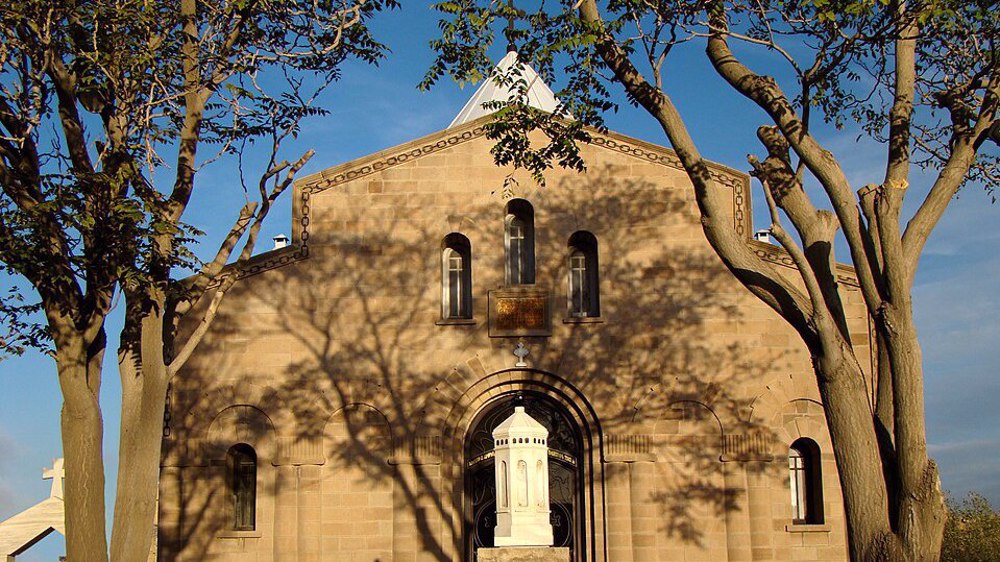
The Armenian Diocese lists several active Armenian churches in the city, including the Holy Mother of God Cathedral, St. Sarkis Church, and Shoghakat Church.
St. Sarkis offers another glimpse into the community’s history.
Located in the former Armenian neighborhood of Lilava, the church was built in the 19th century, with sources dating its original construction to 1821 and its rebuilding to 1845. It was associated with Armenian schools, showing that community institutions extended beyond religious life into education.
These churches are important not simply because they are old buildings, but because they reveal how an urban minority organized its life.
A church could function as a place of worship, a community center, and an anchor for schools and charitable activities. The Armenian presence therefore became part of the everyday geography of Tabriz.
From Armenian stages to a wider audience
The Armenian community also played a notable role in the development of theatre in Tabriz. The first Armenian theatrical performance in the city is recorded in 1879, and Armenian theatre gradually grew into an organized cultural activity.
By the 1890s, Armenian women were also taking part: in 1891, several Armenian women teachers from the Lilava neighborhood formed a theatre group, followed by a performance specifically for women the following year.
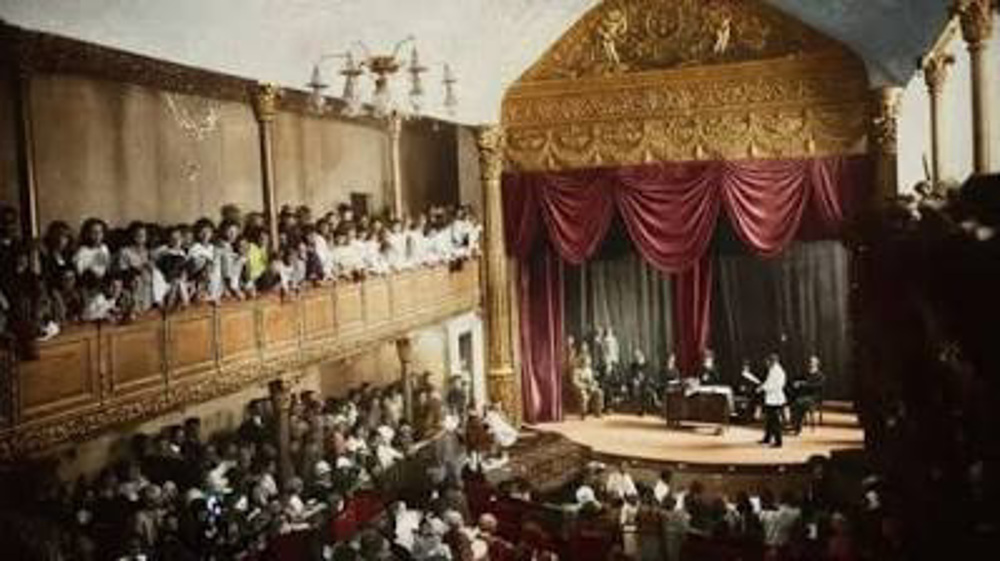
Armenian theatre later reached a wider audience beyond the community. A theatre hall with a capacity of about 500 people was built in Tabriz in 1914–1915, and from 1916 it was also used by non-Armenian theatrical groups.
The development of Armenian theatre therefore reflected not only the cultural life of Tabriz’s Armenian community, but also the gradual exchange between Armenian and the city’s wider urban culture.
Therefore, the city was not an isolated Armenian settlement, nor was its Armenian population simply a community living alongside the majority.
Tabriz’s Muslim majority lived peacefully alongside its Armenian community, with the two communities trading, working, and sharing the city while maintaining their distinct religious identities.
Tabriz’s Armenian heritage is found not in a single monument, but across the city’s history — in its trade routes, neighborhoods, churches, schools and theatres.
For centuries, Armenian merchants and communities were part of the networks that connected Tabriz with the Caucasus, Anatolia and markets farther afield.
Their legacy remains one of the many layers that shaped Tabriz as a city where commerce brought different communities into contact and left its mark on urban life.
Discover Iran: Tabriz’s extraordinary architectural legacy through royal palaces, merchant mansions
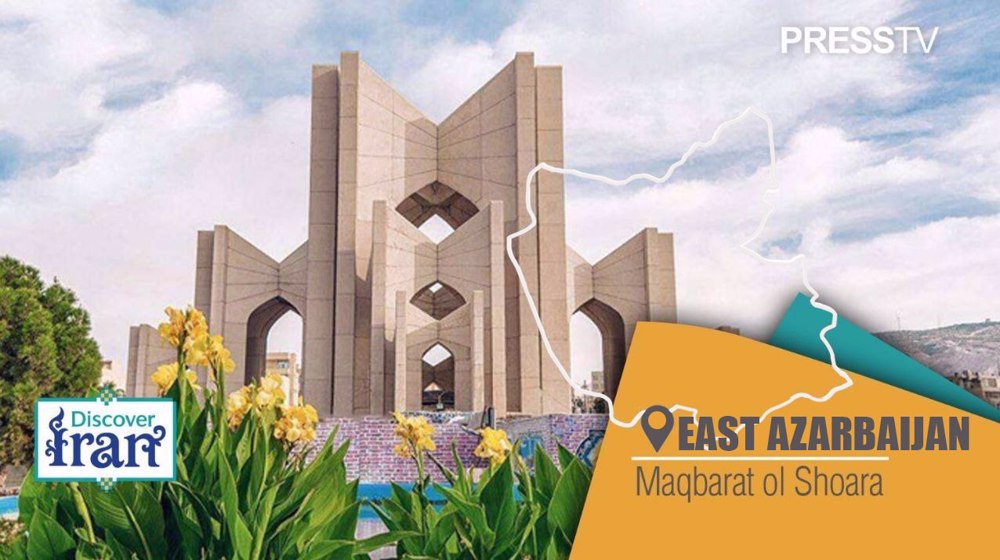
Discover Iran: Tabriz’s ‘Mausoleum of Poets,’ where centuries of Persian literary history live on
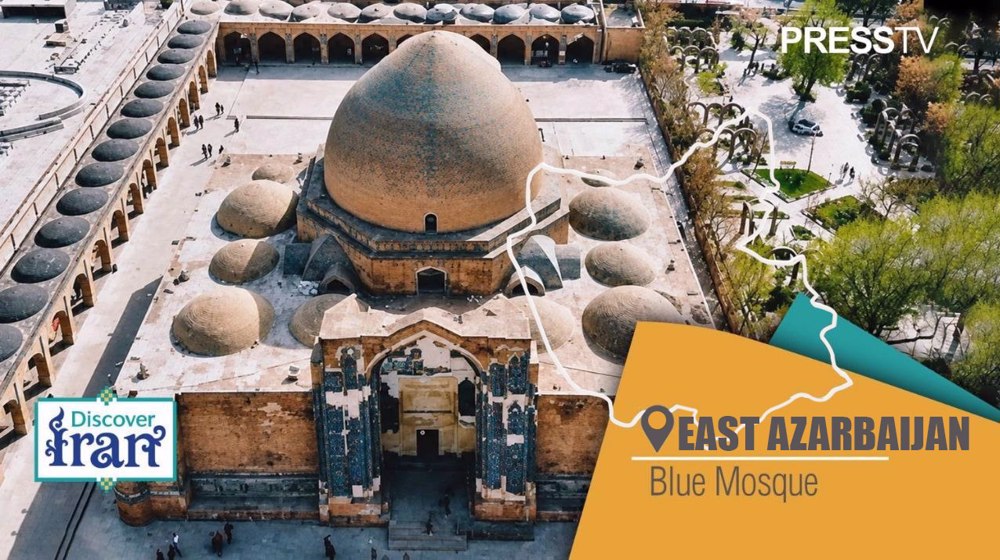
Discover Iran: Tabriz’s Blue Mosque, where glorious history meets timeless Iranian architecture



UN chief warns Israeli violence in West Bank raises ‘specter of ethnic cleansing’
VIDEO | ‘Korea gets nothing, loses everything, with Hormuz deployment’
Iran parliamentary commission approves penalties for violators of Hormuz laws
VIDEO | Trump’s war disrupts the world
Araghchi urges world to hold US accountable for ‘war crimes’ at UNGA
VIDEO | Press TV's news headlines
US F-16 fighter jet crashes at air base in Germany
Iran warns US against new attack, says Washington will gain ‘nothing but failure’


 PressTV NEWSLETTER
now
PressTV NEWSLETTER
now
 This makes it easy to access the Press TV website
