Iran says attacks cannot destroy nuclear science, vows not to surrender to ‘bullies’
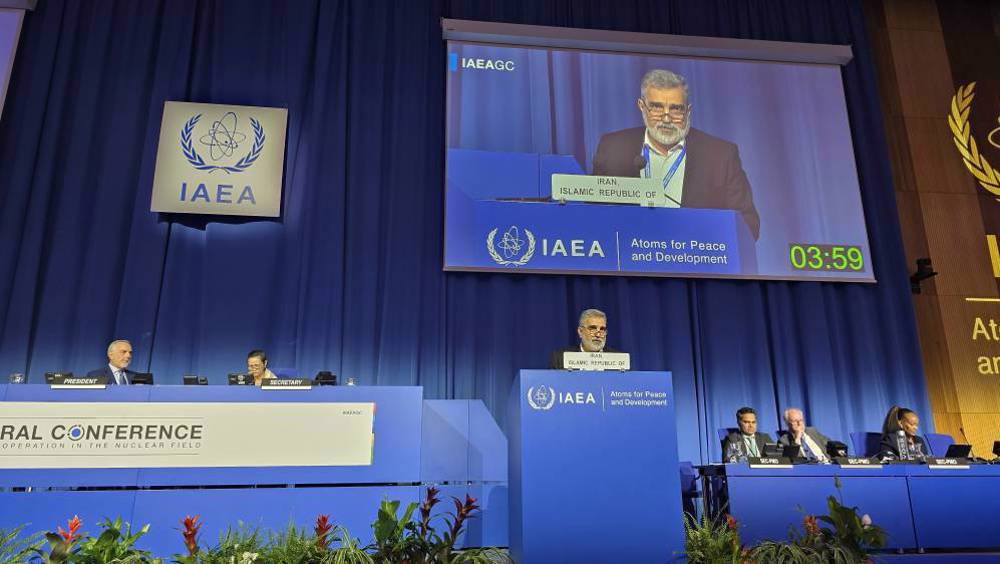
Iran will not abandon its peaceful nuclear program despite attacks on its facilities and scientists, said the deputy head of the Atomic Energy Organization of Iran (AEOI), stressing that the country “will not surrender” to its enemies.
Addressing the International Atomic Energy Agency (IAEA) General Conference in Vienna on Tuesday, Behrouz Kamalvandi said Iran’s nuclear expertise and industry had become deeply rooted in the country and could not be eliminated through military action.
“Attacks against Iranian sites and knowledge-based industrial corporations and pioneers of development and progress will not stop the Iranians,” he said.
“Iran’s enemies must understand that nuclear science, technology, expertise, and industry have taken deep root in the country and cannot be eliminated through military action and assassination.”
The comments come following two rounds of US-Israeli aggression against Iran that have in part targeted Iran’s safeguarded nuclear facilities amid the silence and inaction of the IAEA.
Kamalvandi said Iran had developed its nuclear capabilities after decades of experience in dealing with unreliable international partners and external pressure.
✍🏻 Viewpoint - Iran’s nuclear industry will survive war and strikes because knowledge cannot be obliterated by force
— Press TV 🔻 (@PressTV) September 15, 2026
By Vahid Mirzakhanihttps://t.co/Ij7gCUZxAj
He said Iran’s nuclear science and technology had an 80-year history, while the AEOI was 52 years old. Iran was also among the earliest members of the Treaty on the Non-Proliferation of Nuclear Weapons (NPT), he said, and had consistently maintained the peaceful nature of its nuclear activities.
He recalled that Iran had endured pressure and sanctions over its nuclear program for more than 25 years while continuing to pursue negotiations and honor its agreements, including the Joint Comprehensive Plan of Action (JCPOA).
According to Kamalvandi, the United States was the only JCPOA party that withdrew from the agreement. Iran nevertheless continued implementing its commitments unilaterally for about 1.5 years after the US withdrawal.
He said 15 consecutive reports by the IAEA director general at the time had confirmed Iran’s implementation of its JCPOA commitments. He added that Iran’s approach was nevertheless followed by unilateral sanctions, including measures described by their proponents as “crippling.”
Kamalvandi said negotiations resumed in 2022 after a change of administration in the United States, and a return to the JCPOA was within reach before Washington refused to conclude an agreement. Talks later resumed under the current US administration, but Israel then launched a military aggression on Iran in June 2025 as the parties were preparing to review technical details at the IAEA.
Turning to the IAEA, Kamalvandi questioned whether the agency’s repeated inspections of Iranian nuclear facilities had ever produced a finding of nuclear material diversion by Iran.
‘Serious violation’: Iran slams Austria’s barring of nuclear chief from IAEA conference under US pressurehttps://t.co/RebkmKVuwC
— PressTV Extra (@PresstvExtra) September 14, 2026
He also criticized the IAEA director general for politicized conduct and double standards, noting that recent statements and reports had provided pretexts for Iran’s adversaries to attack the country.
Kamalvandi called on the agency to condemn military attacks against Iran’s nuclear facilities and engage with Tehran. He also urged the IAEA to fulfill its responsibilities on the basis of its statutory mandate and treat Iran in the same manner as other member states.
He said Iran had a peaceful and transparent nuclear program and that its sensitive facilities had been located in secure, including underground, sites because of the country’s continuing exposure to military and security threats. Such measures, he said, should not be viewed as concealment.
He said Iran’s pursuit of indigenous nuclear capabilities stemmed from its experience with European countries that had failed to fully honor nuclear-related contractual commitments both before and after the Islamic Revolution.
Routine nuclear inspections ‘impossible’ amid aggression: Iran to IAEAhttps://t.co/CkKMGHO4r5
— PressTV Extra (@PresstvExtra) September 9, 2026
That experience, he said, demonstrated that international cooperation and external guarantees alone could not meet Iran’s strategic needs. Iran therefore pursued domestic capabilities and completion of the nuclear fuel cycle to meet peaceful civilian requirements, reduce dependence and ensure continuity of its nuclear activities.
Kamalvandi also highlighted Iran’s nuclear achievements in power generation, medicine, industry, irradiation technology and nuclear safety.
He stressed Iran’s determination to continue its nuclear path despite the pressure and attacks.
“The Iranian people have paid a heavy price for their independence and dignity,” Kamalvandi said. “It is therefore evident that this nation will not surrender to the bullies and will continue, to the very end, along the path they have embarked upon.”
He ended by quoting a motto by martyred Leader of the Islamic Revolution Ayatollah Seyyed Ali Khamenei: “Nuclear energy for all, nuclear weapons for none.”
Iran’s nuclear industry will survive war and strikes as knowledge cannot be obliterated by force
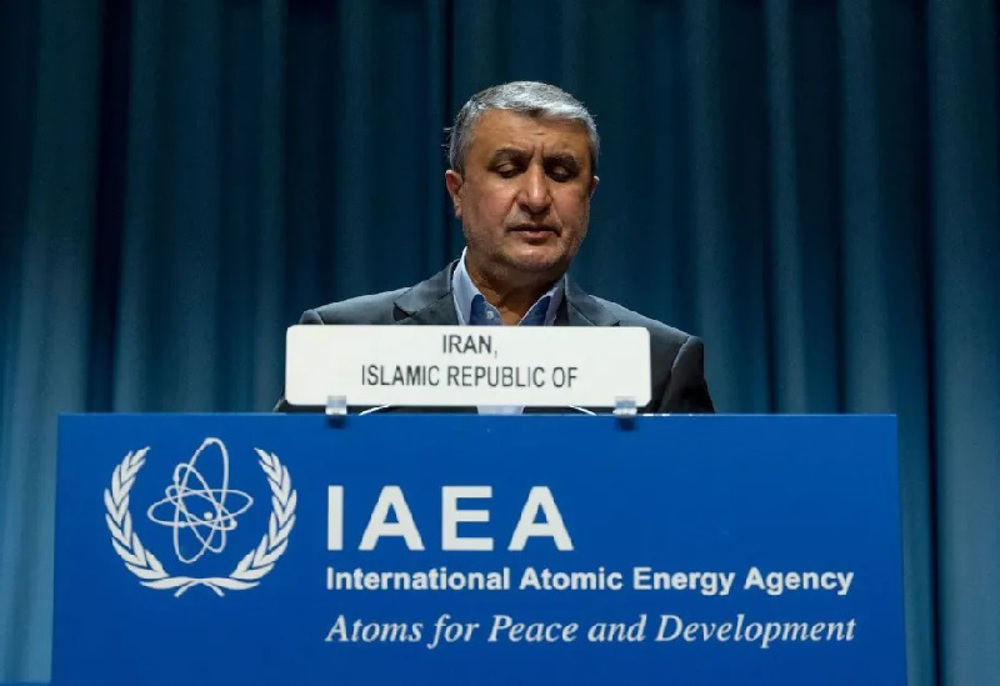
Iranian nuclear chief barred from IAEA conference
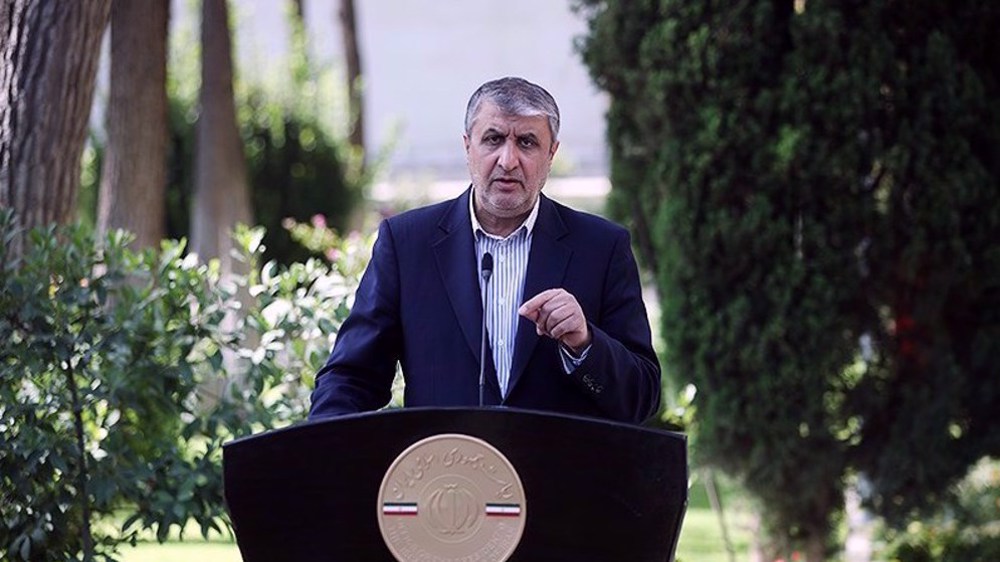
Iran slams Austria’s barring of nuclear chief from IAEA conference under US pressure



Pentagon finally admits Iran struck US F-35 fighter jet
Yemen rejects reports of threat against Mecca amid Saudi escalation
VIDEO | KSA oil bypass backfires
IRGC Navy chief praises 200 nights of nationwide demonstrations
Iran says attacks cannot destroy nuclear science, vows not to surrender to ‘bullies’
VIDEO | Press TV's news headlines
US plot to use Iraqi Kurdistan as launchpad against Iran thwarted: Qalibaf
Israeli forces abduct Press TV reporter Naqqa Hamed near Bethlehem


 PressTV NEWSLETTER
now
PressTV NEWSLETTER
now
 This makes it easy to access the Press TV website
