The art of killing innocents: How US ‘precision’ missiles turned a wedding in southern Iran into a massacre
By Mohammad Molaei
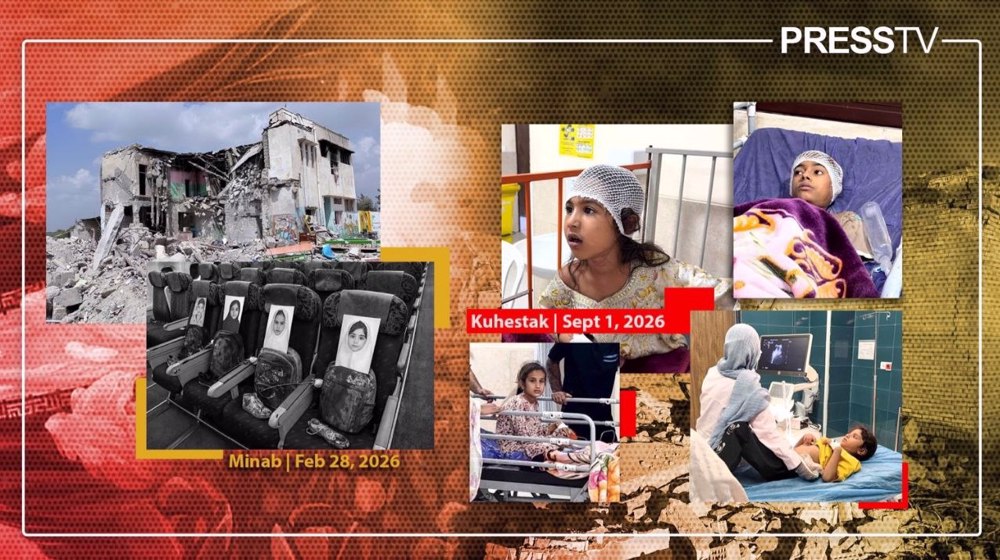
On February 29, US Tomahawks struck an elementary school in southern Iran’s Minab. It was a school where little boys and girls hung their coats on hooks, sat in neat rows and learned to read. It was the opening day of the American military campaign against Iran during the holy month of Ramadan.
The rubble was still smoldering, and burned human remains still lay scattered across the ground when the American spin machine went into motion.
Officials denied responsibility, spokespersons deflected questions, and the news cycle moved on. Weeks later, PrSM missiles struck a sports hall – another building filled with children.
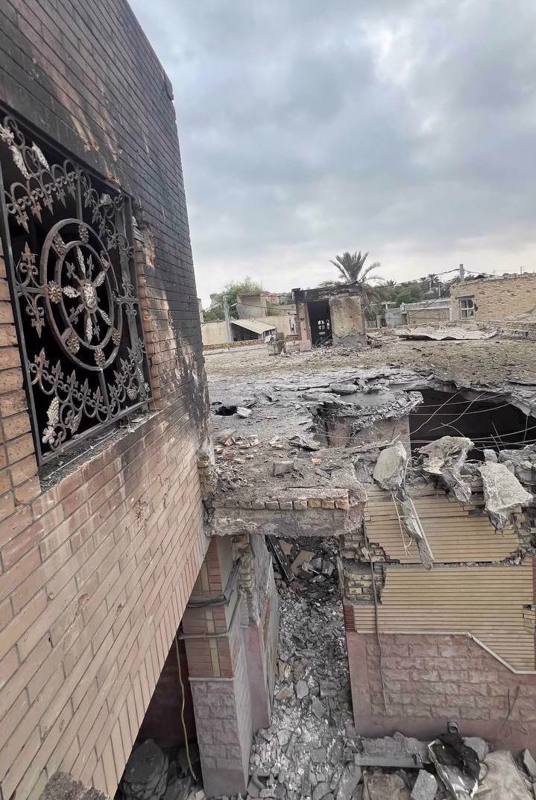
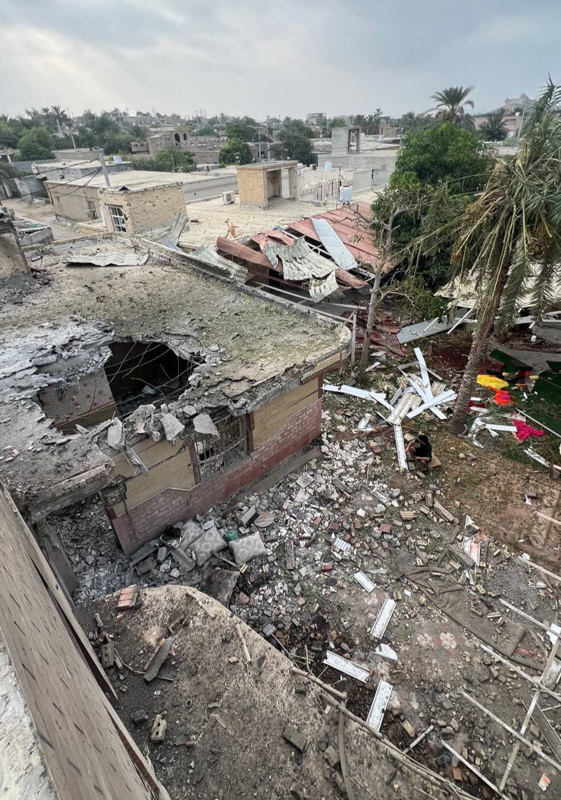
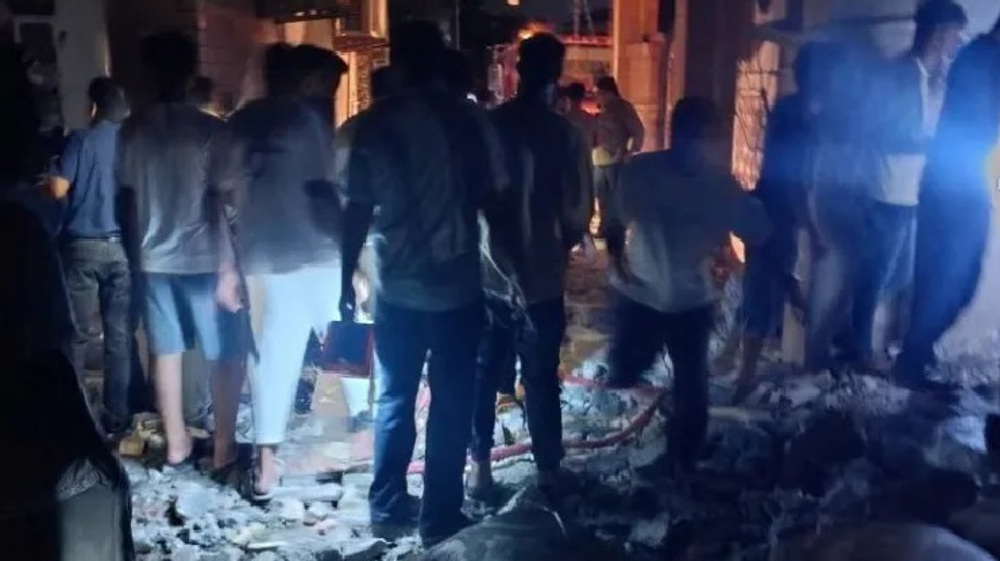
More recently, in the sunbaked southern province of Hormozgan, a wedding in the village of Kuhestak was transformed into a mass-casualty scene.
Four people were killed, including a child, and more than 60 others were injured. Families who had gathered to celebrate a marriage instead found themselves carrying the dead and wounded.
A day meant to mark a new beginning has been forever stained by death and grief. And once again, the bloody gears of the same spin machine are turning.
This is what American precision looks like when it reaches your country.
The wedding
They were celebrating when the missiles struck. That is the unbearable and irreducible fact at the center of everything that followed. People had dressed in their finest clothes, traveled to be with family, and gathered around a couple beginning their life together.
The official American account, delivered with the practiced smoothness of an institution that has told such fictitious stories many times before, is that the intended target was a communications antenna located approximately 200 meters away.
Set aside, for a moment, the grotesque arithmetic of the claim that a communications antenna was worth exposing the people at that wedding to any risk at all. Set aside, too, the question of what military necessity is served by destroying civilian telecommunications infrastructure in a remote village of a coastal province.
Set it all aside, because the physical evidence does not even give the United States the dignity of a targeting mistake.
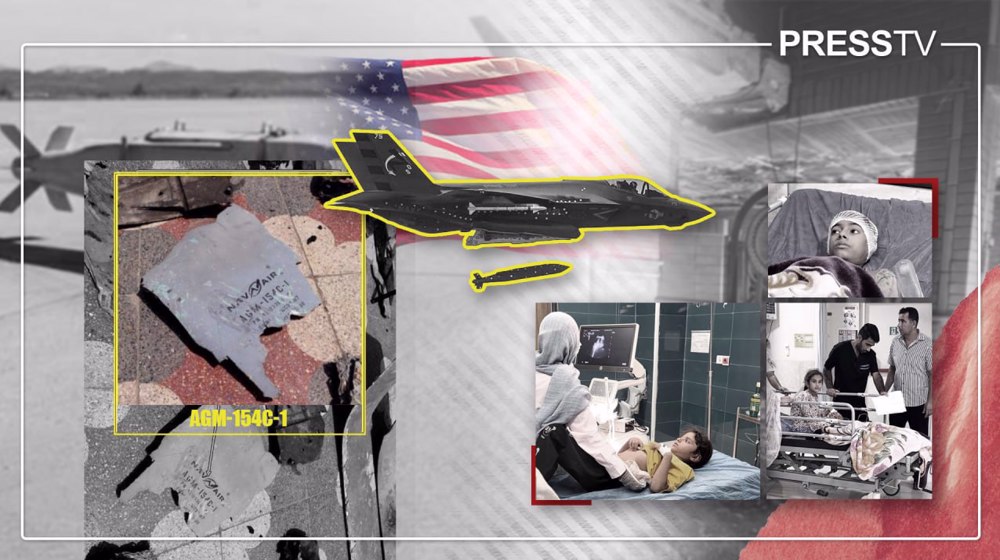
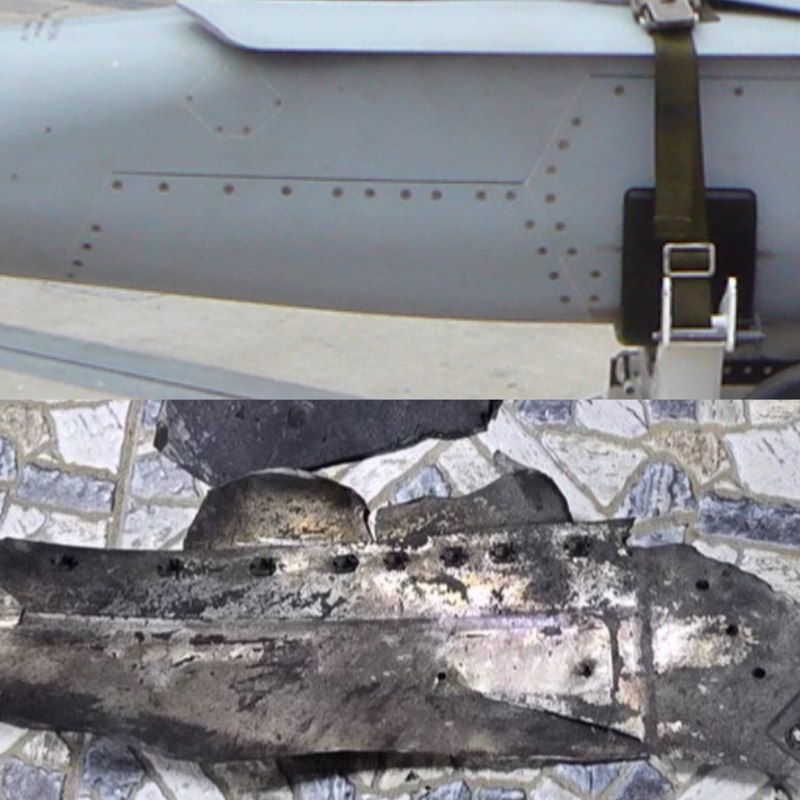
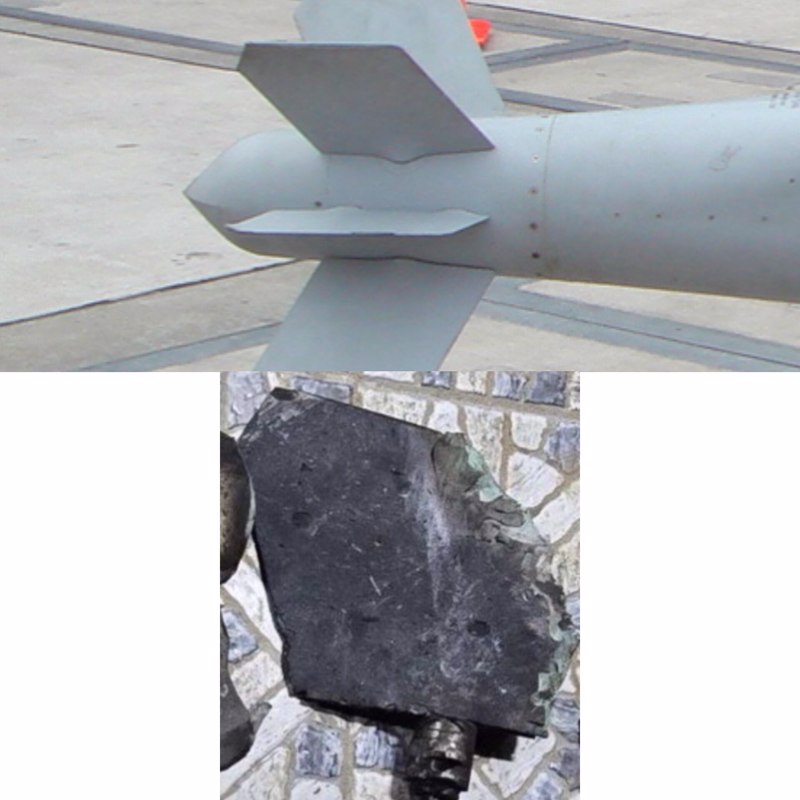
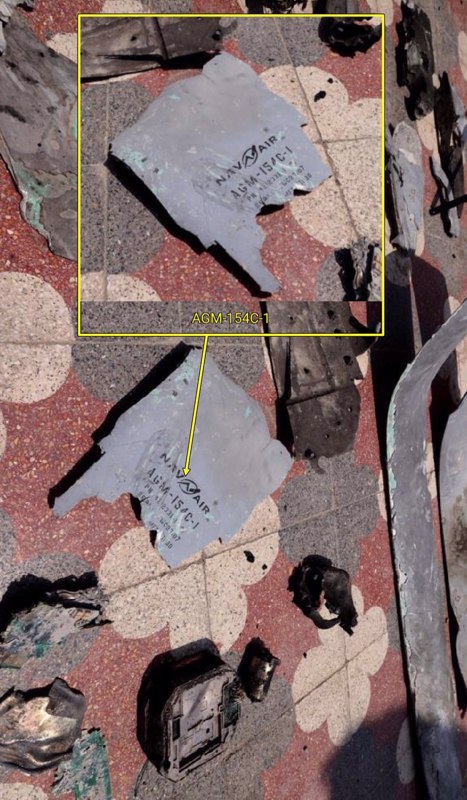
The debris recovered from Kuhestak is not ambiguous. The connecting bolt configuration, the movable end-control blocks, and the branched fuselage section with its internal launch lug are not generic fragments. They are identifiable components of an AGM-154 Joint Standoff Weapon, or JSOW.
And not just any variant. Subsequent imagery analysis narrows the identification further: the version used was the AGM-154C-1, the most advanced configuration in the American arsenal.
Here is why that matters. Here is why the 200-meter story is not a mistake but a deliberate targeting of civilians to instill fear after the military defeat in the battlefield.
The AGM-154C-1 has a circular error probable of under five meters. Under five meters. It also carries a dual-mode seeker, combining imaging-infrared terminal guidance that can optically acquire and lock onto a target in the final seconds of flight with a Link 16 data link that allows the operator to update the designated target even after the weapon has been released from the aircraft.
This weapon can see what it is hitting until the very last second. It can be corrected while it is flying. It was specifically designed to strike its designated target with extraordinary precision.
So when a weapon with this architecture strikes a residential structure 200 meters from its stated aim point and still detonates, a simple guidance failure does not adequately explain what happened. The margin is not a matter of a few meters. It is roughly forty times the weapon's stated circular error probable.
There is no credible basis for treating a 200-meter deviation as an ordinary guidance error by an AGM-154C-1.
What killed those four people and injured those sixty was not a malfunction. It was not the fog of war. It was not some tragic inevitability of modern American warfare. The weapon hit what it was aimed at. A child died where someone had decided a child would die.
The pattern that damns them
To understand what happened in Kuhestak, you have to hold all three incidents in your mind simultaneously, because the United States is relying on you not to.
The school, the sports hall and the wedding. Three strikes. Three civilian gatherings.
Three sets of physical evidence pointing to American weapons systems operating as designed. And three iterations of the same response: denial, deflection, the suggestion that the evidence is unclear, the pivot to the broader war, and the quiet hope that the next news cycle carries everyone away from the specifics.
This is not the picture of a military struggling to reckon with the errors of a difficult campaign. A military that made mistakes would, at some point, acknowledge them. A military grappling with proportionality would show some sign of doing so.
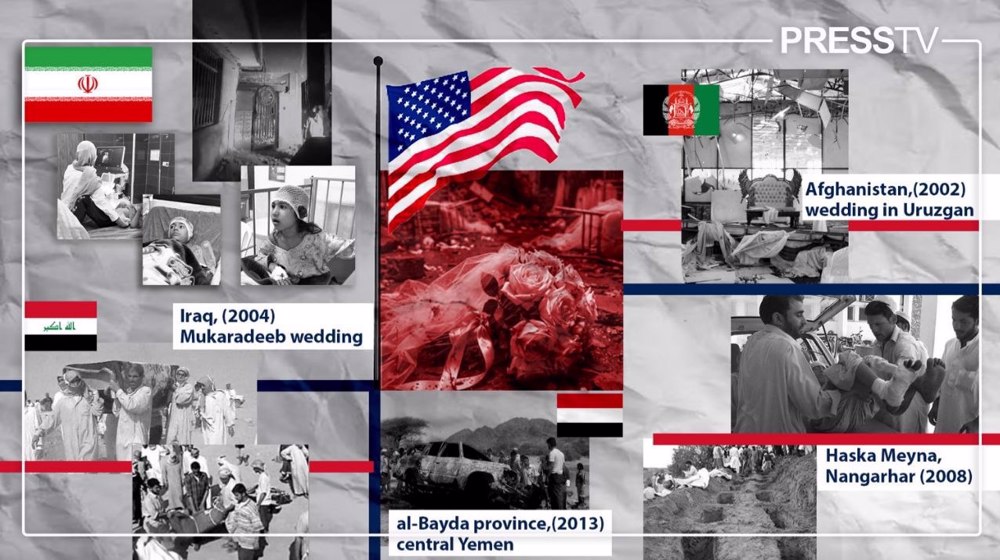
What we are watching instead is a rehearsed performance, polished through repetition across decades of disastrous military interventions and across every theater where American ordnance has fallen on people who were not soldiers. The script remains the same because the underlying decisions remain the same. The denial is institutional. The deflection is policy.
There is a term for deliberately targeting civilian gatherings in ways intended to impose psychological costs on a population, make ordinary life feel dangerous, fill hospitals, and destroy the sense that any place is safe.
It does not require a formal order spelled out in those words. It requires only the accumulated decisions of planners who have determined that a wedding in Hormozgan, a sports hall in Lamerd, or a school in Minab on the first day of term are acceptable coordinates.
If the evidence establishes that civilians were deliberately targeted, or that an attack was knowingly launched in circumstances making the expected civilian harm clearly excessive, that conduct constitutes a war crime.
The Geneva Conventions and their Additional Protocols make it amply clear. The rules governing the protection of civilians and the prohibition of indiscriminate and disproportionate attacks are binding law. They bind the United States and they bind the commanders and officers responsible for approving such strikes. And they bind the officials who stand before cameras afterward and tell the world that the target was a communications antenna.
What the silence implies
After the school bombing, there was silence – or rather, the noise of deflection that functions as silence. After the sports hall bombing, it was the same. Now, after Kuhestak wedding ceremony bombing, the war machinery is running again: the measured statements, the calls for investigations that lead nowhere, the careful language designed to redirect attention, telling the audience that warfare is imperfect.
But the AGM-154C-1 is not imperfect, as military experts would agree. The engineers who designed it built extraordinary precision into it. Sub-five-meter accuracy. Terminal imaging. In-flight correction via data link.
The weapon that killed a child at a wedding in Hormozgan is among the most precise air-launched standoff weapons ever fielded. Its precision is the evidence and indictment.
Four people were killed, and sixty were injured. A family that gathered to celebrate a marriage is now in hospitals and graves. The United States has the satellite imagery, the targeting data, the pre-strike intelligence assessments, the communications logs, and the Link 16 records of every update sent to that weapon after it left its aircraft.
If those records exist as described, the United States knows exactly what was targeted. The question is what it knew, and when it knew it.
IRGC downs another advanced MQ-1 drone over Strait of Hormuz
US tested Lockheed cluster missiles on Iranian civilians, Baghaei says
Iran will be ‘far more advanced technologically’ in any new war: Acting defense minister



Strait of Hormuz authority updates list of vessels violating Iran’s rules
VIDEO | Israel concerns about Houthi
Art of killing innocents: How US ‘precision’ missiles turned southern Iran wedding into a massacre
VIDEO | Regional push for Hormuz deal
VIDEO | News Review: Yemen launches large-scale operation against Saudi base
Iran’s strategic location, energy resources position it as a key player in BRICS alliance: Analyst
Yemeni army strikes aircraft hangars, radars, arms depots at Saudi airbase
Meet the 7-year-old Iranian prodigy who won gold at 2026 International Junior Informatics Olympiad



 PressTV NEWSLETTER
now
PressTV NEWSLETTER
now
 This makes it easy to access the Press TV website
