Iran’s hidden aquaculture revolution over four decades
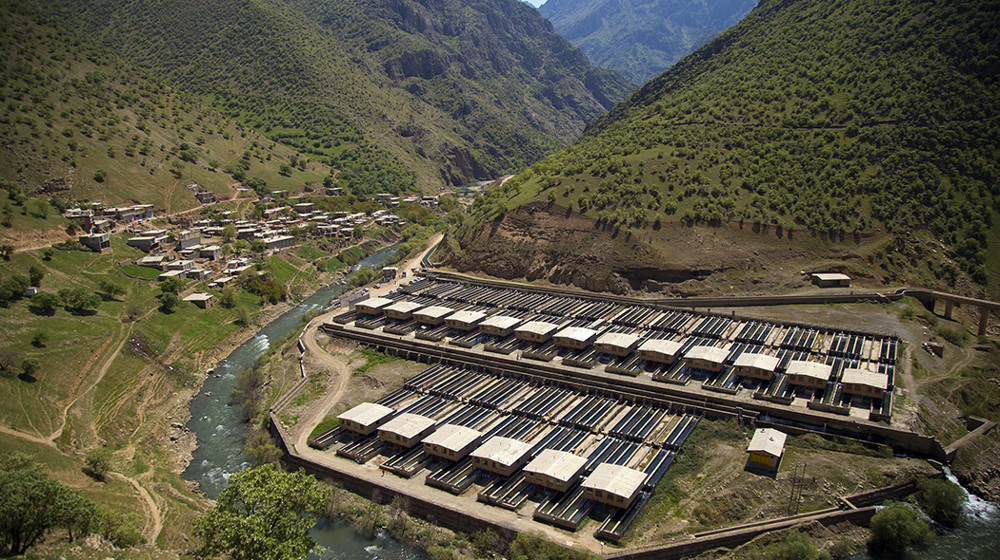
In 1979, Iran produced about 32,000 tons of aquatic products, most of it caught from natural waters rather than deliberately produced through controlled farming systems.
Today, Iran produces about 1.566 million tons annually, nearly fifty times the volume recorded then, according to the country’s Fisheries Organization.
The astonishing figure, however, is concealed inside that transformation, because aquaculture contributed only about 3,000 tons in 1979 compared with roughly 689,000 tons today.
Iran has therefore expanded farmed aquatic production by more than two hundred times within four decades, quietly constructing a second system for producing animal protein alongside conventional livestock.
That is the story hiding behind the familiar language of fisheries production, because Iran is increasingly producing fish through hatcheries, genetics, feed factories, farms, laboratories and processing networks.
The transformation begins long before a fish reaches a farm or processing plant, because modern aquaculture starts with the ability to reproduce aquatic species under controlled conditions.
Inside hatcheries, broodstock are selected, eggs are fertilized, larvae are raised and juveniles are produced before being transferred into commercial production systems, turning biological reproduction into an industrial process.
Iran began developing artificial propagation programs for Caspian species decades ago and gradually expanded trout, carp and other aquaculture technologies across inland provinces.
By the late 1980s, private hatcheries were becoming increasingly important, and trout-fry production rose from about 4.5 million in 1988 to 38 million by 1997.
Once Iran learned to produce juvenile fish reliably, farms could expand beyond locations where nature happened to concentrate abundant wild stocks, opening an entirely different geography for aquatic-food production.
Trout became the clearest demonstration of that shift, moving inland into mountainous provinces where cold, flowing water created conditions suitable for intensive production far from the country’s seas.
FAO data place Iran’s farmed rainbow-trout production at approximately 267,838 tons in 2022, making the country one of the world’s leading producers of the species.
At the leading edge of that industry, an Iranian trout operation can encompass broodstock, roe production, hatchery management, grow-out, specialized feed and genetic improvement within one integrated commercial structure.
FAO recently highlighted an Isfahan facility whose roe production alone supplies roughly one-quarter of national demand, illustrating the scale that some Iranian aquaculture enterprises have reached.
But producing large quantities of fish requires far more than hatcheries, because once the biological cycle is brought under control, every input affecting growth, survival and efficiency becomes part of the production system.
The chain now extends from broodstock and genetics through hatcheries, feed, water management, disease control, harvesting, refrigeration, processing, packaging and distribution to the final consumer.
Feed alone reveals how much industrial activity is hidden behind a single fish, because aquaculture requires carefully balanced proteins, oils, minerals and other nutrients throughout the growth cycle.
Recent research on Iranian trout production has examined poultry by-products, canola meal and other locally available ingredients as potential alternatives to fishmeal in commercial diets.
That research could eventually connect aquaculture more tightly with Iran’s agricultural economy, turning by-products and domestic crops into feed and then converting that feed into high-value animal protein.
The same industrial logic applies to genetics, where producers increasingly need domestic broodstock capable of delivering faster growth, stronger survival, improved disease resistance and more efficient feed conversion.
The country has therefore moved beyond simply learning how to raise fish, toward mastering the biological inputs that determine how efficiently those fish can be produced.
That industrialization becomes even more visible in southern Iran, where shrimp farming has created a coastal production system aimed heavily at international markets.
There, the landscape changes from mountain raceways and freshwater farms to vast ponds, hatcheries, processing facilities and refrigerated export chains along the southern coast.
Iran produced about 62,000 tons of shrimp last year and exported approximately 42,000 tons worth $168 million, according to the Fisheries Organization.
Shrimp thus demonstrates another dimension of the aquaculture transformation, because the same production system can generate food, employment and export earnings simultaneously.
Trout, shrimp and sturgeon are increasingly performing different economic roles, creating domestic protein, foreign exchange and high-value specialty products within the same expanding sector.
Sturgeon shows how far the sector has moved from its traditional dependence on wild stocks, because Iran has developed controlled breeding and farming systems for meat and caviar production.
The Fisheries Organization says Iran produced about 6,000 tons of sturgeon meat and 30 tons of farmed caviar last year, demonstrating the commercial scale of this specialized industry.
Scientists are also working to identify the sex of young sturgeon earlier, a seemingly narrow technical advance that could reduce production costs by allowing farmers to manage valuable caviar-producing fish more efficiently.
Such developments show why the transformation is increasingly a scientific project, because aquaculture depends upon understanding reproduction, genetics, nutrition, disease, water quality and species-specific biology.
The next frontier pushes that science into an entirely different environment, with Iran increasingly experimenting with marine cage farming in both the Caspian Sea and southern waters.
Marine aquaculture changes the equation again, moving production from controlled land facilities toward engineered systems operating directly inside large aquatic environments.
Researchers must determine suitable locations, water circulation, oxygen conditions, waste dispersion, disease risks and environmental carrying capacity before commercial cage systems can expand safely.
That means Iran’s next aquatic-production revolution will depend increasingly upon oceanography, environmental science, engineering and digital monitoring alongside traditional fisheries expertise.
The economic system around these technologies is expanding at the same time, with fisheries officials reporting more than 69,000 billion tomans of investment last year and approximately 92 percent coming from private investors.
The scale of private participation matters because aquaculture requires companies to invest simultaneously in hatcheries, feed, farms, equipment, processing, refrigeration and market access.
Each new farm can therefore generate demand across several other industries, turning aquatic production into a wider industrial cluster rather than an isolated agricultural activity.
That cluster is already visible in the emergence of specialized hatcheries, feed producers, processing plants, laboratories, equipment suppliers and exporters operating around different species and production regions.
Taken together, the expanding aquaculture industry gives Iran a more diversified foundation for food security while creating a platform for further advances in aquaculture science, marine engineering, genetics and high-value aquatic production.
Behind Iran’s record wheat harvest amid drought, sanctions and war

US sanctions will not halt Iran’s aviation industry: Civil aviation chief
Iran inaugurates major desalination plants, says US threats won’t halt development



IRGC downs another advanced MQ-1 drone over Strait of Hormuz
Iran’s hidden aquaculture revolution over four decades
‘I support Israel’: Comedian’s opening line prompts audience walkout
Iran unveils two locally-made strategic catalysts for oil, gas and petchem industries amid sanctions
Israeli war minister threatens to ‘eliminate’ anyone who approaches southern Lebanon heights
Israeli minister vows to revoke filmmakers’ citizenship over award-winning Gaza documentary
US complicity in Gaza genocide must stop: Lawmaker
Satellite images reveal extensive damage to key Saudi oil pipeline as supply fears mount


 PressTV NEWSLETTER
now
PressTV NEWSLETTER
now
 This makes it easy to access the Press TV website
