Behind Iran’s record wheat harvest amid drought, sanctions and war
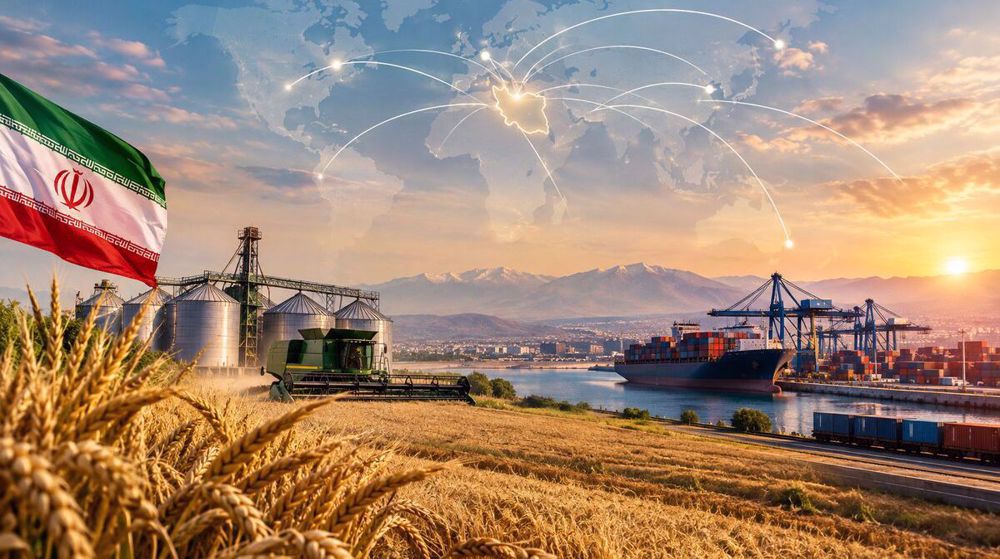
Iran has produced a record 14.1 million tons of wheat this year, marking the highest level ever recorded and turning a major agricultural target into a remarkable achievement despite extraordinarily difficult domestic conditions.
Deputy Agriculture Minister Majid Aanajafi announced the record Sunday, also reporting that total agricultural and horticultural production had risen by roughly seven million tons, pointing to broader gains in the farming economy.
The significance of these figures becomes clearer when viewed against drought, uneven rainfall, economic difficulties, sanctions and the consequences of two US-Israeli wars that disrupted economic activity and added pressure on national life.
The achievement therefore deserves examination not merely as a successful harvest, but as the outcome of a large scientific and institutional effort that has been building for years across laboratories, research stations, government agencies and farms.
According to Aanajafi, around 10,000 experts worked with researchers, managers, officials and farmers, creating a nationwide network that moved scientific findings from experimental fields into practice and, ultimately, national production.
That network is perhaps the most important fact behind the headline number, because a record harvest on this scale cannot be explained by one new seed, one favorable region or one administrative decision during a single growing season.
It reflects the accumulated effects of breeding, field trials, climate analysis, water management, fertilizer use, extension services and farmer experience, all adapted over time to Iran’s agricultural conditions.
For decades, Iranian agriculture tested methods developed mainly for Europe, finding that techniques successful elsewhere could not be transferred directly to Iran’s different temperatures, soils, rainfall patterns and water constraints.
The lesson eventually became apparent that Iran needed agricultural science designed around its own environmental realities, requiring researchers to develop locally appropriate methods through sustained experimentation.
That transition is now producing tangible results, particularly in wheat, where Iranian researchers have spent years studying how different genetic materials behave under irrigated, rain-fed, drought-stressed and geographically contrasting conditions.
Recent Iranian research examined 266 wheat genotypes, including traditional landraces and cultivars, across contrasting moisture environments, seeking varieties capable of combining productivity with stability when water availability becomes unreliable.
Another line of research has used thousands of molecular markers and genomic selection techniques to improve identification of wheat genotypes capable of maintaining useful yields under environmental stress.
This work matters because drought resistance is not a simple characteristic that can be switched on in a plant, but a complicated interaction between genetics, rainfall timing, soil moisture, temperature, planting conditions and crop development.
Iranian researchers are now examining which varieties perform best in each region, rather than expecting one high-yield variety to work equally well everywhere in the country.
This approach is especially important for rain-fed agriculture, where production depends on the timing of rainfall and crop development, leaving farmers with fewer ways to offset adverse weather through irrigation.
More than two decades of research in western Iran has shown that rainfall timing can strongly affect rain-fed durum wheat yields, making moisture management increasingly important alongside breeding drought-tolerant varieties.
The scientific response therefore goes beyond seeds to include planting dates, soil moisture, irrigation, fertilizer use and crop management.
Water productivity has become particularly important because Iran cannot build its agricultural economy by continually using more water, especially as drought and declining availability remain persistent challenges.
The goal is to produce more grain with available water, land and resources by using science to improve agricultural efficiency in ways that last beyond changing weather conditions.
This is where farmer involvement becomes indispensable, because a discovery inside a research station becomes economically meaningful only when it survives the complexities of real fields and improves decisions made by producers.
The cooperation of roughly 10,000 experts with researchers, managers, officials and farmers indicates that the effort has been organized as an agricultural system rather than as a collection of isolated scientific projects.
The seven-million-ton increase in agricultural and horticultural production is consequently significant because it indicates that the scientific effort is generating effects beyond wheat and contributing to broader improvement in Iranian agriculture.
The wheat record is therefore the most visible symbol of a wider agricultural transformation in which accumulated research is beginning to translate into higher output, stronger resilience and greater control over production under difficult conditions.
The achievement becomes even more striking when considered alongside the economic pressures facing farmers, because sanctions have raised agricultural input costs and complicated access to some technologies, financing and imported resources.
The two US-Israeli terrorist wars have added further pressure, disrupting economic activity and agriculture while farmers and researchers were already facing drought and climate volatility.
Wars, sanctions and drought are important parts of the context, but the more important economic question is how Iranian agriculture has managed to raise output despite these constraints.
That distinction matters for Iran’s economic future, especially given that approximately 85 percent of the country’s food requirements are produced domestically, leaving a smaller share dependent upon external supply.
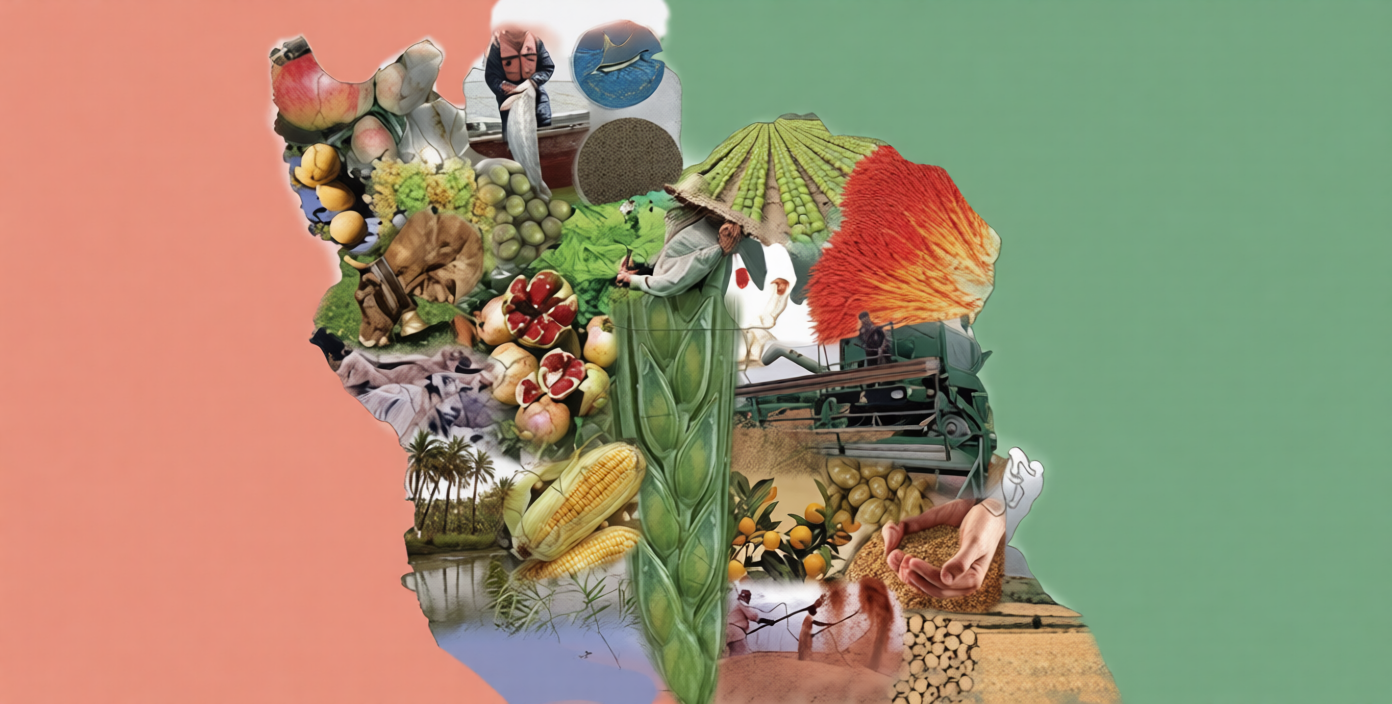
The latest harvest suggests that this productivity goal is already being realized.
Productivity gains built on locally adapted science have helped Iranian agriculture increase output despite difficult conditions, creating returns that can be sustained across successive seasons rather than depending solely on favorable weather.
For Iran, the strategic objective is therefore not simply to produce a record quantity during one exceptional season, but to create an agricultural system capable of repeatedly delivering strong output under increasingly demanding conditions.
That explains why the 14.1-million-ton harvest should be read as both a record and a roadmap, pointing toward an agricultural economy increasingly capable of producing more from what Iran already possesses.
It suggests that the country’s research and extension infrastructure is increasingly converting scientific findings into measurable national output.
Years of experimentation with new methods have consequently produced a different kind of inheritance, because Iranian scientists have accumulated their own evidence about what works, where it works, when it works and why it works.
That accumulated knowledge is now an economic asset, as important as physical infrastructure because it helps Iran gain more from land and water resources that cannot be expanded indefinitely.
The result is a milestone beyond this year’s wheat harvest, showing that years of scientific research can turn difficult environmental conditions into an opportunity to develop methods suited to Iran.

US sanctions will not halt Iran’s aviation industry: Civil aviation chief
Iran inaugurates major desalination plants, says US threats won’t halt development
Iran kept oil exports flowing during war despite 550 strikes on Kharg: Minister



Russia, China clash with West at UNSC over legality of Iran ‘snapback’ sanctions
Algeria cuts diplomatic ties with UAE amid escalating tensions
Yemeni forces capture port of al-Ardhi on Bab al-Mandeb: Report
VIDEO | News Review: Iran says IAEA adopted latest resolution under US, European pressure
Iran tops Asian Youth Karate Championships with 31-medal haul
IRGC declares end of defensive phase, says ready for rapid offensive operations
Iran shifted to offensive posture, will shape new global order: Hezbollah MP
Behind Iran’s record wheat harvest amid drought, sanctions and war


 PressTV NEWSLETTER
now
PressTV NEWSLETTER
now
 This makes it easy to access the Press TV website
