US sanctions will not halt Iran’s aviation industry: Civil aviation chief

The head of Iran’s Civil Aviation Organization says new US sanctions against Iranian airlines were a continuation of a failed policy, stressing that while the measures could increase the cost of operations and procurement, they would not bring the country’s flight operations to a halt.
Speaking on Wednesday in response to the US decision to sanction 27 Iranian airlines, Captain Abuzar Shiroudi said the latest move was neither a new initiative nor evidence of the effectiveness of Washington’s policy.
It is “a repetition of a failed policy against the Iranian nation, a policy that the country’s aviation industry has faced for decades and one that has been met time and again with the capabilities and resilience of Iranian specialists,” he noted.
On Tuesday, the US Treasury Department imposed new sanctions on 27 Iranian airlines, including Iran Aseman, Iran Airtour, Kish Air, Qeshm Air, Zagros, ATA, Varesh, Sepehran, Chabahar and other airlines operating in Iran.
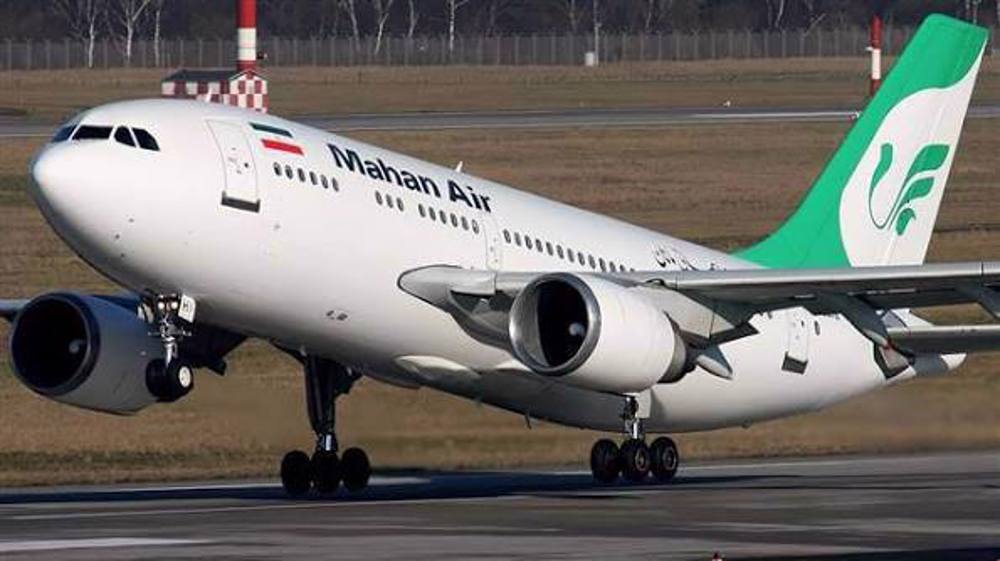
Shiroudi said Iran’s aviation industry had for years faced restrictions on the purchase of aircraft and spare parts, as well as technical, banking, insurance, repair and maintenance services. Despite these pressures, he stressed, the country’s aviation sector had continued to operate.
“Sanctions may increase the cost of operations and the procurement of some needs, but they have so far failed to halt the country’s flight operations, and they will not be able to do so today either,” he said.
The civil aviation chief also warned against exaggerating the impact of the new measures, saying that the imposition of sanctions did not mean that aircraft would be grounded or airlines forced to shut down.
“We must not allow psychological warfare and exaggerated headlines to replace the operational realities of the aviation industry. Sanctions may increase operating costs, but they do not have the power to stop Iran’s aviation industry,” Shiroudi said.
He further stressed that aviation was not merely an economic sector but a vital part of the country’s infrastructure, transporting millions of passengers, families, patients, students and businesspeople.
“Targeting Iranian airlines in practice means restricting people’s access to air transportation services, and ordinary people, patients, families and economic actors will bear the greatest share of the cost,” he said.
Shiroudi noted that Iranian airlines had continued to provide services despite years of sanctions, describing the continuation of flights under difficult conditions as evidence of the aviation industry’s capabilities and resilience.
“America can put the names of companies on its sanctions list, but it cannot sanction the knowledge of specialists, the industry’s accumulated experience or the determination of Iran’s aviation personnel,” he said.
“If the US goal is to stop Iran’s aviation industry, it should know that this goal was not achieved in the past and will not be achieved today either.”
Shiroudi acknowledged that sanctions could make the procurement of some requirements more difficult but said they would not prevent Iran’s aviation sector from continuing to operate.
“Sanctions may make the supply of some needs more difficult, but they cannot stop Iran’s aviation industry,” he said adding that the country’s flights will continue by relying on domestic capabilities, full compliance with safety requirements and careful planning.

Republicans turn to Islamophobia amid 2026 midterm slump: Report
IRGC warns of more ‘unique’ surprises if enemy continues aggression

IRGC condemns assassination of Kurdish cleric by 'Zionist-American separatists'



Tehran rejects Arab League’s skewed account of Iranian retaliation against US’s regional interests
Head home while you still can, senior Iranian lawmaker advises remaining US forces
VIDEO | Press TV's news headlines
Israeli forces kill Palestinian man in West Bank, withhold his body
War and blockade part of same strategy to weaken Iran: Geneva envoy
OIC condemns Nauru embassy opening in occupied al-Quds
Yemen vows ‘severe retaliation’ over 54 Saudi airstrikes in 12 hours
Iran warns IAEA ‘political’ resolution risks ‘ultimate collapse’ of non-proliferation regime


 PressTV NEWSLETTER
now
PressTV NEWSLETTER
now
 This makes it easy to access the Press TV website
