
The Islamic Revolution Guards Corps (IRGC) has said the recent capture of a highly advanced US unmanned underwater vehicle in the Strait of Hormuz demonstrates the effectiveness of Iran’s surveillance capabilities in the strategic waterway.
The IRGC Navy announced on Tuesday that its servicemen had intercepted and captured the unmanned American underwater vehicle near the entrance to the Strait of Hormuz following “complex intelligence and operational action.”
IRGC Navy releases footage of captured US Navy’s unmanned submersible vehicle
— Press TV 🔻 (@PressTV) September 8, 2026
Follow: https://t.co/boCY50qfi9 pic.twitter.com/4m94YxlQX6
The IRGC Navy said the vehicle incorporated advanced underwater technology and had been delivered to the US military in 2025.
The system, a Dive-LD, is an autonomous unmanned underwater vehicle developed by US defense technology company Anduril Industries. It is approximately 5.8 meters long, about 1.2 meters in diameter, and weighs roughly 2.7 tons. Its specifications include an endurance of up to 10 days underwater and a maximum operating depth of around 6,000 meters.
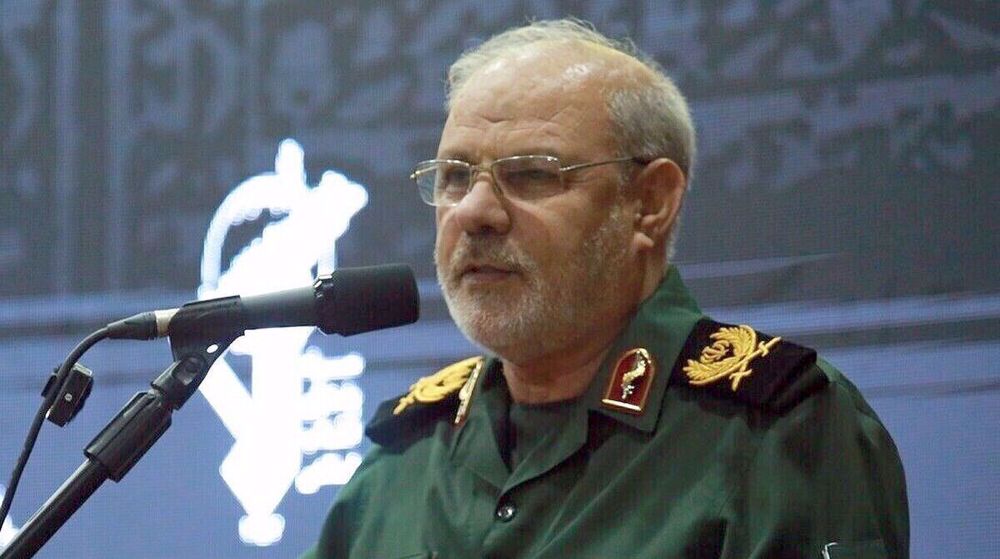
Speaking on Tuesday evening, IRGC spokesman Brigadier General Hossein Mohebbi said the capture demonstrated that advanced technology could not penetrate Iran’s surveillance layers in the Strait of Hormuz.
He said the dawn capture of the US military’s most advanced unmanned submarine of 2025 showed the strength of Iran’s surveillance capabilities in the strategic waterway.
“Dominance over the Persian Gulf belongs to our young technology specialists,” Mohebbi stressed.
The spokesman subsequently addressed the United States directly, saying, “Go back to the Bay of Pigs” in reference to the failed Bay of Pigs invasion of Cuba in April 1961.
Iran closed the Strait of Hormuz following the launch of the latest bout of unprovoked American-Israeli aggression against the country on February 28.
The Islamic Republic and the United States agreed on a 60-day reopening period as part of a Pakistan-mediated memorandum of understanding in June.
Iran took measures to ensure safe and legal transit through the chokepoint in keeping with the understanding, but American violations forced the country to reestablish the closure.
Strait of Hormuz remains under Iran’s firm control: IRGC deputy commanderhttps://t.co/S5FNvRyAzj
— Press TV 🔻 (@PressTV) September 8, 2026
Tehran has conditioned reopening of the waterway on realization of a number of prerequisites, including the complete lifting of the illegal US naval and economic blockade against the Islamic Republic, durable cessation of aggression on all fronts, including Lebanon, and clarification of the situation concerning the blockade of Yemen.
 This makes it easy to access the Press TV website