

Iran says attacks on its nuclear facilities and the assassination of its scientists cannot destroy its nuclear capabilities, stressing that its nuclear expertise is rooted in knowledge, determination and human resources.
An Iranian delegation attending the International Atomic Energy Agency (IAEA) Board of Governors meeting in Vienna made the remarks in a statement released on Tuesday, saying Iran’s nuclear “capabilities are not confined to buildings or machines.”
The statement said US-Israeli aggression against Iran in 2025 and 2026 “might have damaged our peaceful nuclear facilities [and] affected our access to nuclear technology in some vital areas. But Iran’s nuclear capabilities are rooted in knowledge, determination, and human resources of a proud nation.”
“Facilities may be attacked and scientists may be assassinated, but once science takes root in the people, it survives, promotes and passes from one generation to the next. This is the reality of Iran, and no amount of force can change it,” the statement added.
According to the delegation, Iran’s achievements in nuclear science and technology were the result of sustained investment, accumulated knowledge, specialized human resources, and the development of indigenous equipment and infrastructure.
“These achievements have resulted in a mature and sustainable scientific and technological capacity that meets a significant share of the country’s needs,” it added.
The statement highlighted the peaceful applications of nuclear technology in Iran, including agriculture, environmental protection, crop improvement, pest and disease control, food preservation, and the efficient use of water and fertilizers.
It said the country had also developed capabilities in the production and application of radioisotopes, irradiation and sterilization, as well as radiation-based technologies in medicine and industry.
“These activities are supported by capabilities in radiation protection, monitoring, measurement, and detection,” the statement noted.
The delegation also said that technical assistance, the transfer of knowledge and technology, and capacity-building constitute core elements of the IAEA’s statutory responsibilities and should be provided without discrimination and free from political considerations.
It said illegal unilateral sanctions and other restrictive measures had systematically impeded the realization of these objectives, limiting Iran’s ability to fully benefit from technical assistance, technology transfers and capacity-building for decades.
Iran described such measures as contrary to the inalienable right of states to the peaceful use of nuclear energy and to the obligations of developed states under the Nuclear Non-Proliferation Treaty (NPT) to cooperate in the development of peaceful nuclear applications.
The Iranian delegation called on the IAEA Board of Governors to demand an end to such sanctions and restrictions, urging the Agency to seriously assess and address their impact on member states.
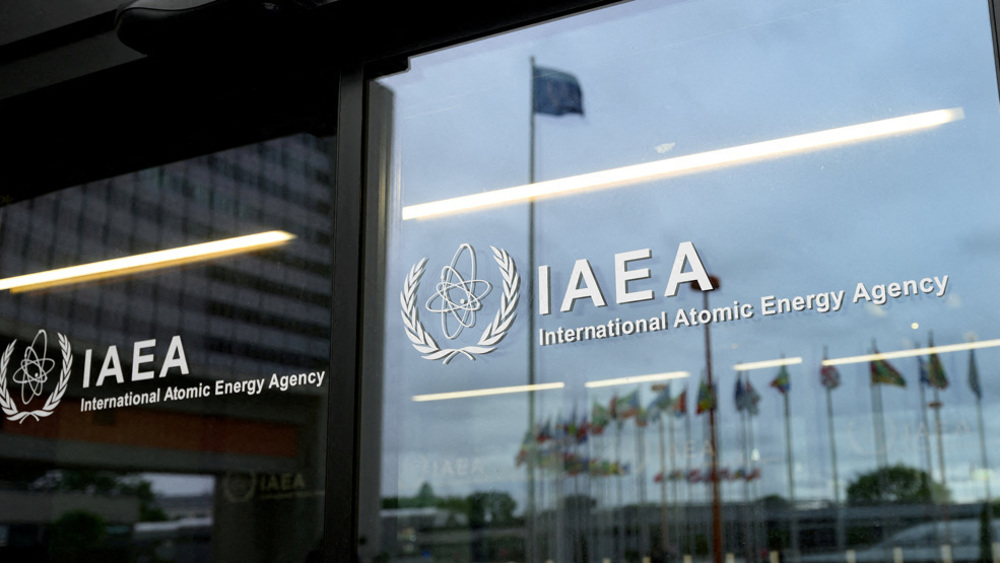
As the IAEA holds its September meeting of the Board of Governors, France, Germany, the UK and the US are pressing the agency to refer Iran to the UN Security Council. The US draft resolution calls on Iran to provide access required by inspectors.
The IAEA has not had access to key nuclear facilities in Iran since June 2025, when Israel, joined by the United States, launched a 12-day war in clear violation of international law and the NPT, striking three Iranian nuclear facilities in Fordow, Natanz and Isfahan.
The aggression prompted Iran to reject immediate access for IAEA inspectors to its nuclear facilities and damaged materials.
Tehran maintains that such matters will only be addressed within the framework of a final agreement and after Washington takes practical steps to lift all illegal sanctions.
Iran’s nuclear facilities also came under attack during the latest US-Israeli war against the country, which began on February 28 and continued until a ceasefire took effect in April.
Iranian Foreign Ministry spokesman Esmaeil Baghaei reiterated earlier in the day that restrictions on inspectors were a consequence of US and Israeli attacks on Iran’s safeguarded nuclear facilities.
 This makes it easy to access the Press TV website