

Iran’s mission to the United Nations in Vienna says calls on Tehran to unconditionally comply with International Atomic Energy Agency (IAEA) Safeguards are “meaningless” under the current “hazardous” circumstances.
In a post on its X account on Monday, the Iranian mission said the call was “meaningless” because it ignores the very fact that the IAEA itself initially suspended the implementation of Safeguards and withdrew its inspectors from Iran “for safety reasons” following the illegal US-Israeli aggression.
“The agency must stop unprofessional, unobjective, semi-technical, and politically influenced reporting and then acts on #Iran,” it added.
The mission urged IAEA Director General Rafael Grossi to first call on the aggressors, the United States and Israel, to stop attacking or threatening to attack Iran’s safeguarded peaceful nuclear facilities.
This was necessary to ensure the essential conditions for the implementation of IAEA Safeguards, it said.
According to the mission, until the UN nuclear agency and the United Nations Security Council fulfill their mandated responsibilities, “Iran has every right to protect its national interests on its own.”
Speaking at a press conference after opening the quarterly meeting of the IAEA Board of Governors in Vienna on Monday, Grossi said giving the agency access to key nuclear facilities in Iran would have “positive repercussions” for Tehran, as a draft resolution seen by AFP proposes referring Tehran to the UN Security Council.
“The best, shortest way for a positive outcome is for Iran to engage with us,” the IAEA chief said.
The IAEA has not had access to key nuclear facilities in Iran since Israel, joined by the United States, launched a 12-day unlawful war in June 2025 that included US strikes on three Iranian nuclear facilities in Fordow, Natanz, and Isfahan, in a clear violation of international law and the Nuclear Non-Proliferation Treaty (NPT).
Iran has firmly ruled out any immediate access for the IAEA inspectors to its nuclear facilities and materials damaged in US-Israeli strikes, stating that such matters will only be addressed within the framework of a final agreement and after Washington takes practical steps to lift all sanctions.
Nuclear facilities have also been hit in the latest US-Israeli unprovoked war, which erupted on February 28, and the IAEA has repeatedly urged access.
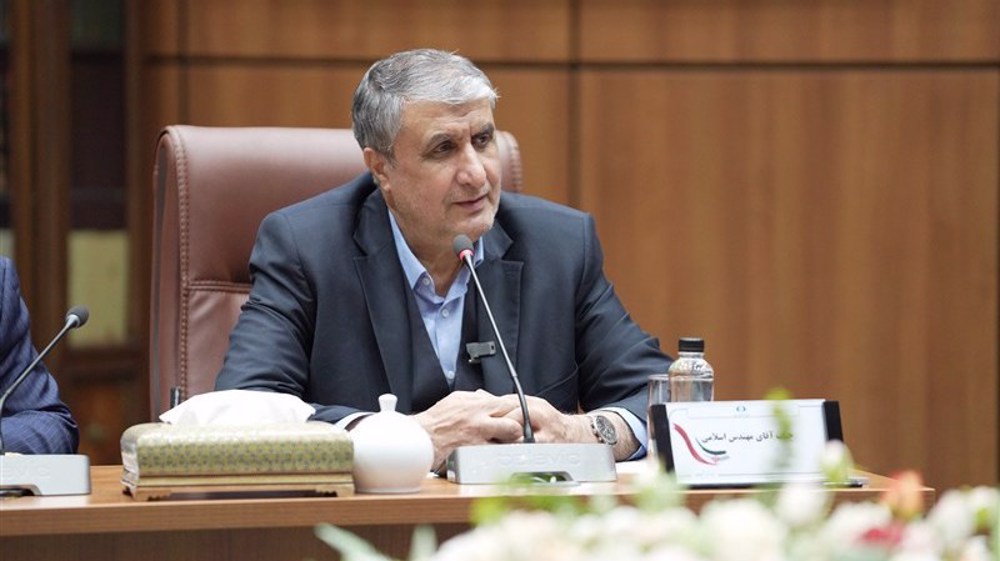
Head of the Atomic Energy Organization of Iran (AEOI) Mohammad Eslami said in August that the UN nuclear watchdog cannot demand access to inspect nuclear facilities damaged in the US-Israeli military strikes unless a specific, approved protocol for inspecting sites under wartime conditions is established.
The current standoff over site inspections is the latest escalation in a prolonged dispute between Tehran and the IAEA’s Board of Governors.
Over the past years, the Board, heavily influenced by the United States and its European allies – namely Britain, France and Germany – has passed multiple resolutions criticizing Iran’s nuclear activities.
These resolutions have frequently demanded immediate access to various Iranian nuclear facilities, often citing concerns over alleged undeclared activities or the presence of nuclear material traces at specific locations.
 This makes it easy to access the Press TV website