
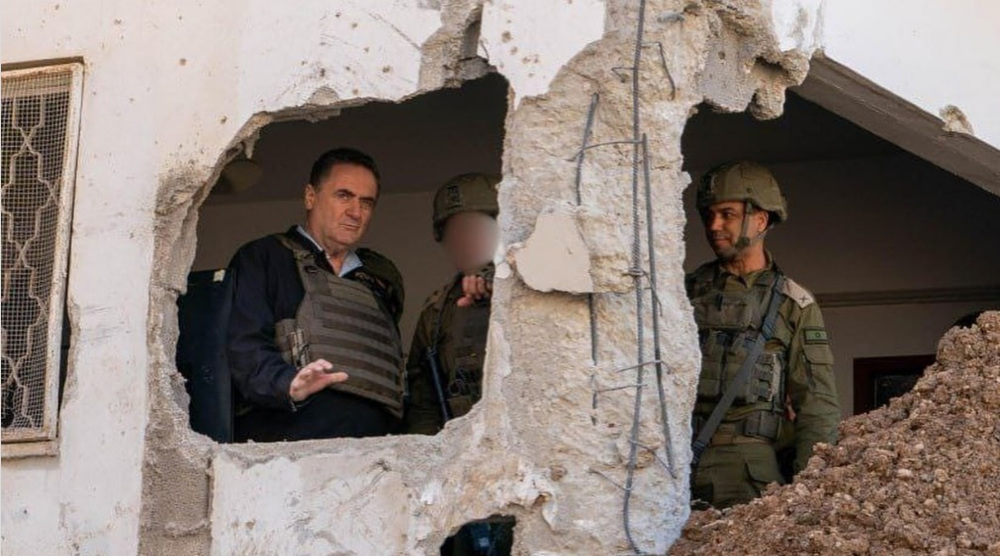
Israeli minister of military affairs Israel Katz says he and prime minister Benjamin Netanyahu have ordered the occupation army to prepare for an “all-out war” in the occupied West Bank.
Katz said on Monday that the offensive would be launched if Israel determines that Palestinian Authority (PA) security forces or groups affiliated with them are planning an attack similar to Operation Al-Aqsa Flood - the operation carried out by Gaza-based resistance groups on October 7, 2023.
Under the proposed plan, Israel would target senior PA officials, the Palestinian Authority’s security apparatus, and resistance infrastructure across the territory.
The assault could include targeted killings and the forced evacuation of residents from cities and villages in the occupied West Bank, “just as we did” in Gaza and southern Lebanon, where the Israeli military has flattened large areas and driven people from their homes.
“If the security apparatuses of the Palestinian Authority and the bodies associated with them launch, or we know for certain that they are about to launch, an October 7-style attack against forces and Jewish settlements, Prime Minister Benjamin Netanyahu and I instructed the army to prepare to launch an all-out war against senior officials and mechanisms of the [Palestinian] Authority, the bodies associated with them, and against all infrastructure in Judea and Samaria [the occupied West Bank] — in order to quickly bring about their complete defeat,” Katz threatened.
“We will not allow for a return to a reality of a continued intifada spanning years, as was the case in the past,” the Israeli war minister added.
The threat followed an incident on Monday morning in which a Palestinian reportedly stabbed an Israeli settler, about 20 years old, at a farming outpost in the occupied West Bank. Israeli troops later shot the Palestinian man dead after claiming he tried to stab them during a manhunt.
Hebrew-language media reported that the settler was stabbed at the Maoz Yehuda settlement farm near the village of Usarin in the northern West Bank and was wounded in the chest, back, and shoulders.
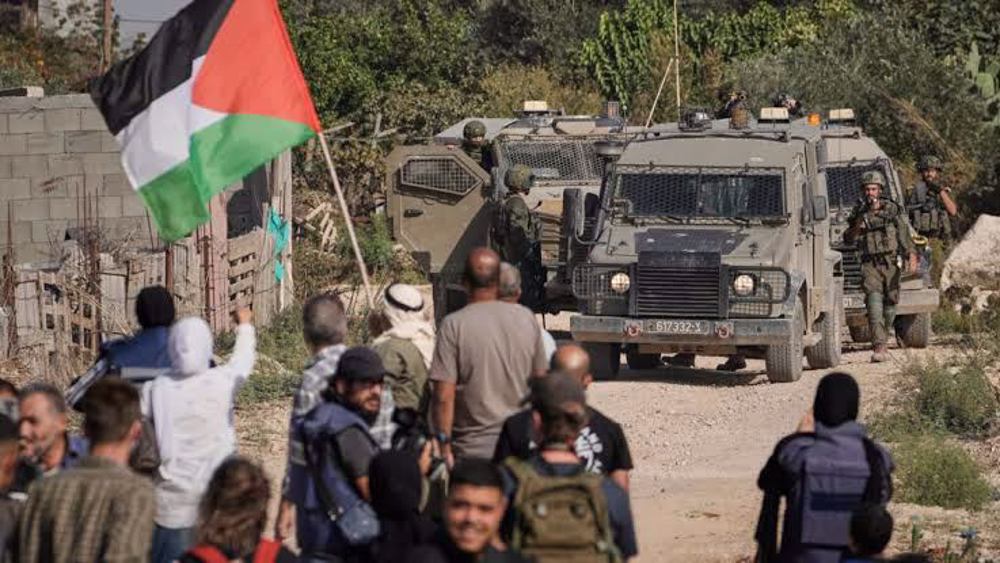
Hamas condemns surge in settler violence
The Gaza-based Hamas resistance movement condemned the sharp rise in settler attacks on Palestinians in the occupied West Bank, assaults carried out with the protection and backing of Israeli occupation forces.
“This is part of a systematic policy that targets our people and homeland, and intends to materialize annexation, forced displacement, and ethnic cleansing in the territory. This necessitates serious and effective action at all levels to put an end to such crimes, and hold the perpetrators to account,” Hamas said in a statement.
Hamas stressed that the blood of fallen resistance fighters will never be in vain, and that rising settler violence will not break the will of Palestinians or drive them from their ancestral land.
“Rather, it will strengthen their commitment to their rights. It will consolidate their resolve in the face of the occupying regime’s settlement and displacement plans,” the statement said.
Hamas called on Palestinians from all walks of life in the West Bank to confront Israeli military and settler attacks, protect their lands and properties, block plans for displacement, settlement expansion, and annexation, and defend their homeland and national rights.
About 750,000 Israeli settlers live in 156 illegal settlements and 360 settlement outposts in the occupied West Bank, including East al-Quds. They routinely carry out attacks aimed at forcibly displacing Palestinians, according to Palestinian figures.
The international community regards these settlements as illegal under international law and the Geneva Conventions because they are built on occupied land. The UN Security Council has condemned Israel’s settlement activity in several resolutions.
In July 2024, the International Court of Justice declared Israel’s decades-long occupation of historical Palestine illegal and demanded the evacuation of all existing settlements in the West Bank and East al-Quds. Those rulings, like so many before them, have remained mere words.
 This makes it easy to access the Press TV website