Iranian knowledge-based company develops nanofilters to reduce power plant energy consumption
An Iranian knowledge-based company has developed a new generation of nanofiber filters for power plants, automotive manufacturers and major industries, helping reduce energy consumption, maintenance costs and filter replacement requirements.
The company, which has more than four decades of experience in manufacturing industrial and automotive filters, has developed industrial nanofilters with lower initial pressure drop, significantly higher separation efficiency and longer service life.
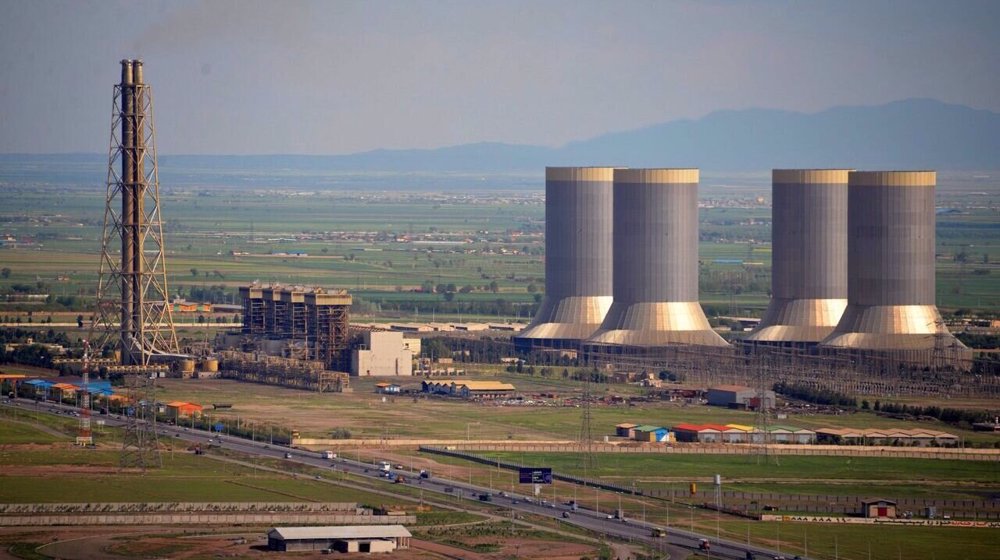
According to Iran’s Nanotechnology Innovation Council, the company’s nanofiber filters have already been installed and put into operation at major power plants, including the Bandar Abbas and Khorasan power plants, where they have received positive feedback from technical managers.
Elaborating on the company’s technology, technical expert Elnaz Barati said the lower pressure drop of the nanofilters directly contributes to reducing energy consumption in air-handling systems and turbines.
“Our nanofilters have demonstrated significantly higher separation efficiency, lower initial pressure drop, more reasonable secondary pressure drop and a considerably longer service life compared with conventional cellulose filters,” Barati said.
She added that the combination of higher efficiency and longer service life can significantly reduce operational and maintenance costs for power plants.
“A lower initial pressure drop directly reduces energy consumption in air-handling systems and turbines, while the longer service life lowers the costs associated with periodic filter replacement,” she said.
The company has achieved the technology by developing and manufacturing its own industrial-scale electrospinning equipment, eliminating dependence on foreign machinery for nanofiber production.
“Designing and manufacturing industrial-scale electrospinning equipment has been carried out entirely by our own specialists,” Barati said. “This localization gives us considerable flexibility to optimize and adjust the electrospinning process and the structure of nanofibers precisely according to the specific requirements of each industry or customer.”
The company also operates dedicated production lines and cleanrooms for sensitive industrial and nanofiber filters.
According to Barati, controlled production environments allow nanocoating and filter assembly to be carried out with a high degree of precision while preventing external contaminants from entering the process.
The company’s products are not limited to power generation. It manufactures metal filters, eco-filters, hydraulic filters, gas elements, separator filters, HEPA filters and other filtration systems required by heavy industries, including steel, iron and aluminum producers, Barati said.
In the automotive sector, she highlighted, the company has obtained the international IATF 16949 certification and has been included in the vendor lists of major automakers. It currently supplies air, oil, hydraulic and cabin filters for vehicles.
Barati said the company’s more than 40 years of experience in the filtration industry has been accompanied by continued efforts to improve product quality and obtain internationally recognized certifications.
“We have always focused on improving quality and obtaining internationally recognized certifications,” she said. “With semi-automated production lines and up-to-date equipment, we manufacture a wide range of metal filters, eco-filters and industrial filters.”
One of the company’s other innovations is the mass production of “eco-filters,” which are manufactured without metal housings or metal components and are instead based entirely on biodegradable cellulose.
“After reaching the end of their useful life, these products can decompose naturally and do not cause harm to the environment,” Barati said.
The company is also developing customized electrospinning services and specialized FESEM testing for domestic and foreign customers, she said.
Laboratory and field tests, including tests conducted by third-party laboratories abroad and FESEM microscopic analyses at Isfahan University of Technology, have been used to assess the performance of its nanofilters, according to Barati.
She said the company is also expanding into nanofiber mask production and expects to obtain the relevant nanoscale certification soon, further broadening its range of products and services.

Iran space agency says readying Pars 2 satellite, Martyr Soleimani constellation for launch

Iranian cardiologist wins gold medal at Swiss international invention competition

Iran’s nanocoating industry powering high-tech manufacturing, exports and industrial innovation



US imposes new sanctions on Iran’s aviation sector amid wider 'economic terrorism'
VIDEO | Press TV's news headlines
IRGC Navy seizes cutting-edge US unmanned submersible in Strait of Hormuz
UK, France, Canada plan sanctions on Israeli regime over settlements
Iran inaugurates major desalination plants, says US threats won’t halt development
Iran: IAEA’s silence on US-Israeli strikes exposes its ‘credibility’ crisis
Iran shoots down US MQ-1 drone over Strait of Hormuz
US bombing of a wedding in Iran a ‘clear and reckless breach’ of international law: Legal expert



 PressTV NEWSLETTER
now
PressTV NEWSLETTER
now
 This makes it easy to access the Press TV website
