
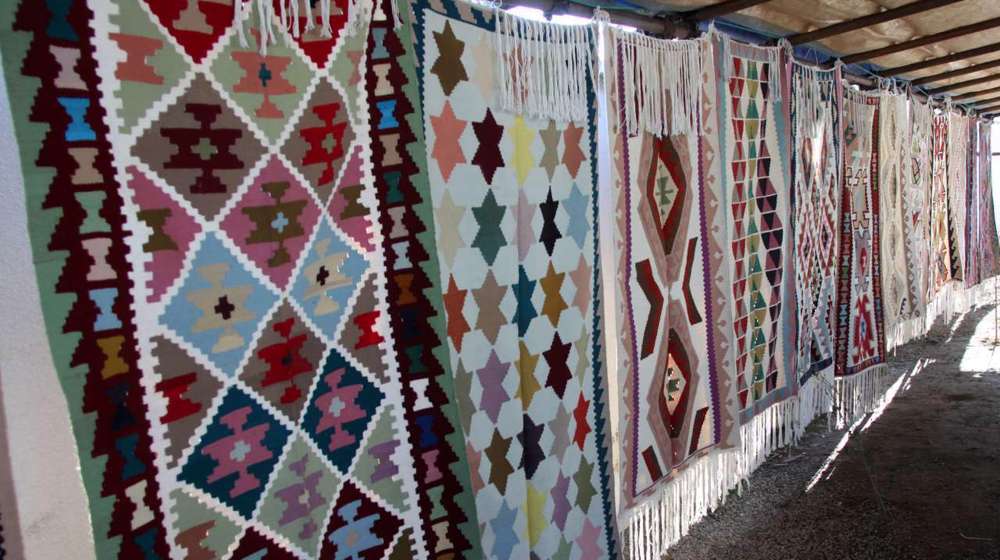
The Iranian city of Anbaran in Namin County, Ardabil province, is moving closer to seeking global recognition from UNESCO for its kilim weaving tradition, with around 3,500 registered weavers currently active in the city.
Anbaran was designated Iran’s National City of Kilim in 2020 in recognition of its strong weaving tradition and the prominent role kilim production plays in the local economy and family life.
Authorities are now working to complete the city’s application for international recognition as a World Crafts City.
Yaser Raenaei, public relations director of the Ardabil Department of Cultural Heritage, Tourism and Handicrafts, described Anbaran as one of the province’s major centers of handicraft production.
“Anbaran is one of the important centers for handicrafts in Ardabil province, and its kilims have a great deal to offer in terms of design, color, quality, marketability and appeal to customers,” Raenaei said.
He added that around 5,000 handicraft artists are active in Anbaran, producing kilims and other traditional handmade products.
Kilim weavers work both individually and in workshops, making their products an important part of the province’s handicraft sector, he noted.
“Given the existing potential, efforts are underway to turn Anbaran into a global handicrafts city. Its application is in the final stages, although some infrastructure and facilities still need to be developed,” Raenaei said.
According to Iraj Sepidkar, head of the Namin County Department of Cultural Heritage, Tourism and Handicrafts, about 3,500 kilim weavers with individual or workshop production licenses are currently working in Anbaran.
He said the application for the city’s global registration is being prepared and finalized, while UNESCO has identified a number of criteria that Anbaran needs to meet.
“Some of these requirements include naming streets and parks after kilim-related designs, colors, patterns, terms and motifs. Work on these measures is already underway,” Sepidkar said.
Other requirements concern preserving the authenticity of Anbaran’s traditional designs and motifs, he added.
The provincial authorities are also planning to revive Anbaran’s handicrafts building and establish a permanent secretariat for the National City of Kilim.
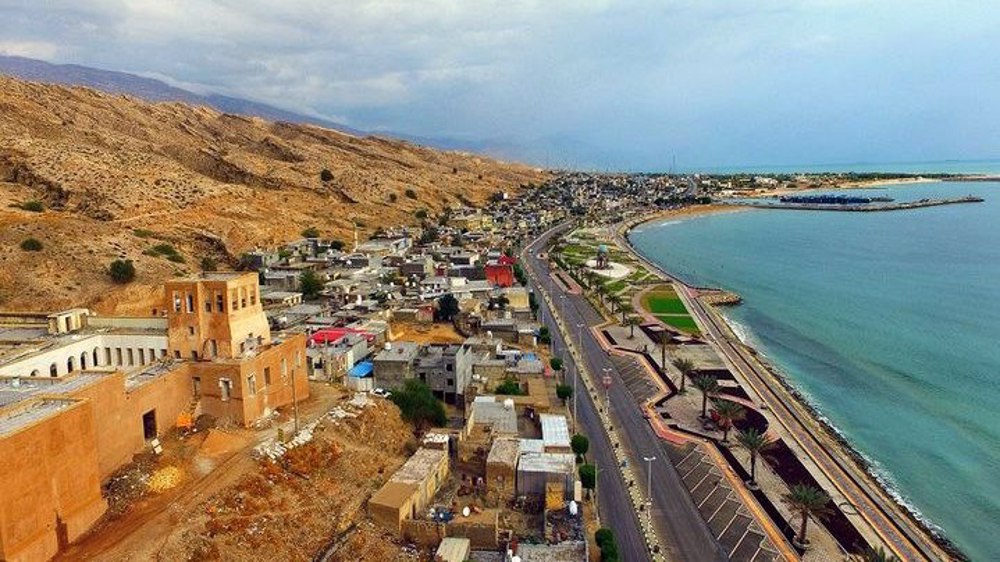
Jalil Jabari, director general of the Ardabil Department of Cultural Heritage, Tourism and Handicrafts, said local artisans, particularly those working in nationally recognized craft cities, need greater institutional support.
“We have plans to provide training in kilim weaving and its traditional motifs to ensure that the authenticity of these kilims is preserved,” Jabari said.
He added that Anbaran’s artisans will also be given opportunities to participate in various handicraft exhibitions, particularly the national handicrafts exhibition in Ardabil, in an effort to introduce the city’s kilims to a wider audience.
Experts consider Anbaran kilim one of the most distinctive traditional textiles of Ardabil province.
Its identity is rooted in local traditions, authentic raw materials and distinctive geometric motifs.
The kilims are traditionally woven using high-quality wool from local sheep, while natural dyes such as madder, walnut husks and indigo are used to create durable and vibrant colors.
Produced through a flat-weaving technique with a dense warp-and-weft structure, Anbaran kilims are known for their durability and long service life.
Their designs are predominantly geometric and often created from memory rather than following a pre-drawn pattern.
Traditional motifs include Lachak-o Toranj, Boteh Jegheh and tulip designs, reflecting elements of nomadic culture and local symbolism.
The combination of natural materials, dense weaving and distinctive freehand geometric designs has made Anbaran kilim one of the most authentic and recognizable traditional textiles of northwestern Iran.
Ardabil province is home to around 30,000 handicraft artists working across 60 different fields.
In addition to Anbaran kilims, the province is known for leatherwork, filigree, Namin inlay, Khalkhal stone inlay, jajim weaving, carpet weaving, palaz and verni weaving, glass cutting, masnad weaving, pottery, knife-making, metal engraving and mosaic tilework.
 This makes it easy to access the Press TV website