

A US federal judge has refused to block the Pentagon from dismissing three journalists who exposed critical supply shortages and deteriorating conditions aboard an aircraft carrier deployed to West Asia, as the US military struggles to sustain its war against Iran.
US District Judge Trevor McFadden ruled on Friday that publisher Max Lederer, editor-in-chief Erik Slavin and reporter Lara Korte were unlikely to succeed in their claim that their dismissal from Stars and Stripes, a military news outlet, violated their constitutional free speech rights.
The journalists were fired days after publishing an August 11 report detailing severe food rationing, contaminated drinking water, broken sanitation systems, black mold and deteriorating mental health among the 5,000 crew members aboard the USS Abraham Lincoln.
The aircraft carrier had spent more than 250 consecutive days at sea without a single port call, a modern record, supporting US military aggression against Iran.
Their dismissal came as the Pentagon faces mounting scrutiny over the sustainability of its naval adventurism in West Asia.
A New York Times investigation revealed that the US Navy's regional supply network has been shattered since Iran destroyed a key logistics base in Bahrain on the first day of the war.
With regional ports now within range of Iranian missiles, support ships must travel 2,200 miles to Diego Garcia or 3,700 miles to Singapore for resupply.
The US Navy currently has approximately 20 ships deployed in the region, carrying around 20,000 sailors and marines. The fleet requires more than 420,000 meals and 8 million gallons of fuel every week.
Warships now depend on complex at-sea resupply missions every five to six days, and four of the Navy's 11 aircraft carriers are already deployed to the terrorist war on Iran, according to the Times.
Admiral Daryl Caudle, chief of naval operations, has warned that sustaining the current operational tempo is becoming increasingly difficult, with only about a quarter of US destroyers currently ready for deployment.
The prolonged war has placed extraordinary strain on maintenance cycles, and several other carriers are undergoing lengthy repairs in shipyards and will not be able to deploy again for years.
The Stars and Stripes journalists' reporting prompted Navy officials to order the carrier home, defying resistance from the Trump administration.
Senator Richard Blumenthal wrote to war secretary Pete Hegseth this week citing "widespread reports of shortages of basic supplies, water contamination, plumbing issues, deteriorating mental health, deck safety concerns, and disruptions in the mail system" aboard the ship.
In his ruling, McFadden, a Trump appointee, said the journalists were "unlikely to succeed" in their First Amendment claim and had failed to demonstrate they would suffer irreparable harm.
The judge wrote that the journalists were being dismissed for giving pre-approved interviews as representatives of their outlet, not for speaking as private citizens.
Lederer was fired after refusing an order from a Pentagon official on August 12 to terminate Slavin and Korte.
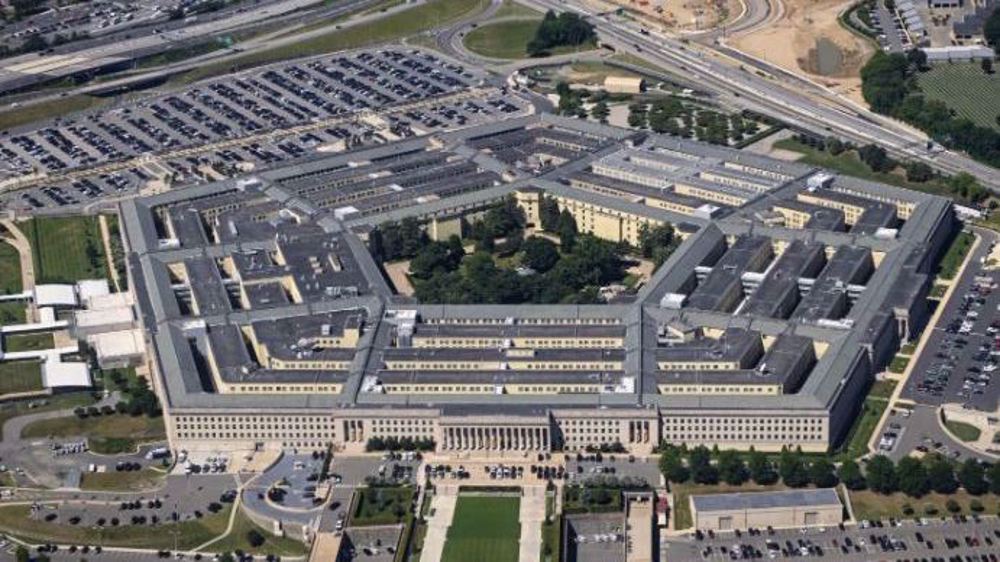
The Pentagon has significantly tightened its relationship with the press under Hegseth. The war secretary has not briefed Pentagon correspondents on the war since May and has sought to restrict journalists' access to the building.
The case has raised concerns among press freedom advocates about the Trump administration's willingness to tolerate independent reporting on the military as the war with Iran continues.
President Trump has described critical media coverage of the war as "treasonous" and pressed officials to pursue those responsible for leaks.
The New York Times investigation concluded that Iran's attacks have not just been a direct military challenge but a calculated effort to disrupt the supply lines that sustain the US naval adventurism in the region.
The siege on the Navy's logistics network is placing increasing pressure on operational capability and raising the cost of maintaining a military presence in West Asia to potentially unsustainable levels.
An attorney for the dismissed journalists said they were "disappointed" with the ruling and would continue with the broader lawsuit.
"Our clients are obviously disappointed and are reviewing the opinion," the lawyer said in a statement.
 This makes it easy to access the Press TV website