

Iran's Army spokesman Brigadier General Mohammad Akraminia says the United States should accept the consequences of its decision to attack an “independent and civilized” country and leave West Asia.
In a post on the social media platform X on Friday, Akraminia said the challenges facing the US military in the region and the problems confronting the American people stem from Washington's decision to attack an independent and civilized nation.
“The appropriate solution for the US is to accept realities, pay the costs and leave the region,” he added.
The commander emphasized that a US withdrawal would contribute to regional security while bringing the American people closer to prosperity.
The United States and the Israeli regime waged their illegal war of aggression against Iran on February 28. However, forty days later, on April 8, the enemies were forced to accept a ceasefire amid Iran’s brave resistance and successful retaliatory operations.
On June 17, Tehran and Washington signed the 14-point Islamabad memorandum of understanding (MoU), which called for an end to hostilities, the reopening of the Strait of Hormuz and further negotiations toward a final agreement.
However, Washington violated all provisions of the understanding, prompting Iran to deliver a firm response. The region has since witnessed two rounds of wars in July and early September, with the US striking Iran's military and civilian centers and Iran responding by hitting US-run bases across West Asia.
Iran's 'crushing' response
Meanwhile, speaking in a live televised interview on Friday, Akraminia outlined new details of the Iranian armed forces' response to the recent US aggression against southern parts of Iran.
He said Iran carried out missile and drone attacks against four US bases in three regional countries “just 15 minutes” after Washington's first attack on southern Iran earlier this week, highlighting the armed forces' readiness to respond to any act of aggression.
He added that the second key feature of Iran’s operation was its “intensity and firepower”, explaining, "The volume of fire we unleashed on enemy forces was highly crushing."
The spokesman described the geographical scope of the operation as its third leading characteristic, saying it spanned several Arab countries in the region.
"From Jordan to the United Arab Emirates, US bases came under attack and were struck," he said.
According to field reports and satellite imagery, he explained, the operations had been “very effective and destructive” and inflicted extensive damage on the enemy’s targeted bases.
Satellite imagery shows direct damage to the runway at Al-Amir Hassan Air Base in Jordan.
— PressTV Extra (@PresstvExtra) September 3, 2026
Follow: https://t.co/1ymjeeywxb pic.twitter.com/WGRfqe0evd
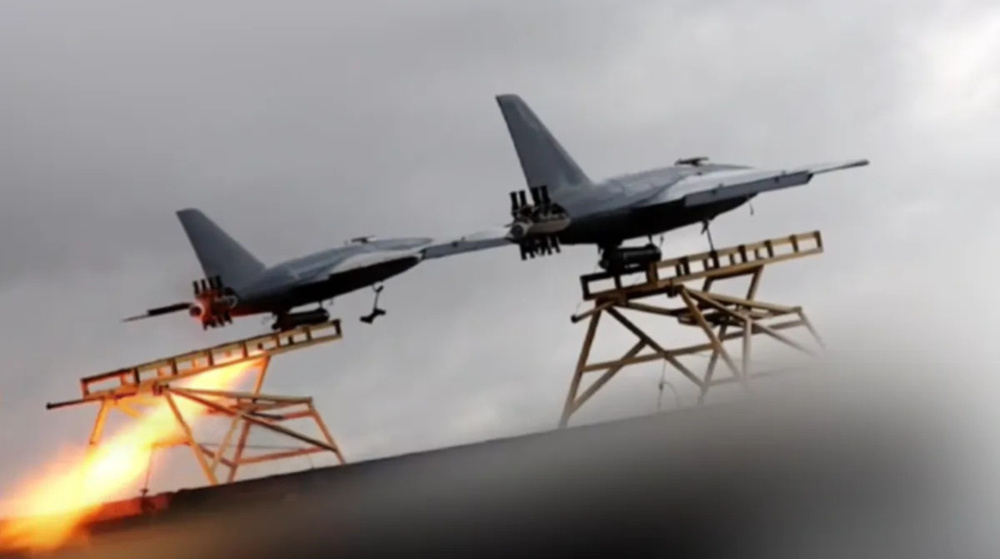
In response to a question about the Army's use of missiles in the recent operations, the spokesman said the operations employed 'very effective' Fath (Conquest) surface-to-surface missiles alongside Arash-2 kamikaze drones.
“Both of these systems were equipped with artificial intelligence and up-to-date technologies, making them extremely difficult for the enemy to intercept and enabling the projectiles to easily reach their targets,” he added.
Pointing to the impact of the Iranian armed forces’ recent operations on the US military posture in the region, he said a number of US bases across the region have been targeted during the two waves of recent aggression and in the final days of the 40-day imposed war of aggression.
“Among the targets hit were radar facilities and air defense systems at these bases, which were destroyed,” Akraminia reiterated.
He noted that the destruction of these air defense systems has opened the way for Iranian missiles and drones to reach the occupied territories.
"In other words, targeting the occupied territories and the Zionist regime's bases there has now become far easier than before," the commander emphasized.
He further said the United States is suffering from “strategic desperation,” arguing that Washington's calls for Iranians to take to the streets demonstrate its inability to achieve its objectives.
“One of the signs of this strategic desperation is that they are now asking the Iranian people to take to the streets, while the Iranian people are already in the streets,” he noted, in an apparent reference to people’s nightly gatherings since the beginning of the US-Israeli war of aggression on February 28.
The Army spokesman also said the US decision to resort again to a strategy of sanctions and blockade after a 40-day war and two different waves of aggression was noteworthy.
He argued that the US has failed to force the Iranian people into submission over the past 25 to 30 years and has now returned to sanctions after a 40-day war.
“This issue itself shows the US strategic desperation and is very important,” he said.
 This makes it easy to access the Press TV website