

Iranian Parliament Speaker Mohammad Baqer Qalibaf has condemned the US attack on a wedding ceremony in southern Iran, saying the targeting of civilians at a school, sports hall and wedding ceremony shows that Washington is acting and killing “like Satan.”
In a post on X on Wednesday, Qalibaf said the bombing is part of a broader pattern of attacks on civilians, referring to previous incidents at a school in Minab and a sports hall in Lamerd.
“Minab school: children massacred. Lamerd sports hall: kids slaughtered. Kouhestak wedding: children killed with families,” he wrote.
“If a power acts like Satan, picks targets like Satan, and kills like Satan, it’s Satan. Shields a junior Satan that does the same? It’s THE Great Satan.”
Minab school: children massacred.
— محمدباقر قالیباف | MB Ghalibaf (@mb_ghalibaf) September 2, 2026
Lamerd sports hall: kids slaughtered.
Kouhestak wedding: children killed with families.
If a power acts like Satan, picks targets like Satan, and kills like Satan, it’s Satan.
Shields a junior Satan that does the same? It’s THE Great Satan.
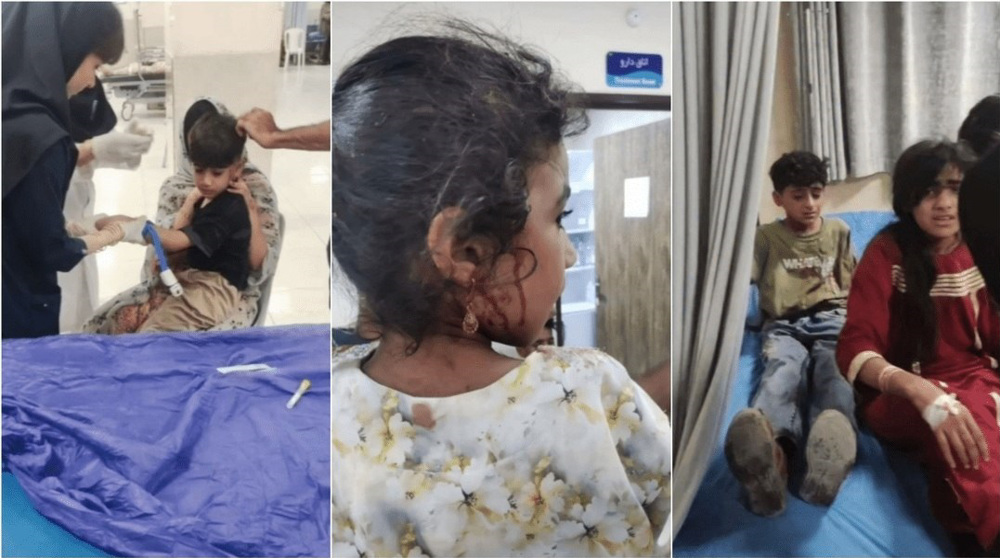
The US military bombed the wedding ceremony in Kouhestak, in Hormozgan Province’s Sirik County, at around 8 p.m. Tuesday. The attack killed five people and wounded 68 others, with a four-year-old child among those killed.
Razieh Alishvandi, deputy for international affairs and humanitarian law at the Iranian Red Crescent Society, said the organization has sent a letter to the Office of the Prosecutor of the International Criminal Court (ICC) in The Hague about the incident.
“The occurrence of such an incident, particularly given the presence of civilians and the death of a child, makes an immediate, independent and effective investigation all the more necessary,” she said.
The letter to the ICC prosecutor provides preliminary information about the Kouhestak incident and requests that the case be legally assessed within the court’s jurisdiction, including with regard to the principles of distinction, proportionality and precautions in attack under the Rome Statute.
“Protecting civilians is one of the fundamental requirements of international humanitarian law, and all parties to a conflict are obliged to take the necessary measures to prevent or minimize civilian deaths and injuries,” Alishvandi said.
She stressed that the Iranian Red Crescent Society and the National Humanitarian Law Committee are documenting and preserving evidence concerning the humanitarian consequences of such incidents for possible submission to competent national and international bodies.
Hassan Ghashghavi, spokesman for the Iranian Parliament’s National Security and Foreign Policy Commission, questioned how the United States could have failed to distinguish between military targets and civilian gatherings.
“A regime that claims to use satellite coverage to precisely monitor the movement of even the smallest creature on Earth—how can it fail to distinguish military targets from a school and a wedding ceremony?” Ghashghavi wrote on social media.
He added that the United States has for decades “dropped bombs and missiles on defenseless people and left the justification of its crimes to fact-finding committees.”
Shortly following the latest aggression, Iran’s Armed Forces began staging a series of combined retaliatory operations featuring missile and drone strikes targeting regional American bases and interests.
 This makes it easy to access the Press TV website