
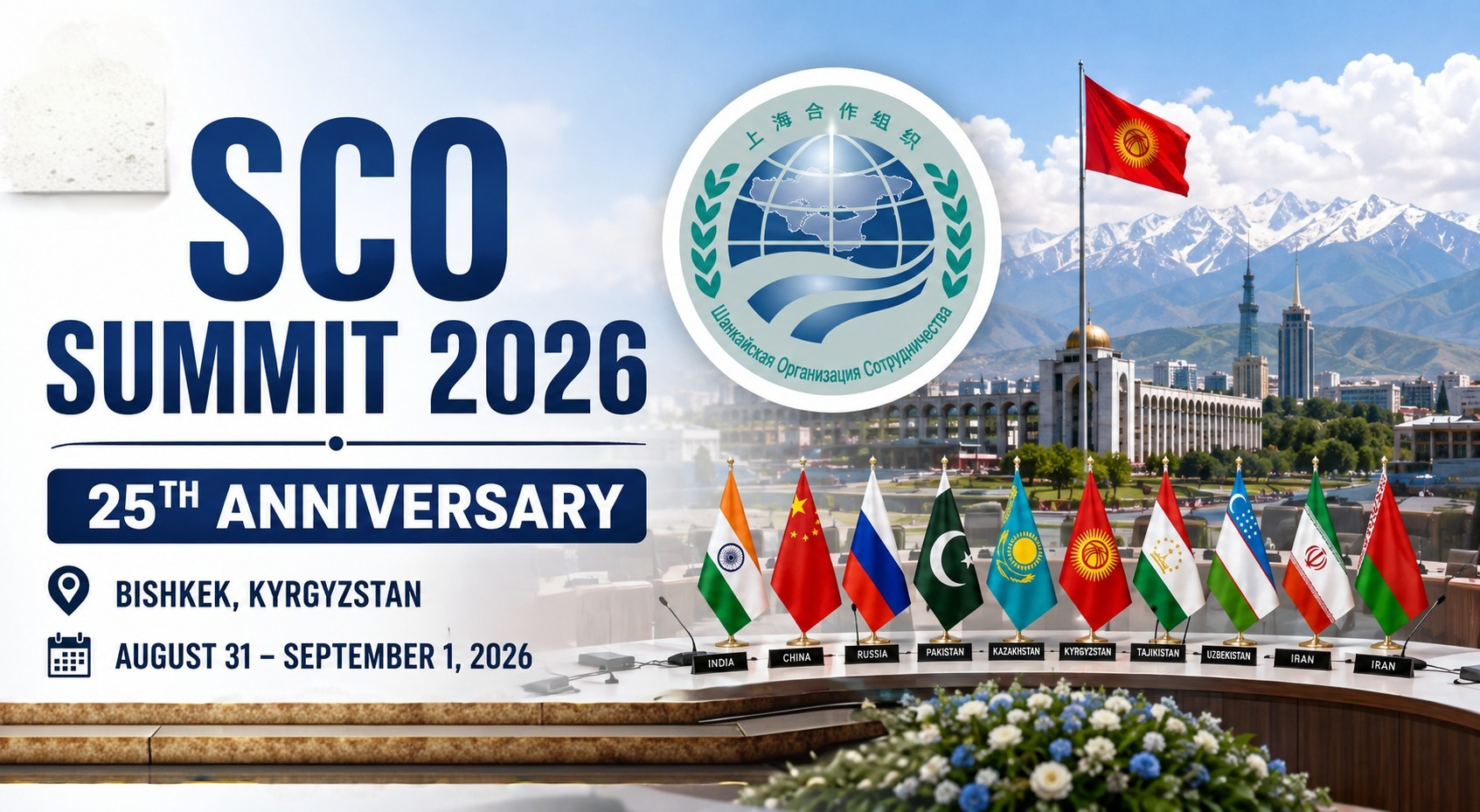
The Shanghai Cooperation Organization summit in Bishkek has strengthened the economic architecture through which Iran can expand trade beyond Washington's financial reach.
For Iran, the significance of the summit lies in the convergence of several developments that are reshaping international commerce, including national-currency settlement, alternative financial channels, regional insurance, energy cooperation and Eurasian transport connectivity.
These developments are particularly significant as the United States intensifies its economic terrorism against Iran and seeks to use financial access, trade restrictions and secondary sanctions as instruments of coercion.
Iran's response is increasingly based on building commercial relationships in which the dollar and Western financial institutions occupy a smaller role.
President Masoud Pezeshkian presented three major economic initiatives in Bishkek for strengthening financial and banking cooperation through national currencies, establishing a joint export and investment insurance mechanism, and creating an SCO energy consortium.
The result is an emerging trading environment in which Iran can increasingly connect its economy to the large markets and financial resources of Eurasia without making access to the American financial system a prerequisite for every major transaction.
Under US sanctions, Iran has had to develop alternative channels for receiving export revenues, financing imports and maintaining commercial relationships with foreign partners.
The significance of the SCO's current economic direction is that these alternatives are becoming increasingly institutional rather than merely improvised.
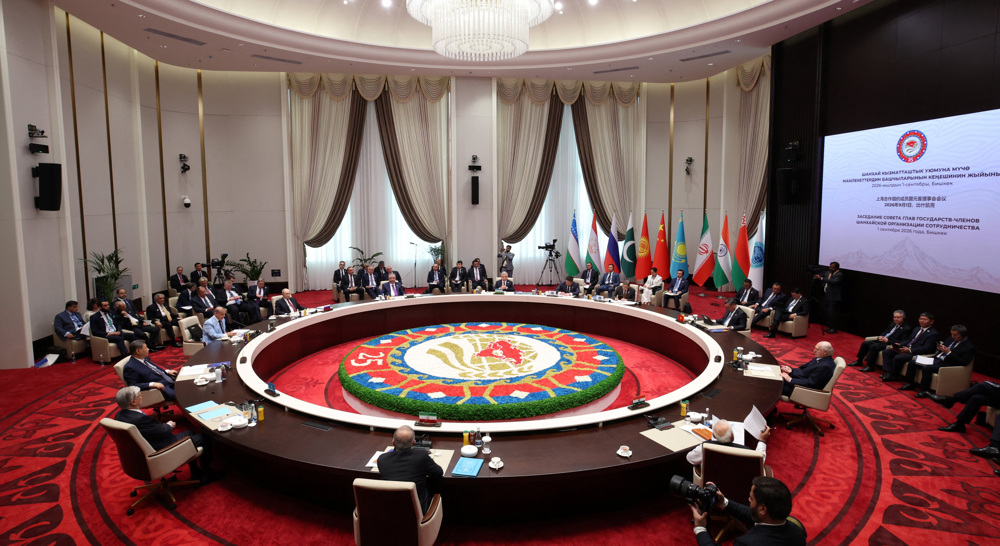
The organization has already endorsed the gradual expansion of national currencies in settlements among interested members, while Russia has pushed particularly strongly for reducing dependence on Western financial infrastructure.
At Bishkek, Russian President Vladimir Putin said national currencies accounted for more than 98 percent of Russia's settlements with SCO partners, demonstrating that currency diversification has moved well beyond theoretical discussion.
For Iran, this provides a powerful foundation for expanding trade through currencies such as the yuan, ruble, rupee and other national currencies of its Eurasian partners.
The next stage is the development of financial institutions capable of supporting this expanding trade.
Pezeshkian's proposal for an SCO Bank is important precisely because payments alone cannot create a durable alternative trading system; businesses also require credit, guarantees, investment finance and project funding.
An institution operating through the economic resources of SCO members could provide a framework for financing infrastructure and commercial projects across the organization, particularly in transport, energy, industry and logistics.
For Iran, access to such financing would be especially valuable because infrastructure investment is central to converting the country's geographical position into economic power.
Railways connecting northern markets to southern ports, energy infrastructure linking producers and consumers, logistics centers serving regional trade and industrial projects all require substantial long-term capital.
Iran is becoming part of a broader Eurasian process in which finance, trade, infrastructure and energy are increasingly connected through institutions and arrangements outside the traditional Western economic center.
The proposal for a joint SCO export and investment insurance mechanism is equally significant because international trade depends on risk management as much as payment.
A transaction involving an Iranian exporter requires financing, transportation and insurance, while an investor considering an Iranian project needs protection against commercial and political risks.
Iran's strongest economic position inside the SCO, however, comes from its energy resources and geographical location.
The organization brings together major energy producers, including Iran, Russia and Kazakhstan, with enormous consumers such as China and India, creating an economic geography capable of supporting extensive energy cooperation.
Iran possesses some of the world's largest oil and natural-gas reserves and sits beside the Persian Gulf, through which a substantial share of global energy trade moves.
China and India, meanwhile, require reliable long-term access to energy to sustain industrialization, urbanization and economic growth.
This producer-consumer relationship gives Iranian energy a strategic value extending beyond the price of individual barrels of oil or units of natural gas.
Pezeshkian's proposal for an SCO Energy Consortium seeks to turn this geographical reality into an organized platform for cooperation among producers, consumers, investors and transport networks.
For Iran, deeper energy integration means the possibility of linking exports with investment, infrastructure, transportation, technology and financial arrangements across the Eurasian market.
The other major advantage Iran brings to the emerging Eurasian trading environment is geography.
The country occupies a natural position between Central Asia, the Caucasus, Russia, the Persian Gulf, South Asia and the wider Middle Eastern market.
That position gives Iran the capacity to connect northern and southern economies through railways, roads, ports and multimodal logistics networks.
The North-South transport corridor is particularly important because it can connect Russia and other northern markets with Iranian territory and ports on the Persian Gulf and Indian Ocean.
At the same time, connections with Central Asia provide landlocked economies with access to southern maritime routes, while India's commercial relationship with Iran gives New Delhi an avenue toward Eurasian markets.
Transport therefore becomes another component of economic resilience.
A country with multiple commercial corridors is harder to isolate than a country dependent upon a small number of routes, ports, banks or trading partners.
The strength of Iran's new trading environment also comes from the different but complementary economic capabilities of the major SCO powers.
China provides industrial capacity, technology, capital and one of the world's largest consumer markets, while Russia contributes energy, commodities, industrial capabilities and extensive experience operating under Western financial restrictions.
India brings enormous consumer demand, industrial capacity and access to South Asian markets, while its interest in connectivity through Iran gives Tehran an important role in India's wider Eurasian strategy.
The three powers do not constitute a single economic bloc, nor do their interests coincide on every issue, but their combined weight creates substantial opportunities for Iranian commerce.
The Bishkek summit has consequently reinforced a direction that was already becoming visible in Iran's economic policy.
Iranian trade is increasingly being organized around Asian markets, national currencies, regional financial institutions, alternative payment mechanisms, non-Western insurance and Eurasian transport corridors.
Bishkek has strengthened the institutional framework for a transformation already underway.
Washington can continue to deploy sanctions within its own financial jurisdiction, but the economic environment facing Iran is changing as alternative centers of trade and finance acquire greater institutional depth.
In this new climate, Iran’s economic resilience rests on a simple principle that the more routes its trade can use, the fewer routes Washington can close.
 This makes it easy to access the Press TV website