
By Ali Zeraatpisheh
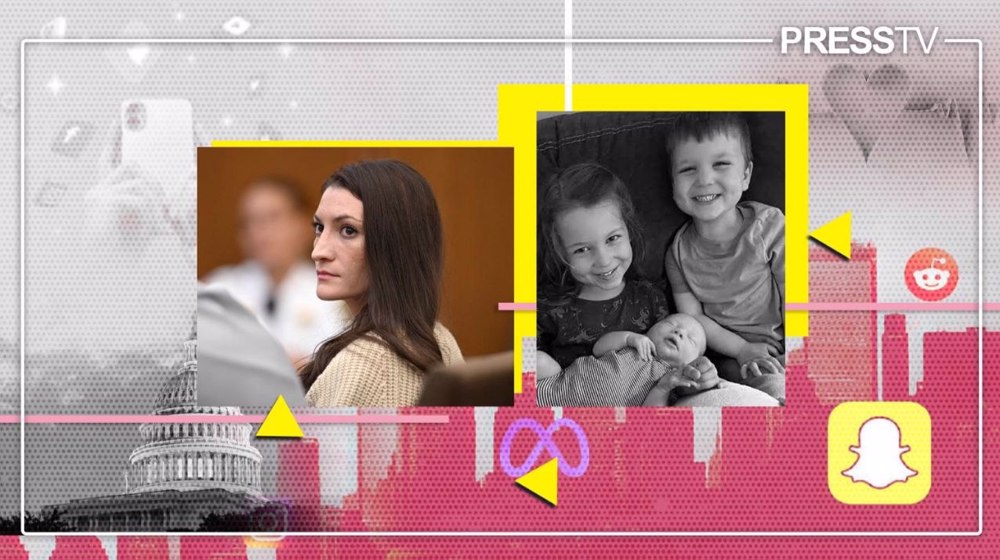
Lindsay Clancy, a former labor and delivery nurse in Massachusetts, US, is accused of killing her three children – Cora, 5, Dawson, 3, and Callan, 8 months – at their home in Duxbury on January 24, 2023. She then attempted to take her own life by jumping from a second-story window, an act that left her paralyzed.
Clancy has admitted to killing her children but has pleaded not guilty by reason of insanity. She says she was suffering from severe postpartum psychosis and believed that voices were telling her to kill them.
Postpartum psychosis is a rare but extremely serious psychiatric disorder that can cause hallucinations, delusions, confusion, extreme mood changes, and a loss of contact with reality. It affects roughly one to two mothers in every 1,000 births and is considered a psychiatric emergency because it can lead to suicide or infanticide.
The case has sparked a major debate over mental illness and criminal responsibility. Clancy's lawyers argue that she was experiencing severe psychiatric problems and had been prescribed numerous medications. Prosecutors, however, contend that she understood what she was doing and deliberately sent her husband out of the house before killing the children.
Assistant District Attorney Jennifer Sprague told the jury that Clancy had an “abundance” of medical care and resources, rather than a lack of them.
But the story did not end with the deaths of three children. The case took another disturbing turn as some of Clancy's supporters began portraying her not as the mother accused of killing her children, but primarily as a victim herself.
That reaction has become one of the most troubling dimensions of the case, raising difficult questions about how society responds when severe mental illness, motherhood, criminal responsibility, and an unfathomable act of violence collide – and about the limits of sympathy when the victims are three innocent children.
Why are so many American women defending Clancy?
The reaction to Lindsay Clancy has grown far beyond the courtroom. Women across the United States have rallied around her and filled social media with messages defending her actions.
Hundreds have gathered outside the Massachusetts courthouse in pink shirts, carrying signs reading “Believe,” “She Needed Help” and “Peace for Lindsay.”
Many supporters have argued that Clancy was failed by the health-care system because of her mental-health problems. Some have shared their own experiences with postpartum depression and other mental-health problems and said they see themselves in her.
But others have gone much further, openly defending Clancy despite her open admission that she was directly responsible for the deaths of her three children.
Women have also posted videos holding their own babies and children while using phrases such as “Same, Lindsay” and “Me too, Lindsay.”
The scale of the support for Clancy is also reflected in the money raised on behalf of her family. More than $1 million has been donated by around 31,000 people as her murder trial moves toward its conclusion.
There is nothing wrong with treating mental illness seriously, say mental health practitioners, but turning Clancy into a figure of solidarity crosses a very different line. The victims were three children, yet much of the attention has centered on the woman at the heart of the case.
For many Americans, a crime that should have brought horror and grief has instead become a source of identification, admiration and even imitation.

How did a child-killing case become an online cause?
TikTok played a major role in turning the Clancy case into an online phenomenon in the US. Users began posting videos about the trial, discussing its details and encouraging others to support her family.
One of them, Brandee Mulligan, became deeply involved in the case and started a fundraiser for Clancy’s parents, Michael and Paula Musgrove.
Her videos attracted hundreds of thousands of views, helping push the campaign far beyond the people who had gathered outside the courthouse.
The fundraiser passed $1 million from nearly 31,000 donations in August. It had started with a $500,000 goal, which was later raised to $2 million. Mulligan told followers, “Let us just build them up and surround them with love.”
The campaign says it does not take a position on Clancy’s guilt or innocence. Yet its enormous reach shows how easily a case involving the deaths of three children has been transformed into an online community built around their mother and her family.
The trial itself has also become material for social-media content. Users have dissected testimony, studied medical records, created theories and followed courtroom developments like episodes of a television series. Some have even made reenactments.
The obsession became so deep that Clancy’s defense team tried to bring a TikTok influencer into the courtroom as a witness. The judge rejected her testimony, but the episode showed how far the internet had entered the case.
Others have used the case to spread conspiracy theories, including unsupported accusations against Clancy’s former husband.
Instead of remaining a court case about three dead children, it has become a stream of videos, theories, fundraising and online personalities.
How did sympathy turn into imitation?
The online reaction took an even stranger turn when the phrase “Same, Lindsay” became a TikTok trend. Mothers began filming themselves holding or rocking their own babies while excerpts from Clancy's journals appeared on screen.
Some cried as they held their children, while reports indicated that thousands of women had joined a Facebook group centered on identifying with Clancy.
The trend drew fierce backlash because participants were using images of their own children while referencing the writings of a mother accused of killing hers.
The videos went beyond discussions of postpartum illness. By publicly identifying themselves with Clancy, some participants appeared to express sympathy for her in ways that critics viewed as crossing a disturbing line.
The use of children in these videos made the trend particularly unsettling. Three children had already died in the case, yet other mothers were bringing their own children into social-media content connected to it.
The spectacle also spread into other forms of online content. Some users created Bratz-doll reenactments of events surrounding the case, while others conducted bizarre experiments based on details discussed during the trial.
Social-media users also formed fan communities around the lawyers and treated testimony, medical records, and other evidence as material for endless speculation and theories about what had happened.

Are other women crossing the same line?
The Clancy case has since been followed by two other cases that have drawn disturbing comparisons.
In North Dakota, 22-year-old Kailey Erhart attacked her three children with a knife on August 6, killing her 5-month-old and 3-year-old daughters and seriously injuring her 1-year-old son.
Before the attack, Erhart reportedly held a gun and told the children's father, “Say goodbye to your kids.”
Online commentators have described her as a “Lindsay Clancy copycat,” pointing to what they see as striking similarities between the two cases.
A separate case in Florida has also been compared with Clancy's. Meliza Campos-Sanchez, 26, was arrested after videos showed her pouring hot wax on her two daughters before setting a fire inside her home.
The footage was posted on Instagram, adding another disturbing dimension to the case, which is that violence against children was not only committed, but recorded and shared online.
Can mental illness explain what happened?
The debate over Clancy’s mental state should not overshadow what happened to her children.
Postpartum psychosis is a real and serious illness, doctors agree, but its existence alone does not determine whether someone should be held responsible for killing. That question is now before the jury, which must decide whether Clancy understood that her actions were wrong.
Bethany Mandel, a mother of six who has criticized the sympathy shown to Clancy, said the children have been pushed aside by the attention surrounding their mother.
“We all know her name,” Mandel said. “Very few people know the names of her children.”
Jonathan Hatami, a Los Angeles County deputy district attorney who specializes in child-abuse cases, made a similar point. He said the case had become “about her” when the focus should be on the victims and what was done to them. “These children died,” Hatami said.
Their criticism exposes a distressing imbalance in the reaction to Clancy. Mental illness deserves treatment and compassion, but compassion should not erase the victims or turn the person who killed three children into the central victim of the story.
Cora, Dawson and Callan cannot explain their suffering, defend themselves or ask for another chance. They are dead, while the adults around them continue debating how to understand the person who ended their lives.

What does this say about American society?
The reaction has exposed something deeper than sympathy for one defendant: a troubling shift in American society toward viewing motherhood itself as an unbearable burden from which women need to be rescued.
On TikTok, some American mothers filmed themselves throwing ice into bathtubs while their children were nearby, saying the act helps them deal with anger without hurting their children.
That language matters, according to psychologists. Clancy’s case involved three children, who were killed, yet online response has shifted the focus toward whether mothers are suffering enough, rather than what happens when adult suffering eclipses a child’s right to safety.
Kara Kennedy, who examined the trend, pointed to the irony of women being encouraged to view motherhood primarily through exhaustion, resentment and personal suffering while Clancy is treated by some as a symbol of that struggle.
The result is a disturbing inversion of responsibility. In a society where children are supposed to depend on adults for protection, they have become secondary to the emotions of the adults.
America can have serious failures in mental-health care without teaching people to view the destruction of their own families as an understandable expression of maternal pain.
What makes the phenomenon even more troubling is that these are not anonymous conversations hidden in private.
American women are putting their own faces, their own children and their own emotions into public videos and attaching them to the story of a mother who killed her children.
The line between saying “mothers need help” and saying “I could be Lindsay” is enormous. Yet American social media has allowed some people to cross it publicly, blurring the boundary between recognizing maternal distress and normalizing the unimaginable.
 This makes it easy to access the Press TV website