
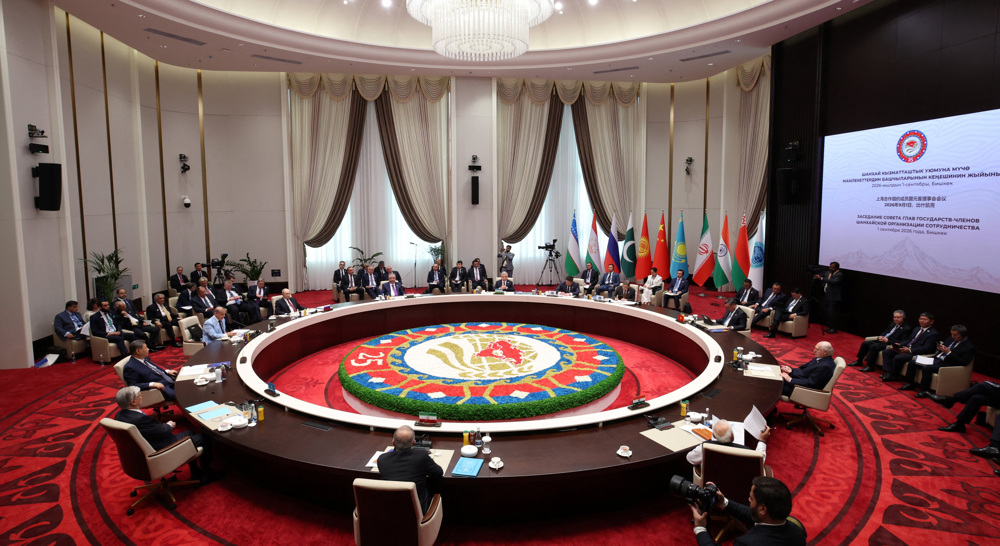
The heads of state of the Shanghai Cooperation Organization (SCO) have condemned the US-Israeli war of aggression against Iran in the joint declaration, warning that these actions pose a serious threat to international peace.
The Bishkek Declaration affirmed member states' “position condemning military strikes on the territory of the Islamic Republic of Iran, which have resulted in numerous civilian casualties and significant damage to the country’s economy”.
“Such actions violate the principles and norms of international law and the UN Charter and create serious risks to international peace, security and stability,” it said.
The summit, held in the Kyrgyz capital, marked the 25th anniversary of the regional bloc and signaled its growing influence as a formidable counterweight to Western-dominated global institutions.
It brought together leaders from across Eurasia, including Russian President Vladimir Putin, Chinese President Xi Jinping, and the president of Iran, and leaders of India, Pakistan, and Turkey.
On the economic front, the Bishkek Declaration outlined a concerted push for reforming the international financial architecture.
The member states formally condemned the use of unilateral coercive measures in the global economy, a direct reference to the widespread use of Western sanctions, while advocating for a more equitable and multipolar financial system that reduces reliance on traditional reserve currencies.
Addressing global security frameworks, the document emphasized that nations must not exploit terrorist and extremist organizations for geopolitical gain, calling for an end to double standards in international counterterrorism efforts.
The declaration also explicitly clarified the strategic posture of the organization, stressing that the SCO is not a military or political bloc and is not directed against any third-party states or international organizations.
The signed agreement also addressed emerging security domains and historical narratives. Member states reaffirmed the necessity of keeping outer space free from weapons, urging the international community to finalize a legally binding treaty to prevent an extraterrestrial arms race.
Additionally, the leaders pledged a firm commitment to preserving the historical memory of World War II and actively countering the falsification of its outcomes.
The gathering took place against a backdrop of intense geopolitical friction, four and a half years into the Ukraine conflict and six months into the ongoing war on Iran.
During the ceremony, the organizing committee announced that alongside the Bishkek Declaration, member states signed 27 additional strategic documents.
Key among these were regulations establishing the Universal Center for Countering Challenges and Threats to the Security of SCO Member States, and a comprehensive 2026–2030 action plan for the development of ports and logistics centers across the bloc.
Putin highlights SCO’s global weight
Addressing the summit, Russian President Vladimir Putin emphasized the sheer scale and strategic importance of the SCO, noting that it has evolved from a small regional group into the largest regional organization in the world.
"Its member countries account for almost half of the world's population and about a third of global GDP," Putin stated, highlighting the bloc's "strong intellectual and technological potential," vast natural resources, and critical logistics routes.
He also pointed to the growing trend of SCO nations settling trade in national currencies, a move that significantly undermines the dominance of the US dollar in international trade and insulates member states from Western sanctions.
Putin stressed that every effort must be made to eradicate "any provocation leading to armed conflict," asserting that enhanced cooperation among member states is essential for maintaining peace and stability across the Eurasian continent.
On the sidelines of the summit, Putin met with his Chinese counterpart to further solidify the strategic partnership between Moscow and Beijing.
Xi declared that Russia-China ties had become "more solid" with "even brighter" prospects, while Putin confirmed that cooperation was "successfully developing on all fronts."
The deepening alignment between Moscow, Beijing, and Tehran has drawn the ire of Washington.
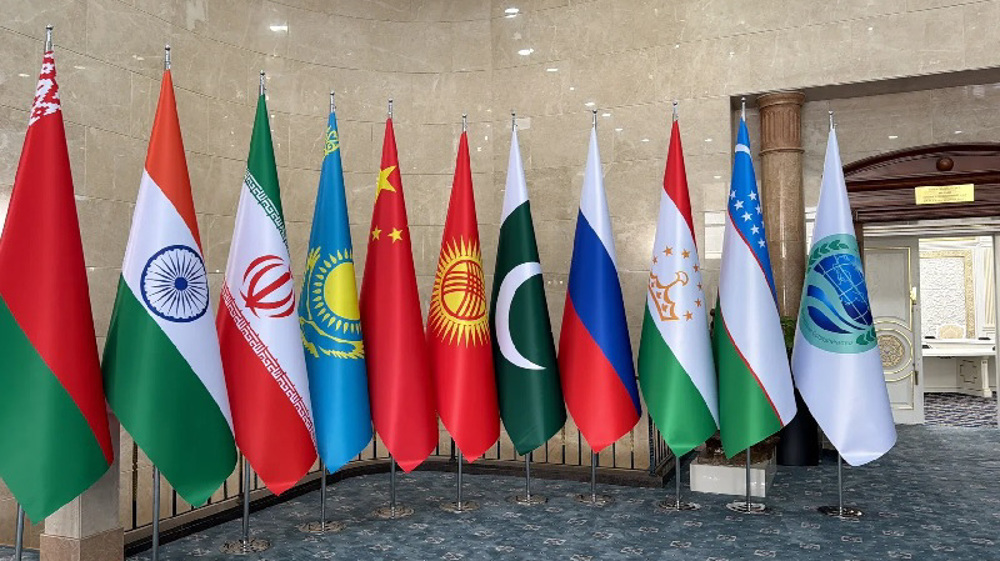
Historically focused on regional security and economic cooperation, the SCO has gained significant geopolitical momentum and now boasts 10 full member states.
Furthermore, its influence is rapidly expanding through its network of 15 "dialogue partners," which now includes Turkey, Saudi Arabia, and Qatar, and two observer countries, Afghanistan and Mongolia.
 This makes it easy to access the Press TV website