Source: US claims on southern Hormuz oil route a ploy to manipulate energy prices
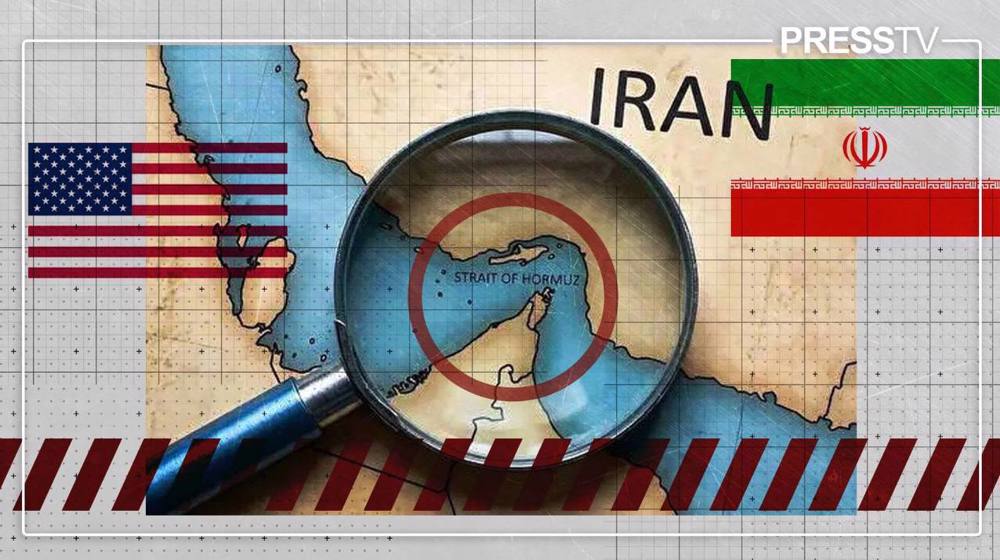
An informed security source in Tehran has dismissed American claims regarding the transit of a significant volume of oil via the southern route of the Strait of Hormuz, labeling the claims as a ploy to manipulate global energy prices.
Speaking to Press TV on Saturday, the source said these claims are "contrary to realities on the ground" and part of a widespread psychological warfare by the United States.
According to the source, Washington is attempting to portray the southern route through the strategic waterway as operating smoothly while simultaneously projecting the northern route as ineffective.
The source further asserted that Iran's operations to keep the strategic chokepoint closed are real, contrary to false US narratives. This is evidenced, as the informed security source noted, by vessels that violate regulations being struck and oil tankers altering their routes in response to decisive and clear warnings.
IRGC Navy: Remarks made by US officials about the Strait of Hormuz being open are an obvious lie and are aimed at controlling oil prices and hiding their failures. pic.twitter.com/FmF4c6yrRS
— Press TV 🔻 (@PressTV) August 28, 2026
He questioned the validity of US claims by asking why, if the southern route were indeed functioning, Washington would press Tehran for an agreement and maintain its illegal naval blockade.
The source also pointed to rising gasoline prices in the US as evidence contradicting American claims of the southern route being open.
The remarks come amid heightened tensions in the Strait of Hormuz, a critical waterway for global oil shipments, amid continued US aggression and maritime banditry.
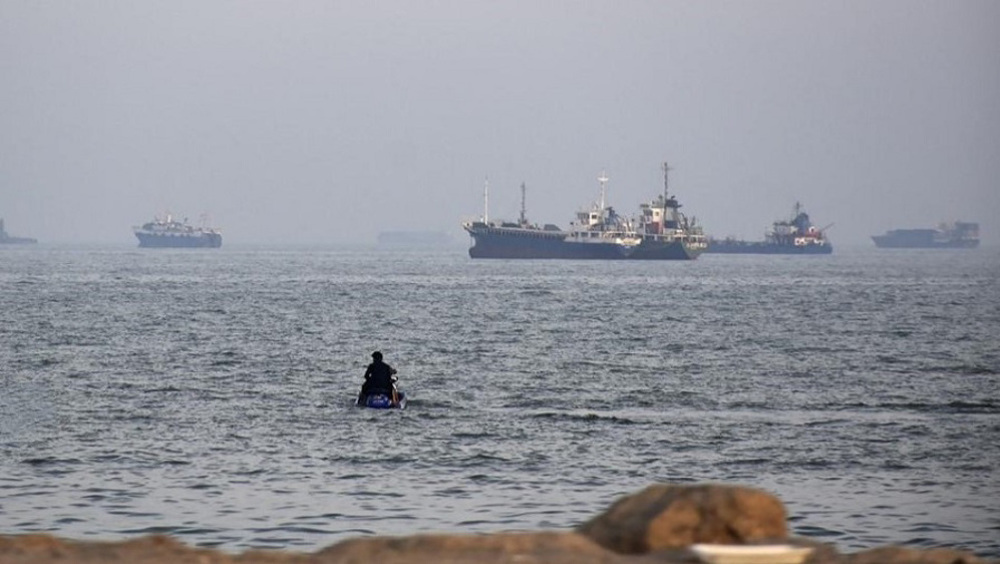
Ship-tracking firms have reported that the traffic through the strait remains suspended, with no crude oil shipments visible, in contrast to hundreds of vessels that traversed it daily before the US and the Israeli regime launched aggression against Iran in late February.
The source's comments also align with recent public statements by Iranian officials, including Parliament Speaker and lead negotiator Mohammad Bagher Ghalibaf, who mocked what he described as US attempts to manipulate "paper oil markets" and asserted that Iran maintains control over the key oil transport route.
The denial of US claims regarding oil flow coincides with US President Donald Trump's public acknowledgment that Americans should brace for higher fuel prices as the war against Iran continues. Trump urged the American public to accept slightly higher gasoline costs.
The average US gasoline price has risen dramatically from the previous year, reflecting the inflationary impact of the crisis resulting from the US-Israeli war against Iran.
Pezeshkian congratulates Muslim states on Prophet's birth anniversary
Qalibaf: US Treasury chief Bessent lying, failing to manage markets
Qalibaf tells regional states: Security built on foreign intervention is ‘fragile’



Iran: Implementation of Hormuz understanding with Oman hinges on US’s fulfilling its commitments
Source: US claims on southern Hormuz oil route a ploy to manipulate energy prices
US-led Board of Peace using Gaza funds to erase evidence of Israel's genocide: Analyst
Pezeshkian congratulates Muslim states on Prophet's birth anniversary
VIDEO | An Iranian initiative promotes solidarity in Yemen
Iran’s breakthrough in power generation from waste heat
Iraqi resistance group sets conditions to hand over weapons to government
Qalibaf: US Treasury chief Bessent lying, failing to manage markets


 PressTV NEWSLETTER
now
PressTV NEWSLETTER
now
 This makes it easy to access the Press TV website
