
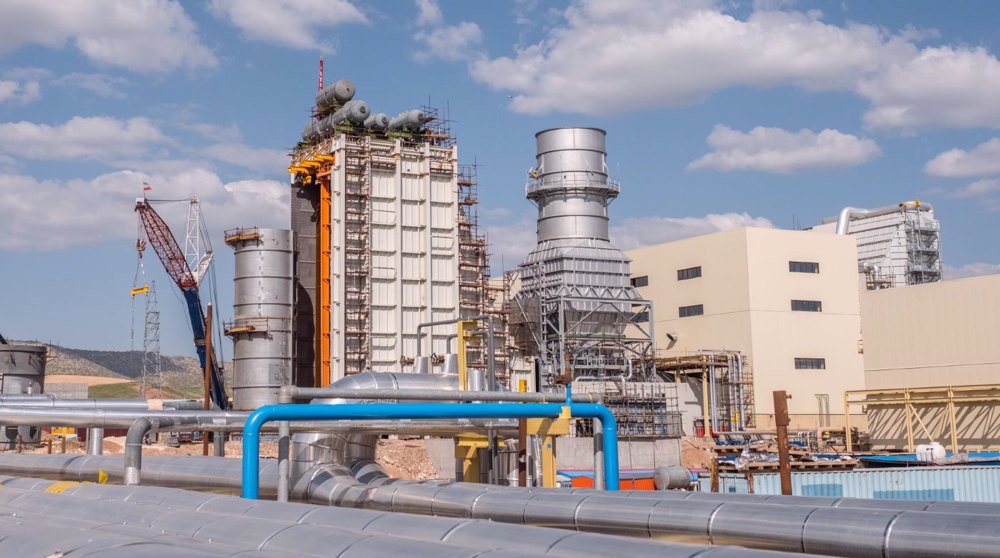
Imagine adding 290 megawatts to a national electricity grid without building another gas turbine, without opening another fuel line and without consuming another corresponding drop of fuel to generate that power.
That is the extraordinary proposition behind the latest stage of Iran’s Dalahoo combined-cycle power plant in Kermanshah, where a 290-megawatt steam unit has been connected to the national grid.
The result is the completion of a 910-megawatt power complex consisting of two 310-megawatt F-class gas units and one 290-megawatt steam unit.
Yet the size of the plant is not the most revealing part of the story, for the real surprise is where the new electricity comes from.
The steam unit takes the heat produced by the exhaust of the two gas turbines, which was already being thrown away after the first stage of generation, and converts that residual energy into another stream of electricity.
In effect, the plant is making the same fuel work twice, extracting additional economic value from energy that would otherwise have been lost.
The process requires a sophisticated chain of engineering, because transforming exhaust heat into nearly 300 megawatts requires far more than placing another turbine beside an existing power block.
The exhaust gases must pass through heat-recovery equipment capable of transferring their thermal energy to water, producing steam under carefully controlled pressure and temperature conditions.
That steam then drives a separate turbine, while sophisticated control, cooling, electrical and auxiliary systems allow the gas and steam cycles to operate together as one integrated generating system.
The technology is known internationally as combined-cycle generation, but the more important Iranian story is the country’s growing mastery of the engineering, manufacturing, integration and operation of sophisticated equipment required for such projects.
That story has acquired a far greater urgency in the wake of the terrorist US-Israeli attacks on Iran’s energy infrastructure, which damaged power and energy facilities and disrupted part of the country’s gas production system.
The attacks have reinforced the economic value of technologies capable of producing more electricity from existing fuel and infrastructure.
Dalahoo therefore deserves attention not because Iran has invented the principle of recovering waste heat, but because Iranian industry has progressively localized the engineering and manufacturing capabilities needed to deploy it at substantial scale.
Project documentation from Farab identifies Dalahoo as a 910-megawatt plant using two F-class gas units, two boilers, a 290-megawatt steam unit and an air-cooled condenser system.

When the first gas unit was synchronized with Iran’s national grid in June 2019, the project was already conceived as a combined-cycle plant, meaning the steam stage was integral to its eventual efficiency and capacity.
The second 310-megawatt gas unit followed in September 2020, leaving the steam section as the final major component required to complete the plant’s designed 910-megawatt configuration.
Simply put, Iran has completed the technological process that allows the energy already flowing through the two gas turbines to be exploited much more efficiently.
That distinction is crucial because the country does not merely need more electricity; it needs additional electricity that does not impose a proportionate additional burden on the fuel system.
A conventional new gas-fired plant can add generation capacity, but it also creates another large consumer of natural gas, whereas a completed combined-cycle system can recover energy from fuel that the gas turbine has already consumed.
Dalahoo therefore addresses the electricity problem and the fuel problem simultaneously, not by eliminating either constraint, but by making the existing fuel input work considerably harder.
The official estimate illustrates the scale of efficiency gain at Dalahoo. The 290-megawatt steam unit is expected to prevent consumption of about 600 million cubic meters of natural gas annually.
That volume is equivalent, according to Iranian officials, to roughly 600 million liters of liquid fuel, demonstrating why the project is economically significant even before the value of its additional electricity is calculated.
The significance of that saving becomes clearer when the electricity sector is viewed as part of a wider fuel economy, where gas used by power plants competes with household heating, industrial production and other essential uses.
Every cubic meter of gas that Dalahoo no longer needs for electricity generation can therefore serve another purpose, effectively increasing the usable supply of a fuel whose availability becomes critical when demand surges or infrastructure comes under pressure.
The project consequently creates value twice: it adds 290 megawatts to the electricity system while simultaneously reducing the fuel requirement that would normally accompany such additional generation.
But that economic advantage could not have been achieved without the technological capability to capture the heat in the first place, making the engineering story inseparable from the energy story.
Farab’s documentation says 49 percent of Dalahoo’s equipment was domestic, while the project included technology transfer and domestic manufacturing involving major components of the heat-recovery system.
Most notably, documentation on the project states that 61 percent of the three-pressure heat-recovery steam generator equipment was manufactured in Iran.
The technological story is that Iranian engineers and manufacturers have learned to absorb, reproduce, integrate and increasingly localize complex technologies, transforming imported know-how into domestic industrial capability.
That achievement becomes particularly consequential when access to foreign equipment, financing or technology can itself be complicated by sanctions and geopolitical confrontation, making domestic capabilities increasingly valuable to energy security.
The significance extends beyond Dalahoo because the Iranian power sector is increasingly trying to extract additional electricity from existing thermal infrastructure rather than relying exclusively upon new fuel-consuming capacity.
Iranian officials have said more than 1,423 megawatts of steam capacity entered service during the past year, while another recent Energy Ministry account put total new thermal capacity added over one year at 2,450 megawatts.
That broader expansion included seven steam units at combined-cycle plants capable of producing electricity without requiring additional fuel, alongside upgrades to existing plants that added further electricity to the national grid.
Iranian officials also estimate that the Dalahoo steam unit will reduce pollutant emissions and rejected heat by more than 50 percent, adding environmental efficiency to the project’s fuel and electricity benefits.
The strategy is particularly logical because Iran already possesses a large installed base of gas-fired generation, meaning considerable amounts of thermal energy are being produced wherever those turbines operate.
The good news is that with the same approach replicated across suitable existing gas-fired plants, thousands of additional megawatts could potentially be obtained through efficiency improvements rather than through an equivalent expansion of fuel consumption.
 This makes it easy to access the Press TV website