

Iranian President Masoud Pezeshkian says implementing the Memorandum of Understanding (MoU) reached between Iran and the United States in June will prevent Washington and Israel from sowing chaos in the West Asian region.
Pezeshkian said on Saturday that the Pakistan-mediated agreement, aimed at paving the way for a permanent end to the war, would help regional nations “pursue stability and development through unity, cooperation and convergence.”
The president reiterated that the Islamic Republic does not seek war but will stand firmly against any aggressor, vowing that “no power can force a nation standing with full strength and determination to surrender.”
Iran, he said, would never bow to any threat, despite its efforts to pursue diplomacy.
“With the support of the people, the efforts of government officials and the dedication of armed forces commanders, we will not bow to any threat, as we have demonstrated time and again in the past,” he said.
The president once again called for greater unity and cohesion, saying the country can overcome its challenges through national unity and the implementation of the MoU.
“If we implement the memorandum based on national unity and with the support of all those who care about the country and seek its dignity and prosperity, we can overcome our challenges.”
He also called for greater unity and solidarity among Muslim countries to thwart the enemies’ schemes, saying that if peace and stability are to take hold in the world, they must emerge from within the West Asia region.
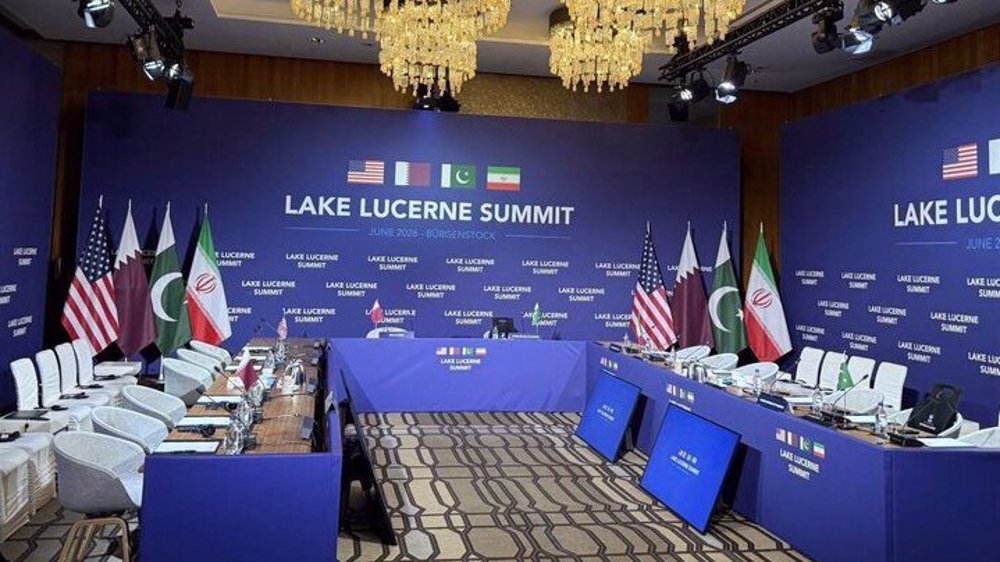
In separate remarks on Friday, the Iranian president said Tehran would continue to honor its commitments under the MoU as long as Washington did the same. If the other side failed to comply, he added, Iran would no longer remain bound by its commitments either.
He also called for stronger diplomatic efforts involving Iran’s neighbors and Muslim countries.
The MoU, signed on June 17 by US President Donald Trump and President Pezeshkian, followed high-level talks between Iranian and American officials hosted by Islamabad.
The preliminary agreement was intended to bring an end to US-Israeli aggression against Iran, launched on February 28 with the assassination of Leader of the Islamic Revolution Ayatollah Seyyed Ali Khamenei and several senior commanders.
The war has severely disrupted commercial shipping in the Persian Gulf, particularly the transport of oil and gas exports vital to global markets.
The Trump administration, however, failed to fulfill its commitments under the agreement to release frozen Iranian assets, lift sanctions, remove its illegal naval blockade of Iranian ports and press Israel to withdraw from southern Lebanon.
On August 18, the 60-day period set under the MoU expired. Washington showed no interest in extending it, while Trump unleashed what he called a "D-Day" economic pressure campaign against Iran.
 This makes it easy to access the Press TV website