
By Press TV Website Staff
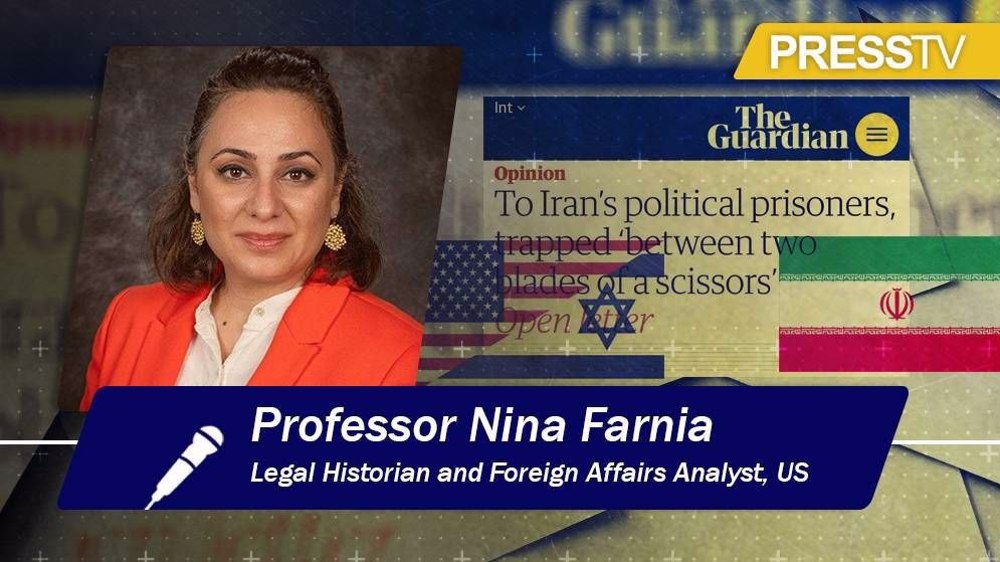
The Western left’s “politics of purity” can ultimately reinforce the very imperialism it claims to oppose, says a legal analyst, while rejecting the recent open letter published by The Guardian.
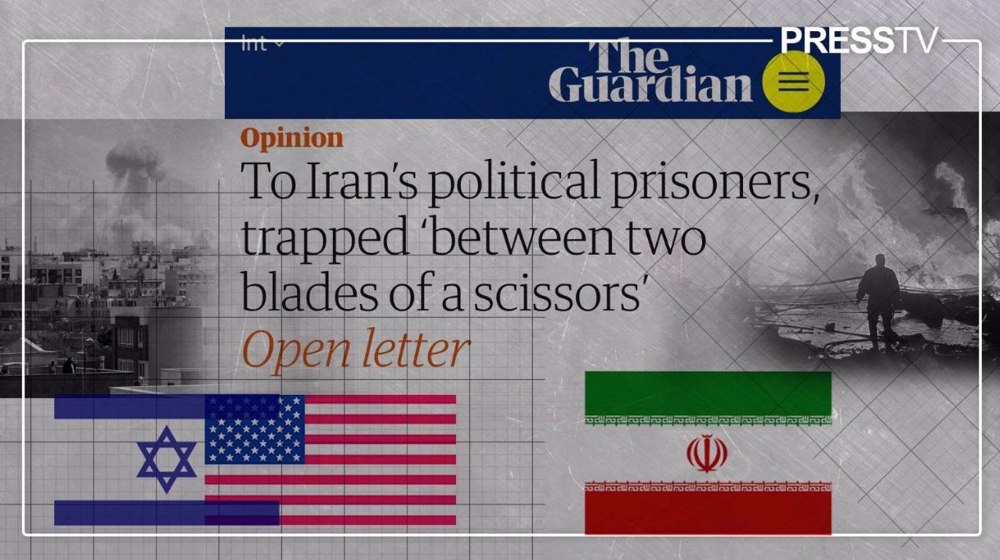
Over the past few days, since its publication, the letter has sparked a wider debate on how Iran’s internal policies should be understood amid US-Israeli military aggression against the country and decades of political intervention and the so-called “regime change” campaigns.
The letter has drawn criticism and controversy, including questions about its authors, the identity of those who organized it, and reports that some signatories did not understand what they were signing.
In an interview with the Press TV website, Nina Farnia, a US-based writer, law professor and legal historian, offered a sharply critical assessment of the letter, rejecting its framing, describing it as a form of “intellectual counterinsurgency” that shifts attention away from imperialism and undermines solidarity with Iran and the Palestinian resistance.
Different systems, different contexts
Farnia rejected the idea that the Islamic Republic’s prisons and policies, alongside Israel’s detention of Palestinians and the US immigration detention system, which are treated equally in the letter, can be understood outside their radically different political and historical circumstances.
She described Israel as “a glorified US military base” committing “the first live-streamed genocide in world history” in an effort to destroy the “courageous and steadfast resistance” of the Palestinian and Lebanese people.
Farnia stressed that Israel’s military and political survival is fundamentally dependent on Washington.
“If the US decides to stop funding it, Israel as we know it will collapse in a matter of weeks or months,” she told the Press TV website.
Against that backdrop, she said, the Islamic Republic of Iran is “the only nation-state in the world that is leading a regional war against the largest and most powerful empire in world history and its genocidal lapdog.”
“The whole of the Global South supports Iran in this struggle; even most people in the US are now against US support of Israel. And everyone waits with bated breath for an Iranian victory, watching and learning from its world historical resistance, as US political prisoner Mumia Abu Jamal has said,” Farnia noted.
She described the contradiction between Iran’s resistance and US power as “the primary motive force in the world today.”
Farnia also referred to a statement issued by The Anti-Imperialist Scholars Collective (AISC), an organization she is part of, in response to The Guardian open letter.
The statement also pointed out that abolitionist frameworks developed in the US should not be universally applied to countries like Iran without considering their different political and historical contexts.
“Abolition as a framework of analysis and struggle is suited for a settler colonial, capitalist racist, imperialist context, not for national liberation movements and states under the boot of US imperialism. We reject the Eurocentric tendency to universalize provincial US categories and frameworks,” the statement reads.
‘Intellectual counterinsurgency’
Farnia also rejected the letter’s comparison between the treatment of prisoners in the Islamic Republic and the pressure resulting from US-Israeli aggression against Iran, noting that such equivalence obscures the central political reality: an ongoing imperialist war against the country.
She said the primary purpose of the letter was to generate political confusion among its intended audience in the Western left by “obfuscating objective conditions of imperialist warfare” and shifting attention away from “the genocidal violence of the strongest and most powerful empire in world history.”
Farnia described this process as a “campaign of intellectual counterinsurgency.” In her view, this intellectual campaign operates alongside US counterinsurgency wars in West Asia, although on a different battlefield.
From a “genealogical standpoint,” she said, some of the most successful intellectual counterinsurgency campaigns directed against anti-imperialist movements have launched their accusations “from the so-called left.”
“That is, Cuba is not revolutionary enough because it is anti-Black, China is not revolutionary enough because it represses Muslims, Iran is not revolutionary enough because it is capitalist, and all these countries have prisoners so no true leftist or anti-imperialist should support them,” she said.
According to Farnia, this rhetoric constitutes the political environment in which the Western left operates, but she highlighted that such claims are “neither honest nor benign.”
“They have the effect of undermining support for these revolutionary and emancipatory projects. They play into a politics of purity, which ultimately is a trap that reinforces imperialism and its repression,” she said.
The letter’s omissions
The letter does not substantially engage with the security threats, foreign interference, terrorism and espionage that Iranian authorities cite as grounds for most arrests and prosecutions.
In this regard, Farnia said that the circumstances surrounding the letter itself raise questions about what its authors intended to accomplish.
She noted that the authors remained clandestine, which creates “a whole host of concerns around the identity of the authors and the motivations behind the letter.”
“It’s difficult to believe that the authors merely dismissed these central factors, factors that govern the very conditions of Iranian life both inside Iran and around the world,” she noted.
She cited the 1988 executions mentioned in the letter as an example, explaining that the episode is not widely known even among Iranians, much less outside Iran.
“I doubt many of the signatories to the letter even took the time to research the 1988 executions or understand what they were signing,” she said.
At the same time, Farnia highlighted that the effects of US sanctions and “Washington’s financial manipulation” are much more widely known in the United States.
“You would be hard-pressed to find anyone who is unaware of the sanctions Iran faces or the financial manipulations the US government engages in to shore up its position against Russia, China, and Iran,” she said, adding that these actions are known “across the political spectrum in the US.”
She pointed specifically to the timing of the letter, noting that its failure to address sanctions and US economic pressure was significant because it was released on the same day that the US Treasury announced measures economically destructive toward Iran.
“In this context, I don’t believe the authors made mistakes or failed in any way,” she said. “I believe the letter does exactly what it intended to do,” she told the Press TV website.
She said that its purpose was to divide the Western left and weaken solidarity with the Palestinian struggle, the Axis of Resistance and the Islamic Republic of Iran.
“Fortunately, it appears that the letter has backfired,” she stated.
An ‘obvious script’
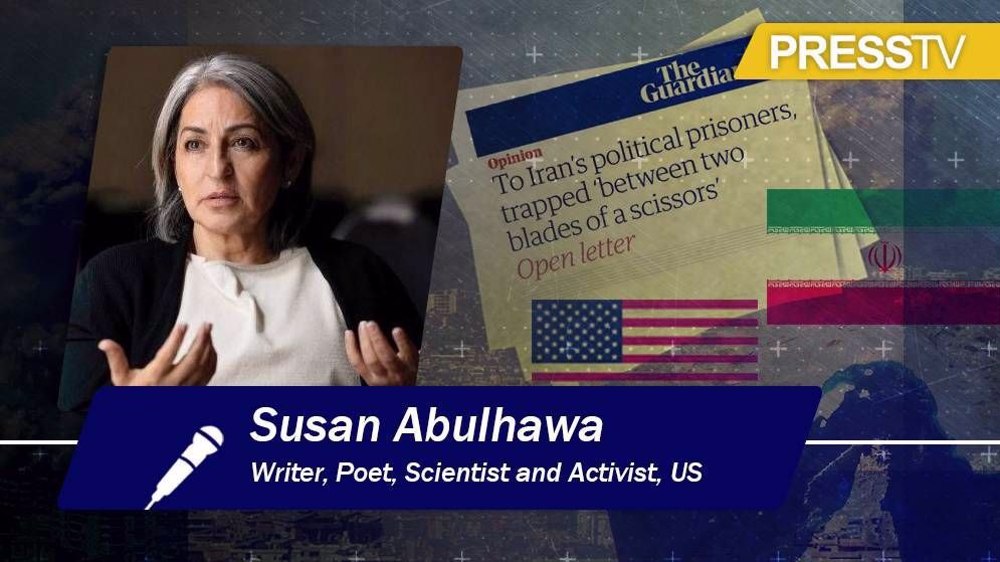
The letter’s authors describe themselves as opposing both imperialism and what they call “hollow anti-imperialism.”
Farnia turned the accusation back on the signatories, saying that their own intervention exemplifies the phenomenon they claim to oppose.
“I don’t take the accusation of hollow anti-imperialism seriously,” she said. “If anything, it is the signatories who are practicing hollow anti-imperialism by signing this statement.”
“For nearly a century, there has been a debate within the Western left about imperialism. Most members of the Western left will call themselves anti-imperialist in name, but in many cases, their individual praxis is not consistent with anti-imperialist principles,” she added.
In her view, more liberal, opportunistic or US-government-funded sections of the left frequently criticize, challenge or undermine anti-imperialist movements when those movements involve state actors or successfully confront imperial power.
She said such groups often invoke accusations of state repression and authoritarianism against anti-imperialist states and political movements.
“The script is now so obvious that we know when and where to predict it,” Farnia said, adding that the same pattern emerges whenever there is a successful challenge to US hegemony and domination.
She traced that pattern back to the Soviet Union nearly a century ago and said it has subsequently been applied to Cuba, China, Venezuela, Nicaragua, the Democratic People’s Republic of Korea, Russia and Iran.
“Even the Alliance of Sahel States, increasingly revealing itself as an anti-imperialist formation, has come under similar attacks,” she said.
According to Farnia, the accusations commonly focus on issues including the treatment of women, Black people, LGBTQ people and prisoners.
“Of course, there is not a single place in the world that is perfect, a utopia that is completely free of any forms of harm,” she said.
She contrasted these criticisms with the record of the United States, noting that Washington continues to incarcerate more people than any other country and has “extraordinary and incomparable white supremacy and settler colonialism.”
For Farnia, this context makes it difficult for anti-imperialist activists to accept selective concern for oppressed people.
“So it is difficult for many of us in the anti-imperialist left to believe these feigned concerns for the world’s oppressed, especially when we find that the scholars and institutions who echo these concerns are funded by major capitalist foundations like the Soros Foundation, the Ford Foundation, etc,” she said.
The 1988 executions and wartime context
According to Farnia, the letter refers to the 1988 executions withoutsufficiently situating them within the Iraqi Ba’thist regime’s invasion of Iran, and the role of the Mujahedin-e Khalq (MKO) terrorist group in cooperation with the Iraqi dictator Saddam Hussein.
Farnia framed the issue as a broader question of how states facing imperial power respond to armed forces aligned with their adversaries.
“From a political standpoint, you raise an interesting question,” she said. “How should nation-states under the boot of the most powerful empire in world history deal with the mercenaries of that empire?”
She stressed an important distinction between regular armed forces and mercenary formations. In her characterization, the US has increasingly relied on mercenary forces since its defeat in the Vietnam War.
“Mercenaries are not officially members of a state’s armed forces, and because of that, they regularly and intentionally act outside the bounds of the law to target civilians and civilian infrastructure,” she told the Press TV website.
Farnia noted that the 1988 executions referenced in the letter were “largely” executions of US-backed mercenaries within the MKO terror cult.
“In the present moment, US-backed mercenaries are using dogs and sharp instruments to rape Palestinian political prisoners,” she said.
She also referred to foreign-backed January riots across Iran in which “these mercenaries used axes to dismember human beings, literally cutting their limbs off in the streets.”
Going further back, she cited Nicaragua following the country’s revolution, explaining that “US-backed mercenaries dropped Nicaraguans into the Masaya Volcano, cut women’s breasts off and gouged out their eyes with spoons.”
“I write about this in my forthcoming book, Imperialism and Resistance,” Farnia said, emphasizing that these were only a few examples of a much larger history of violence.
“The types of violence that the people around the world have experienced at the hands of the US and its mercenaries are quite frankly unfathomable, and yet, the letter authors and signatories don’t name this violence,” she said.
Instead, she said, “they focus on the executions of those US-backed mercenaries, without even naming the broader context of the US-backed Iraqi invasion of Iran.”
“As I have already said, such omissions and obfuscations are intentional,” she said.
Iran and the Palestinian cause
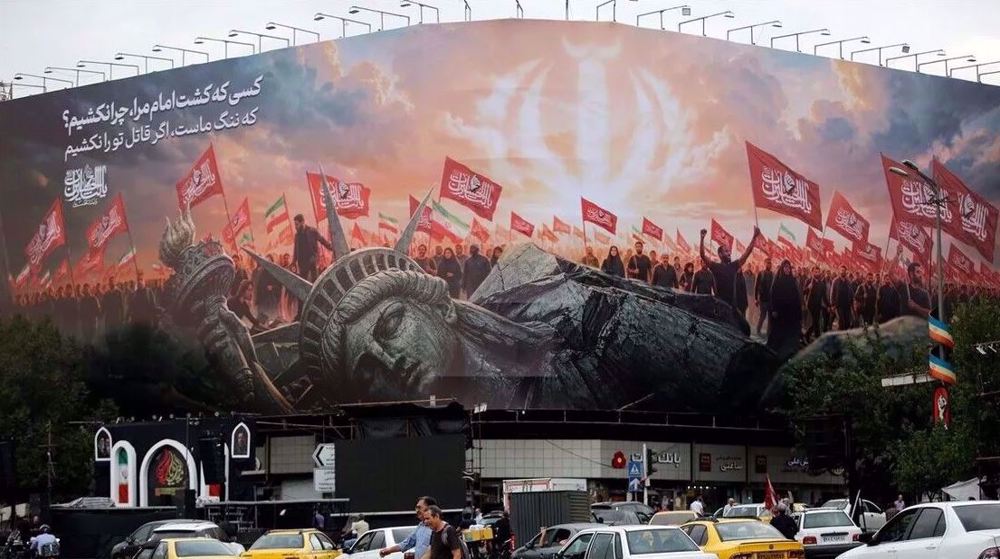
Another major omission identified by Farnia is the letter’s failure to discuss Iran’s decades-long support for the Palestinian cause and its opposition to Israel’s occupation.
She said that Iran’s relationship with Palestine is not simply a recent political alignment but a longstanding element of the Islamic Republic’s foreign policy and Iranian political life.
“Iran is the only nation-state in the world with a permanent line item in its national budget to support the Palestinians, irrespective of faction or ideology,” she said.
Farnia noted that all major Palestinian political factions have relationships with the Islamic Republic and that Iranian support for the Palestinian cause extends beyond the government itself.
“All the major Palestinian political factions have relationships with the Islamic Republic, and the Iranian people have supported the Palestinian cause for generations,” she said.
She also pointed to the historical involvement of Iranians in the Palestinian struggle, saying that some of the earliest martyrs in that struggle were Iranian.
“No other nation-state can claim this record, committing itself so fully and for so long to the cause of the Palestinians,” she said.
In her view, the historical record was impossible for the letter’s authors to reconcile with the political framing they sought to advance, which is why, she said, they omitted Iran’s support for Palestine altogether.
“There is no way for the letter writers to obscure or manipulate this historical record in their favor, so they omit it altogether,” Farnia said.
 This makes it easy to access the Press TV website