Iran prepares ‘surprises’ in weapons, tactics for any future war

Iran has prepared new weapons, equipment, technologies and tactics to be unveiled on the battlefield under the principle of surprise if another war breaks out, the spokesman for the Ministry of Defense and Armed Forces Logistics says.
Brigadier General Reza Talaei-Nik said Iranian military commanders have deliberately kept details of the country’s planned military capabilities confidential so they can serve as “surprises” on the battlefield.
“Commanders have directed these surprises in a way that, while observing the principle of surprise and protecting military and defense information, they will be seen on the battlefield,” Talaei-Nik was quoted as saying by IRNA.
He said surprises have already emerged during Iran’s recent wars, with one of the most significant being the failure of the opposing side to accurately assess Iran’s ability to withstand prolonged war.
“They thought that in the first days, our resilience and endurance in the defense industry, the armed forces, society, the economy, the government and the state would collapse,” he said. “But exactly the opposite happened.”
Talaei-Nik said Iran’s armed forces and defense industry have emerged from the war stronger than they were before the 40-day Ramadan war, adding that the experience has reinforced a principle of continuous learning within the military establishment.
“During the war and through operational, tactical, strategic and technical experiences, we constantly improve our learning, skills, tactics, techniques and strategies,” he said.
🔺 The enemy & some foreign countries had said before the Ramadan war that they were copying Iranian drone & weapons designs.
— Press TV 🔻 (@PressTV) August 28, 2026
🔺 New weapons, equipment, technologies & tactics have also been prepared to preserve the element of surprise & will be revealed on the battlefield.
‘We did not face shortages’
Talaei-Nik described Iran’s ability to maintain the supply of weapons and military equipment throughout the war as another major surprise, saying the country’s armed forces and defense industry did not face critical shortages despite the scale of the war.
“One of the other surprises was that the Islamic Republic of Iran, its fighters, armed forces and defense industry did not run short in the battlefield, either in terms of defense capabilities or in terms of logistical support and defensive weapons,” he said.
He said that despite the scale of preparations made by the opposing side, Iran maintained its supplies, calling the achievement “the greatest surprise in the defense industry.”
The spokesman said the experience has also shaped preparations for any future confrontation, with additional capabilities now being developed and kept confidential until they are needed.
“Surprises in weapons, equipment, technology and tactics have also been prepared in accordance with the principle of surprise, and they will be seen on the battlefield,” he said.
Asked whether the recent war prompted changes to Iran’s defense doctrine, Talaei-Nik said military planning is continuously adjusted in response to battlefield developments and changes in the regional security environment.
Operational commanders implement tactical and strategic changes according to battlefield conditions, he said, while the Defense Ministry adjusts its support accordingly.
“The support strategy follows the operational strategy and the broader defense strategy,” he said, adding that priorities are determined through the Khatam al-Anbiya Central Headquarters based on the needs of the Army and the Islamic Revolution Guards Corps.
Islamic Republic will send Netanyahu ‘to hell’: Iran’s security chiefhttps://t.co/aNcMmBqB8Q
— Press TV 🔻 (@PressTV) August 28, 2026
Talaei-Nik described Iran’s principal approach as “combined and asymmetric defense,” saying it involves maintaining and strengthening active deterrence while preventing an adversary from seizing the initiative.
“It is defense with the aim of defending, but using offensive approaches so that the enemy does not have the initiative,” he said.
Defense production more than doubled
Talaei-Nik said one of the main lessons Iran has drawn from its recent wars is the need to turn wartime experience into technological and industrial advances.
“Every war and major event has damaging and costly consequences, but at the same time creates new opportunities,” he said.
Iran’s defense production more than doubled between the 12-day war and the subsequent Ramadan war, he said, attributing the increase to cooperation among the armed forces, the Army, the IRGC, private companies and knowledge-based firms.
He added that production of some weapons and equipment was significantly cheaper than foreign equivalents, as Iran sought to reduce the cost of its defense systems.
“We have focused on making the production of weapons, equipment and ammunition more economical,” Talaei-Nik said, adding that the production cost of some Iranian systems was between one and 20 times lower than comparable foreign products.
He also rejected the characterization of Iran’s defense industry as dependent on copying foreign weapons and reverse engineering.
“Our scientific and defense community has gone beyond the stage of copying and reverse engineering,” he said, highlighting drone and ballistic missile technologies as areas in which Iran no longer needs to rely on reverse engineering.
Talaei-Nik said Iran’s defense industry has achieved more than 90% self-sufficiency and currently produces more than 1,000 types of weapons, military equipment and ammunition domestically.
“We have used the latest scientific and technological findings and domestic capabilities in the production of our products,” he said, while noting that cooperation with foreign partners takes place where necessary.
On foreign demand for Iranian weapons, Talaei-Nik said Iran’s arms exports have been increasing before the two recent wars, with requests coming from countries across different regions.
However, he said domestic requirements now take priority.
“After the outbreak of the Ramadan war, our priority is first to meet the needs of our own armed forces,” he said. “We then pursue exports according to demand and our ability to supply them.”
“In wartime, exports depend on having a surplus. In fact, exports are carried out to the extent that there is a surplus,” he added.
Five fronts shaped outcome of war
Talaei-Nik said Iran’s assessment of the recent war should not be limited to military operations, stating that several interconnected fronts contributed to its outcome.
“The battlefield must be viewed in its entirety,” he said. “There was the military battlefield, the social battlefield, which was the presence of the people, the field of service and support provided by the government, the diplomatic field and the media field.”
“These five fields determined the course of the war toward the failure of the enemy and the victory of the Iranian nation,” he added.
He said lessons learned after the 12-day war also helped reduce casualties in the Defense Ministry during the subsequent 40-day war.
According to Talaei-Nik, despite the later war lasting several times longer and being more intense, the number of Defense Ministry personnel martyred was half that recorded during the 12-day war.
He attributed the reduction partly to the strengthening of air-defense capabilities, particularly systems designed to counter advanced and strategic drones.
IRGC: US, Israel resort to economic war after failing to defeat Iranhttps://t.co/7qHq8lHabK
— Press TV 🔻 (@PressTV) August 28, 2026
Talaei-Nik said the government has played a key role in maintaining military readiness while ensuring the continued functioning of civilian life during the wars.
The fighting affected around 25 Iranian provinces to varying degrees, he said, describing the confrontation as “unequal and unbalanced” because of the scale of military capabilities available to the opposing side and the use of facilities in several countries in the region.
Despite those circumstances, the government supported the armed forces and helped meet the requirements of the Khatam al-Anbiya Central Headquarters, he said.
At the same time, the government had to ensure the continued supply of essential goods and prevent major disruptions to people’s daily lives.
“Supporting the people and serving the people was one of the government’s national missions, and it was carried out well,” Talaei-Nik said.
He said the war has also increased Iran’s “social capital,” including public participation, cohesion and solidarity, and called for that capacity to be used in implementing the government’s national development programs.

Former British PM Johnson admits US war against Iran was a ‘mistake’
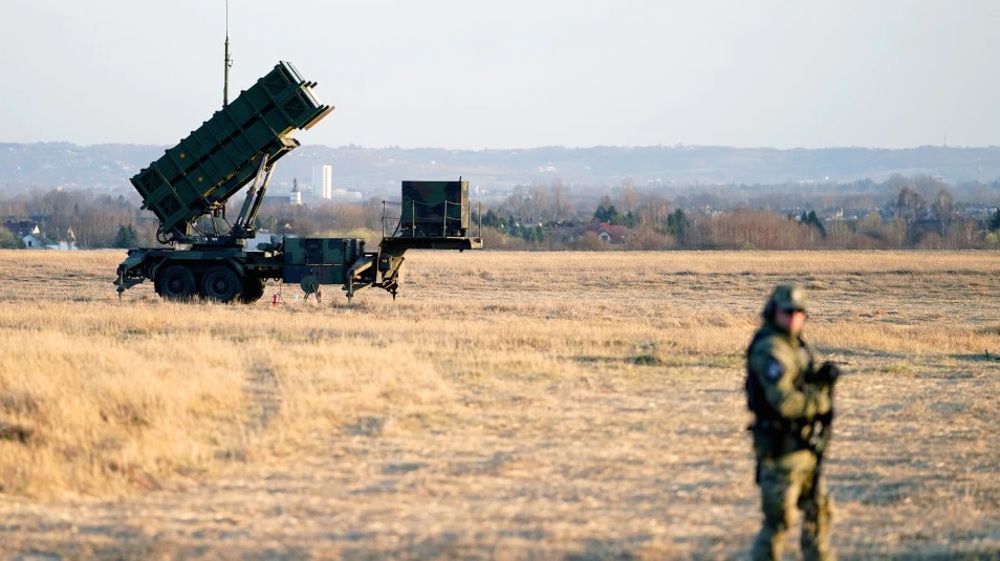
US aggression against Iran leaves NATO air defenses ‘beyond critical,’ officials admit
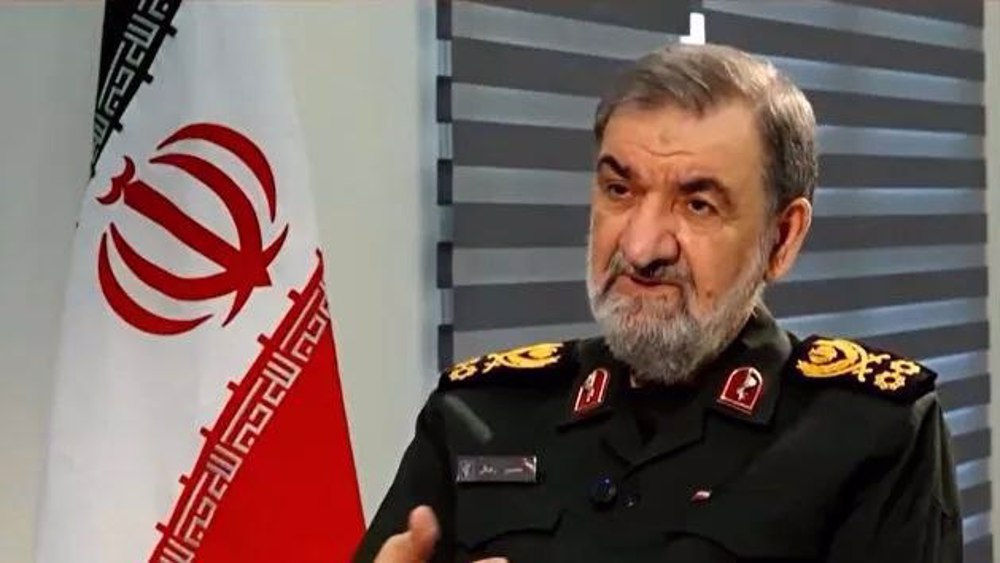
Iran will send Netanyahu ‘to hell’: Rezaei



Islamic Unity Conference in Tehran urges Muslim resistance against Israel, US
Islamabad MoU: US signature, hollow from the start
Iran warns states not to become complicit in US ‘economic terrorism’
No one will sell oil in region if Iran cannot: Parliament speaker
Basij chief: US turns to economic war after failing to destroy Iran
Iran prepares ‘surprises’ in weapons, tactics for any future war
'Ideological cover for war': Anti-imperialist scholars condemn Guardian open letter over Iran
Iran says changed balance of power, proved era of hit-and-run over


 PressTV NEWSLETTER now
  This makes it easy to access the Press TV website